Where Safety Meets Expert Tree Service.

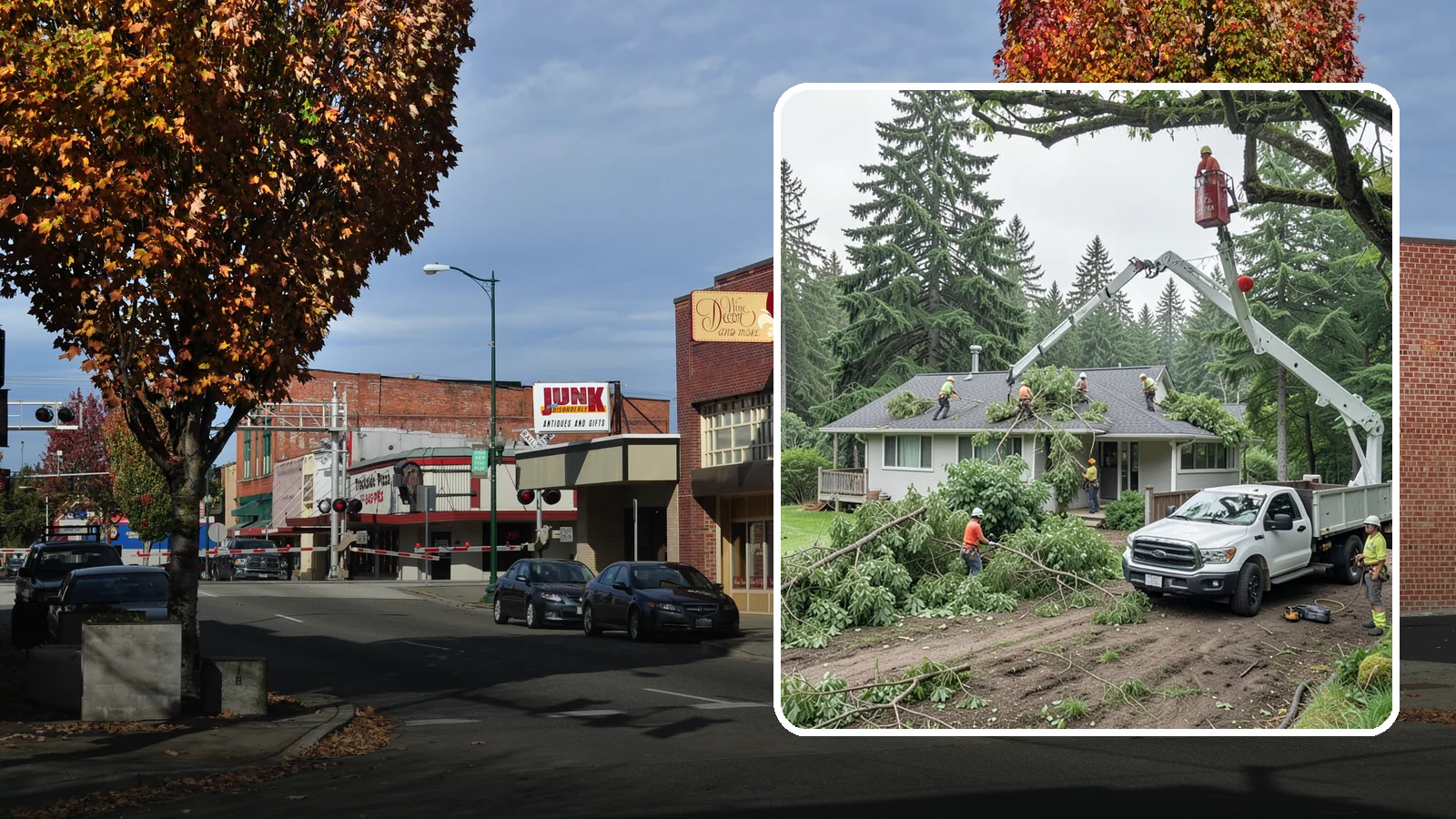
Puyallup Roof Clearance Pruning
The pruning of branches away from rooflines.
You see moss spreading on the shingles, a gutter packed with needles, or a branch that scrapes the roof when the wind picks up. Any of these is a good reason to look at the trees closest to your house.
Roof clearance pruning shortens or removes the limbs that hang over or touch the roof. The aim is a gap between foliage and shingles, so the roof can dry and the branches stop rubbing the surface.
About Roof Clearance Pruning in Puyallup
Roof clearance pruning helps keep your home’s exterior safe by trimming branches away from rooflines. This essential tree care protects roofing materials and gutters while reducing the amount of debris that accumulates over time. We work with homeowners throughout our service area to maintain healthy trees without compromising their structure or safety.
What Puyallup Roof Clearance Pruning Includes
Our team specializes in pruning branches specifically to create safe distance between your limbs and your home’s roofline. This targeted approach reduces potential damage from falling leaves, twigs, and larger debris that can clog gutters or wear down shingles. We focus on removing only what is necessary while respecting the natural growth patterns of each tree species.
Puyallup Roof Clearance Pruning Process
The work begins with a careful assessment of your canopy condition to determine the best pruning objectives for your specific trees. Our trained crews select precise cuts tailored to the season and species, ensuring clean incisions that avoid stressing the plant. After making these strategic cuts, we lower the material safely and thoroughly clean up the entire work area around your property.
Equipment We Use for Puyallup Roof Clearance Pruning
We utilize a variety of tools including hand saws, pole saws, chainsaws, and wood chippers to handle branches efficiently. Depending on how close trees are to structures or roofs, our crews may use climbing rigging gear or aerial lifts for safe access. All personnel wear proper personal protective equipment while operating this specialized machinery around your home.
Puyallup Roof Clearance Pruning Safety & Best Practices
We strictly follow recognized arboricultural standards to avoid making harmful cuts that could weaken a tree’s structure. Our crew watches carefully for overhead power lines and unstable limbs before beginning any work aloft or on the ground. Fall protection systems are used whenever workers climb, ensuring everyone remains secure throughout the pruning process.
Signs You Need Roof Clearance Pruning in Puyallup
You may need this service if you notice branches hanging low over your roofline or accumulating excessive debris in gutters. Deadwood found near weak unions or limbs interfering with structures also indicate that clearance work is appropriate for your trees. Addressing these issues early helps prevent branch failure and supports the long-term health of your landscape.
What Affects the Cost of Roof Clearance Pruning in Puyallup
The final price depends on factors such as tree species, current canopy condition, and specific access requirements like climbing gear or lifts. We also consider the volume of debris that needs processing and removal from your site before concluding our estimate. Each project is unique, so we evaluate these variables to provide a fair assessment for every job.
Best Time of Year for Puyallup Roof Clearance Pruning
Scheduling work during dormant seasons often minimizes stress on trees caused by over-pruning live tissue at the wrong time. We adhere to specific timing sensitivities required by different tree species common in our region to ensure optimal healing and growth. Planning ahead allows us to match methods to site conditions while keeping your trees vigorous throughout their life cycle.
Why roof clearance matters in wet Puyallup
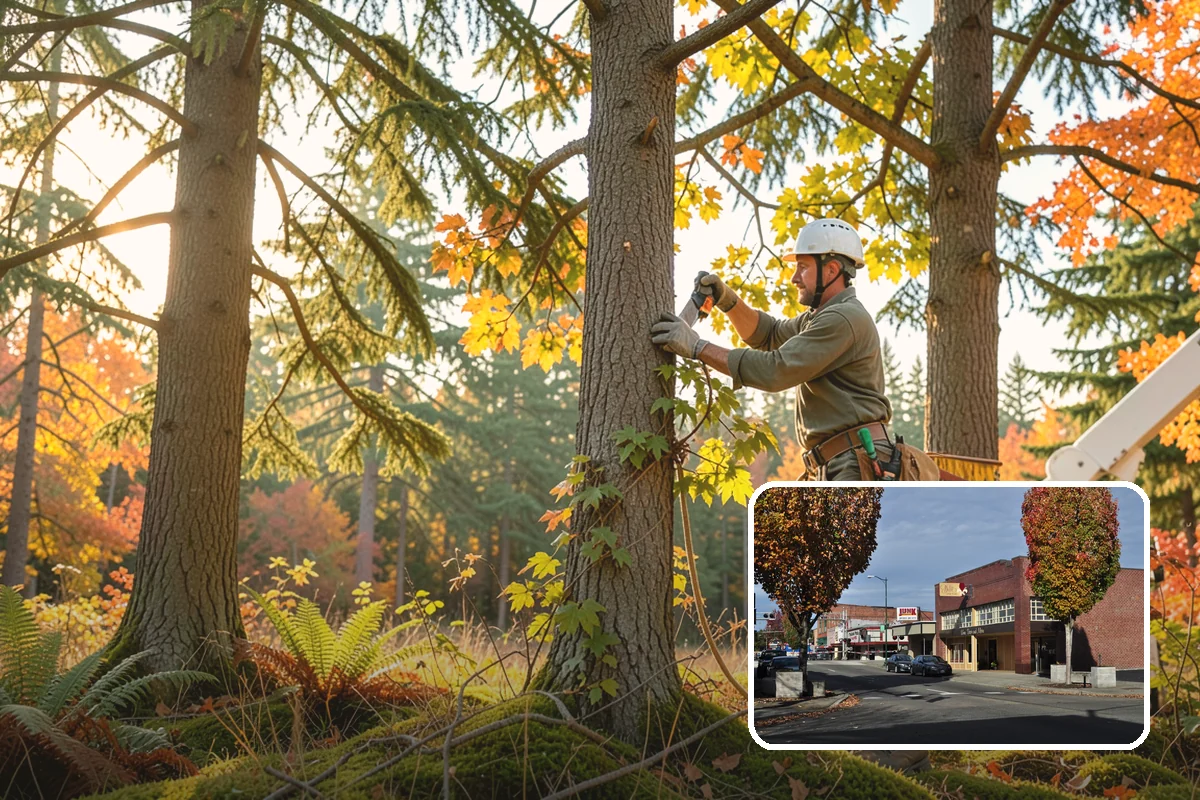
Branches near a roof cause trouble in a few ways. Limbs that touch the surface scuff shingles as they move. Leaves, needles and twigs collect in valleys and gutters and hold water against the roof. Shade and constant dampness encourage moss. A heavy limb over the roof can also break and land on it.
Local rain makes the damp problem more likely. Daymet, a gridded climate dataset covering 2005-2025, shows about 108 days a year in Puyallup with 0.1 inch of rain or more. The same dataset puts 81% of the yearly rain and snow between October and April. That means a roof shaded by branches can stay wet for long stretches through the fall, winter and spring. Opening up the canopy over the roof gives sun and air more time to dry it.
The USDA map from 2023 places Puyallup in hardiness zone 8b. That is a measure of winter cold, not of roof damage, but it tells you a wide range of trees can grow well here. Fast growers planted near a house can reach the roofline sooner than owners expect, so clearance is often a repeat task rather than a one-time fix.
The work itself follows standard pruning practice, such as ISA and ANSI A300 guidance. We cut back to a branch union or to a lateral large enough to take over as the new end of the limb, rather than leaving stubs. We take off only as much live foliage as the tree can reasonably tolerate in one visit. We do not top trees. Topping leaves weak regrowth that tends to cause the same problem again. Where a tree is too close to the house to be cleared by pruning alone, we will say so and talk through the options.
Pruning is different from removal, and a city rule on removal does not automatically cover it. If a tree's size, location or status raises a question, we check with the City of Puyallup before work starts. Our ISA Certified Arborist can look at the trees over your roof, and estimates are free. Call or text 425-484-4442.
Puyallup tree conditions at a glance
| USDA hardiness zone | 8b |
|---|---|
| Rain and snow falling October to April | 81% of the year’s total |
| Days that freeze at night and thaw by day | 29 a year |
| Tree City USA | 8 years |
| Electric utility | unconfirmed |
Most common street trees in Puyallup
- Flowering Pear14.6%
- Hornbeam9.4%
- Crabapple8.9%
- Linden7.3%
- Ash6.9%
- Green ash5.9%
Share of 812 trees in the city’s street-tree inventory; median trunk diameter 9.5 in, 0.0% at 24 in or wider.
Sources: Daymet daily weather (NASA/ORNL), NOAA Storm Events, USDA plant hardiness map 2023, NRCS soil survey, USGS elevation, WA DNR landslide inventory, USDA Forest Service aerial survey, WSDA, city tree assessments and street-tree inventories, SILVIS Lab, Arbor Day Foundation, and official city and utility pages.
Roof Clearance Pruning Serving Puyallup
Puyallup

Also serving Puyallup
- Maple Tree Pruning in Puyallupat Washington Landscaping
- Roof Cleaning in Puyallupat Washington Roofing
- Park Tree Maintenance in Puyallupat Washington City Services