Where Safety Meets Expert Tree Service.


Puyallup Preventive Tree Care Plans
Proactive plans that address issues before they escalate.
In Puyallup, 81% of the year's rain and snow falls between October and April, according to Daymet records from 2005 to 2025. That means summer is the dry stretch, and it is when a tree plan does the most good. Watering and checking trees from May through September can head off stress before it shows.
A preventive plan is a set of scheduled visits, not a single job. Each visit looks at structure, soil, and signs of stress, then sets the next steps. The aim is to catch small problems while they are still easy to manage.
About Preventive Tree Care Plans in Puyallup
Preventive tree care plans offer a proactive way to keep your trees healthy before small issues become big problems. These maintenance programs are designed for homeowners who want predictable care that reduces long-term risk and costs. By addressing concerns early through routine attention, you can enjoy safer landscapes year after year.
What Puyallup Preventive Tree Care Plans Includes
This service includes recurring inspections and necessary treatments tailored to the specific needs of your trees. Our trained crews follow recognized arboricultural standards while matching their methods to each tree species and site condition. The goal is to reduce potential failures by spreading care costs over time through a consistent schedule.
Puyallup Preventive Tree Care Plans Process
We begin by assessing your existing trees and setting clear goals for what you want to achieve with the landscape. Once we build a recurring schedule of inspections, our team performs the scheduled work according to that plan. Over time, we review the results together and adjust the program as needed to keep it effective for changing conditions.
Equipment We Use for Puyallup Preventive Tree Care Plans
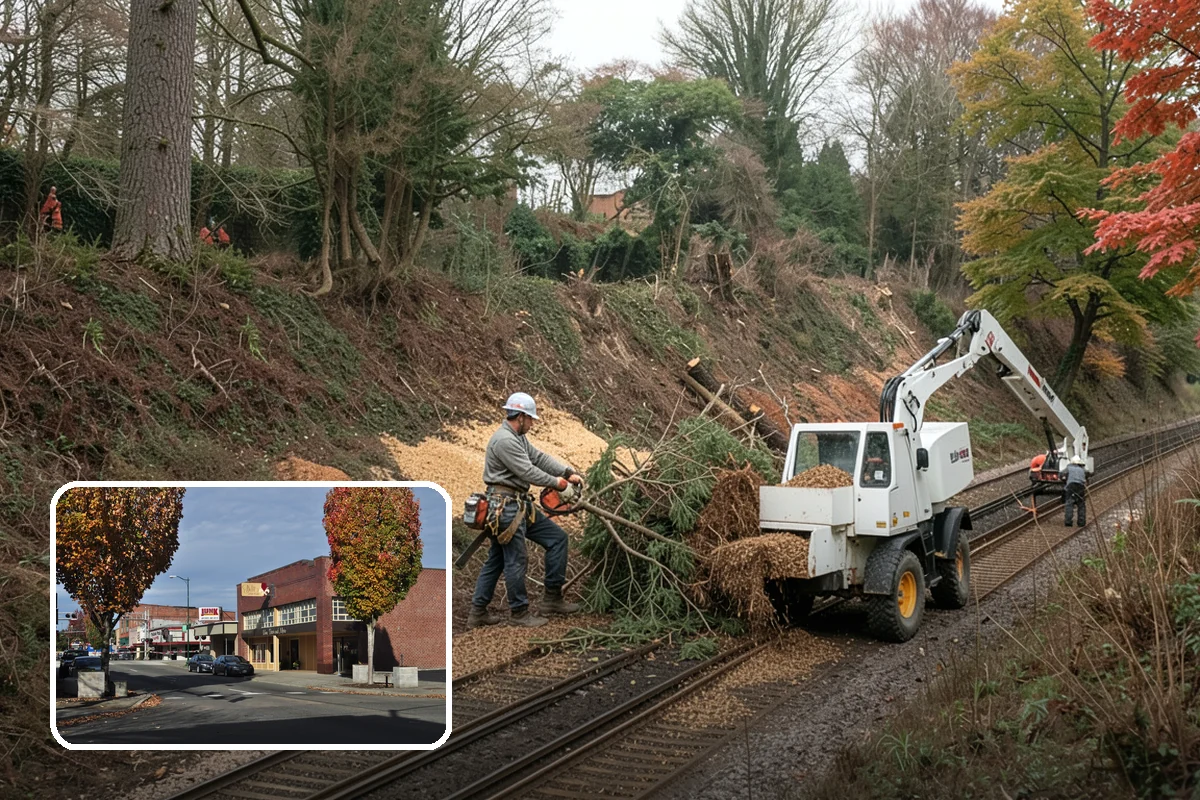
Our crews use specialized pruning and inspection tools along with documentation equipment to track changes in your trees. When necessary, an aerial lift is brought on-site to safely reach higher branches or difficult areas. We also utilize chipper and hauling equipment to manage debris while ensuring all work meets safety standards.
Puyallup Preventive Tree Care Plans Safety & Best Practices
Every visit follows recognized industry standards that prioritize the protection of both people and property. Conditions are documented carefully over time so we can flag emerging hazards promptly before they escalate. If your trees change or new risks appear, we adjust the plan immediately to maintain a safe environment.
Signs You Need Preventive Tree Care Plans in Puyallup
You might need this service if you notice changing tree conditions that require more frequent attention than occasional visits allow. Missed appointments in past schedules often reduce effectiveness, making a structured recurring program essential for consistent results. Additionally, balancing your budget with the scope of care needed across many trees is easier when using a planned approach.
What Affects the Cost of Preventive Tree Care Plans in Puyallup
The total investment depends on factors like tree species and how difficult it is to access certain parts of your property. We also consider the complexity of balancing the overall program scope with any existing budget constraints you may have. This transparent approach ensures that costs are managed predictably without surprise fees or hidden charges.
Best Time of Year for Puyallup Preventive Tree Care Plans
In our local climate, these plans work best when performed year-round to address how tree conditions shift throughout the seasons. While specific tasks like pruning might be timed around dormancy periods or storm seasons for optimal results, regular checks remain valuable all season long. This flexibility allows us to respond quickly whenever weather patterns change and affect your landscape health.
Building a preventive tree care plan in Puyallup
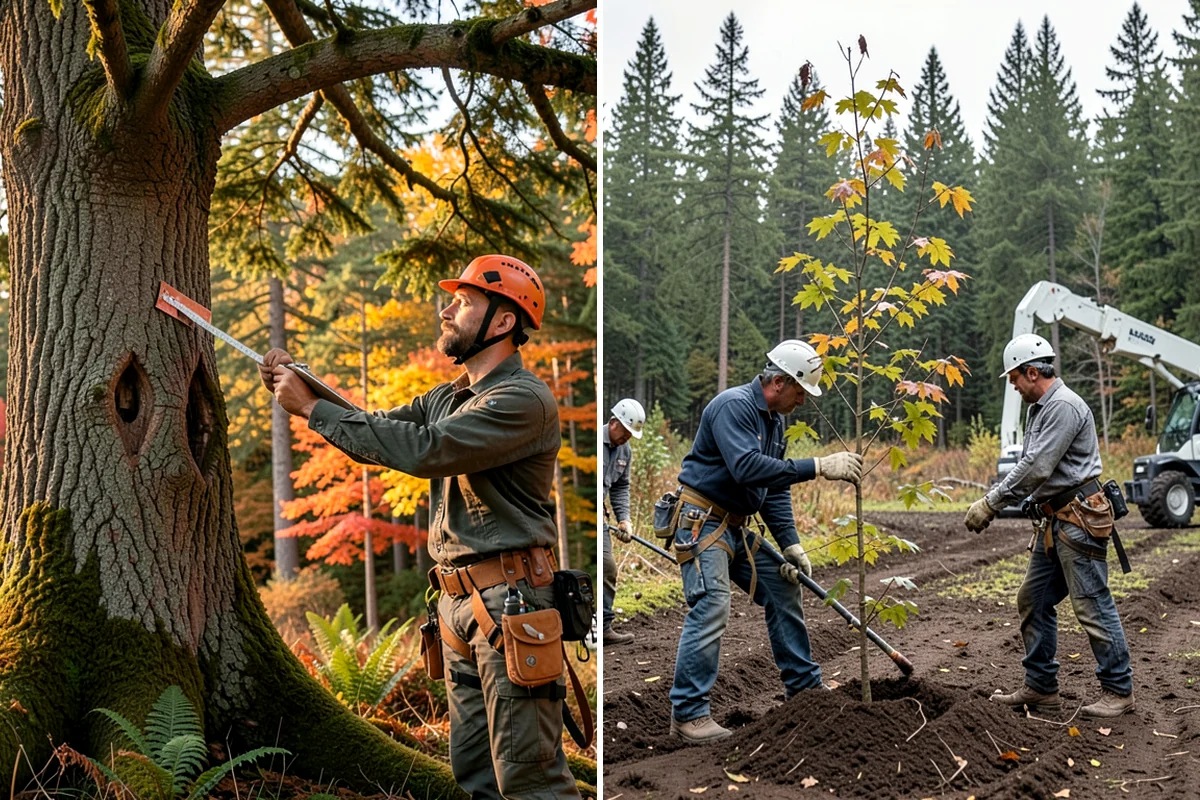
A plan starts with a walk through the property. We note each tree's species, size, and condition, and look at the roots, trunk, and canopy. From that, we set a schedule that fits the trees you have.
Steps in a typical plan
- Inspect each tree for dead wood, weak unions, cracks, and fungal growth.
- Prune to ANSI A300 standards, removing dead or hazardous limbs and correcting structure. We do not recommend topping.
- Check soil, mulch, and watering needs.
- Write down what we found and what to watch before the next visit.
Why the dry season matters here
With 81% of precipitation arriving from October to April, the summer months can leave trees short of water. Maples are one example. WSU HortSense advises that to prevent leaf scorch, you should irrigate during dry periods, wetting the entire root zone without overwatering. A plan can set up that routine and check whether it is working.
What the nearby forest survey tells us
A 2021-2025 aerial survey by the USDA Forest Service and WA DNR covered forest within 10 km of Puyallup. It looked at forest land, not street or yard trees, so it does not describe any tree on your property. Still, it shows what is happening in the region. The largest mapped damage was 1,101 acres of decline with no cause identified, mostly in unknown hardwoods and western redcedar. That label means dieback where no single cause was found. Douglas-fir engraver affected 273 acres of Douglas-fir, and bears damaged 100 acres of Douglas-fir. If you have Douglas-fir, redcedar, or hardwoods, we pay close attention to thinning crowns, dead tops, and bark damage on regular visits.
Rules and next steps
Preventive work is mostly pruning and monitoring. If a visit points toward removing a tree, we check with the city before work starts. For a free estimate, call or text 425-484-4442. An ISA Certified Arborist on staff can walk the property with you.
Puyallup tree conditions at a glance
| USDA hardiness zone | 8b |
|---|---|
| Soils | 13% of land has hardpan or another restrictive layer within 40 in; most common series Puyallup; 47% well drained |
| Rain and snow falling October to April | 81% of the year’s total |
| Days with 0.1 in or more of rain | 108 a year |
| Days that freeze at night and thaw by day | 29 a year |
Most common street trees in Puyallup
- Flowering Pear14.6%
- Hornbeam9.4%
- Crabapple8.9%
- Linden7.3%
- Ash6.9%
- Green ash5.9%
Share of 812 trees in the city’s street-tree inventory; median trunk diameter 9.5 in, 0.0% at 24 in or wider.
Tree health near Puyallup
Spongy moth (WSDA 2017): WSDA trap detection(s): 27 moth(s) in 13 trap catch record(s).
Spongy moth (WSDA 2012): WSDA eradication treatment (Btk).
- Decline, cause not identified1,101 ac
- Douglas-fir engraver273 ac
- Bears100 ac
Forest damage mapped from the air within 10 km of Puyallup, 2021-2025 (USDA Forest Service and WA DNR). This covers forest land, not street or yard trees. “Decline, cause not identified” is dieback with no single cause found.
Sources: Daymet daily weather (NASA/ORNL), NOAA Storm Events, USDA plant hardiness map 2023, NRCS soil survey, USGS elevation, WA DNR landslide inventory, USDA Forest Service aerial survey, WSDA, city tree assessments and street-tree inventories, SILVIS Lab, Arbor Day Foundation, and official city and utility pages.
Preventive Tree Care Plans Serving Puyallup
Puyallup
Also serving Puyallup
- Lawn Top Dressing in Puyallupat Washington Landscaping