Where Safety Meets Expert Tree Service.

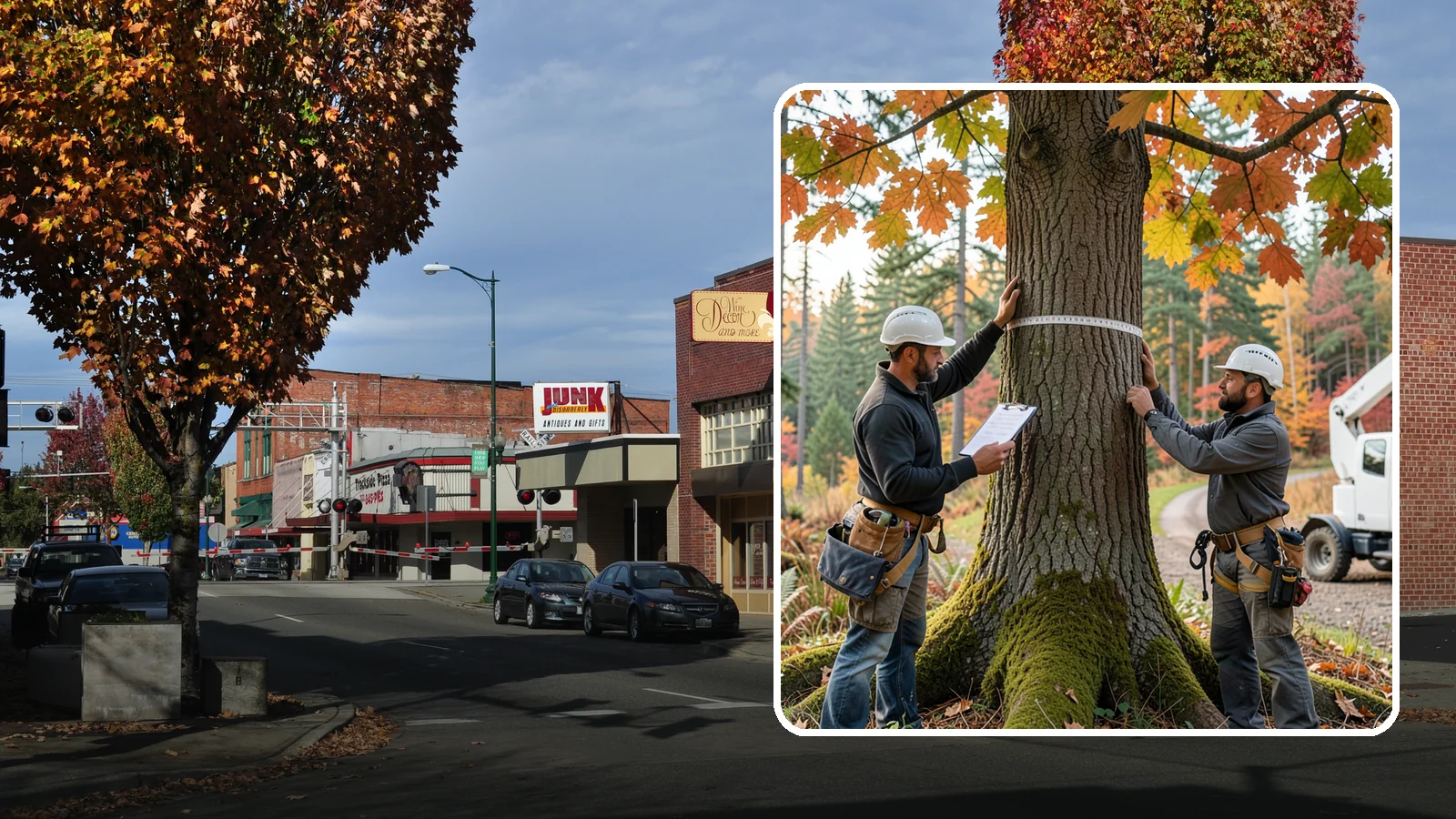
Puyallup Permit Assistance
Assistance preparing and submitting tree-work permits.
In Puyallup, the first question is where the tree stands. The city's rule says significant tree protections do not apply on lots with single-family, duplex, triplex or up to four-unit residential development, unless the tree is in a critical area. A critical area is a place such as a steep slope or stream corridor.
So before you plan any removal, find out whether your tree sits in or near one, and whether it is on the city's Heritage Tree register. That answer decides whether you need a permit at all, and how much paperwork comes with it.
About Permit Assistance in Puyallup
Navigating local rules for tree work can feel overwhelming without clear guidance on what approvals are needed. Our permit assistance helps homeowners understand these requirements so they can move forward confidently before any cutting begins. We provide the support you need to ensure your project stays compliant with regulations while protecting your property’s trees.
What Puyallup Permit Assistance Includes
This service focuses specifically on preparing and submitting tree-work permits where local rules demand approval first. It includes gathering necessary site details, analyzing conditions against recognized standards, and creating clear documentation for your records or insurance needs. By handling these administrative steps, we help you prioritize care plans that fit both your budget and safety goals.
Puyallup Permit Assistance Process
We start by collecting information about your specific site and the trees in question to build a complete picture of their health. Our trained crews then inspect conditions carefully before analyzing findings against established objectives and arboricultural standards. Finally, we review our clear recommendations or reports with you to ensure every decision is informed and aligned with local rules.
Equipment We Use for Puyallup Permit Assistance
To assess your site accurately, we use diagnostic tools that measure tree structure along with mapping equipment for precise documentation. Our team also utilizes specialized imaging software to visualize complex conditions before submitting any permit applications. All work is conducted using proper personal protective gear while adhering to recognized industry standards throughout the evaluation process.
Puyallup Permit Assistance Safety & Best Practices
We base all our findings on observed evidence and established safety standards rather than assumptions or guesswork. If there are limitations in what an assessment can reveal, we disclose them clearly so you understand where follow-up visits might be needed. Accurate documentation of current conditions ensures that any permit application reflects the true state of your trees and site access constraints.
Signs You Need Permit Assistance in Puyallup
You likely need this service when local regulations require official approval before any tree work or removal takes place. Situations often arise where incomplete site history or hidden defects make it risky to proceed without a professional review first. Competing objectives for land use or varying regulatory requirements across different jurisdictions also signal that expert guidance is necessary.
What Affects the Cost of Permit Assistance in Puyallup
The investment for this service depends on how complex your specific site layout and access challenges become during the assessment. Projects requiring specialized diagnostic tools to evaluate conditions against unique local rules may involve additional considerations in pricing. Ultimately, costs are influenced by the depth of analysis needed to produce documentation that satisfies both you and the relevant authorities.
Best Time of Year for Puyallup Permit Assistance
While we can assist with permit preparation year-round, this service often aligns best with your project planning phases before active tree work begins. In our region, many homeowners schedule these consultations during quieter months to finalize plans for spring or summer maintenance seasons. Aligning now ensures that all necessary approvals are in hand when weather conditions allow you to start the actual work safely.
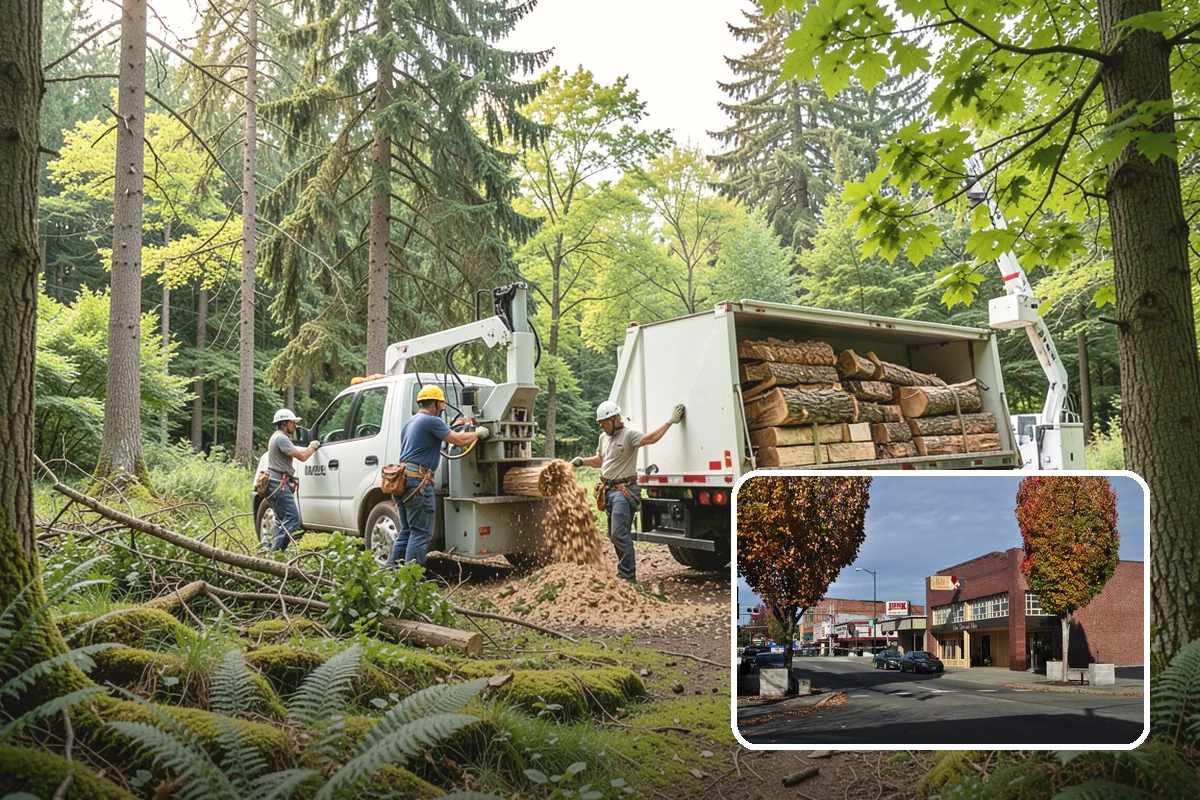
How permit assistance works for Puyallup property owners
Permit assistance means we help you sort out what the city requires before any saw starts. Here is how the work usually goes.
Step 1: Locate the tree
We look at where the tree stands on your lot. According to the city's tree rule, a permit on a lot with up to four residential units is required only if the tree is on the Heritage Tree register, or is within or associated with a critical area. Where a site is unclear, we check with the city before work starts.
Step 2: Check size and species
For regulated trees outside critical areas, the city's rule covers healthy, living trees greater than 15 inches DBH (diameter at breast height). Black cottonwood and red alder are not typically regulated unless they are in a critical area.
Step 3: Treat critical areas differently
Inside a critical area, the city regulates all trees regardless of size or species, including dead trees and snags. That surprises many owners. A small or dead tree on a slope can still need a permit.
Step 4: Prepare the application
For significant trees when regulated, and for all critical-area trees, the city requires a tree risk assessment report from a certified arborist who holds the TRAQ qualification. It goes in with the permit application. Our ISA Certified Arborist can prepare that kind of assessment, so the report and the application move together.
Step 5: Plan for replacement
Trees removed in or near a critical area must be replaced with two new trees for each tree removed. Replacement may also be required for other approved removals. Knowing this early helps you budget space and planting.
This rule covers removal. It does not tell us anything about pruning, so we confirm with the city if your plans include other work. Call or text 425-484-4442 to start with a free estimate.
Puyallup tree conditions at a glance
| Soils | 13% of land has hardpan or another restrictive layer within 40 in; most common series Puyallup; 47% well drained |
|---|---|
| High and strong wind episodes, 2005-2025 | 25 in the forecast zone |
| USDA hardiness zone | 8b |
Tree removal rules in Puyallup
Significant tree protections do not apply to lots containing single-family, duplex, triplex or up to four-unit residential development unless the tree is in a critical area. A permit is required on such lots only if the tree is on the City's Heritage Tree register, or is within or associated with a critical area (wetland/buffer, steep slope, stream buffer, habitat area/greenbelt). Significant trees are regulated on commercial, industrial, institutional and multifamily (5+ units) property.
Regulated size: Healthy, living tree greater than 15 in DBH (black cottonwood and red alder not typically regulated unless in a critical area).
Official city source. Rules change; we confirm with the city before work starts.
Sources: Daymet daily weather (NASA/ORNL), NOAA Storm Events, USDA plant hardiness map 2023, NRCS soil survey, USGS elevation, WA DNR landslide inventory, USDA Forest Service aerial survey, WSDA, city tree assessments and street-tree inventories, SILVIS Lab, Arbor Day Foundation, and official city and utility pages.
Permit Assistance Serving Puyallup
Puyallup
Also serving Puyallup
- Landscape Design in Puyallupat Washington Landscaping