Where Safety Meets Expert Tree Service.

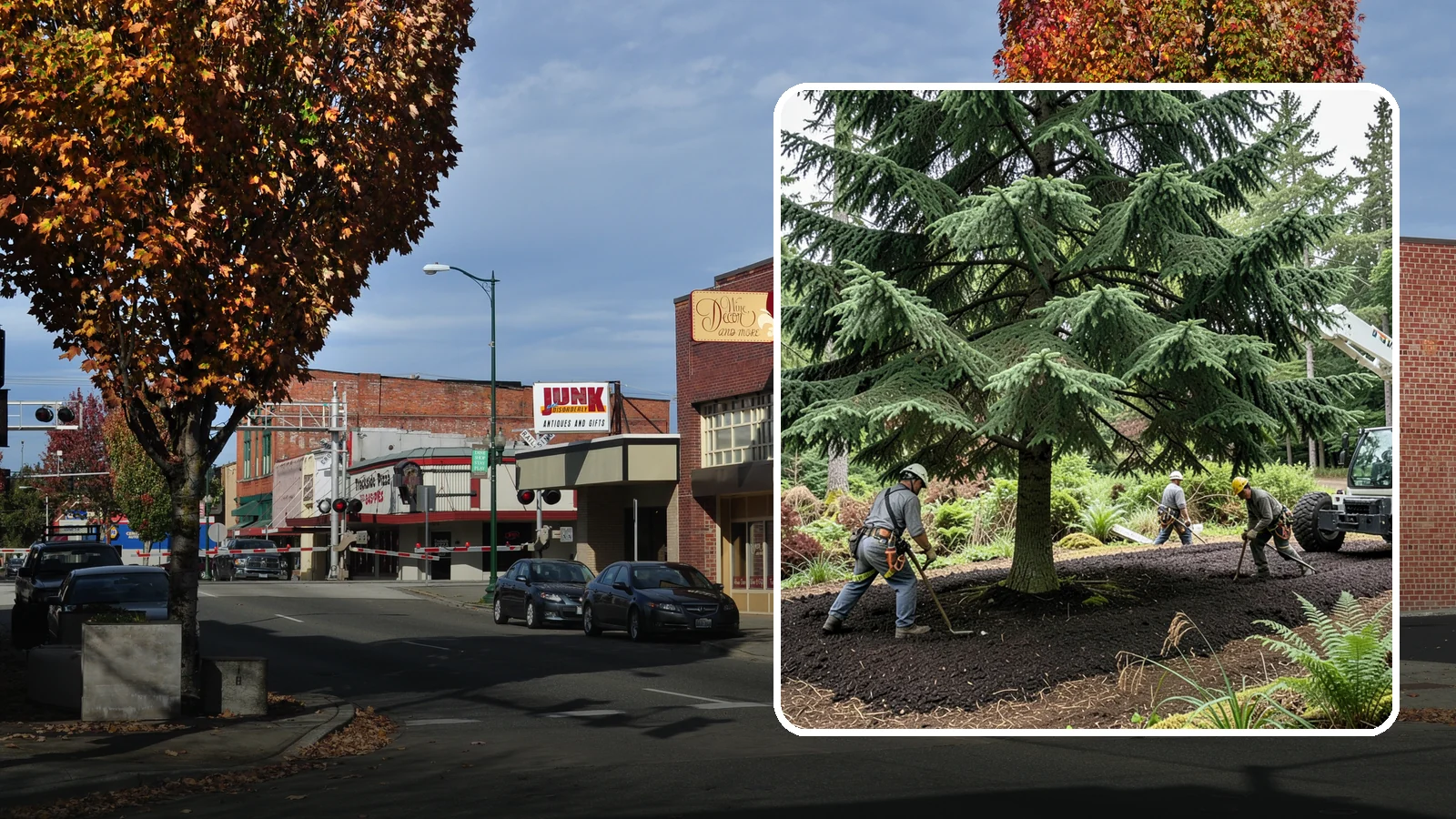
Puyallup Mulching
The application of mulch over the root zone.
You may notice bare, packed soil under a tree, or grass creeping right up to the trunk. Maybe the ground bakes dry by midsummer, or a tree just looks stressed and you are not sure why. Mulch is often the first thing to check.
A layer of wood chips over the root zone slows moisture loss, keeps the soil cooler, and cuts down on grass and weeds competing with the roots. How it is placed matters as much as having it at all. Here is what to expect for mulching in Puyallup.
About Mulching in Puyallup
Mulching is a thoughtful way to care for your trees by protecting their root zones from harsh environmental stressors. This service helps homeowners maintain the stability and long-term health of valued specimens in any yard across Washington State. Whether you have mature oaks or younger shade trees, this approach supports consistent growth year after year.
What Puyallup Mulching Includes
Our crews apply a layer of mulch directly over your tree roots to conserve moisture and keep soil temperatures moderate throughout changing seasons. This process also reduces competition from weeds while improving overall root conditions for better nutrient uptake. We match our methods carefully to the specific species, site layout, and access points at each location.
Puyallup Mulching Process
Work begins with a thorough inspection of the tree and its surrounding area to identify factors like soil quality or past construction issues. After pinpointing contributing elements such as pests or disease risks, we recommend and apply treatments that fit your unique situation. We document our findings clearly so you understand exactly what was done and how future care should proceed.
Equipment We Use for Puyallup Mulching
Trained teams use diagnostic tools to assess tree health before applying any materials to the ground. Soil probes and sampling kits help us evaluate conditions beneath the surface, while specialized application equipment ensures even coverage around sensitive roots. We also bring air excavation tools when needed to avoid damaging existing root structures during installation.
Puyallup Mulching Safety & Best Practices
All work follows strict label guidelines for products used on your property to protect both soil health and neighboring plants. Our crews take care to prevent any damage to the trunk or exposed roots while moving through tight spaces around established gardens. Accurate documentation of site conditions ensures that every step is performed safely without compromising tree stability.
Signs You Need Mulching in Puyallup
You may benefit from mulching if you notice signs like compacted soil, girdling roots, or decline caused by recent grade changes near your home. Pests and disease often escalate quickly when root zones are stressed, making early intervention through proper ground cover essential for recovery. This service is particularly useful when moisture levels drop too low during dry spells in our local climate.
What Affects the Cost of Mulching in Puyallup
The investment required depends on the specific tree species you have planted across your landscape. Site conditions such as steep slopes or limited access can influence how we approach each job, affecting overall method selection. We tailor every aspect of the work to match individual needs rather than applying a one-size-fits-all solution that might not suit your trees.
Best Time of Year for Puyallup Mulching
While mulching can be done anytime in our mild Puget Sound climate, scheduling during dry periods often yields the best results for moisture conservation. This timing maximizes benefits by helping roots retain water when natural rainfall is less frequent throughout summer months. We remain flexible to accommodate your schedule while ensuring we catch problems before they become difficult to manage later on.
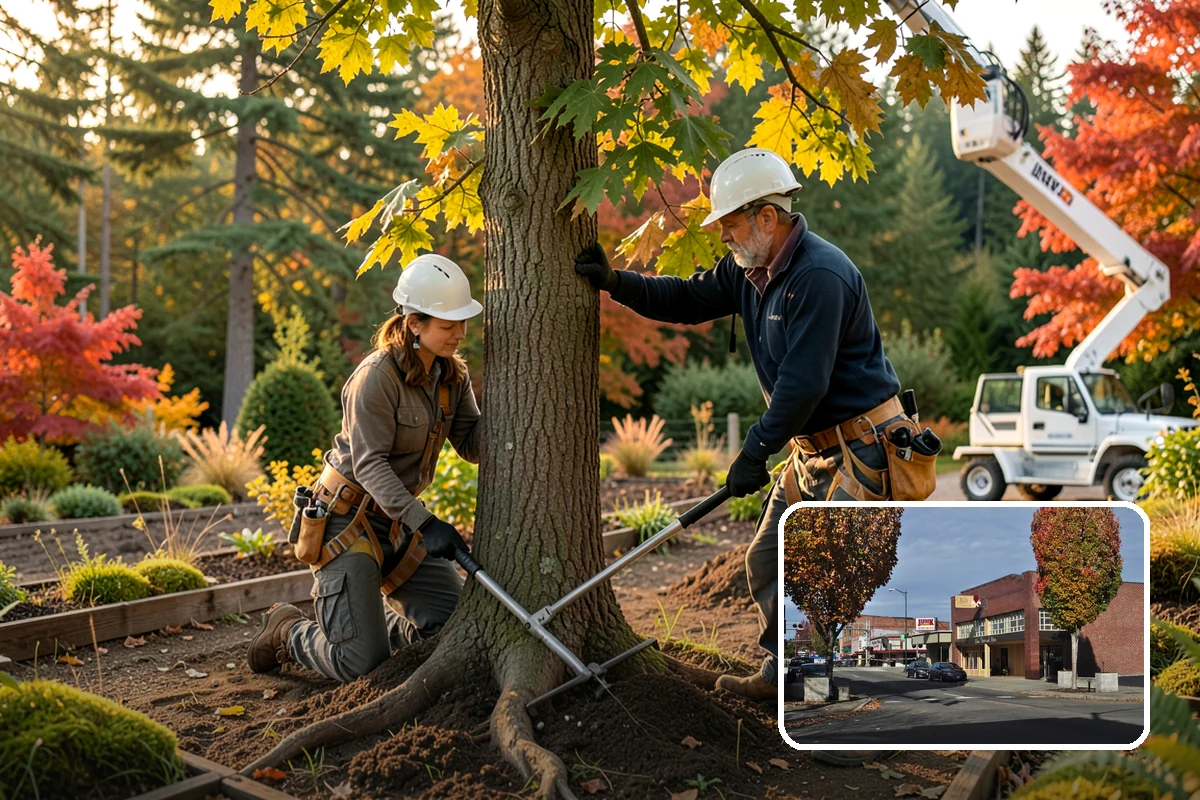
How mulching works for Puyallup trees and soils
Most tree roots sit in the top foot or so of soil. Bare ground there dries out, heats up, and gets compacted by foot traffic and mowers. Mulch shields that layer. As wood chips break down, they also add organic matter to the soil.
Local conditions make this more relevant. July is the driest month in Puyallup on average, so that is when roots benefit most from soil that holds moisture. Mulch will not replace watering in a dry spell, but it helps the water you apply last longer.
Soil matters too. The NRCS soil survey shows that 47% of the land in Puyallup is well drained and 11% is poorly drained. About 13% has a hard or restrictive layer, such as glacial hardpan, within 40 inches of the surface. That is a survey of the area, not a reading of your yard. Still, it shows why drainage can differ a lot from one property to the next. On a slow-draining spot, we would keep the mulch layer modest so the soil is not kept constantly soggy. If you are unsure how your soil drains, ask us to look when we visit.
The work itself follows WSU Extension guidance in the Pacific Northwest Gardener's Handbook: keep mulch a few inches away from the trunk, and spread it out to the drip line or beyond. The drip line is the edge of the canopy, roughly where rain drips off the outer branches. We clear turf from the area, lay the chips evenly, and pull them back from the base of the trunk so the bark stays dry. Piling mulch against the trunk, often called a mulch volcano, holds moisture against the bark and is not recommended.
Mulch needs a light top-up as it breaks down, not a fresh heavy layer each year. If you would like a mulch plan for your trees, call or text 425-484-4442 for a free estimate.
Puyallup tree conditions at a glance
| USDA hardiness zone | 8b |
|---|---|
| Soils | 13% of land has hardpan or another restrictive layer within 40 in; most common series Puyallup; 47% well drained |
| Rain and snow falling October to April | 81% of the year’s total |
| Days with 0.1 in or more of rain | 108 a year |
| Days that freeze at night and thaw by day | 29 a year |
Most common street trees in Puyallup
- Flowering Pear14.6%
- Hornbeam9.4%
- Crabapple8.9%
- Linden7.3%
- Ash6.9%
- Green ash5.9%
Share of 812 trees in the city’s street-tree inventory; median trunk diameter 9.5 in, 0.0% at 24 in or wider.
Tree health near Puyallup
Spongy moth (WSDA 2017): WSDA trap detection(s): 27 moth(s) in 13 trap catch record(s).
Spongy moth (WSDA 2012): WSDA eradication treatment (Btk).
- Decline, cause not identified1,101 ac
- Douglas-fir engraver273 ac
- Bears100 ac
Forest damage mapped from the air within 10 km of Puyallup, 2021-2025 (USDA Forest Service and WA DNR). This covers forest land, not street or yard trees. “Decline, cause not identified” is dieback with no single cause found.
Sources: Daymet daily weather (NASA/ORNL), NOAA Storm Events, USDA plant hardiness map 2023, NRCS soil survey, USGS elevation, WA DNR landslide inventory, USDA Forest Service aerial survey, WSDA, city tree assessments and street-tree inventories, SILVIS Lab, Arbor Day Foundation, and official city and utility pages.
Mulching Serving Puyallup
Puyallup
Also serving Puyallup
- Bush Shaping in Puyallupat Washington Landscaping
- Irrigation Repair in Puyallupat Washington City Services