Where Safety Meets Expert Tree Service.

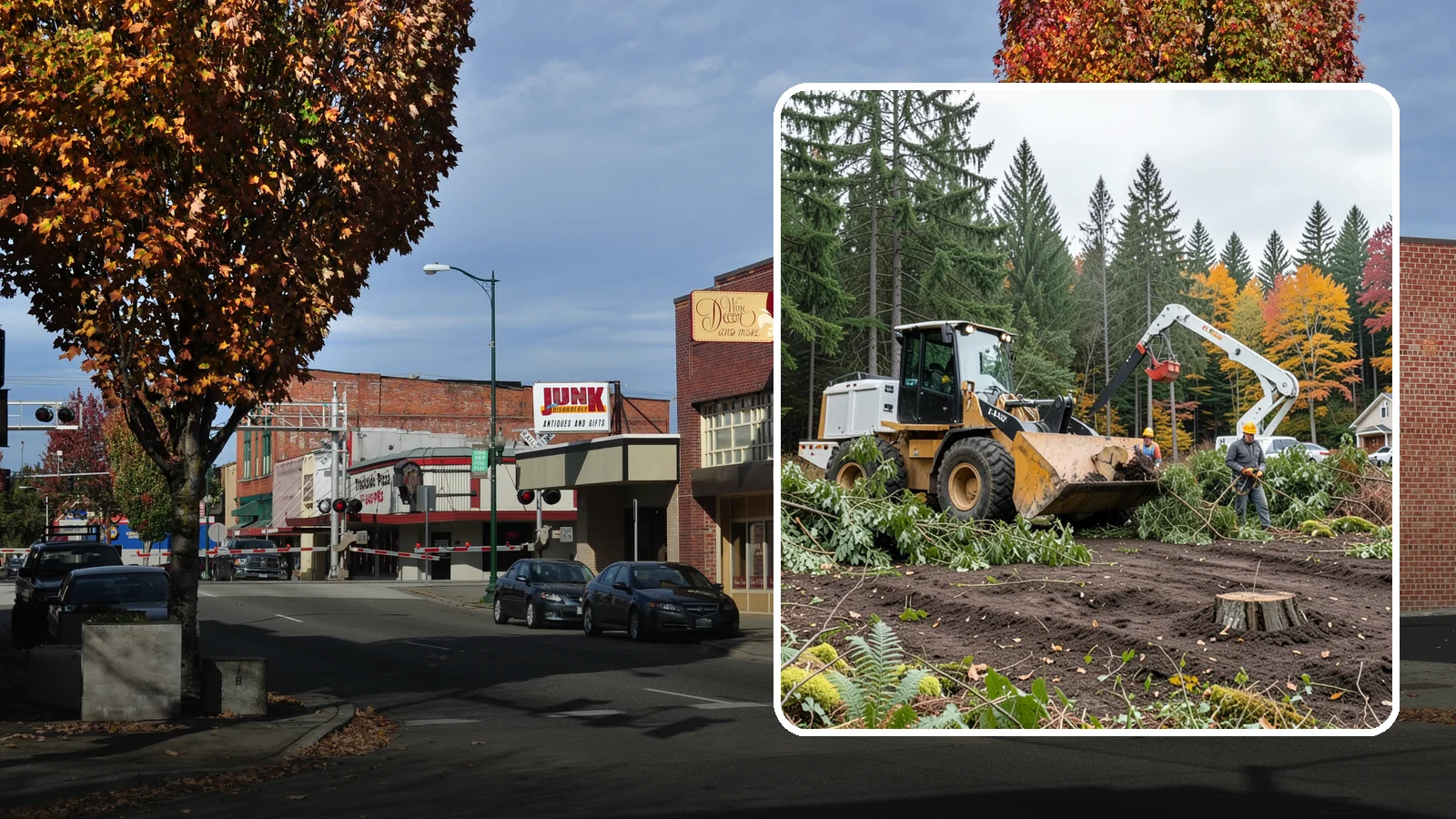
Puyallup Lot Clearing
The clearing of vegetation from a parcel of land.
You have a lot that has gone to blackberry, alder suckers and fallen limbs, and you can no longer tell what is worth keeping. Or you bought a parcel and need a clear building site, a fire break or just a yard you can walk across.
Lot clearing is more than removing everything. The first step is deciding which trees, shrubs and ground cover stay, which go, and which parts of the lot have special rules before any cutting starts.
About Lot Clearing in Puyallup
Lot clearing helps homeowners prepare their property for new construction, landscaping projects, or ongoing maintenance needs. Our trained crews work carefully to remove unwanted vegetation while respecting the unique conditions of your site. This service ensures your land is ready for its intended use without unnecessary hassle.
What Puyallup Lot Clearing Includes
We clear all necessary vegetation from a parcel of land to improve access and usability. The process also reduces fire risks by lowering fuel loads and helps control invasive or overgrown plants that might otherwise spread. By tidying the area, we ensure your site is safe and prepared for whatever comes next.
Puyallup Lot Clearing Process
Our team begins by assessing the location and marking important features they must protect during removal. Vegetation is then cleared in a planned sequence using methods matched to specific tree species and ground conditions. Finally, we process and remove all material responsibly while grading or tidying the area as needed.
Equipment We Use for Puyallup Lot Clearing
To handle various site requirements, our crews utilize brush cutters, chainsaws, chippers, and hauling equipment alongside essential hand tools. We also wear full personal protective gear to ensure everyone stays safe throughout the job. Every tool is selected based on the density of growth and the specific obstacles present at your property.
Puyallup Lot Clearing Safety & Best Practices
Safety starts with identifying property lines, utilities, and any features that must remain untouched during clearing. Our workers stay alert for uneven terrain or hidden obstacles that could create hazards while managing debris effectively. We take extra care to protect retained trees and their root zones from damage throughout the entire project.
Signs You Need Lot Clearing in Puyallup
You may need lot clearing if you notice dense thorny growth, invasive species constantly regrowing, or vegetation blocking access to your land. Situations like uneven ground, wet terrain, or features that require special protection during removal also indicate this service is needed. Whether preparing for a new build or simply maintaining control over your yard, these are clear signs it’s time to act.
What Affects the Cost of Lot Clearing in Puyallup
The price of clearing depends largely on how dense the vegetation is and whether the site has uneven or wet terrain. Protecting existing features like trees or structures adds complexity that can influence the overall cost as well. These factors ensure we provide a fair estimate tailored specifically to your property conditions rather than using generic pricing.
Best Time of Year for Puyallup Lot Clearing
Work can generally proceed year-round given our favorable Puget Sound weather, though heavy rains may cause delays due to saturated ground. We also monitor for invasive species regrowth cycles that might require adjustments to the schedule at certain times of the year. Planning ahead allows us to navigate these natural variables and keep your project moving smoothly whenever possible.

Lot clearing in Puyallup: what the city rule means for your site
Overgrown lots usually follow the same pattern. Fast-growing brush fills any open ground, young trees seed in thickly, and storm-damaged or dead trees stay where they fell or stand. Over time the lot becomes a tangle that hides slopes, drainage paths and the trees that are actually worth keeping.
Puyallup sits in USDA hardiness zone 8b, according to the 2023 USDA map. That is a mild range, and it means regrowth is a real expectation. Cut brush and stump sprouts can return, so clearing often works best when it includes a plan for the bare ground afterward, such as mulch, seeding or planting something you want.
The city rule matters more than the climate figure. According to the City of Puyallup's document on significant trees and trees in critical areas, significant tree protections do not apply to lots with single-family, duplex, triplex or up to four-unit residential development, unless the tree is in a critical area. On those lots, a permit is required only if the tree is on the City's Heritage Tree register, or is within or associated with a critical area. The regulated size is a healthy, living tree greater than 15 inches DBH, and black cottonwood and red alder are not typically regulated unless they are in a critical area.
Critical areas change the job. The city says all trees in critical areas, covered by PMC 21.06, are regulated regardless of size or species, including dead trees and snags. Removal there needs a tree removal permit and an arborist's risk assessment report. If your lot has a steep slope, a stream or a wet area, that affects where crews can cut and what paperwork comes first.
That is why the work starts with a walk of the lot. We look for slopes, water, Heritage Tree status and any trees near the 15 inch size, then check with the city before work starts wherever the rules are unclear. Cutting follows once the plan is set. Trees marked for removal are felled and sectioned, brush is cut, and debris is chipped or hauled depending on what you want left on site. Stumps can be ground or left, depending on your plans for the ground.
Puyallup tree conditions at a glance
| Homes in the wildland-urban interface | 0% |
|---|---|
| Land under dense tree cover (50%+ canopy) | 19% |
| Rain and snow falling October to April | 81% of the year’s total |
Tree removal rules in Puyallup
Significant tree protections do not apply to lots containing single-family, duplex, triplex or up to four-unit residential development unless the tree is in a critical area. A permit is required on such lots only if the tree is on the City's Heritage Tree register, or is within or associated with a critical area (wetland/buffer, steep slope, stream buffer, habitat area/greenbelt). Significant trees are regulated on commercial, industrial, institutional and multifamily (5+ units) property.
Regulated size: Healthy, living tree greater than 15 in DBH (black cottonwood and red alder not typically regulated unless in a critical area).
Official city source. Rules change; we confirm with the city before work starts.
Tree health near Puyallup
Spongy moth (WSDA 2017): WSDA trap detection(s): 27 moth(s) in 13 trap catch record(s).
Spongy moth (WSDA 2012): WSDA eradication treatment (Btk).
- Decline, cause not identified1,101 ac
- Douglas-fir engraver273 ac
- Bears100 ac
Forest damage mapped from the air within 10 km of Puyallup, 2021-2025 (USDA Forest Service and WA DNR). This covers forest land, not street or yard trees. “Decline, cause not identified” is dieback with no single cause found.
Sources: Daymet daily weather (NASA/ORNL), NOAA Storm Events, USDA plant hardiness map 2023, NRCS soil survey, USGS elevation, WA DNR landslide inventory, USDA Forest Service aerial survey, WSDA, city tree assessments and street-tree inventories, SILVIS Lab, Arbor Day Foundation, and official city and utility pages.
Lot Clearing Serving Puyallup
Puyallup
Also serving Puyallup
- Land Leveling in Puyallupat Washington Landscaping
- Selective Demolition in Puyallupat Washington Construction
- Scotch Broom Removal in Puyallupat Washington City Services
- Log Bucking in Puyallupat Washington Firewood