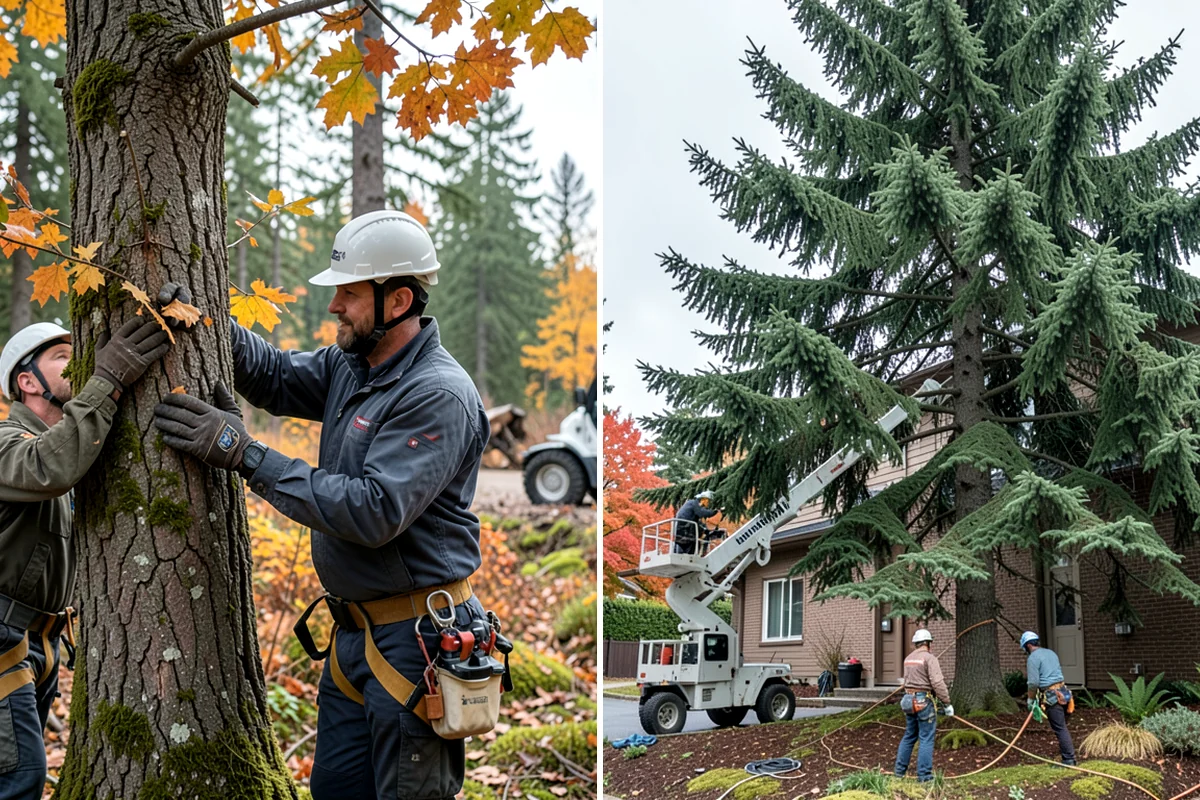
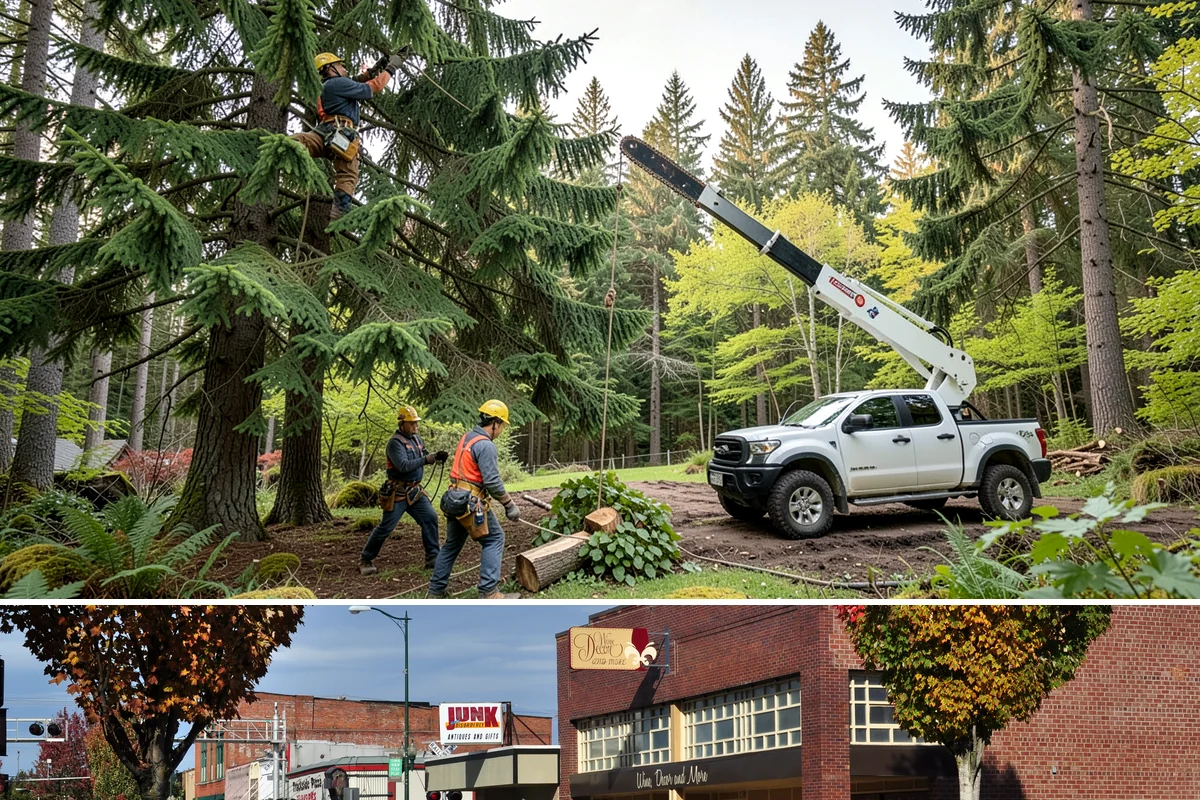
Where Safety Meets Expert Tree Service.

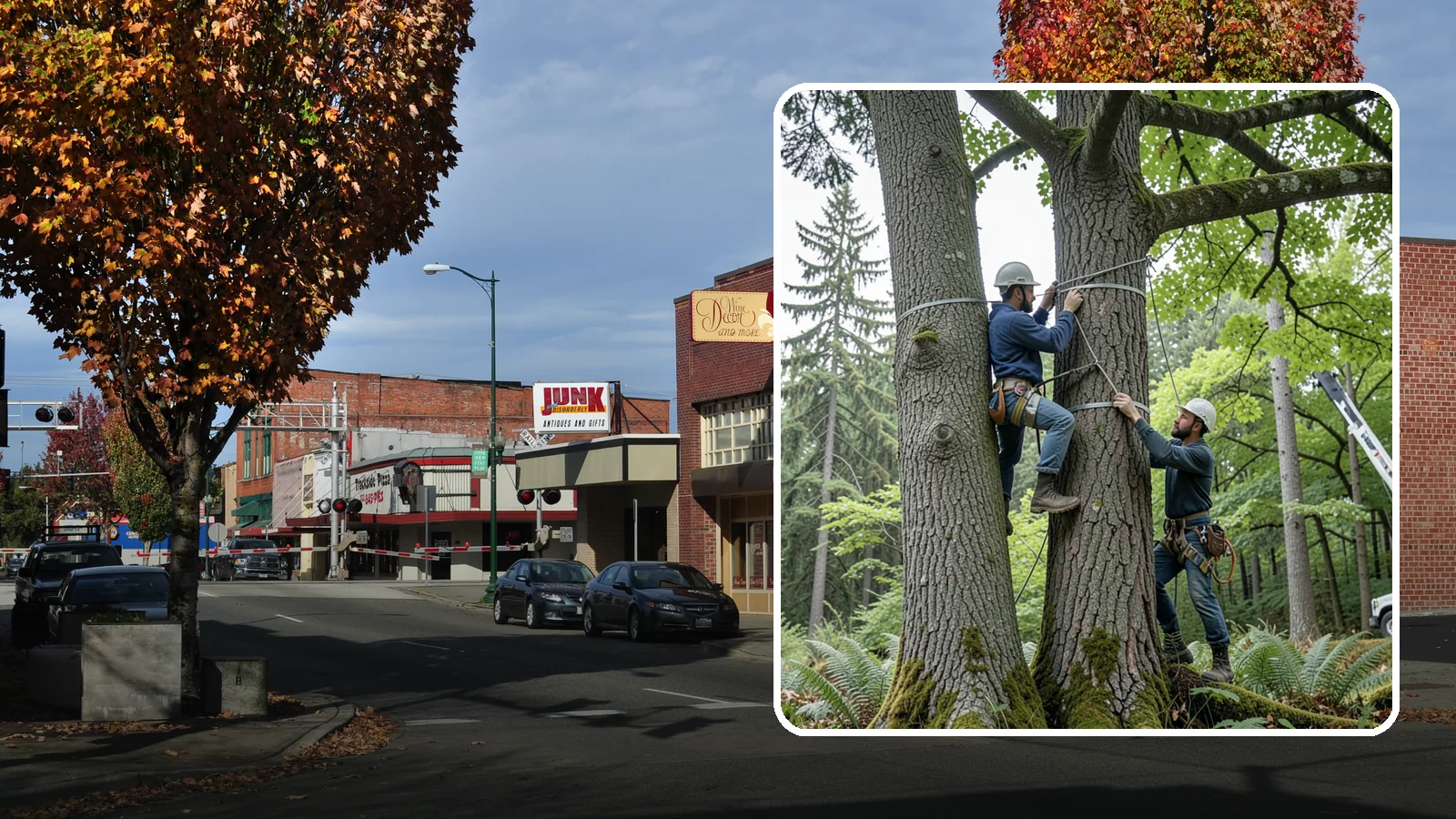
Puyallup Limb Support Systems
Support hardware installed to reduce the risk of limb failure.
You may see a large limb sagging under its own weight, or a tight V-shaped fork in the trunk with bark pinched between the two stems. Maybe a crack has opened near a union, or a branch drops lower every summer. These are the usual reasons people start asking about limb support.
A support system, often a cable or a brace rod, is added to a tree that is still worth keeping. It limits how far a weak union or heavy limb can move. It does not make the tree storm-proof, and it only suits some trees.
About Limb Support Systems in Puyallup
We install limb support systems to help protect your valued trees from breaking under heavy loads or stress. This service is ideal for homeowners who want to preserve significant specimens that have weak unions or overextended branches. Our trained crews use recognized standards to ensure the hardware works effectively with your specific tree species and site conditions.
What Puyallup Limb Support Systems Includes
Limb support systems involve installing specialized cabling and bracing hardware designed to reduce the risk of limb failure. We focus on heavy limbs worth saving, using methods that match the unique needs of each tree at its location. The goal is to strengthen weak points while maintaining the natural beauty and health of your landscape trees.
Puyallup Limb Support Systems Process
Our team begins by assessing structural defects and load paths to determine where support is most needed. Once a system is selected, we install hardware at correct positions using climbing gear or aerial lifts as required. We document every installation clearly and set up an inspection schedule so you know when the next check-up should happen.
Equipment We Use for Puyallup Limb Support Systems
The work relies on high-quality cabling and bracing hardware along with professional installation tools for secure attachment. Our crews bring necessary climbing and rigging gear, plus personal protective equipment to keep everyone safe during the job. An aerial lift is used whenever site access conditions require extra reach or stability while working in your tree canopy.
Puyallup Limb Support Systems Safety & Best Practices
We install support systems only where they will be truly appropriate and effective for reducing failure risk. All hardware we use is correctly rated, and we inspect these systems periodically to ensure they remain secure over time. If a situation changes or the system ages too much, our experts recognize when removal becomes the safer option for your tree.
Signs You Need Limb Support Systems in Puyallup
You may need this service if you notice included-bark unions, cracks in the trunk, or limbs that have grown too long and heavy. Overextended branches often put extra strain on weak spots called codominant stems, which can lead to dangerous breakage later. Aging hardware from previous installations also needs regular inspection to catch any wear before it becomes a problem.
What Affects the Cost of Limb Support Systems in Puyallup
The price of installing support systems is influenced by the specific species of tree you have and how difficult access is at your site. Complexity plays a major role in cost, especially when working with heavy limbs or those that are significantly overextended. These factors determine the amount of specialized hardware needed and the time required for our trained crews to complete the job safely.
Best Time of Year for Puyallup Limb Support Systems
This service can generally be performed year-round here in Puget Sound weather without waiting for a specific season. However, we require careful planning during colder months to avoid installing supports that might suffer from ice loading before they are fully tested. We will coordinate with you to find the best time to work around your schedule and current weather conditions.
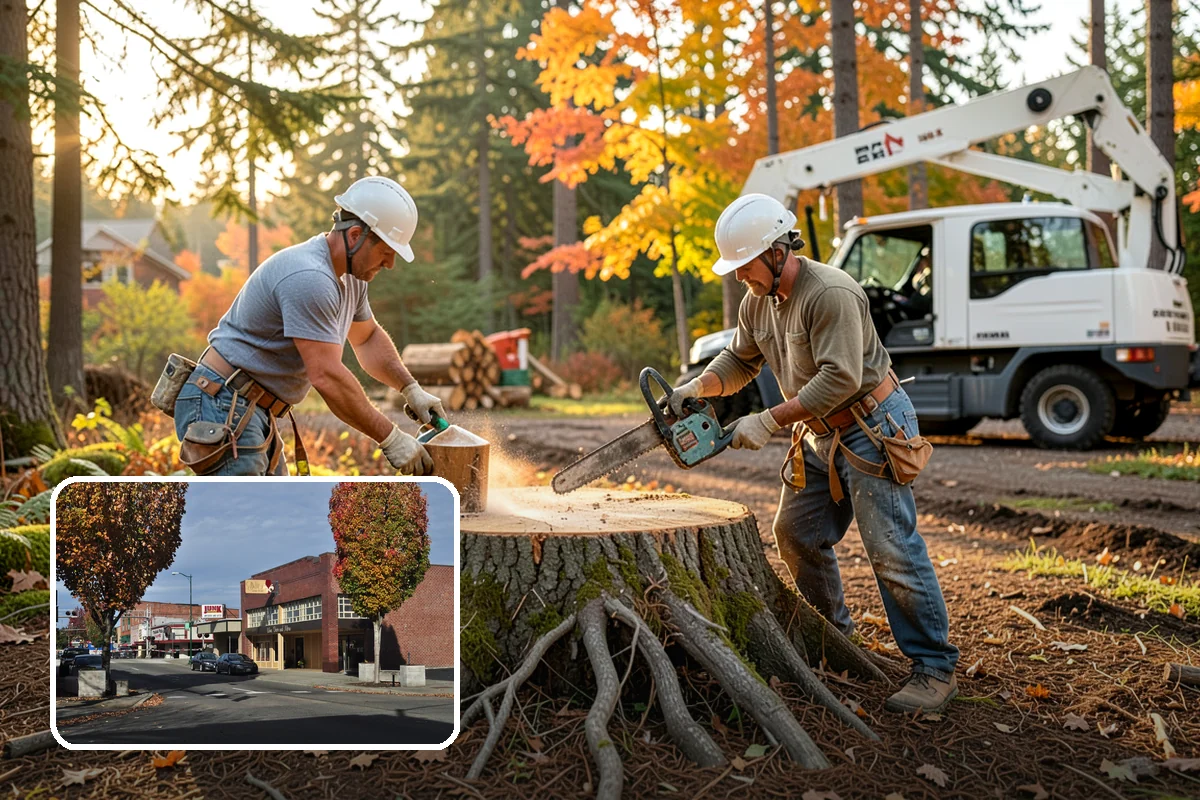
How limb support systems fit Puyallup trees and storms
Most weak limbs trace back to structure. Two stems of similar size grow tightly together and trap bark between them. That included bark keeps the union from forming strong wood. Long, heavy limbs that reach out over a roof or driveway add leverage. Decay at a union makes both problems worse.
Wind and ice are what test those weak points. The National Weather Service forecast zone that includes Puyallup logged 25 high and strong wind episodes from 2005 to 2025. The strongest gust recorded in that zone since 2005 was 62 mph, on October 18, 2007. The same zone had 2 ice storm episodes in that period. Those figures cover the whole zone, not one yard. They do show that a union can be loaded by wind in some years and by ice in others, so a flaw that holds for a while may not hold forever.
Tree size matters too. Puyallup's street-tree inventory shows a median trunk diameter of 9.5 in, and 0.0% of those trees are 24 in or wider. That is street trees, not private yard trees. Still, it is a reminder that many trees nearby are medium-sized, and a support system is often a better fit for a younger or mid-sized tree with a flaw than for a very large tree with advanced decay.
What the work involves
We start by looking at the whole tree: the union, any cracks, decay, the crown's weight and what sits underneath it. Some trees need pruning to reduce end weight first. Where a support system makes sense, a cable is installed in the upper crown, usually in the upper third of the tree, following standard ISA and ANSI A300 practice. A brace rod may be used across a crack. Hardware needs periodic inspection, because the tree keeps growing around it.
If a storm has already damaged the tree, the Washington DNR advises hiring a licensed, insured company with ISA Certified Arborists. Free estimates are available at 425-484-4442. If a tree looks too far gone to support, we will say so.
Puyallup tree conditions at a glance
| High and strong wind episodes, 2005-2025 | 25 in the forecast zone |
|---|---|
| Ice storm episodes, 2005-2025 | 2 in the forecast zone |
| Average snowfall | 7.8 in a season |
| Soils | 13% of land has hardpan or another restrictive layer within 40 in; most common series Puyallup; 47% well drained |
Strongest wind events near Puyallup
- Oct 18, 2007: gusts to 62 mph
- Jan 6, 2019: gusts to 61 mph
- Feb 25, 2025: gusts to 60 mph
NOAA Storm Events, forecast zone that includes Puyallup, 2005-2025.
Most common street trees in Puyallup
- Flowering Pear14.6%
- Hornbeam9.4%
- Crabapple8.9%
- Linden7.3%
- Ash6.9%
- Green ash5.9%
Share of 812 trees in the city’s street-tree inventory; median trunk diameter 9.5 in, 0.0% at 24 in or wider.
Sources: Daymet daily weather (NASA/ORNL), NOAA Storm Events, USDA plant hardiness map 2023, NRCS soil survey, USGS elevation, WA DNR landslide inventory, USDA Forest Service aerial survey, WSDA, city tree assessments and street-tree inventories, SILVIS Lab, Arbor Day Foundation, and official city and utility pages.
Limb Support Systems Serving Puyallup
Puyallup