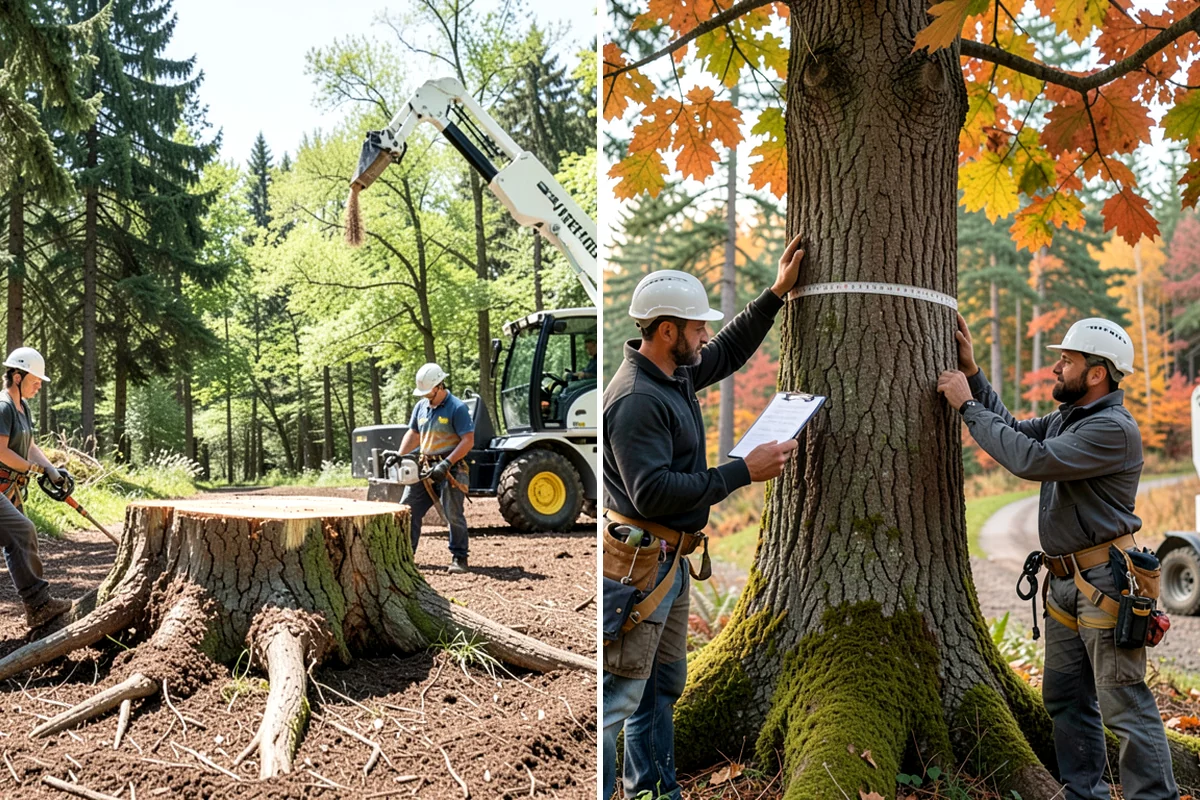
Where Safety Meets Expert Tree Service.

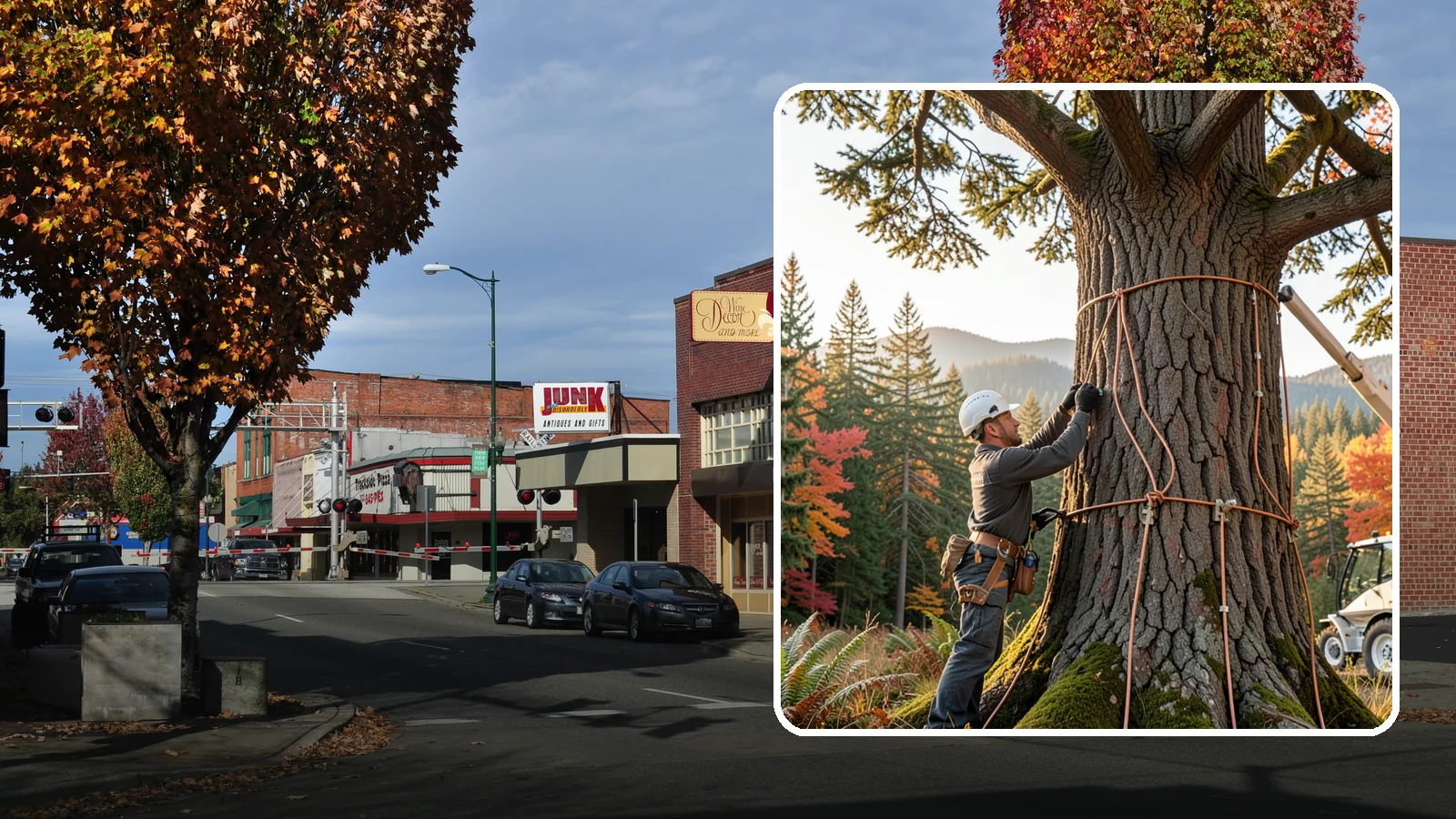
Puyallup Lightning Protection Systems
The installation of lightning protection for high-value trees.
Puyallup's street-tree inventory shows a median trunk diameter of 9.5 in, and none of the inventoried trees are 24 in or wider. That tells you something about the city's public trees, not your own. The trees most worth protecting are usually the tallest, oldest or most valued ones on your lot, whatever size the street trees run.
A lightning protection system gives a strike a path to the ground through cable and rods instead of through the trunk. Start by walking your yard and picking out the trees that stand above the rest, stand alone, or sit close to the house.
About Lightning Protection Systems in Puyallup
We provide lightning protection systems designed specifically for high-value trees that need extra care during storms. This service helps homeowners protect their most significant specimens from the risk of limb or stem failure caused by lightning strikes. Our trained crews work to ensure your valued trees remain safe and healthy through severe weather events.
What Puyallup Lightning Protection Systems Includes
Lightning protection involves installing specialized hardware to reduce damage risks for important trees on your property. We match our methods carefully to the specific tree species, site conditions, and access requirements of each job. This approach supports weak unions and heavy limbs while helping to extend the safe life of significant trees in your landscape.
Puyallup Lightning Protection Systems Process
Our typical process begins with a thorough assessment of structural defects and load paths within the tree. We then select an appropriate support system before installing hardware at correct positions according to recognized arboricultural standards. Finally, we document the installation details and set up a schedule for future inspections to maintain system integrity over time.
Equipment We Use for Puyallup Lightning Protection Systems
To complete this work safely and effectively, our crews use cabling and bracing hardware along with specialized installation tools. We bring climbing and rigging gear as well as aerial lifts when needed to reach difficult areas without harming the tree. All personnel wear proper personal protective equipment while operating these tools on your property.
Puyallup Lightning Protection Systems Safety & Best Practices
Safety is central to this service, so we install systems only where support will be both appropriate and effective for the specific situation. We always use correctly rated hardware that meets industry standards to ensure long-term reliability. It is also important to recognize when removal might be a safer option than installation or periodic inspection of aging components.
Signs You Need Lightning Protection Systems in Puyallup
You may need this service if your trees show included-bark unions, codominant stems, cracks, cavities, or overextended limbs. Aging hardware that requires regular inspection can also indicate the time is right to evaluate your current protection system. These signs suggest a higher risk for lightning damage that our systems are designed to help mitigate.
What Affects the Cost of Lightning Protection Systems in Puyallup
The cost of installing these systems is influenced by factors such as tree species and site access conditions. Complexity plays a major role, particularly regarding how difficult it is to install hardware at correct positions for high-value trees. Each project is unique, so the final price reflects the specific needs of your landscape rather than a standard rate.
Best Time of Year for Puyallup Lightning Protection Systems
Work can generally be performed year-round in our local climate due to mild weather patterns throughout the seasons. However, we must always follow recognized arboricultural standards regardless of when you choose to schedule the job. This ensures that every installation is done correctly and safely no matter what time of year it falls.
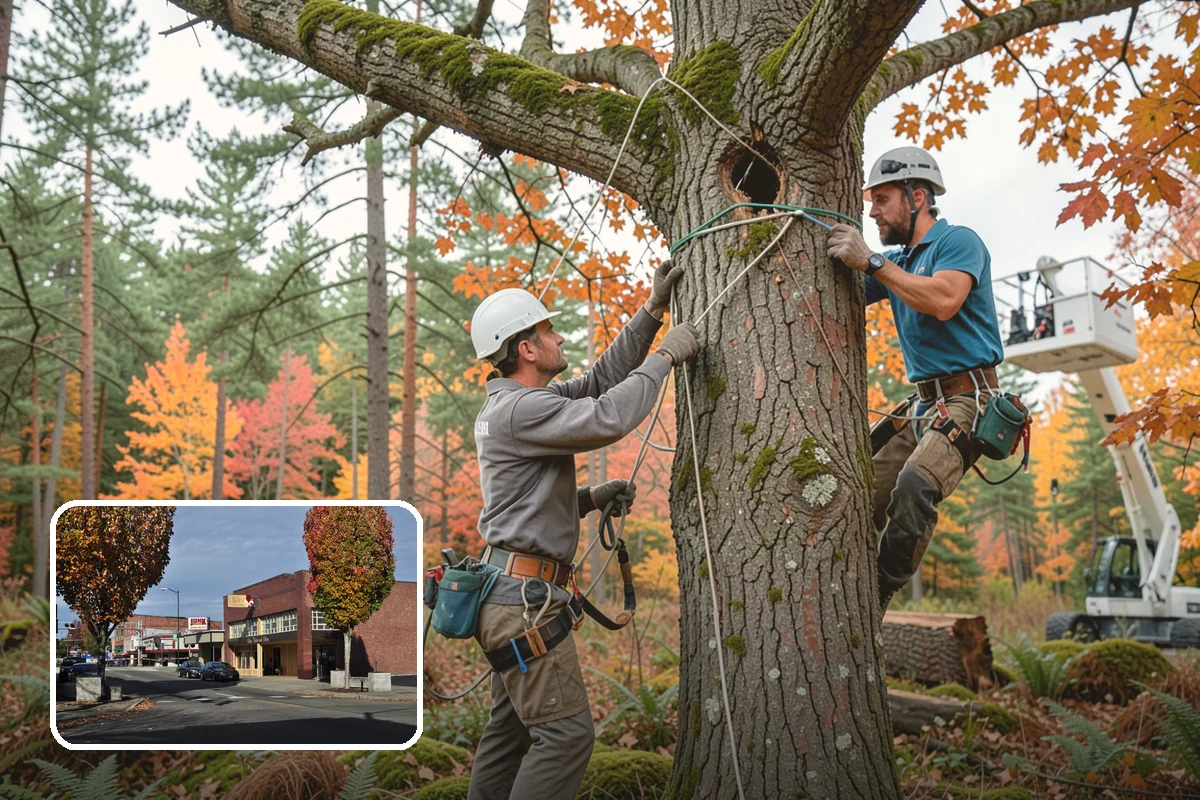
How lightning protection for trees works in Puyallup
Tree lightning protection follows a standard approach. Here is how the work usually goes, step by step.
- Choose the tree. We look at height, position, health and what the tree is near, such as a house, play area or driveway.
- Install an air terminal near the highest point of the tree, usually a copper or similar conductive rod fixed to the main stem.
- Run a conductor cable down the trunk, secured so it can move as the tree grows and sways.
- Connect the cable to ground rods set in the soil away from the roots where possible.
- Inspect the system from time to time, since cables loosen and trees keep growing.
Why size matters here
The city's street-tree inventory puts the median trunk at 9.5 in, with 0.0% of trees at 24 in or wider. These are public street trees only, so they say little about the large trees in a back yard. A mature specimen on your property may be far bigger, and bigger, taller trees usually need longer cable runs and more careful attachment. We measure your tree instead of relying on the city figures.
Cover and ground
Satellite data shows about 19% of Puyallup's land under dense tree cover, at 50% canopy or more. Much of the city is more open, so a single tall tree in a clear yard can be the highest point nearby. That is the case where protection is worth discussing. Puyallup sits at about 99 ft in elevation, so the land is low and your tree's own height is what sets it apart.
Before work starts
A tree with decay, dead limbs or a weak structure may need pruning first, because a system does not repair a failing tree. We also check with the city before work begins if any permit question comes up. An ISA Certified Arborist on staff can look at your trees. Call or text 425-484-4442 for a free estimate.
Puyallup tree conditions at a glance
| High and strong wind episodes, 2005-2025 | 25 in the forecast zone |
|---|---|
| Ice storm episodes, 2005-2025 | 2 in the forecast zone |
| Average snowfall | 7.8 in a season |
| Soils | 13% of land has hardpan or another restrictive layer within 40 in; most common series Puyallup; 47% well drained |
Strongest wind events near Puyallup
- Oct 18, 2007: gusts to 62 mph
- Jan 6, 2019: gusts to 61 mph
- Feb 25, 2025: gusts to 60 mph
NOAA Storm Events, forecast zone that includes Puyallup, 2005-2025.
Most common street trees in Puyallup
- Flowering Pear14.6%
- Hornbeam9.4%
- Crabapple8.9%
- Linden7.3%
- Ash6.9%
- Green ash5.9%
Share of 812 trees in the city’s street-tree inventory; median trunk diameter 9.5 in, 0.0% at 24 in or wider.
Sources: Daymet daily weather (NASA/ORNL), NOAA Storm Events, USDA plant hardiness map 2023, NRCS soil survey, USGS elevation, WA DNR landslide inventory, USDA Forest Service aerial survey, WSDA, city tree assessments and street-tree inventories, SILVIS Lab, Arbor Day Foundation, and official city and utility pages.
Lightning Protection Systems Serving Puyallup
Puyallup