Where Safety Meets Expert Tree Service.

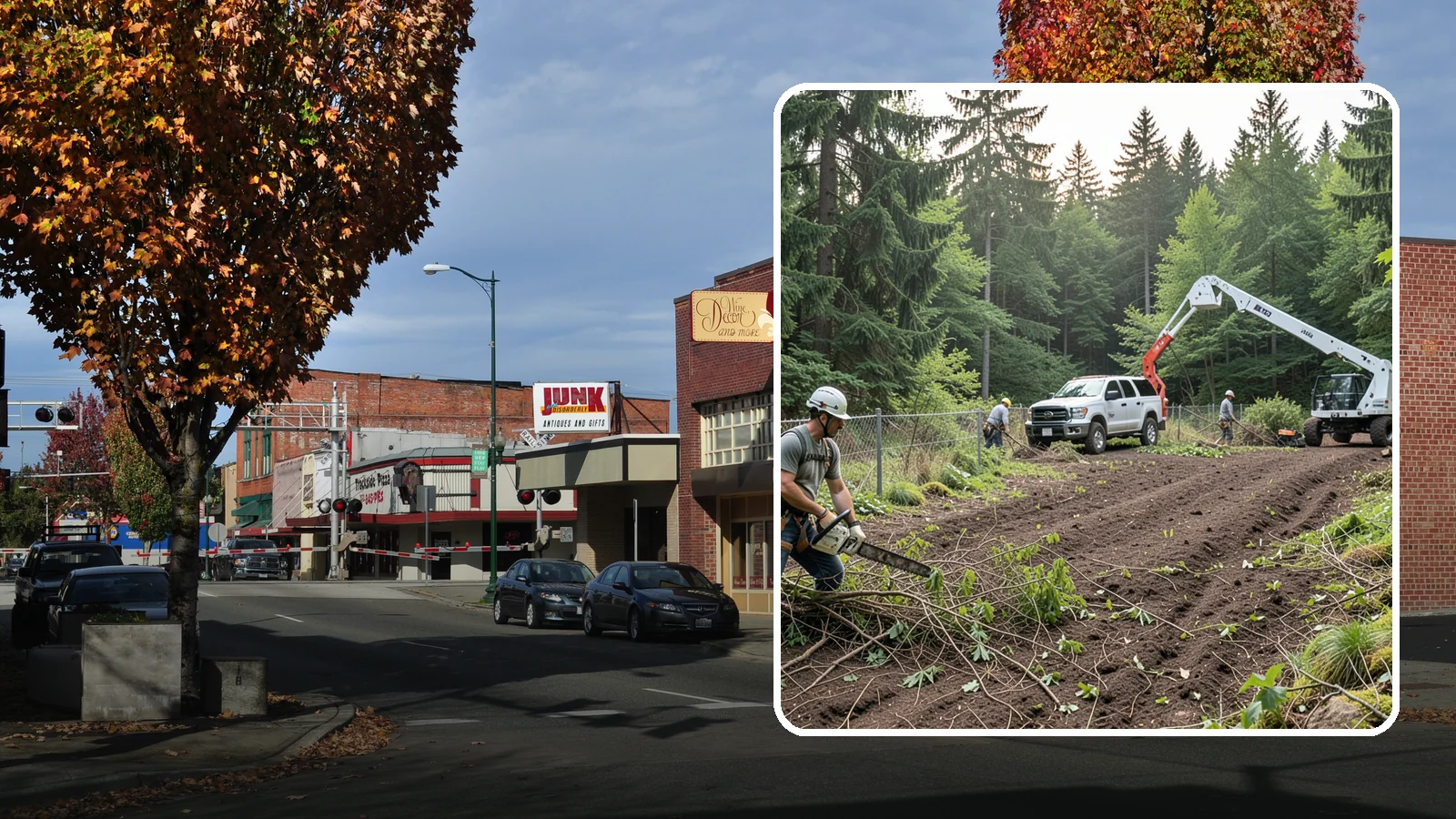
Puyallup Fence Line Clearing
The clearing of vegetation along fence lines.
Late winter into early spring is a practical window for clearing a fence line in Puyallup. Deciduous branches are bare, so you can see which limbs lean over the fence and which stems grow through the wire or boards. Doing the work before spring growth means the line stays open through the season.
Start by walking the fence with a roll of flagging tape. Mark what bothers you: branches pushing on panels, saplings rooted at the base, vines climbing the posts. That walk gives us a shared picture of the job before anyone picks up a saw.
About Fence Line Clearing in Puyallup
Fence line clearing helps homeowners keep their property lines defined and easy to maintain while protecting your fencing from overgrowth. Our trained crews work carefully through dense vegetation along fence lines to simplify future upkeep for you. This service is ideal if you want a cleaner, safer edge between your yard and neighboring properties or public spaces.
What Puyallup Fence Line Clearing Includes
This land clearing task focuses specifically on removing unwanted plants that grow right next to your fences. The goal is to reduce fire risk by lowering fuel loads while controlling invasive species that might otherwise take over the area. We clear these areas in a planned sequence to ensure the fence remains secure and accessible for daily use.
Puyallup Fence Line Clearing Process
Our team begins by assessing the site, marking important features like utility lines or specific plants you wish to keep intact. Once marked, we remove vegetation using methods matched to your specific tree species and current ground conditions. After clearing is complete, we process and haul away debris responsibly, then tidy up the area so it looks neat again.
Equipment We Use for Puyallup Fence Line Clearing
We utilize a mix of brush cutters, chainsaws, chippers, and hauling equipment tailored to the job at hand. Hand tools are often used for delicate work near fences or around sensitive root zones that need extra care. All crew members wear necessary personal protective gear while operating this machinery safely along your property lines.
Puyallup Fence Line Clearing Safety & Best Practices
Safety is our priority as we identify utility locations and uneven terrain before starting any cutting or clearing work. We take special precautions to protect retained trees, their roots, and the fence structure from accidental damage during operations. By managing debris effectively on site, we prevent hazards that could arise from loose branches or slippery conditions after rain.
Signs You Need Fence Line Clearing in Puyallup
You may need this service if you notice thorny growth making your property difficult to walk through or inspect regularly. Invasive species are another sign it is time for clearing, as they can quickly regrow and overwhelm fence lines without help. If wet mud makes access tricky or the vegetation looks too dense to manage on your own, professional assistance may be needed.
What Affects the Cost of Fence Line Clearing in Puyallup
The price of this work depends largely on how thick the vegetation grows along your specific fence line. Uneven ground that is hard to navigate will also influence the final cost compared to flat and easy-to-access areas. Additionally, if you have thorny plants requiring special protection methods or a large volume of debris for disposal, these factors play a role in pricing.
Best Time of Year for Puyallup Fence Line Clearing
While we can perform this work year-round given our local climate conditions, wet weather may complicate access on uneven terrain at times. It is best to schedule projects when the ground is not overly muddy so that heavy equipment and crews can move safely along your property lines. We will always account for current soil moisture levels before beginning any clearing operation near fences or slopes.
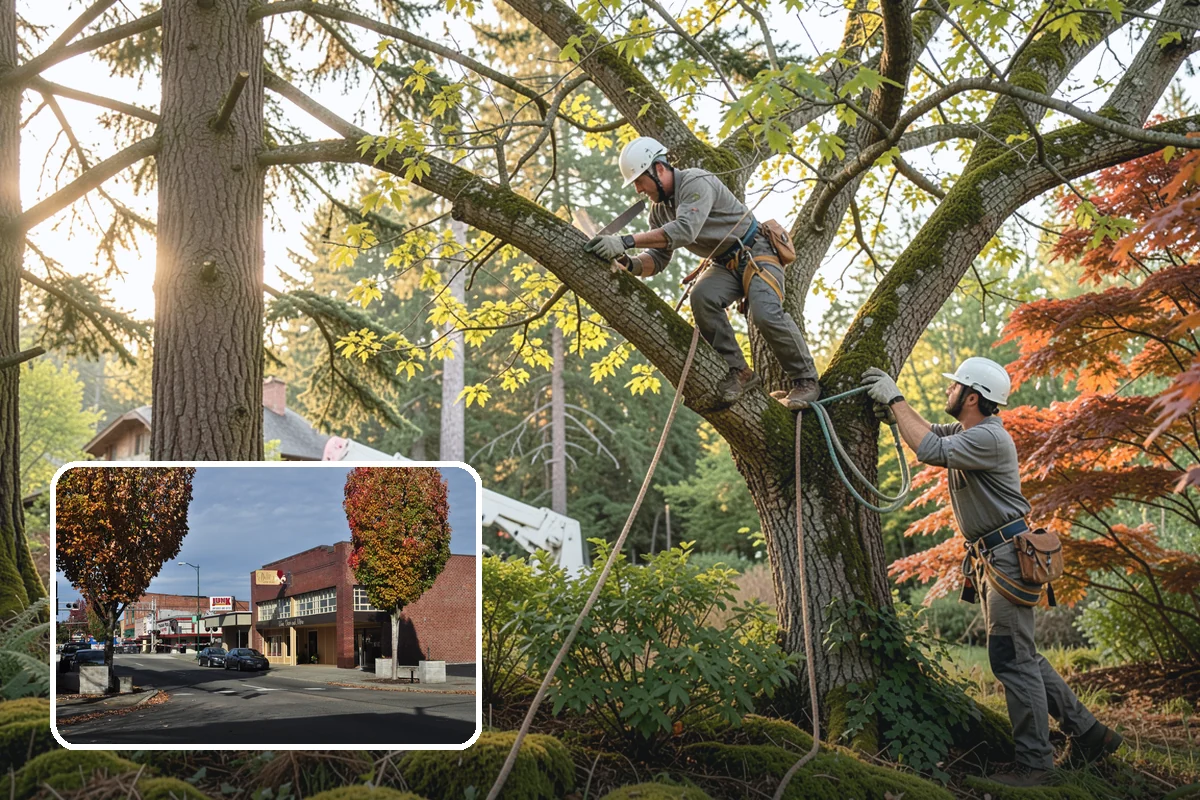
Planning a fence line clearing in Puyallup
Fence line clearing usually means removing brush, small trees, and overhanging limbs along a property edge. Puyallup is mostly residential, and single-family detached houses make up about 56% of its housing, according to the Census ACS for 2020-2024. That matters here because many fence lines are shared with a neighbor. Before cutting, it helps to know where the boundary sits and who owns what grows on it. A limb that crosses the line is a conversation, not just a task. Talk with the neighbor first when the trees may belong to them.
What affects the scope
Three things shape the job: the size of the growth, the access, and what is being cut. Brush and small saplings can be cut and hauled out quickly. Larger trees near the fence need more care so they do not fall onto the panels. Tight side yards may mean carrying debris by hand rather than driving equipment in.
Puyallup sits in USDA plant hardiness zone 8b (USDA map, 2023). In practice, mild winters let many shrubs and invasive vines regrow fast. Cutting them to the ground is often not the end. Expect to cut regrowth back again, or treat stumps, if you want the line to stay clear.
About 19% of Puyallup's land is under dense tree cover of 50% canopy or more, based on satellite data. That is a citywide figure, not a reading of your lot, but it is a reminder that many properties border mature trees. If a larger tree stands close to the fence, we check with the city before any removal begins, since rules vary.
On the day
We walk the line with you and confirm what stays and what goes. Then we cut from the top down, make pruning cuts at the branch collar where limbs are shortened or removed, and clear debris as we go. Where roots are tangled with posts, we cut carefully to avoid loosening the fence.
Free estimates are available at 425-484-4442, and an ISA Certified Arborist is on staff.
Practical tip: take dated photos of the fence before work starts. They help settle questions about existing damage and show what was cleared.
Puyallup tree conditions at a glance
| Homes in the wildland-urban interface | 0% |
|---|---|
| Land under dense tree cover (50%+ canopy) | 19% |
| Rain and snow falling October to April | 81% of the year’s total |
Tree removal rules in Puyallup
Significant tree protections do not apply to lots containing single-family, duplex, triplex or up to four-unit residential development unless the tree is in a critical area. A permit is required on such lots only if the tree is on the City's Heritage Tree register, or is within or associated with a critical area (wetland/buffer, steep slope, stream buffer, habitat area/greenbelt). Significant trees are regulated on commercial, industrial, institutional and multifamily (5+ units) property.
Regulated size: Healthy, living tree greater than 15 in DBH (black cottonwood and red alder not typically regulated unless in a critical area).
Official city source. Rules change; we confirm with the city before work starts.
Tree health near Puyallup
Spongy moth (WSDA 2017): WSDA trap detection(s): 27 moth(s) in 13 trap catch record(s).
Spongy moth (WSDA 2012): WSDA eradication treatment (Btk).
- Decline, cause not identified1,101 ac
- Douglas-fir engraver273 ac
- Bears100 ac
Forest damage mapped from the air within 10 km of Puyallup, 2021-2025 (USDA Forest Service and WA DNR). This covers forest land, not street or yard trees. “Decline, cause not identified” is dieback with no single cause found.
Sources: Daymet daily weather (NASA/ORNL), NOAA Storm Events, USDA plant hardiness map 2023, NRCS soil survey, USGS elevation, WA DNR landslide inventory, USDA Forest Service aerial survey, WSDA, city tree assessments and street-tree inventories, SILVIS Lab, Arbor Day Foundation, and official city and utility pages.
Fence Line Clearing Serving Puyallup
Puyallup

Also serving Puyallup
- Land Grading in Puyallupat Washington Landscaping
- Site Clearing in Puyallupat Washington Construction
- Bare Ground Vegetation Control in Puyallupat Washington City Services
- Firewood Recycling in Puyallupat Washington Firewood