Where Safety Meets Expert Tree Service.

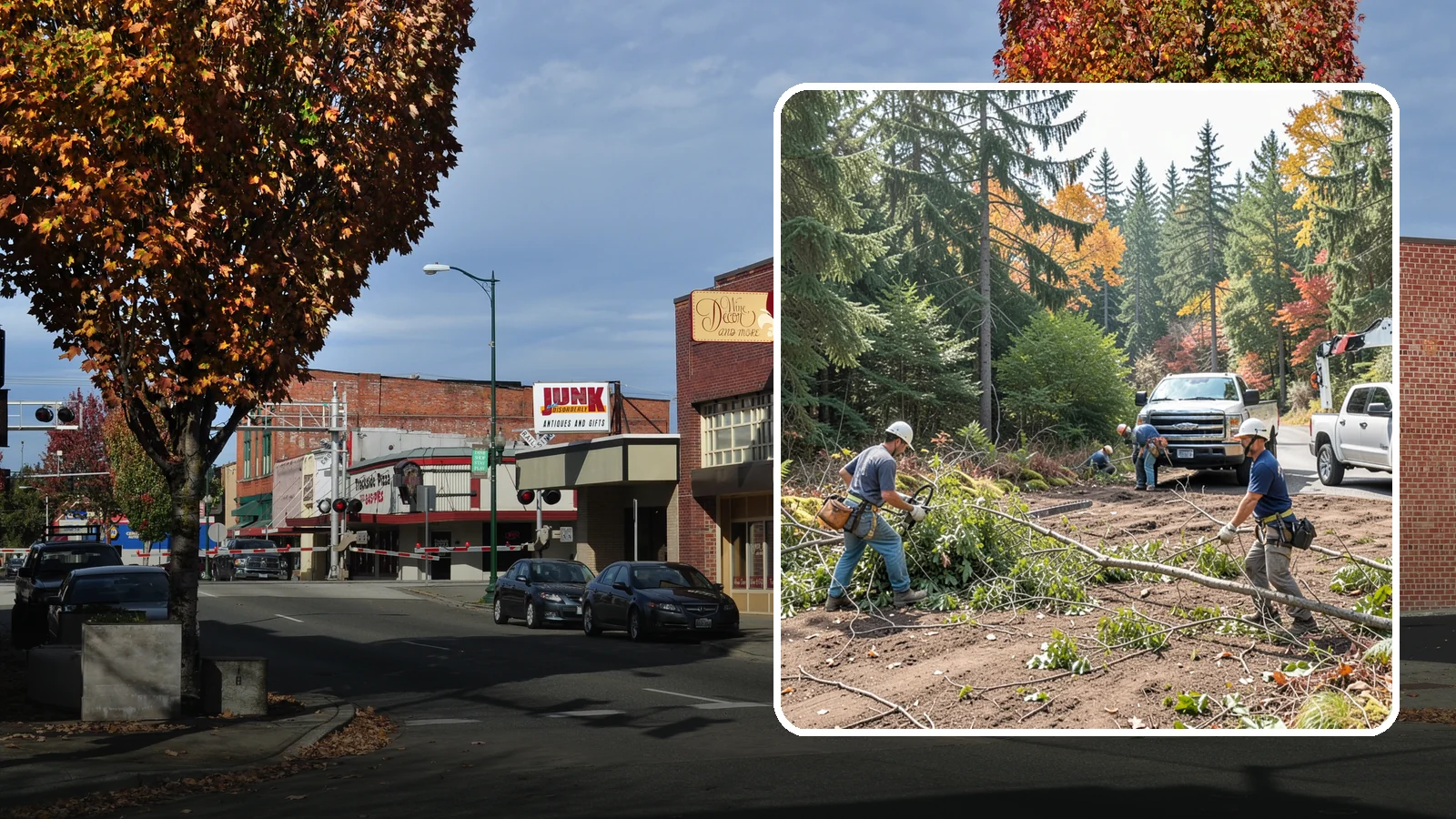
Puyallup Driveway Clearance Pruning
Pruning to provide vertical and side clearance over driveways.
How much clearance does a driveway need? A good working rule is to keep branches off the pavement and out of the path of the tallest vehicle that uses it, with a margin for a delivery truck or a wet, drooping limb. Walk the drive and look up along the full length, not just at the entrance.
Low limbs scrape roofs, block sight lines at the street, and sag further after rain. Pruning them back to the right point on the branch is straightforward work when it is planned and done before the limb causes damage.
About Driveway Clearance Pruning in Puyallup
Driveway clearance pruning helps keep your home’s entrance safe by ensuring vehicles can pass under tree branches without risk. This friendly service is designed for homeowners who want clear sightlines and a tidy approach to their garage or street. We work with you to maintain the health of your trees while protecting your driveway access.
What Puyallup Driveway Clearance Pruning Includes
Our team performs pruning specifically to provide vertical and side clearance over driveways, allowing safe vehicle passage every day. This service improves tree structure and appearance by removing branches that interfere with structures or block views from inside a car. We match our methods to the specific needs of each tree species and your unique site conditions.
Puyallup Driveway Clearance Pruning Process
The work begins with an assessment of your canopy condition and clear discussion about pruning objectives for your property. Our trained crews select clean cuts at proper points, avoiding over-pruning while removing deadwood or weak unions that could fail later. We process the cut material on-site and thoroughly clean up the driveway area to leave everything tidy after completion.
Equipment We Use for Puyallup Driveway Clearance Pruning
To complete this job safely, we use hand saws, pole saws, chainsaws, and climbing gear matched to your specific trees. When access requires it, our crews bring aerial lifts and wood chippers to handle larger branches efficiently. Every crew member wears personal protective equipment while operating these tools around overhead lines and unstable limbs.
Puyallup Driveway Clearance Pruning Safety & Best Practices
We follow recognized arboricultural standards to make cuts that avoid stressing the tree or causing harmful damage. Our safety protocols include using fall protection when working aloft and carefully watching for dangerous conditions like weak branches or power lines. By limiting removal to healthy amounts of live tissue, we reduce the risk of branch failure while keeping your driveway secure.
Signs You Need Driveway Clearance Pruning in Puyallup
You may need this service if you notice interference with structures such as garage doors or overhead wires blocking vehicle access. Deadwood hanging over your drive or weak unions near the ground are also signs that pruning is required to prevent accidents. If branches obstruct sightlines when pulling out of a parked car, it is time to schedule clearance work for better visibility and safety.
What Affects the Cost of Driveway Clearance Pruning in Puyallup
The price depends on tree size and how difficult access is across your driveway surface. Canopy complexity often requires specific cuts tailored to each species, which influences the overall cost of the project. Additionally, factors like the amount of wood material that needs disposal will play a role in determining the final quote for your property.
Best Time of Year for Puyallup Driveway Clearance Pruning
Work schedules are planned according to recognized arboricultural standards matched to the season required by each tree species in our local climate. We avoid cutting during times when specific trees are sensitive to stress, ensuring they remain vigorous and healthy year-round. Contact us anytime to discuss how we can fit this seasonal work into your calendar for optimal results.
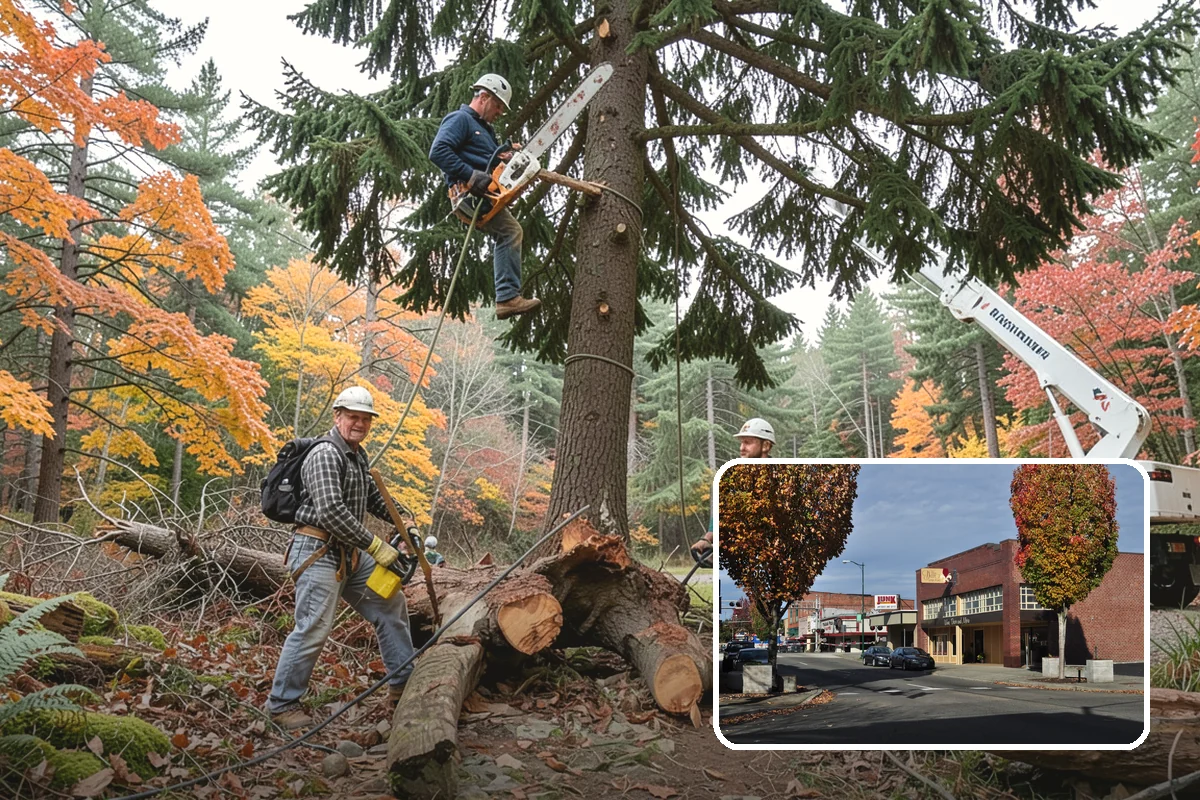
Driveway clearance pruning in Puyallup: what to plan for
Cut at the branch, not at the gap
Clearance pruning means removing the lower limbs that reach into the driveway space. Standard practice under ANSI A300 is to cut back to a branch collar or to a side branch large enough to take over growth. Cutting a limb off at an arbitrary height leaves a stub that decays and often sprouts weak shoots. We do not recommend topping a tree to gain space.
Plan for the tree species you have
Puyallup's street-tree inventory lists 812 trees, and the most common are Flowering Pear at 14.6%, Hornbeam at 9.4% and Crabapple at 8.9%. That is a count of city street trees, not of trees on your property. It still hints at what grows well here, and species matter for this job. Crabapples and pears tend to put out dense, low shoots that need regular thinning. Lindens and ash usually carry their lower limbs higher, so clearance cuts may be fewer but larger. We identify the tree first, then decide how much can come off.
Snow, rain and how branches hang
Average snowfall in Puyallup is 7.8 in per season. That is modest, but wet snow loads branches and bends them down over a drive just when you need to get out. Limbs that clear a car in August may not in January. Pruning with some extra height in mind helps. Heavy limbs over the pavement are worth a closer look, since a big cut near the trunk should be limited and spread over more than one visit when the tree needs it.
Before work starts
If a tree is close to the street, it may belong to the city or sit in the right-of-way. We check with the city before work starts when ownership or rules are unclear. Call or text 425-484-4442 for a free estimate, and we can look at the drive with you.
Puyallup tree conditions at a glance
| USDA hardiness zone | 8b |
|---|---|
| Rain and snow falling October to April | 81% of the year’s total |
| Days that freeze at night and thaw by day | 29 a year |
| Tree City USA | 8 years |
| Electric utility | unconfirmed |
Most common street trees in Puyallup
- Flowering Pear14.6%
- Hornbeam9.4%
- Crabapple8.9%
- Linden7.3%
- Ash6.9%
- Green ash5.9%
Share of 812 trees in the city’s street-tree inventory; median trunk diameter 9.5 in, 0.0% at 24 in or wider.
Sources: Daymet daily weather (NASA/ORNL), NOAA Storm Events, USDA plant hardiness map 2023, NRCS soil survey, USGS elevation, WA DNR landslide inventory, USDA Forest Service aerial survey, WSDA, city tree assessments and street-tree inventories, SILVIS Lab, Arbor Day Foundation, and official city and utility pages.
Driveway Clearance Pruning Serving Puyallup
Puyallup

Also serving Puyallup
- Birch Tree Pruning in Puyallupat Washington Landscaping
- Roof Moss Treatment in Puyallupat Washington Roofing
- Trail Clearing in Puyallupat Washington City Services