Where Safety Meets Expert Tree Service.

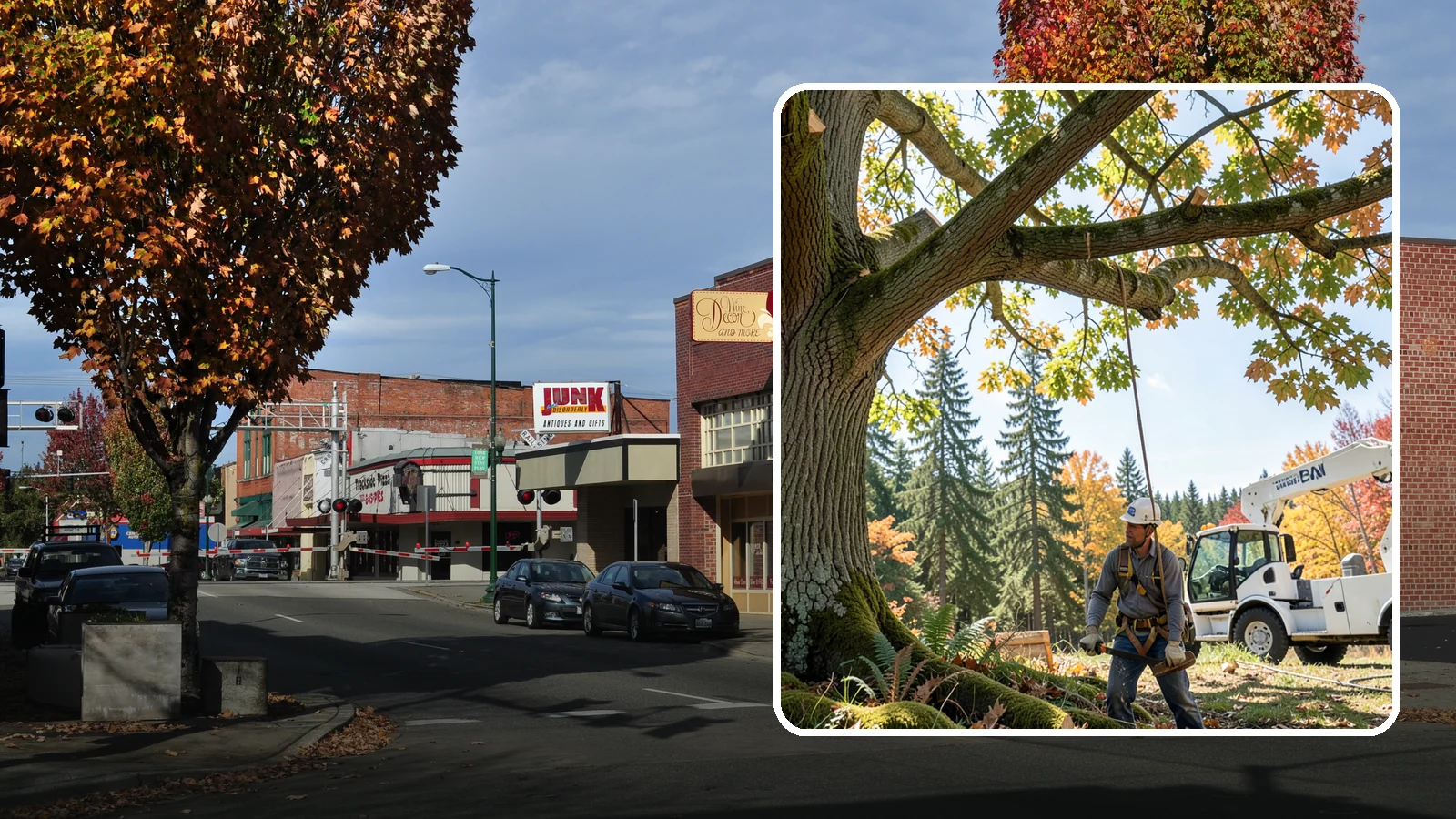
Puyallup Deadwood Removal
The removal of dead branches from the canopy.
You look up and see bare branches in a tree that is leafed out everywhere else. Or limbs with no buds in spring, bark peeling away, or small twigs that snap clean and dry. These are common signs of deadwood, and they are easiest to spot when the tree is in full leaf.
Dead branches can drop without warning, so note what hangs over before you decide how soon to act. A driveway, a play area, a roof or a neighbor's fence all raise the stakes. Photos taken from the ground help when you plan the work.
About Deadwood Removal in Puyallup
We help homeowners keep their trees safe and looking great by removing dead branches from the canopy. This friendly approach ensures your property stays hazard-free while enhancing its natural beauty. Whether you have a single tree or a large grove, our trained crews are ready to assist with this essential care.
What Puyallup Deadwood Removal Includes
Deadwood removal focuses on taking out lifeless limbs that pose risks of falling unexpectedly. Beyond safety, the process also improves how your trees look and supports their long-term health by removing weak unions. We match every method to the specific tree species and site conditions for a tailored result.
Puyallup Deadwood Removal Process
Our work begins with an assessment of the canopy condition and clear pruning objectives for each tree. Crews select precise cuts that fit the season and species, ensuring we never over-prune or cause unnecessary stress. After making clean incisions at proper points, we carefully lower branches and process them before cleaning up your entire work area.
Equipment We Use for Puyallup Deadwood Removal
To handle this job safely, our teams use hand saws, pole saws, chainsaws, and various climbing gear as needed. Depending on the tree’s height and location, an aerial lift may be utilized to reach difficult spots without risk. We also bring a wood chipper for efficient material processing along with full personal protective equipment for everyone involved.
Puyallup Deadwood Removal Safety & Best Practices
Our crews strictly follow recognized pruning standards to avoid making cuts that could harm your trees or invite disease. We carefully watch for overhead power lines and unstable limbs before starting any work aloft. Fall protection is always used when working from heights, ensuring a secure environment throughout the project.
Signs You Need Deadwood Removal in Puyallup
You might need this service if you see dead branches hanging loosely in your canopy or notice weak unions that could fail during wind events. Over-pruning by others or interference with nearby structures and lines are also common reasons to call for professional help. These issues can cause stress to healthy tissue, so addressing them early supports the tree’s overall vigor.
What Affects the Cost of Deadwood Removal in Puyallup
The final cost is influenced by how large your canopy is and whether site access conditions make the job more complex. Tree species complexity plays a role in pricing, as does the volume of material that needs to be removed and disposed of properly. We evaluate all these factors together to provide an accurate estimate for your specific situation.
Best Time of Year for Puyallup Deadwood Removal
In our Puget Sound climate, this work can generally be performed year-round without major restrictions. However, we consider species-specific timing considerations to avoid stressing the tree or creating entry points for disease during certain seasons. Our experts will guide you on the best time to schedule based on your particular trees and local conditions.
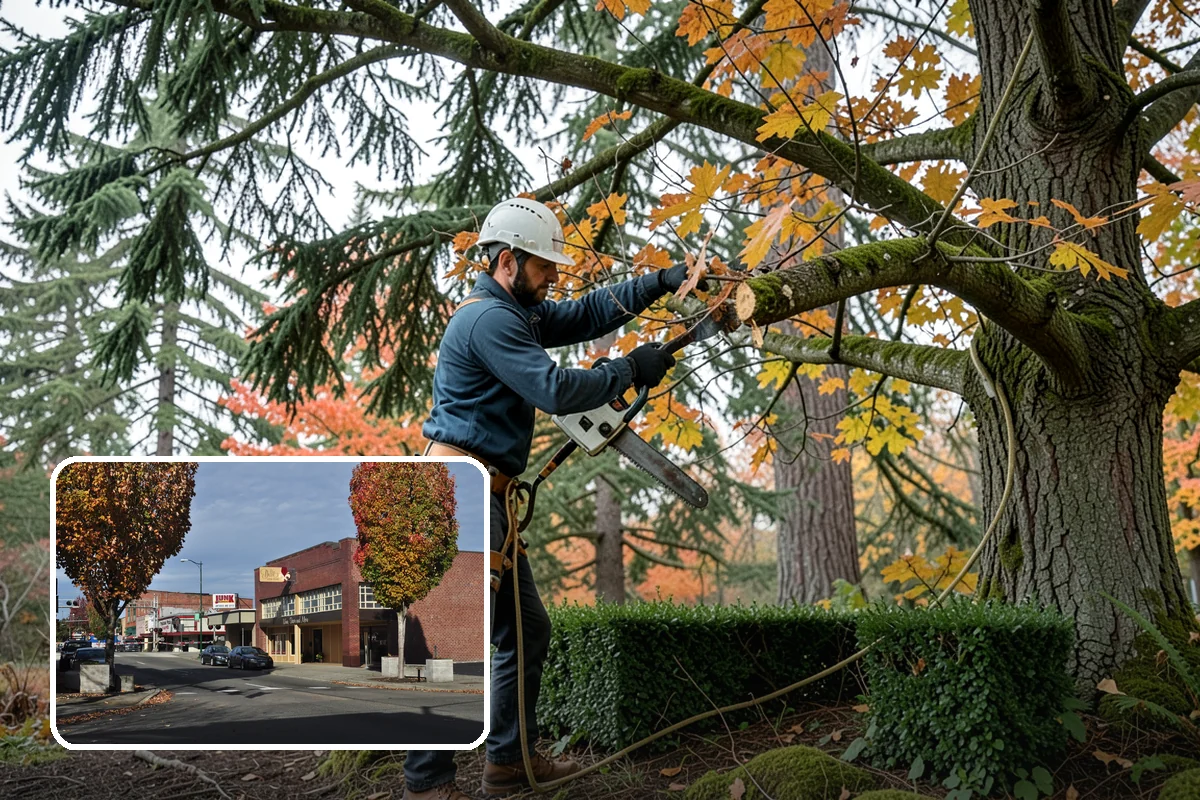
Deadwood removal in Puyallup: causes and local conditions
Deadwood is any branch that has died. Shade, root damage, drought stress, disease and insects can all kill limbs. Often the cause is not one thing. Several stresses stack up over a few seasons, and the canopy thins from the inside or the top.
Local conditions are worth knowing here. Daymet data for 2005 to 2025 shows that 81% of Puyallup's yearly rain and snow falls from October to April. Soils stay wet through the cold months, and wet soil favors root problems. A tree with weak roots may show dead branches above ground before anything else looks wrong. Dry summers after those wet months can then stress a tree further.
A federal aerial survey (USDA Forest Service and WA DNR, 2021 to 2025) covered forest within 10 km of Puyallup. This is forest land, not street or yard trees, so it does not describe your tree. It does show what is happening nearby. The largest mapped damage was 1,101 acres of decline with no cause identified, in unknown hardwoods and western redcedar. That label means dieback where no single cause was found. The survey also mapped 273 acres of Douglas-fir engraver damage in Douglas-fir. If you have a Douglas-fir with dying limbs, we look for signs of both.
Deadwood on a Douglas-fir can also point to laminated root rot. WSU HortSense says trees infected with it are considered hazardous and extremely prone to wind damage. In that case, removing dead limbs may not be the whole answer, and we will tell you if the tree needs a closer look at the base and roots.
The work itself follows standard pruning practice. We identify dead limbs, then cut them back to the branch collar or to a living lateral without cutting into healthy wood more than needed. We do not top the tree. Our ISA Certified Arborist can assess larger or higher limbs before climbing. Pruning is not covered by a removal rule, but where any city rule might apply, we check with the city before work starts. Call or text 425-484-4442 for a free estimate.
Puyallup tree conditions at a glance
| USDA hardiness zone | 8b |
|---|---|
| Soils | 13% of land has hardpan or another restrictive layer within 40 in; most common series Puyallup; 47% well drained |
| High and strong wind episodes, 2005-2025 | 25 in the forecast zone |
| Electric utility | unconfirmed |
Tree removal rules in Puyallup
Significant tree protections do not apply to lots containing single-family, duplex, triplex or up to four-unit residential development unless the tree is in a critical area. A permit is required on such lots only if the tree is on the City's Heritage Tree register, or is within or associated with a critical area (wetland/buffer, steep slope, stream buffer, habitat area/greenbelt). Significant trees are regulated on commercial, industrial, institutional and multifamily (5+ units) property.
Regulated size: Healthy, living tree greater than 15 in DBH (black cottonwood and red alder not typically regulated unless in a critical area).
Official city source. Rules change; we confirm with the city before work starts.
Strongest wind events near Puyallup
- Oct 18, 2007: gusts to 62 mph
- Jan 6, 2019: gusts to 61 mph
- Feb 25, 2025: gusts to 60 mph
NOAA Storm Events, forecast zone that includes Puyallup, 2005-2025.
Most common street trees in Puyallup
- Flowering Pear14.6%
- Hornbeam9.4%
- Crabapple8.9%
- Linden7.3%
- Ash6.9%
- Green ash5.9%
Share of 812 trees in the city’s street-tree inventory; median trunk diameter 9.5 in, 0.0% at 24 in or wider.
Sources: Daymet daily weather (NASA/ORNL), NOAA Storm Events, USDA plant hardiness map 2023, NRCS soil survey, USGS elevation, WA DNR landslide inventory, USDA Forest Service aerial survey, WSDA, city tree assessments and street-tree inventories, SILVIS Lab, Arbor Day Foundation, and official city and utility pages.
Deadwood Removal Serving Puyallup
Puyallup

Also serving Puyallup
- Willow Pruning in Puyallupat Washington Landscaping
- Roof Maintenance Plan in Puyallupat Washington Roofing
- Brush Clearing in Puyallupat Washington City Services