Where Safety Meets Expert Tree Service.

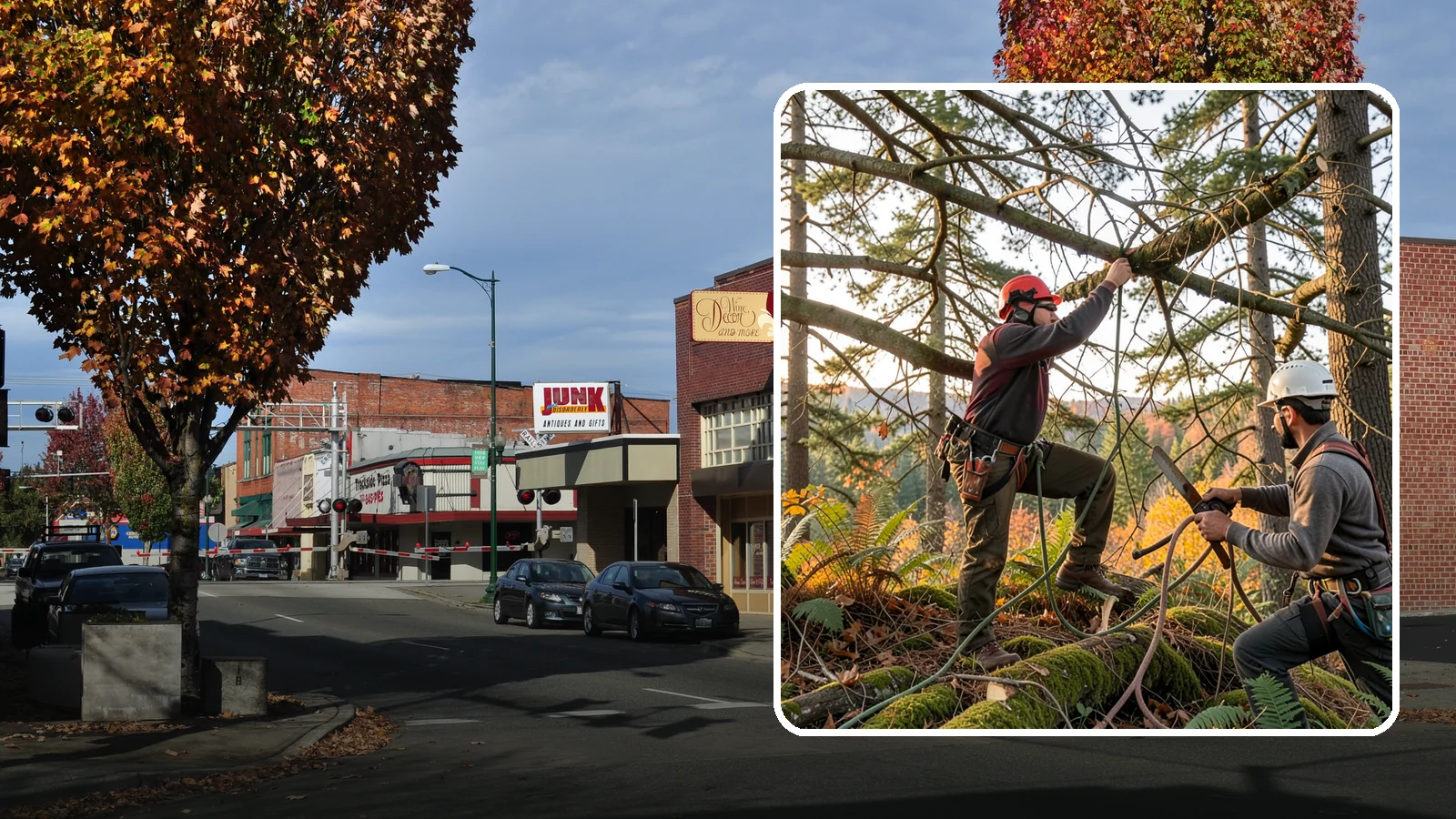
Puyallup Crown Thinning
The selective removal of live branches to reduce crown density.
You may notice that the canopy of a tree has gotten so dense that the lawn underneath stays shaded and damp, or that the branches rub against each other and the view from a window has narrowed. Those are common reasons people start looking into crown thinning in Puyallup.
Thinning selectively removes some live branches to open up the crown. The goal is more light and air movement through the tree while keeping its natural shape. Here is how it works, what local conditions bear on it, and how to decide whether your tree needs it.
About Crown Thinning in Puyallup
Crown thinning helps improve your tree’s structure by selectively removing live branches to reduce density in the canopy. This process is ideal for homeowners who want better light penetration and increased air movement through their trees while reducing wind load. We work with you to determine if this service fits the specific needs of your landscape.
What Puyallup Crown Thinning Includes
This service involves carefully selecting cuts that match the tree species, site conditions, and current access limitations. Our goal is to enhance health and appearance without over-pruning or causing stress to the living tissue. By lowering wind resistance, we help protect both the trees and nearby structures from potential damage during storms.
Puyallup Crown Thinning Process
We begin by assessing your canopy condition and defining clear pruning objectives for each tree on site. Trained crews then make clean cuts at proper points using methods suited to the specific species and season. Afterward, all cut material is processed through a wood chipper before we thoroughly clean up the work area around your property.
Equipment We Use for Puyallup Crown Thinning
Our teams utilize hand saws, pole saws, chainsaws, and climbing or rigging gear depending on the tree’s height and location. When necessary, aerial lifts are deployed to safely reach higher branches that require attention. We also use wood chippers to efficiently process removed limbs and personal protective equipment for everyone involved in the job.
Puyallup Crown Thinning Safety & Best Practices
Safety is a priority as we follow recognized pruning standards to avoid making harmful cuts or removing too much healthy tissue at once. Our crews stay alert for overhead power lines and unstable limbs that could pose risks during removal work. When working aloft, our technicians always use proper fall protection gear to ensure everyone stays secure throughout the project.
Signs You Need Crown Thinning in Puyallup
You may need crown thinning if you notice deadwood or weak unions in your trees that increase the risk of branch failure. Interference with sightlines or structures caused by an overly dense canopy is another clear indicator that this service would be beneficial. If wind seems to push against a heavy top, reducing density can help stabilize the tree and improve its overall vigor over time.
What Affects the Cost of Crown Thinning in Puyallup
The final cost depends on factors like species-specific timing sensitivities which dictate when certain trees should not be pruned. Access requirements for aerial lifts or climbing gear will also influence how much labor is needed to complete the job safely. Additionally, the volume of cut material that must be processed through a wood chipper plays a role in determining the overall price.
Best Time of Year for Puyallup Crown Thinning
In our local climate, it is best to schedule this work outside of late spring and early summer when many native trees are actively transpiring. We often recommend dormant seasons or specific windows dictated by individual species requirements to ensure healthy healing after cuts. Planning ahead for these seasonal constraints helps us provide the highest quality care without harming your landscape’s natural cycle.
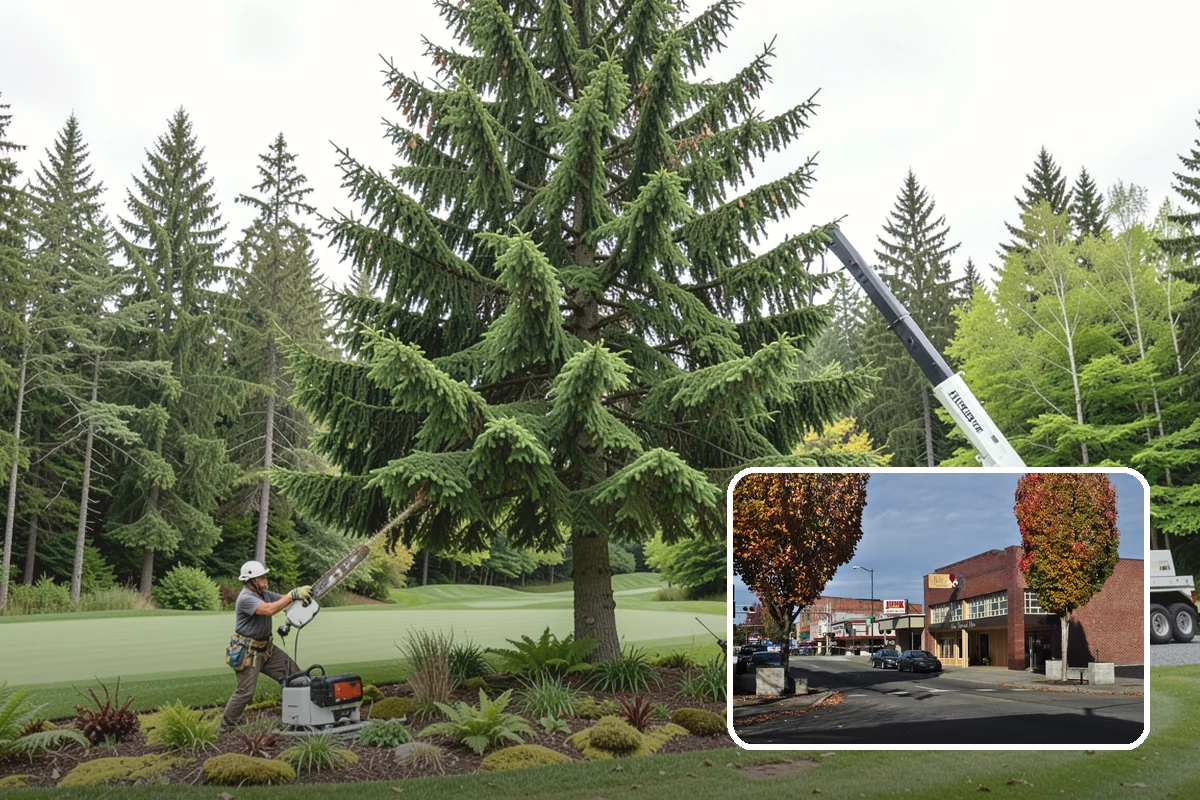
How crown thinning fits trees in Puyallup
Dense crowns usually come from years of unchecked growth. Branches crowd the same space, cross, and rub. Rubbing wounds the bark, and thick interior growth holds moisture on leaves and limbs longer after rain.
That moisture matters here. Daymet climate data for 2005 to 2025 shows that 81% of Puyallup's yearly rain and snow falls from October to April. For a tree with a thick crown, that means a long wet stretch when foliage and bark dry slowly. Opening the canopy can help air move through during those months. It is not a cure for disease, and we would not promise it will prevent any problem.
Species matter too. Puyallup's street-tree inventory lists 812 trees, and the most common are Flowering Pear at 14.6%, Hornbeam at 9.4%, Crabapple at 8.9%, Linden at 7.3% and Ash at 6.9%. That inventory covers city street trees, not yard trees, so it says nothing about your property. It does show that ornamental and small-to-medium broadleaf species are common in town. Many of these form tight, crowded branching, and they are the kind of tree where selective thinning is often discussed. We look at your actual tree rather than assume.
What the work involves
Under ISA and ANSI A300 style practice, thinning means removing selected branches back to a parent branch or lateral, not cutting stubs or shearing the outside. We usually favor smaller-diameter cuts spread evenly through the crown, and we avoid taking too much live foliage in a single visit. Heavy removal stresses a tree. Thinning is not topping, and we do not recommend topping.
If your goal is a view through a conifer, WSU Extension guidance, in a column by Jane Billinghurst from January 2016, points to skirting (limbing up), thinning or windowing rather than crown reduction. We can talk through which fits your tree.
Before any work starts, we check with the city if there is a question about whether a rule applies. To arrange a free estimate, call or text 425-484-4442.
Puyallup tree conditions at a glance
| USDA hardiness zone | 8b |
|---|---|
| Rain and snow falling October to April | 81% of the year’s total |
| Days that freeze at night and thaw by day | 29 a year |
| Tree City USA | 8 years |
| Electric utility | unconfirmed |
Most common street trees in Puyallup
- Flowering Pear14.6%
- Hornbeam9.4%
- Crabapple8.9%
- Linden7.3%
- Ash6.9%
- Green ash5.9%
Share of 812 trees in the city’s street-tree inventory; median trunk diameter 9.5 in, 0.0% at 24 in or wider.
Sources: Daymet daily weather (NASA/ORNL), NOAA Storm Events, USDA plant hardiness map 2023, NRCS soil survey, USGS elevation, WA DNR landslide inventory, USDA Forest Service aerial survey, WSDA, city tree assessments and street-tree inventories, SILVIS Lab, Arbor Day Foundation, and official city and utility pages.
Crown Thinning Serving Puyallup
Puyallup
Also serving Puyallup
- Fig Tree Pruning in Puyallupat Washington Landscaping
- Roof Cleaning in Puyallupat Washington Roofing
- Storm Cleanup in Puyallupat Washington City Services