Where Safety Meets Expert Tree Service.


Puyallup Crown Cleaning
The selective removal of dead, dying, diseased, and weakly attached branches from the crown.
What does crown cleaning actually do for a tree in Puyallup? It removes dead, dying, diseased and broken branches from the canopy, and nothing else. The tree keeps its shape and its live growth. The goal is a safer, cleaner crown that is easier to inspect.
A good time to book it is when you see bare twigs, branches with no leaves in season, hanging limbs, or snapped stubs after a storm. Walk around the tree and look up from several sides. Take photos of anything that worries you, and we can go over them together.
About Crown Cleaning in Puyallup
Crown cleaning helps keep your trees safe by removing dead or weak branches from the upper canopy without altering their overall size. This selective approach improves both the health of your landscape and its visual appeal while maintaining the tree’s natural form. We are here to support homeowners who want a healthier, safer yard through professional care.
What Puyallup Crown Cleaning Includes
Our crews perform crown cleaning by carefully selecting which branches to remove based on recognized arboricultural standards. This process targets dead, dying, diseased, and weakly attached limbs while leaving the healthy structure intact. The work is tailored to match your specific tree species, site conditions, and access requirements for a clean result.
Puyallup Crown Cleaning Process
We begin by assessing the condition of your canopy and defining clear pruning objectives before making any cuts. Our team selects precise cut points that suit the season and species, ensuring we do not over-prune or cause unnecessary stress. Afterward, we lower all material safely, process it on site, and thoroughly clean up the work area to leave everything tidy.
Equipment We Use for Puyallup Crown Cleaning
To complete this job effectively, our crews utilize hand saws, pole saws, chainsaws, and wood chippers for efficient debris removal. Depending on your specific tree location, we may also use climbing rigging gear or an aerial lift to reach high branches safely. Every crew member wears necessary personal protective equipment while operating these tools with care.
Puyallup Crown Cleaning Safety & Best Practices
We strictly follow recognized pruning standards to avoid making harmful cuts that could damage the tree’s long-term vigor. Our team stays alert for overhead power lines and unstable limbs, using fall protection whenever we work aloft. By limiting removal to healthy amounts of live tissue, we ensure your trees remain strong after the service is complete.
Signs You Need Crown Cleaning in Puyallup
You may need crown cleaning if you notice deadwood hanging in your canopy or weak unions that could fail during a storm. This service becomes important when branches interfere with structures or block sightlines at driveways and walkways. It is also recommended to address species-specific timing sensitivities before they lead to over-pruning issues later on.
What Affects the Cost of Crown Cleaning in Puyallup
The investment for crown cleaning depends largely on the type of tree you have and how easily its canopy can be accessed. Additional costs may arise if significant disposal of cut material is required or if your site has unique conditions like proximity to structures. We evaluate these factors carefully so there are no surprises regarding what influences the final price.
Best Time of Year for Puyallup Crown Cleaning
For most trees in our region, we aim to schedule work outside of dormant periods whenever possible to support better healing and growth. However, exact timing must be adjusted for each species to prevent over-pruning during sensitive seasons that could harm the tree’s health. We will coordinate with you to find a window that aligns with both your needs and the biological requirements of your specific trees.
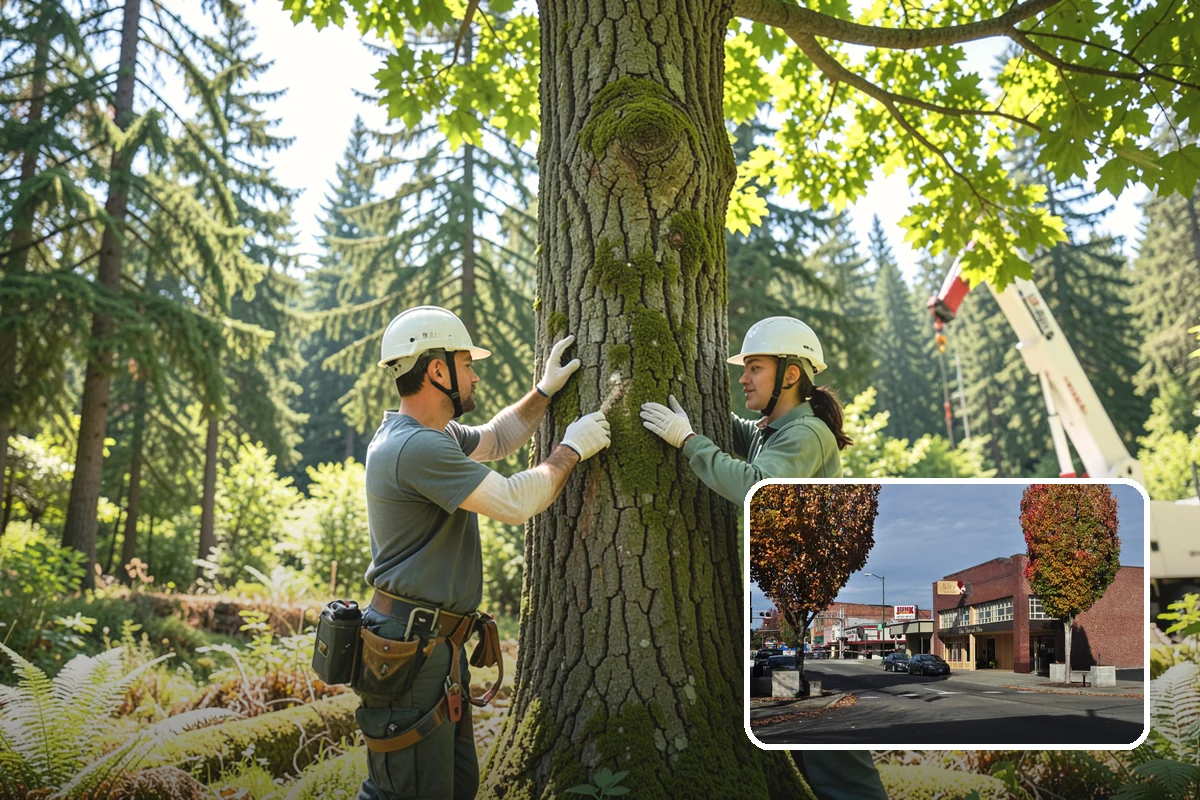
Crown cleaning for Puyallup trees: what to know before work
Why the wet season matters
Daymet climate data for 2005-2025 shows that 81% of Puyallup's yearly rain and snow falls from October to April. Wet months keep wood damp, which favors decay in weak or broken branches. A dead limb that is soaked and heavy is also more likely to drop. Checking the crown before autumn lets you spot problems while the weather is still dry and easier to work in.
Reading dieback in context
A 2021-2025 aerial survey by the USDA Forest Service and WA DNR mapped damage in forest within 10 km of Puyallup. This is forest land, not street or yard trees, so it does not describe your tree. Still, it shows what is nearby. The largest category was 1,101 acres of decline with no cause identified, in unknown hardwoods and western redcedar. That label means dieback where no single cause was found. The survey also mapped 273 acres of Douglas-fir engraver damage and 100 acres of bear damage in Douglas-fir. If your tree has unexplained dead tips, cleaning removes the dead wood, but the cause may need a closer look.
How the cuts are made
Crown cleaning follows standard pruning practice. Each cut goes just outside the branch collar, the slightly swollen ring where a branch meets its parent limb. The WSU Extension Pacific Northwest Gardener's Handbook notes that flush cuts, which remove the collar, are slower to seal and more prone to decay. Large limbs are cut in stages so the bark does not tear.
Crown cleaning does not thin the canopy or reduce its height. If a limb is too large or too close to a structure to remove safely from the ground, we will say so and talk through options. Removing a whole tree is a different job, and Puyallup may have its own rules for that, so we check with the city before any removal work starts.
Puyallup tree conditions at a glance
| USDA hardiness zone | 8b |
|---|---|
| Rain and snow falling October to April | 81% of the year’s total |
| Days that freeze at night and thaw by day | 29 a year |
| Tree City USA | 8 years |
| Electric utility | unconfirmed |
Most common street trees in Puyallup
- Flowering Pear14.6%
- Hornbeam9.4%
- Crabapple8.9%
- Linden7.3%
- Ash6.9%
- Green ash5.9%
Share of 812 trees in the city’s street-tree inventory; median trunk diameter 9.5 in, 0.0% at 24 in or wider.
Sources: Daymet daily weather (NASA/ORNL), NOAA Storm Events, USDA plant hardiness map 2023, NRCS soil survey, USGS elevation, WA DNR landslide inventory, USDA Forest Service aerial survey, WSDA, city tree assessments and street-tree inventories, SILVIS Lab, Arbor Day Foundation, and official city and utility pages.
Crown Cleaning Serving Puyallup
Puyallup
Also serving Puyallup
- Oak Tree Pruning in Puyallupat Washington Landscaping
- Roof Moss Removal in Puyallupat Washington Roofing
- Street Tree Removal in Puyallupat Washington City Services