Where Safety Meets Expert Tree Service.

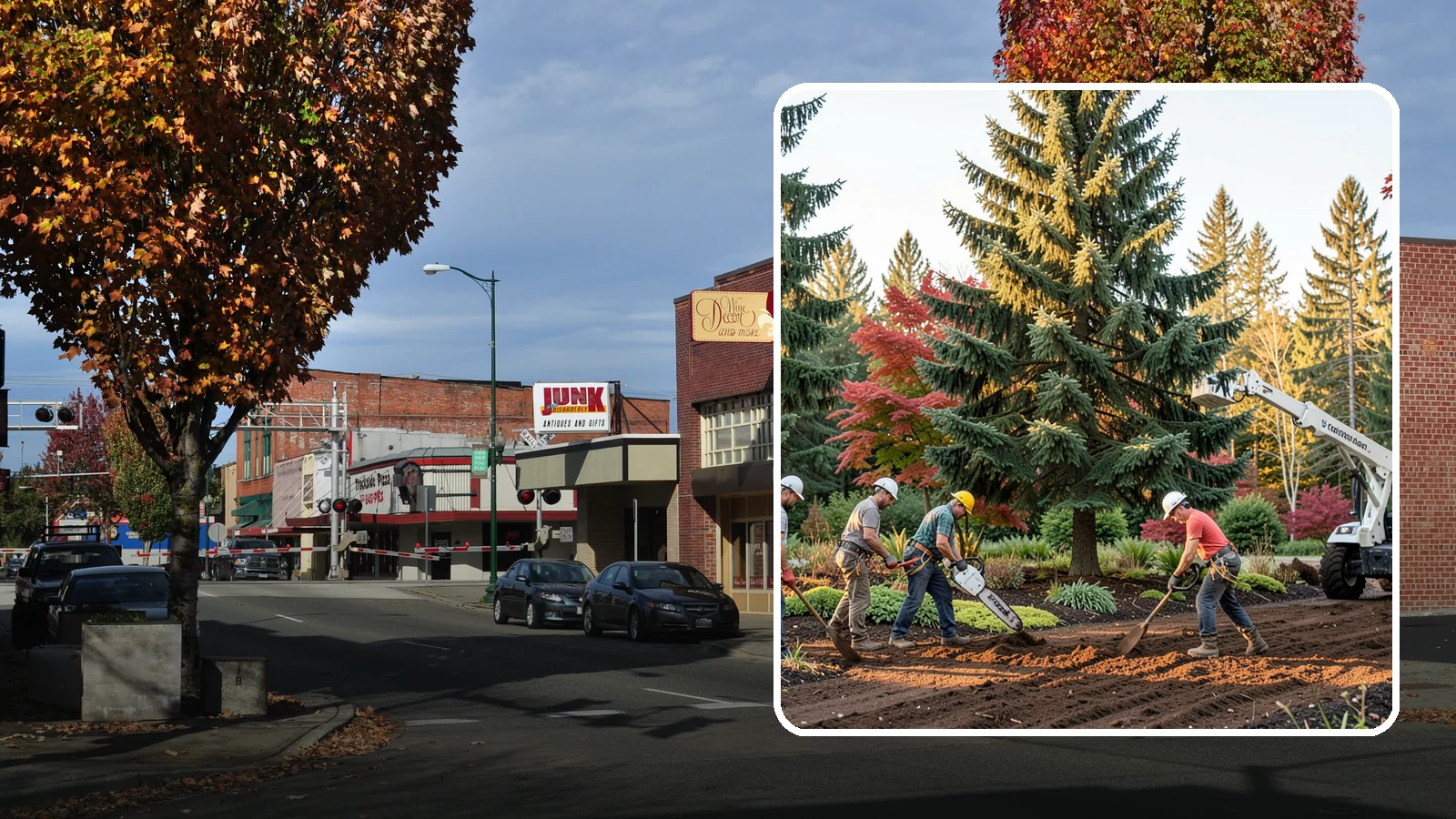
Puyallup Compost Spreading
The application of compost to improve soil.
Compost spreading suits Puyallup yard owners with thin, compacted or tired soil, and those with young trees, shrub beds, or lawn areas that stay soggy in winter. It also fits properties where fruit trees, vegetable beds or newly planted shrubs need a better growing medium around their roots.
The main choice is how you apply it: as a thin top-dressing, as a mulch layer around trees, or not at all near certain trunks. Here is how to weigh those options on local soil.
About Compost Spreading in Puyallup
Compost spreading is a thoughtful way to nourish your trees by adding organic matter directly where roots need it most. This service helps improve soil biology so that valued specimens can thrive for years to come. It works well for homeowners who want their landscape to stay healthy and stable over the long term.
What Puyallup Compost Spreading Includes
We apply compost specifically designed to support soil life and enhance root conditions around your trees. Our trained crews match application methods to each tree species, site condition, and access point on your property. The goal is simple: add organic matter that catches problems before they escalate into larger issues.
Puyallup Compost Spreading Process
Work begins with a careful inspection of the tree and its surrounding environment to identify factors like soil quality or past construction impacts. Based on these findings, we recommend and apply appropriate treatments while documenting our observations for future reference. We follow up regularly to ensure the care provided continues to support your trees effectively.
Equipment We Use for Puyallup Compost Spreading
Our crews use diagnostic tools and soil probes to understand exactly what each site needs before starting work. Depending on access conditions or compaction levels, we may bring in injection equipment, air excavation tools, or sampling kits as required. Everyone also wears personal protective equipment to keep the job safe for our team and your landscape.
Puyallup Compost Spreading Safety & Best Practices
We strictly follow label guidelines when applying products to protect both the soil and nearby plantings from unintended harm. Our methods are designed to avoid damaging roots or trunks while we work around complex site conditions like girdling roots or compacted earth. Accurate documentation of these safety measures ensures that every job is completed responsibly and correctly.
Signs You Need Compost Spreading in Puyallup
You might need this service if your trees show signs of decline from poor soils, pests, disease, or changes in ground grade over time. Compacted areas around the root zone often struggle to support healthy growth without additional organic matter. If you suspect past construction has hurt your soil structure, adding compost can help restore balance and stability quickly.
What Affects the Cost of Compost Spreading in Puyallup
The final price depends on how difficult it is for crews to access your specific site conditions during work. Soil compaction levels that require excavation tools will influence the cost alongside the volume of compost needed for different tree species. These factors ensure we provide a solution tailored precisely to what each individual project requires without hidden fees.
Best Time of Year for Puyallup Compost Spreading
In our local climate, this service can be performed year-round whenever your trees would benefit from extra organic matter. However, during periods of heavy rain, we schedule carefully to prevent runoff and make sure the compost incorporates well into compacted soils. Planning around weather patterns helps ensure every application supports soil biology effectively without causing damage.
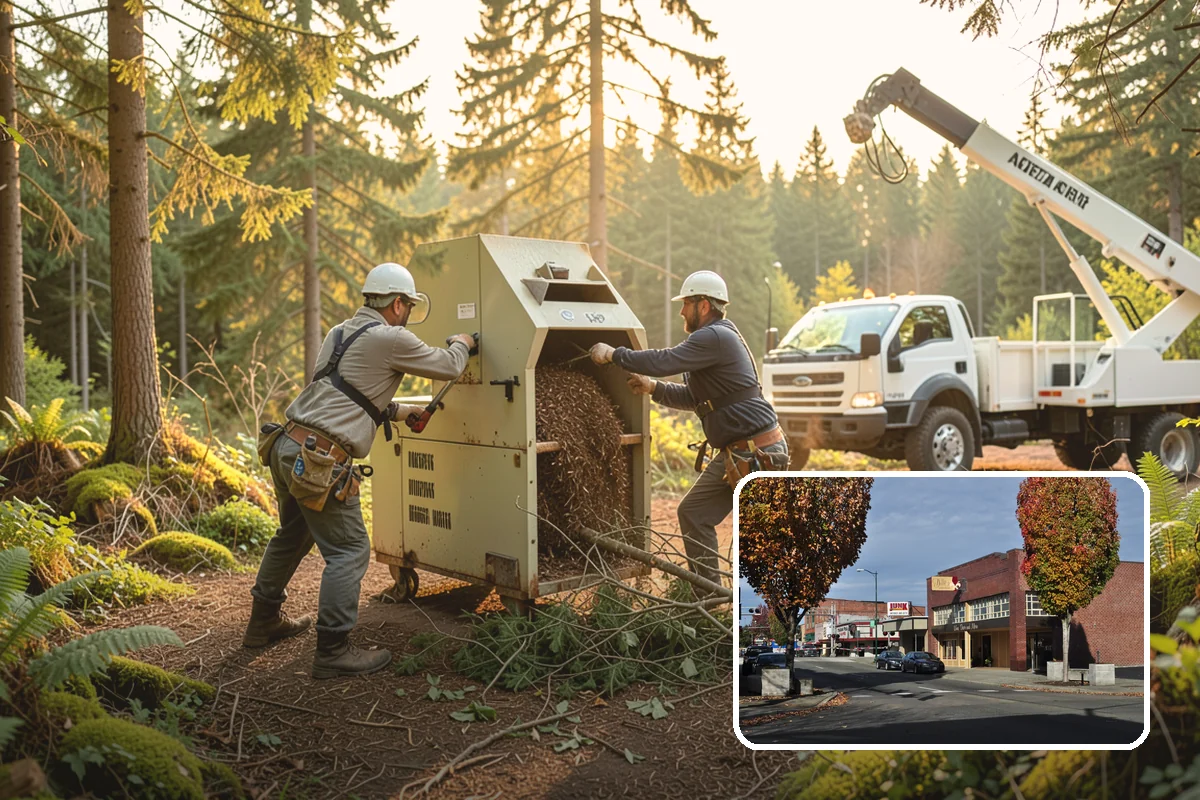
Choosing a compost approach for Puyallup soils
Local soil changes what compost can do. The NRCS soil survey shows that 47% of Puyallup's land is well drained and 11% is poorly drained. It also shows 13% has a hard or restrictive layer, such as glacial hardpan, within 40 inches of the surface. Those are city-wide figures, not a reading of your yard, so a quick probe or test hole tells you more about your own lot.
Options to compare
- Thin top-dressing over lawn or beds. A light layer of compost feeds the soil and improves its structure over time. It works best on well-drained ground, where water moves through.
- Compost under trees and shrubs. Spread it in a wide ring, kept several inches back from the trunk or root flare. Piling it against bark holds moisture where it does harm.
- Wood chips instead of, or over, compost. WSU Extension (Linda Chalker-Scott, FS160E) describes arborist wood chips as one of the best mulches for trees and shrubs where trees dominate the landscape. Compost adds nutrients. Chips hold moisture and protect the surface. Many owners use a thin compost layer first, then chips on top.
Where drainage is poor
Compost does not fix a hardpan layer or a wet spot. On poorly drained ground, a deep layer can sit wet around roots. Keep the layer thin there, and look at the cause of the standing water before adding more material.
Yard waste and fruit
Pierce County is inside the WSDA apple maggot quarantine. Homegrown fruit and yard waste may not be moved out of the quarantine area into pest-free areas. If you have fruit trees, keep fallen fruit and trimmings on site or handle them through approved local disposal, and do not haul them elsewhere.
Tell us what you are growing and how the ground behaves in winter, and we will suggest the approach that fits. For a free estimate, call or text 425-484-4442.
Puyallup tree conditions at a glance
| USDA hardiness zone | 8b |
|---|---|
| Soils | 13% of land has hardpan or another restrictive layer within 40 in; most common series Puyallup; 47% well drained |
| Rain and snow falling October to April | 81% of the year’s total |
| Days with 0.1 in or more of rain | 108 a year |
| Days that freeze at night and thaw by day | 29 a year |
Most common street trees in Puyallup
- Flowering Pear14.6%
- Hornbeam9.4%
- Crabapple8.9%
- Linden7.3%
- Ash6.9%
- Green ash5.9%
Share of 812 trees in the city’s street-tree inventory; median trunk diameter 9.5 in, 0.0% at 24 in or wider.
Tree health near Puyallup
Spongy moth (WSDA 2017): WSDA trap detection(s): 27 moth(s) in 13 trap catch record(s).
Spongy moth (WSDA 2012): WSDA eradication treatment (Btk).
- Decline, cause not identified1,101 ac
- Douglas-fir engraver273 ac
- Bears100 ac
Forest damage mapped from the air within 10 km of Puyallup, 2021-2025 (USDA Forest Service and WA DNR). This covers forest land, not street or yard trees. “Decline, cause not identified” is dieback with no single cause found.
Sources: Daymet daily weather (NASA/ORNL), NOAA Storm Events, USDA plant hardiness map 2023, NRCS soil survey, USGS elevation, WA DNR landslide inventory, USDA Forest Service aerial survey, WSDA, city tree assessments and street-tree inventories, SILVIS Lab, Arbor Day Foundation, and official city and utility pages.
Compost Spreading Serving Puyallup
Puyallup
Also serving Puyallup
- Weed Removal in Puyallupat Washington Landscaping
- Irrigation Repair in Puyallupat Washington City Services