Where Safety Meets Expert Tree Service.

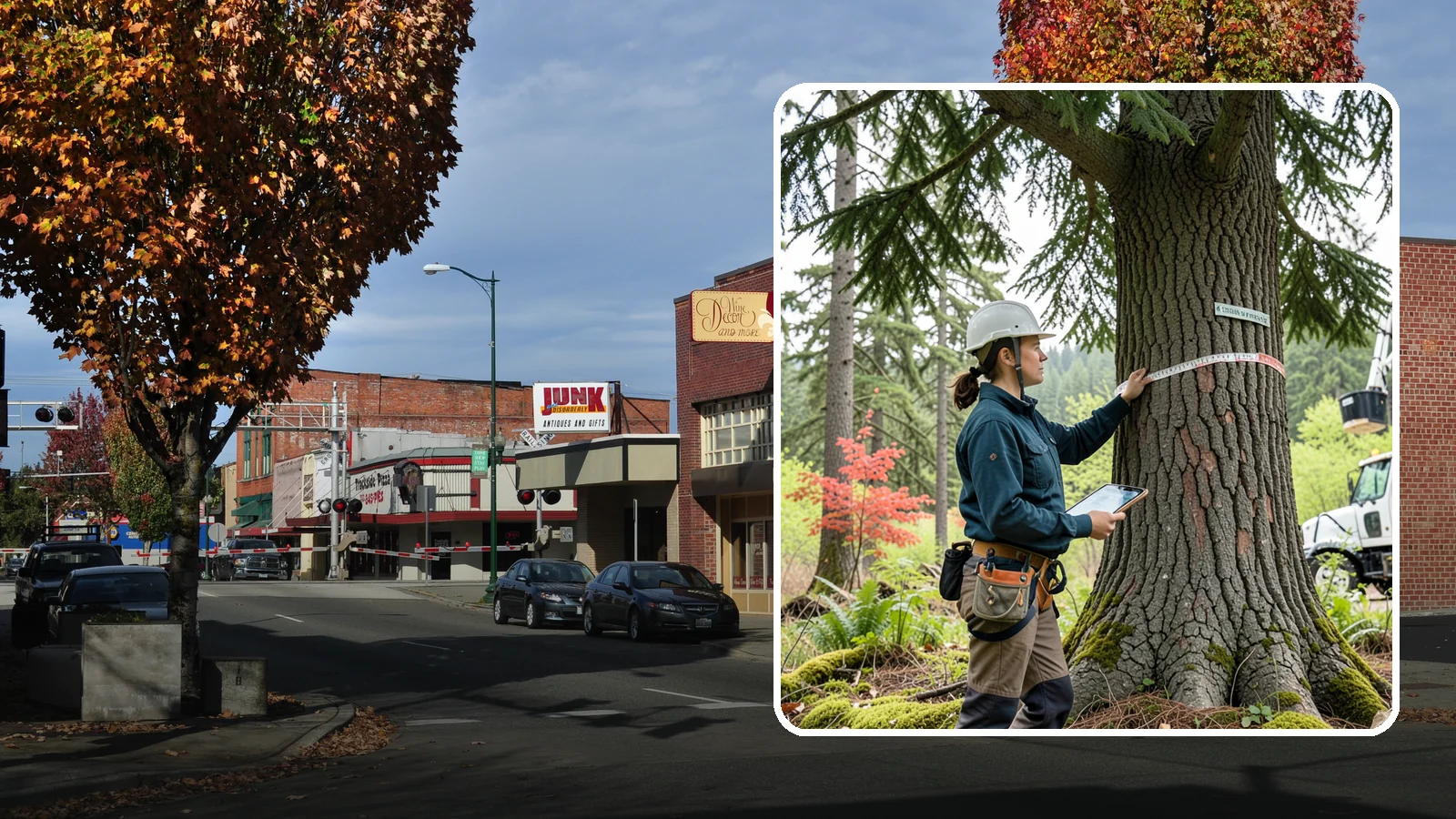
Puyallup Certified Arborist Reports
Written reports prepared by a certified arborist.
Do you need a certified arborist report for a tree in Puyallup? Sometimes. The city asks for a written tree risk assessment from a certified arborist when a permit application covers a regulated tree, and for every tree in a critical area. For a typical yard tree on a home lot, it often does not apply.
The quickest way to find out is to look at where the tree stands and what it is. A tree near a steep slope or stream is treated differently from one in a flat backyard. Below, we explain how that plays out for your property.
About Certified Arborist Reports in Puyallup
Our certified arborist reports provide expert documentation that helps homeowners make informed decisions about their property trees. Whether you need support for permitting or insurance purposes, our trained crews prepare clear records based on recognized standards. This service is designed to give you objective guidance when planning care or evaluating your landscape assets.
What Puyallup Certified Arborist Reports Includes
A certified arborist prepares written reports tailored to the specific needs of your site and tree species. These documents are created using methods that match local conditions, ensuring accurate assessment for property decisions or regulatory requirements. The final output offers a reliable record of findings backed by professional expertise.
Puyallup Certified Arborist Reports Process
We begin by gathering essential information about your trees and their surroundings before conducting a thorough inspection. Our team analyzes these observations against established objectives to develop clear recommendations included in the report. Finally, we review all findings with you to ensure you fully understand the results and next steps.
Equipment We Use for Puyallup Certified Arborist Reports
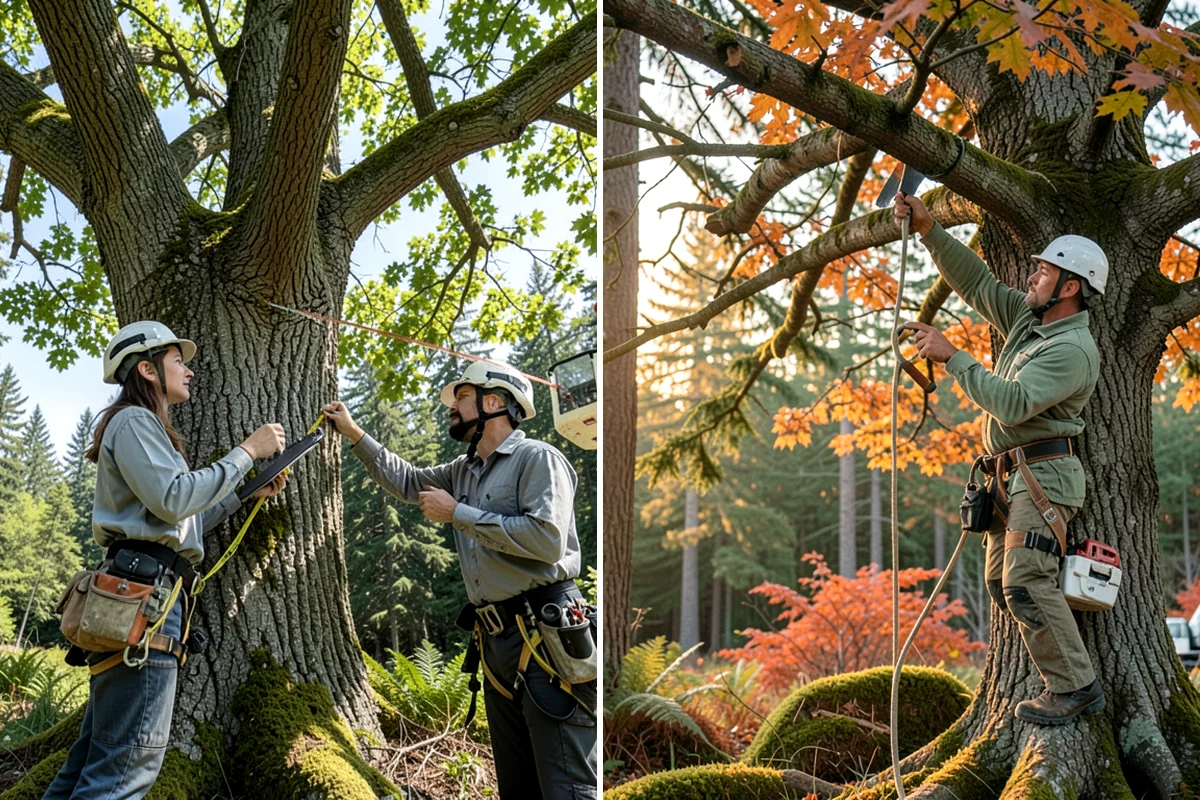
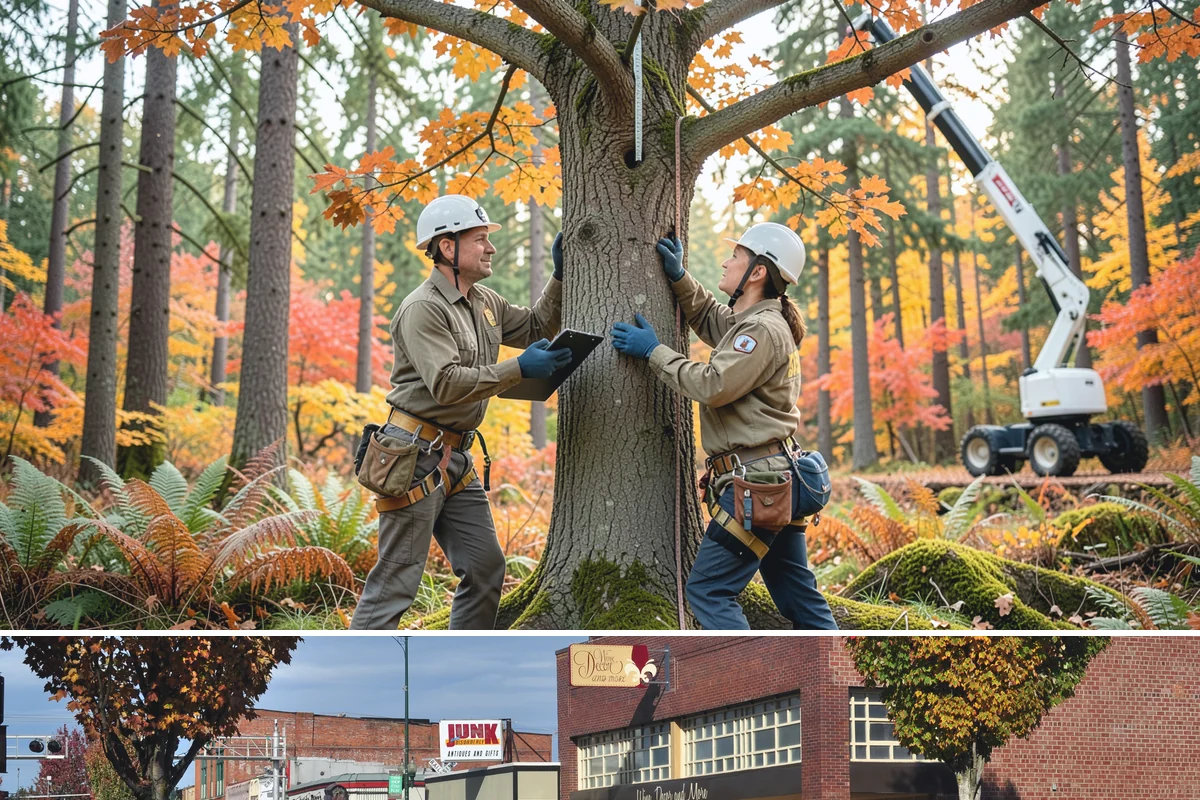
The work utilizes specialized diagnostic tools for measurement as well as mapping and imaging equipment when necessary. We also use professional documentation software to create precise reports that stand up to scrutiny. All crew members wear appropriate personal protective gear while operating these advanced assessment tools on your property.
Puyallup Certified Arborist Reports Safety & Best Practices
Our findings are always based strictly on observed evidence and recognized industry standards rather than assumptions. If an assessment has limitations or if uncertainty remains about certain conditions, we clearly disclose those factors in the report. We recommend follow-up actions whenever a situation requires further evaluation to ensure long-term safety for your trees.
Signs You Need Certified Arborist Reports in Puyallup
You may need this service when facing incomplete site history that complicates tree care planning or hidden defects you cannot see from the ground. Regulatory requirements often vary by jurisdiction, and our reports help navigate these complex rules effectively. Competing objectives on a property can also benefit from an expert analysis to prioritize what matters most for your landscape.
What Affects the Cost of Certified Arborist Reports in Puyallup
The price of this service is influenced by factors such as site complexity and variations in tree species found at the location. Access limitations around difficult-to-reach trees may require additional time or specialized approaches during the assessment phase. Additionally, if specialized diagnostic tools or mapping imaging are needed to fully understand a condition, these requirements will affect the overall cost.
Best Time of Year for Puyallup Certified Arborist Reports
Reports can generally be performed year-round given our favorable Puget Sound climate conditions for outdoor work. However, inspections conducted during wet seasons may require extra caution from our crew to ensure safe access and accurate assessment of hidden defects. We schedule visits when we believe they offer the best opportunity for a thorough evaluation while keeping everyone secure.

When Puyallup property owners need an arborist report
Critical areas change the answer
The city's tree code says all trees in critical areas are regulated regardless of size or species. That includes dead trees and snags. If your tree is on a steep slope, near a stream or in another critical area, the city requires a tree removal permit and a tree risk assessment report from a certified arborist who holds the tree risk assessment qualification the city names. Check this first, because a dead tree on a slope is not exempt.
Single-family lots are treated differently
According to the city's document on significant trees and trees in critical areas, significant tree protections do not apply to lots with single-family, duplex, triplex or up to four-unit residential development, unless the tree is in a critical area. On such a lot, a permit is required only if the tree is on the City's Heritage Tree register or is within or associated with a critical area. So if your tree is outside a critical area and not a registered Heritage Tree, the report requirement tied to that permit may not come up. That is the city's rule as written. It covers removal, and it does not speak to pruning or other work.
Size and species where the rule applies
Where significant tree rules do apply, the regulated size is a healthy, living tree greater than 15 inches DBH, which is trunk diameter measured at breast height. Black cottonwood and red alder are not typically regulated unless they are in a critical area. Measuring your trunk gives you a useful starting point before you call anyone.
What to bring to the first visit
- The tree's location relative to slopes, streams or wet areas
- The trunk diameter, if you can measure it
- Any signs of decay, leaning, cracks or dead limbs
- Whether the tree is on a Heritage Tree register
Where the rules are unclear, we check with the city before any work starts. Call or text 425-484-4442 and an ISA Certified Arborist can talk through your situation. Estimates are free.
Puyallup tree conditions at a glance
| Soils | 13% of land has hardpan or another restrictive layer within 40 in; most common series Puyallup; 47% well drained |
|---|---|
| High and strong wind episodes, 2005-2025 | 25 in the forecast zone |
| USDA hardiness zone | 8b |
Tree removal rules in Puyallup
Significant tree protections do not apply to lots containing single-family, duplex, triplex or up to four-unit residential development unless the tree is in a critical area. A permit is required on such lots only if the tree is on the City's Heritage Tree register, or is within or associated with a critical area (wetland/buffer, steep slope, stream buffer, habitat area/greenbelt). Significant trees are regulated on commercial, industrial, institutional and multifamily (5+ units) property.
Regulated size: Healthy, living tree greater than 15 in DBH (black cottonwood and red alder not typically regulated unless in a critical area).
Official city source. Rules change; we confirm with the city before work starts.
Sources: Daymet daily weather (NASA/ORNL), NOAA Storm Events, USDA plant hardiness map 2023, NRCS soil survey, USGS elevation, WA DNR landslide inventory, USDA Forest Service aerial survey, WSDA, city tree assessments and street-tree inventories, SILVIS Lab, Arbor Day Foundation, and official city and utility pages.
Certified Arborist Reports Serving Puyallup
Puyallup
Also serving Puyallup
- Green Roof Installation in Puyallupat Washington Landscaping