Where Safety Meets Expert Tree Service.

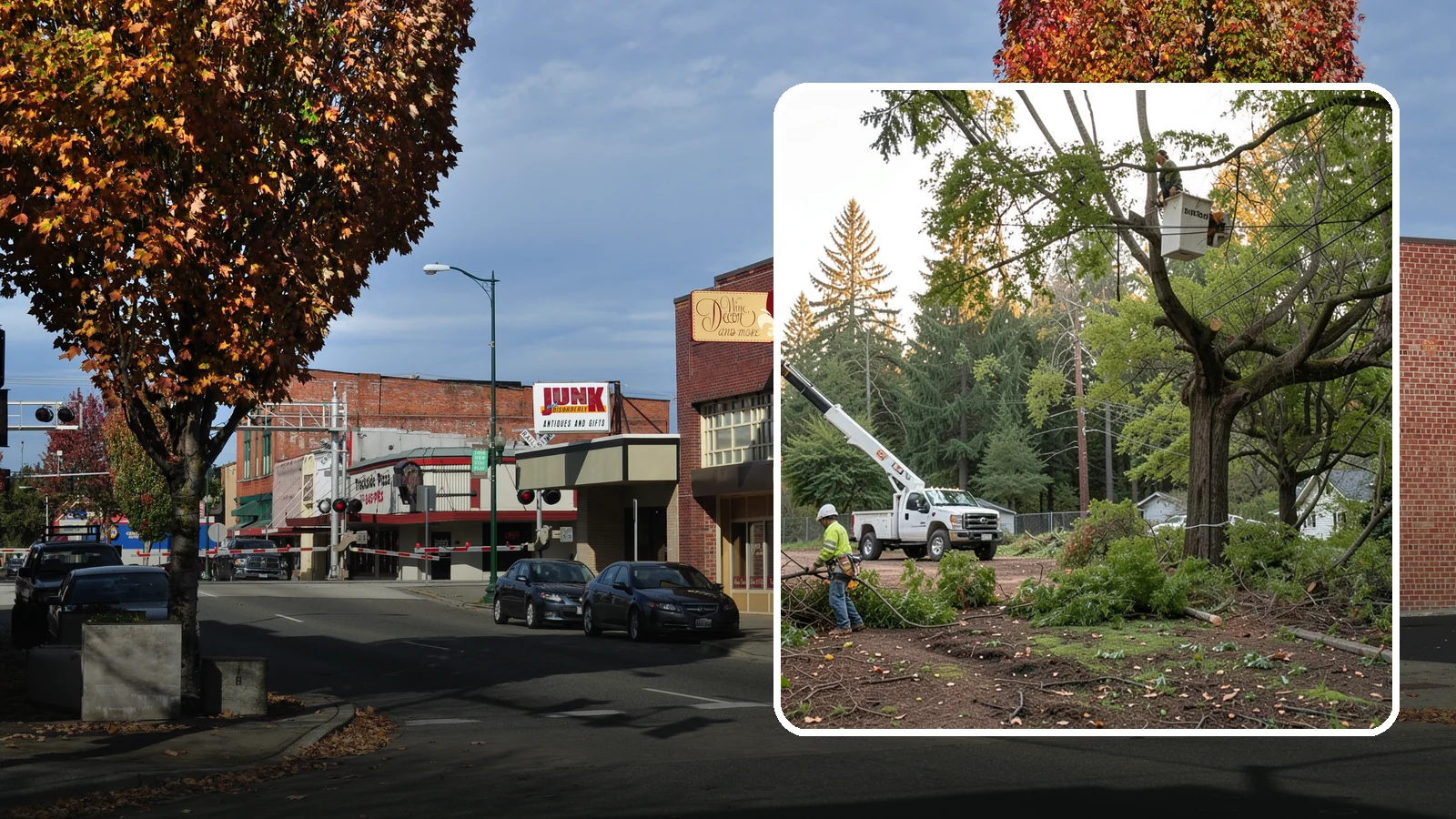
Puyallup Building Clearance Pruning
The pruning of branches away from walls and structures.
The best time to schedule building clearance pruning in Puyallup is often a dry stretch, before branches that touch the roof, siding or gutters have a chance to hold moisture against them. Daymet weather records for 2005-2025 show about 108 days a year here with 0.1 inch of rain or more, so wet surfaces are common and branches that rub or overhang stay damp.
Walk the outside of your house and look up. Note any limb that touches the roof, scrapes siding, hangs over a chimney or reaches a window. Photos of each spot help us plan the cuts before anyone climbs.
About Building Clearance Pruning in Puyallup
Building clearance pruning helps keep your trees healthy while protecting your home from damage caused by touching branches. Our trained crews use recognized standards to safely remove growth that creates moisture contact or abrasion against walls and structures. This service is ideal for any homeowner who wants to maintain clear sightlines and reduce the risk of branch failure near their property.
What Puyallup Building Clearance Pruning Includes
This pruning category focuses specifically on cutting branches away from buildings, fences, decks, and other hardscapes. The work includes making clean cuts at proper points without over-pruning, which supports long-term tree vigor and appearance. We match our methods to the specific species of your trees and the unique conditions of your site for a tailored result.
Puyallup Building Clearance Pruning Process
Our team begins by assessing the canopy condition and selecting the correct cuts based on the season and tree type. After making precise incisions with minimal stress, we lower and process all cut material before thoroughly cleaning up the work area. This systematic approach ensures that debris is removed efficiently while leaving your property tidy after completion.
Equipment We Use for Puyallup Building Clearance Pruning
We utilize a range of tools including hand saws, pole saws, chainsaws, and wood chippers to handle branches of various sizes. For higher reaches or difficult access points, our crews may use climbing gear, rigging equipment, or an aerial lift as needed. Every crew member also wears appropriate personal protective equipment while operating these machines safely around your home.
Puyallup Building Clearance Pruning Safety & Best Practices
We follow recognized pruning standards to avoid harmful cuts that could stress the tree or compromise its structure. Our safety protocols include watching for overhead power lines and unstable limbs before making any incisions near structures. When working aloft, we strictly use fall protection measures to ensure everyone remains secure throughout the job.
Signs You Need Building Clearance Pruning in Puyallup
You may need this service if you notice branches rubbing against siding, creating moisture pockets that can damage building materials. Signs of deadwood or weak unions interfering with your home’s structure also indicate it is time for clearance pruning. Additionally, reduced sightlines from overhanging limbs near windows or walkways suggest a need to restore proper spacing between trees and buildings.
What Affects the Cost of Building Clearance Pruning in Puyallup
The price varies based on the size of each tree and how difficult site access conditions are, such as proximity to power lines. Crew complexity increases if rigging work is required to remove heavy branches safely from tight spaces around your property. Disposal costs also depend on the volume of debris generated after clearing all interfering growth away from walls.
Best Time of Year for Puyallup Building Clearance Pruning
In our local climate, this type of pruning can be performed year-round with minimal restriction for most tree species. However, we generally avoid working during late winter dormancy breaks or periods when wet weather increases moisture contact risks against your building materials. Scheduling the work outside these sensitive times helps ensure optimal healing and reduces potential damage to both the tree and your home.
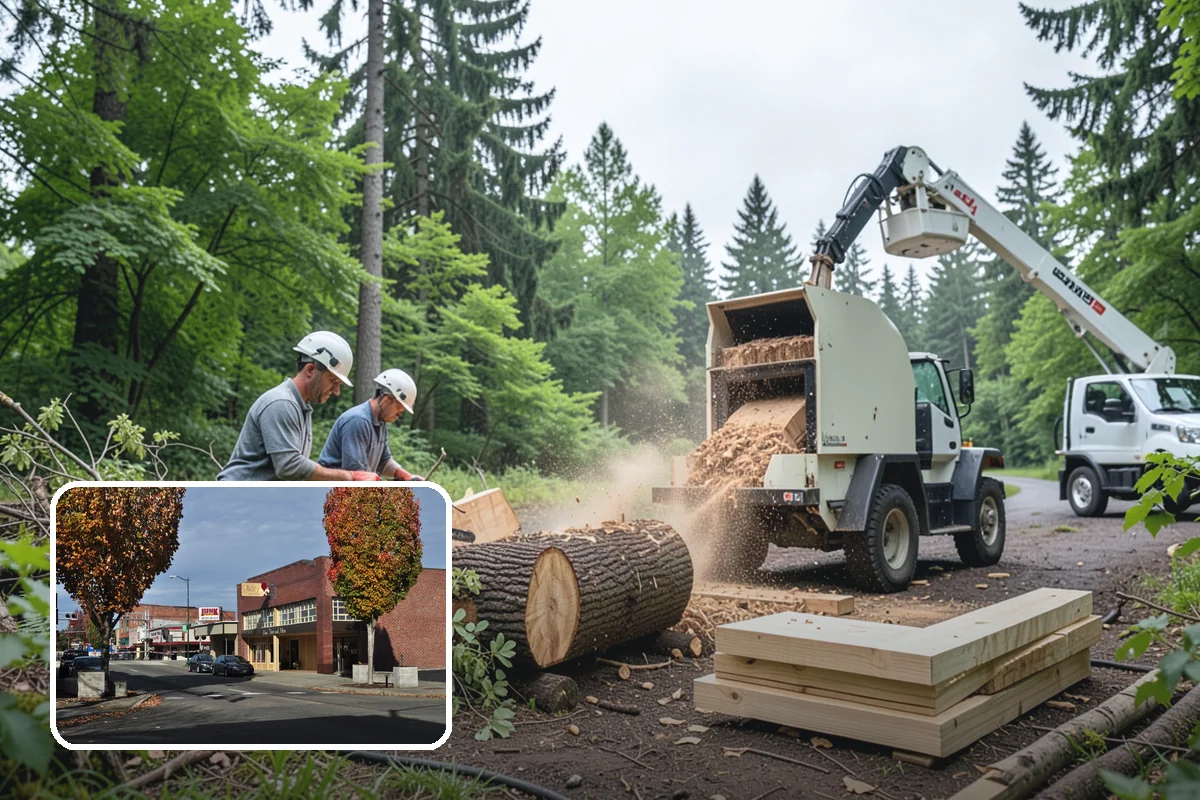
Planning building clearance pruning in Puyallup
Building clearance pruning means shortening or removing branches that grow too close to a structure. The goal is space between foliage and your house, so limbs stop rubbing shingles, dropping debris into gutters or giving moisture a path to the wall.
What shapes the scope
Census ACS data for 2020-2024 shows single-family detached houses make up about 56% of Puyallup's housing. On many of these lots, a tree sits close to the house on a modest yard. That makes the distance between trunk and wall a main factor. A tree growing near the foundation may need clearance work on more than one side, and a tree farther off may need only a few limbs.
The USDA map from 2023 places Puyallup in plant hardiness zone 8b. That tells you which plants can survive winter lows here. It does not tell us how a given tree has grown. We judge each tree by its species, branch structure and how much of the crown reaches toward the building.
Other things that affect scope include branch size, how high the limbs are, whether power lines are nearby, and how much of the crown we can remove without harming the tree. Standard practice under ANSI A300 is to cut back to a branch union or the trunk collar and to avoid removing too much live crown at once. We do not top trees. If a tree is too close to the house to prune well, we will say so and talk through the options.
What to expect on the day
We start by walking the site with you and confirming which limbs are coming off. Then we set up protection for plantings and any hard surfaces, and make the cuts from the top of the work area down. Branches are lowered or cut into pieces where needed. When the pruning is done, we clear the debris and check the roofline and gutters for fallen material.
If you want a written look at the job first, we offer free estimates. Call or text 425-484-4442 with photos of the problem spots.
One practical tip: after pruning, check the roof and gutters again after the first heavy rain. It shows you whether any remaining branch still drips onto or touches the house.
Puyallup tree conditions at a glance
| USDA hardiness zone | 8b |
|---|---|
| Rain and snow falling October to April | 81% of the year’s total |
| Days that freeze at night and thaw by day | 29 a year |
| Tree City USA | 8 years |
| Electric utility | unconfirmed |
Most common street trees in Puyallup
- Flowering Pear14.6%
- Hornbeam9.4%
- Crabapple8.9%
- Linden7.3%
- Ash6.9%
- Green ash5.9%
Share of 812 trees in the city’s street-tree inventory; median trunk diameter 9.5 in, 0.0% at 24 in or wider.
Sources: Daymet daily weather (NASA/ORNL), NOAA Storm Events, USDA plant hardiness map 2023, NRCS soil survey, USGS elevation, WA DNR landslide inventory, USDA Forest Service aerial survey, WSDA, city tree assessments and street-tree inventories, SILVIS Lab, Arbor Day Foundation, and official city and utility pages.
Building Clearance Pruning Serving Puyallup
Puyallup

Also serving Puyallup
- Plum Tree Pruning in Puyallupat Washington Landscaping
- Roof Algae Treatment in Puyallupat Washington Roofing
- Tree Inventory in Puyallupat Washington City Services