Where Safety Meets Expert Tree Service.


Pacific Tree Replacement
The replanting of trees to replace those removed.
About 81% of Pacific's yearly rain and snow falls between October and April, based on Daymet data from 2005 to 2025. For a new tree, that means fall and winter planting can lean on natural rainfall while the roots settle in.
Replacing a tree is more than putting a new one in the old spot. The species, the planting site and the timing all shape how the new tree does over the next several years. Here is how we approach it.
About Tree Replacement in Pacific
We help homeowners restore their landscape by replanting trees after removals or other changes. This approach brings back essential shade, privacy, and ecological benefits to your property. Our trained crews work carefully to ensure each new tree is well-suited to its specific site conditions.
What Pacific Tree Replacement Includes
Tree replacement focuses on restoring canopy cover with healthy specimens chosen for their local adaptability. We match planting methods to the species selected while considering soil quality and access constraints at your location. The goal is to establish a robust foundation that supports long-term growth and stability in your yard.
Pacific Tree Replacement Process
Our team begins by assessing site conditions to select suitable tree varieties before preparing the planting area. Soil amendments are added as needed, followed by careful placement at the correct depth with proper spacing between trees. We finish each job by applying mulch, watering thoroughly, and providing guidance on care during the establishment phase.
Equipment We Use for Pacific Tree Replacement
Successful replanting relies on digging tools designed for precise hole preparation alongside equipment for efficient soil handling. We bring necessary supplies such as soil amendments, mulch, and specialized watering gear to support new growth immediately after planting. Staking materials are used when required to help young trees withstand wind until their root systems strengthen.
Pacific Tree Replacement Safety & Best Practices
Before any digging begins, we take steps to locate underground utilities to protect both workers and your infrastructure. We select species that fit the site dimensions to prevent future conflicts with structures or power lines. Proper planting depth is maintained throughout the process, and care is taken during handling to avoid damaging delicate root systems.
Signs You Need Tree Replacement in Pacific
You may need this service if you are looking to replace trees removed for safety reasons or development projects. Situations where canopy has been lost often call for replanting to regain privacy screening and cooling shade. If your soil feels compacted or if previous plantings struggled, establishing new, healthy trees can improve overall site ecology.
What Affects the Cost of Tree Replacement in Pacific
The investment varies based on the specific species chosen and how accessible the planting location is for our equipment. Soil conditions that require amendments will influence the final cost along with any necessary staking requirements to support young saplings. These factors ensure we provide a solution tailored to your unique landscape needs without unnecessary expenses.
Best Time of Year for Pacific Tree Replacement
The ideal time for replanting arrives in late fall or early spring when soil work is easier and roots can establish before summer heat sets in. We avoid periods of deep dormancy that slow growth as well as times of extreme wetness that make proper depth placement difficult. Choosing the right season gives your new trees the best chance to thrive year after year.
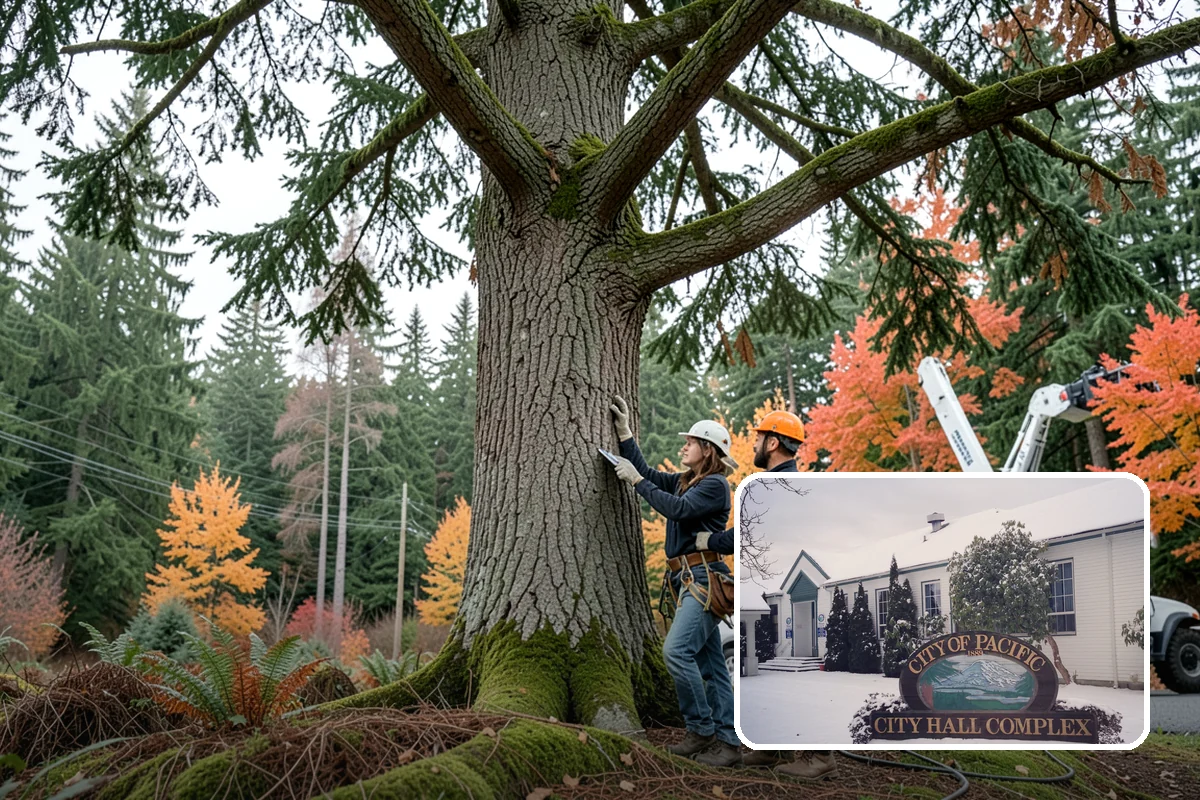
How tree replacement works in Pacific, Washington
Replacement starts with the tree that is coming out, or has already come out. Before any removal, we check with the city of Pacific. The published rules we found don't spell out clearly which removals need city approval, so we ask first and confirm before work starts.
Step by step
- Look at the site: sun, soil, drainage, and what is overhead and underground.
- Choose a species that fits the space at full size, not just the size at purchase.
- Remove the old tree if needed, and decide whether to grind the stump or plant offset from it.
- Plant at the right depth, with the root flare at or just above the soil line.
- Mulch in a wide ring, kept back from the trunk, and set up a watering plan.
Why the local details matter
Pacific sits in USDA plant hardiness zone 8b, according to the 2023 USDA map. That zone number describes average winter lows. It helps narrow the list of species that tolerate the cold here, but it says nothing about your soil or shade, so we still judge each yard on its own.
The rainfall pattern affects timing. Since 81% of the year's precipitation arrives from October to April, planting in that window usually means less hand watering at the start. The dry months are different. A young tree has a small root system, so plan on regular, deep watering through its first few summers.
Choosing what goes back
A tree that outgrows its spot leads to more pruning and sometimes another removal. We talk through mature height, spread and root habits with you before anything is ordered. Our ISA Certified Arborist can walk the site with you, and estimates are free. Call or text 425-484-4442 to set up a visit.
Pacific tree conditions at a glance
| USDA hardiness zone | 8b |
|---|---|
| Soils | 29% of land has hardpan or another restrictive layer within 40 in; most common series Puyallup; 27% well drained |
| Rain and snow falling October to April | 81% of the year’s total |
| Days that freeze at night and thaw by day | 28 a year |
Tree removal rules in Pacific
Pacific’s published rules don’t spell out clearly which removals need city approval. We check with the city before work starts.
Sources: Daymet daily weather (NASA/ORNL), NOAA Storm Events, USDA plant hardiness map 2023, NRCS soil survey, USGS elevation, WA DNR landslide inventory, USDA Forest Service aerial survey, WSDA, city tree assessments and street-tree inventories, SILVIS Lab, Arbor Day Foundation, and official city and utility pages.
Tree Replacement Serving Pacific
Pacific


Also serving Pacific
- Shrub Planting in Pacificat Washington Landscaping
- Municipal Irrigation Installation in Pacificat Washington City Services