Where Safety Meets Expert Tree Service.

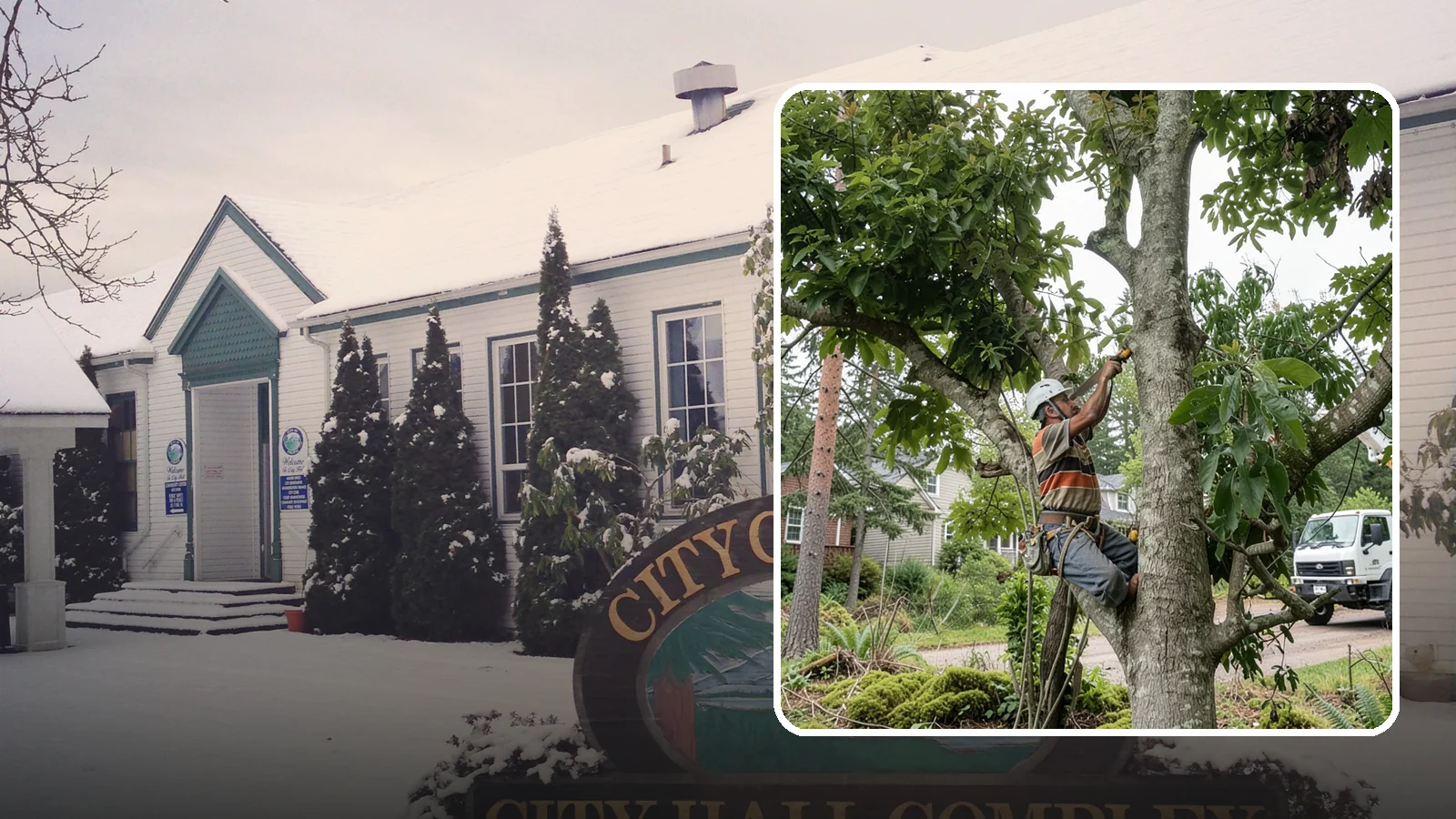
Pacific Tree Pruning
The removal of specific branches to improve a tree’s structure, health, and safety.
How much can you cut off a tree in one visit? As a general rule, WSU Extension's pruning guidance puts the range at zero to 25% of the live canopy, and says to take the least live tissue that gets the job done. For many trees in Pacific, a lighter cut is the right one.
Before you call anyone, walk around the tree. Note dead branches, limbs rubbing each other, growth over the roof or lines, and what the tree is. Fruit trees and other spring bloomers need different timing than shade trees. Photos and notes make a pruning plan much easier to settle.
About Tree Pruning in Pacific
Tree pruning helps homeowners maintain healthy, strong trees that fit well within their landscape. Our trained crews work carefully to remove specific branches while keeping your property safe and attractive year-round. We focus on improving the overall structure of your tree without causing unnecessary stress.
What Pacific Tree Pruning Includes
This service involves removing selected branches to enhance a tree’s health, appearance, and safety around structures or power lines. It targets defective growth like deadwood and weak unions to support a robust framework for future seasons. Every cut is planned to match the specific needs of your tree species and site conditions.
Pacific Tree Pruning Process
We begin by assessing the canopy condition and defining clear goals for what you want to achieve with each tree. Our team selects precise cuts that follow recognized arboricultural standards, ensuring we never remove too much live tissue at once. After making clean incisions at proper points, we lower branches safely, process the wood material, and leave your work area tidy.
Equipment We Use for Pacific Tree Pruning
To complete this job effectively, our crews use hand saws, pole saws, chainsaws, and various climbing or rigging gear as needed. Depending on access requirements, an aerial lift may be brought in to reach higher branches safely. We also utilize a wood chipper for processing cut material and wear full personal protective equipment throughout the project.
Pacific Tree Pruning Safety & Best Practices
Safety is our priority, so we always follow recognized pruning standards to avoid making harmful cuts that could weaken your tree. Our workers watch closely for overhead power lines and unstable limbs before starting any work aloft or on the ground. We limit removal to healthy amounts of live tissue and use fall protection whenever anyone climbs a tree.
Signs You Need Tree Pruning in Pacific
You may need this service if you notice deadwood, weak branch unions, or branches interfering with your home’s structures or utility lines. Over-pruning from previous attempts or improper cuts can cause stress that shows up as declining health in the canopy. If sightlines are blocked by low-hanging limbs or clearance issues exist near walkways, pruning is a good solution.
What Affects the Cost of Tree Pruning in Pacific
The investment for this work depends on factors like your tree species and how large its canopy has grown over time. Access requirements might change if equipment such as an aerial lift is needed to reach certain branches safely. Additionally, the volume of wood material that must be removed and processed will influence the overall cost of the project.
Best Time of Year for Pacific Tree Pruning
The best time for pruning follows recognized arboricultural standards matched to our local Puget Sound climate conditions. We aim to schedule work during natural dormant periods preferred by each specific tree species in your landscape. Timing is critical because cutting at the wrong season can harm the tree or delay its ability to heal properly.
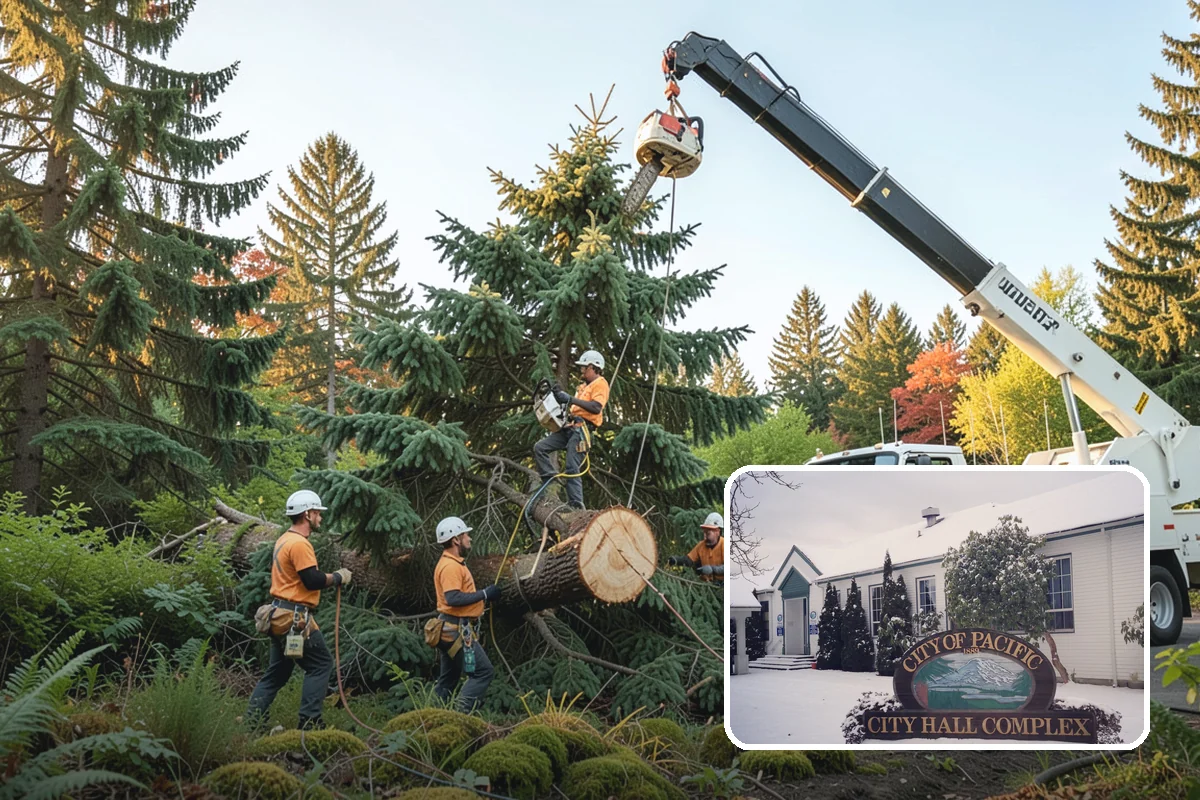
Pruning Timing and Limits for Trees in Pacific, WA
Keep the cut small
The WSU Extension Pacific Northwest Gardener's Handbook, in its chapter on pruning woody landscape plants, gives a tolerance of zero to 25% of a tree's live canopy. It also advises taking the least live tissue that accomplishes the goal. So we start by asking what you want fixed: clearance, deadwood, a weak branch union, or light into a yard. Then we remove only what serves that purpose. Heavy cuts that strip a tree of leaf area stress it, and we do not recommend topping.
Know what your tree blooms on
Timing matters most for flowering and fruiting trees. The same WSU Extension handbook notes that pruning spring bloomers, such as most fruit trees, in the dormant season removes flower buds formed the previous summer. If you want blossoms or fruit this year, pruning right after bloom may suit the tree better than a winter cut. Shade trees that do not depend on spring flowers give you more flexibility, and deadwood can come out whenever it shows up.
Plan around the wet season and wind
Daymet data for 2005 to 2025 shows 81% of Pacific's yearly rain and snow falls from October to April. That is a long stretch of saturated ground and wet weather, so it helps to book work and access for drier months when you can. Separately, the forecast zone that includes Pacific logged 38 high and strong wind episodes from 2005 to 2025. That figure covers the whole zone, not your tree, but it is a fair reason to deal with crossing branches, weak attachments and deadwood before the windy season.
Pacific sits in USDA hardiness zone 8b (USDA map, 2023), which helps when choosing what to plant, but it does not set a pruning calendar by itself.
What to do next
- Photograph the tree from a few sides.
- Mark the branches that worry you.
- Tell us whether it flowers or fruits.
- Say what you want from the cut.
Send those to us at 425-484-4442 by call or text. An ISA Certified Arborist can review the plan, and estimates are free. If a city rule could apply to the work, we check with the city before anything starts.
Pacific tree conditions at a glance
| USDA hardiness zone | 8b |
|---|---|
| Rain and snow falling October to April | 81% of the year’s total |
| Days that freeze at night and thaw by day | 28 a year |
| Electric utility | unconfirmed |
Sources: Daymet daily weather (NASA/ORNL), NOAA Storm Events, USDA plant hardiness map 2023, NRCS soil survey, USGS elevation, WA DNR landslide inventory, USDA Forest Service aerial survey, WSDA, city tree assessments and street-tree inventories, SILVIS Lab, Arbor Day Foundation, and official city and utility pages.
Tree Pruning Serving Pacific
Pacific
Also serving Pacific
- Maple Tree Pruning in Pacificat Washington Landscaping
- Copper Strip Installation in Pacificat Washington Roofing
- Vegetation Management in Pacificat Washington City Services