Where Safety Meets Expert Tree Service.


Pacific Tree Preservation During Construction
Measures to protect trees throughout construction.
The best time to plan tree protection is before anyone brings a machine onto the lot, ideally while the site plan is still being drawn. Pacific sits in USDA hardiness zone 8b (USDA map, 2023), so the ground is rarely frozen for long. That means digging and grading can start in almost any month, and roots can be damaged in any month too.
Protection set up first costs little. Fixing damaged roots later usually can't be done. If you are weighing a build, an addition, or a driveway near existing trees, this page explains how we approach it.
About Tree Preservation During Construction in Pacific
We help homeowners keep their valued trees healthy while building projects happen on their property. Our team takes care of tree preservation during construction so your landscape remains strong after the work is done. This service ensures that retained trees stay in good condition throughout the entire build process.
What Pacific Tree Preservation During Construction Includes
Tree preservation during construction involves specific measures designed to protect trees from damage caused by nearby building activities. We use methods matched to each tree species and site conditions to keep them healthy while you construct your home or addition. These steps help reduce the risk of decline that often comes with major landscaping changes.
Pacific Tree Preservation During Construction Process
The work begins by identifying which trees need protection and mapping out their specific zones before any digging starts. Our trained crews establish protective measures early on and monitor tree health throughout the construction timeline. If issues arise, we address impacts immediately and provide follow-up care to support recovery after the project ends.
Equipment We Use for Pacific Tree Preservation During Construction
We utilize protective fencing and signage to clearly mark areas where equipment must not enter. Ground protection materials like mulch are used to shield roots from compaction, while air excavation tools help us work carefully near sensitive root systems. Monitoring tools allow our team to track tree health closely without disturbing the soil unnecessarily.
Pacific Tree Preservation During Construction Safety & Best Practices
Keeping heavy machinery and traffic out of designated protection zones is a top priority for every job we complete. We avoid making grade changes or compacting soil over existing roots to maintain proper drainage and stability. Coordinating directly with your site crews ensures everyone follows safety protocols, and all measures are documented for compliance.
Signs You Need Tree Preservation During Construction in Pacific
You may need this service if you have plans that involve retaining mature trees while building a new structure. Signs include concerns about root-zone compaction from equipment or delayed decline appearing months after construction finishes. If encroachment by machinery threatens your landscape, our preservation plan helps mitigate those risks before they become permanent damage.
What Affects the Cost of Tree Preservation During Construction in Pacific
The price is influenced by the number of trees you want to keep and their individual size requirements. Species-specific protection needs vary, as do site access constraints that affect how easily equipment can reach certain areas. Additionally, the complexity of establishing root zones against active construction activities plays a role in determining the final cost.
Best Time of Year for Pacific Tree Preservation During Construction
This service can be performed year-round throughout our region, offering flexibility for your project schedule. However, careful monitoring is required during wetter seasons to prevent soil saturation issues that could worsen compaction risks around roots. Planning ahead allows us to adjust methods based on current weather conditions and site moisture levels.
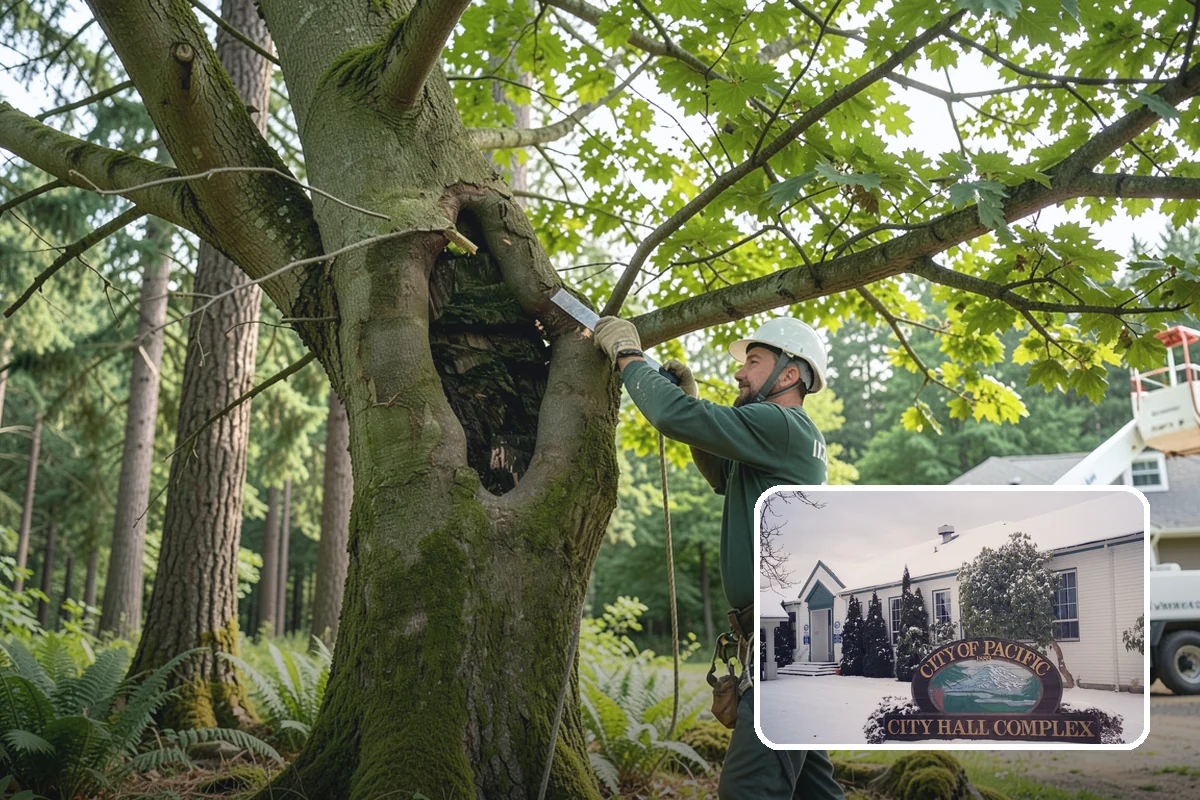
Protecting trees on a Pacific building site
Planning before work starts
We start with a walk of the site, ideally with your site plan in hand. We note which trees are close to the building footprint, utility trenches, and the driveway. Then we mark a protection zone around each tree worth keeping. Standard practice, in line with ISA and ANSI A300 guidance, is fencing that zone off so equipment, materials, and soil piles stay out of it. The farther the fence sits from the trunk, the more roots it protects.
Our ISA Certified Arborist can assess each tree's health and structure first. A tree that is already declining or leaning may not be a good candidate to keep next to a new house.
What affects the scope
Soil matters here. The NRCS soil survey for Pacific shows 29% of the land has a hard or restrictive layer, such as glacial hardpan, within 40 inches of the surface. It also shows 45% of the soil is poorly drained and 27% well drained. That is a survey of the city overall, not a reading of your lot. Still, it suggests roots in some spots may stay shallow and spread wide, so trenching or grading well away from a trunk can still cut them. Compacted, wet soil is also easy to damage with heavy equipment, so we may recommend keeping machines off the root zone entirely.
Other factors include how close the work is, whether any pruning is needed to clear equipment, and how many trees are involved.
Pacific's published tree rules do not clearly say which removals need city approval. If a tree might have to come out, we check with the city before work starts.
What to expect on the day
Setup is usually quick. We install the fencing at the marked distances, add signs if wanted, and walk through the zones with you or your builder. Where traffic can't be avoided, we may spread wood chips over the ground to cushion it. Any pruning follows A300 practice, with no topping.
One practical tip: keep the fence in place until all construction is finished. Once the work is done, maintain wood chips 4 to 6 inches deep to control weeds, as WSU Extension advises in its guide on arborist wood chips as landscape mulch.
Pacific tree conditions at a glance
| Soils | 29% of land has hardpan or another restrictive layer within 40 in; most common series Puyallup; 27% well drained |
|---|---|
| High and strong wind episodes, 2005-2025 | 38 in the forecast zone |
| USDA hardiness zone | 8b |
Tree removal rules in Pacific
Pacific’s published rules don’t spell out clearly which removals need city approval. We check with the city before work starts.
Sources: Daymet daily weather (NASA/ORNL), NOAA Storm Events, USDA plant hardiness map 2023, NRCS soil survey, USGS elevation, WA DNR landslide inventory, USDA Forest Service aerial survey, WSDA, city tree assessments and street-tree inventories, SILVIS Lab, Arbor Day Foundation, and official city and utility pages.
Tree Preservation During Construction Serving Pacific
Pacific

Also serving Pacific
- Garage Demolition in Pacificat Washington Construction
- Debris Removal in Pacificat Washington Landscaping
- Municipal Pathway Construction in Pacificat Washington City Services