Where Safety Meets Expert Tree Service.


Pacific Tree Planting
The selection and planting of new trees.
This page is for owners in Pacific who want to add a tree to a yard, replace one that came down, or fill a bare strip along a driveway or fence line. It also fits anyone who planted before and lost the tree to wet roots or poor placement.
The choices that matter most come before the hole is dug: where the tree goes, how tall it will get, and what the soil under it does after a wet winter. Settling those first makes the planting itself simple.
About Tree Planting in Pacific
Our tree planting services help homeowners establish new greenery that fits their property perfectly. We work with you to bring healthy trees suited to your specific location for long-term benefit. This project is ideal if you want to expand your shade or improve the ecology of your yard.
What Pacific Tree Planting Includes
Tree planting involves carefully selecting and placing new trees where they will thrive best. Our trained crews use methods matched to each tree species, site conditions, and access points. The goal is always to establish healthy trees that support privacy, screening, and a richer environment for wildlife.
Pacific Tree Planting Process
We begin by assessing your site conditions to choose the right species before preparing the soil. Once ready, we plant at the correct depth and spacing, then add mulch and water in each tree. Finally, we provide guidance on establishment care to ensure your new trees get off to a strong start.
Equipment We Use for Pacific Tree Planting
Our crews utilize digging tools, watering equipment, and staking materials as needed for every job. We also bring soil amendments and fresh mulch to support the health of newly planted specimens. All work is done with personal protective equipment to keep our team safe throughout the project.
Pacific Tree Planting Safety & Best Practices
Before any digging begins, we locate underground utilities to prevent damage or injury during installation. We select species suited to your site to avoid future conflicts between roots and structures. Planting at the proper depth and handling trees gently protects their root systems from harm.
Signs You Need Tree Planting in Pacific
You may need this service if you want to restore tree cover lost over time or create new shade areas. It is also a great choice when aiming to improve privacy, screening views, or enhancing your site ecology. Establishing healthy trees suited to the location helps ensure these benefits last for years to come.
What Affects the Cost of Tree Planting in Pacific
The price of planting depends on how difficult it is to access your specific site conditions. Costs are influenced by whether soil amendments are needed for poor or compacted ground and which tree species you choose. Necessary staking materials also play a role in the final cost based on what each project requires.
Best Time of Year for Pacific Tree Planting
In our Pacific Northwest climate, planting works best during dormant seasons to minimize transplant shock for most trees. While evergreens can often be planted year-round with proper care, timing is key to reducing stress on new specimens. We will help you choose a season that gives your new trees the best chance to establish themselves successfully.
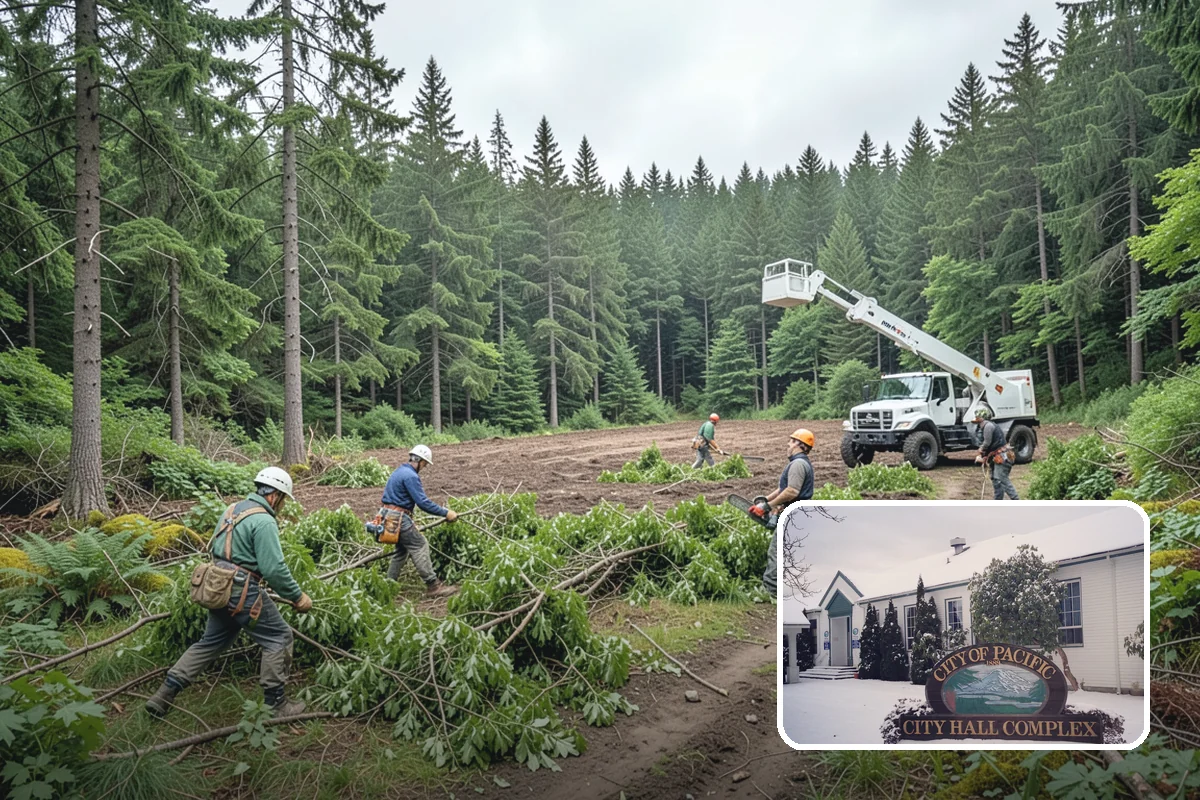
Tree planting options for Pacific yards and soils
Most owners here choose between three approaches. Local soil and rain favor each one differently.
Plant in the ground as it is
The NRCS soil survey lists Puyallup as the most common soil series in Pacific. It also shows 45% of the land as poorly drained and 27% as well drained. A tree that tolerates wet feet suits the poorly drained spots. A tree that wants drier ground belongs only where water clearly leaves.
Plant on a mound or raised planting area
The same survey shows 29% of the land has a hard or restrictive layer, such as glacial hardpan, within 40 inches of the surface. Where that layer sits close, roots can sit in standing water. Setting the root flare slightly high on a broad mound, or breaking up the layer where practical, gives roots more room above it. We would check the hole with a drainage test before choosing, since the survey describes land in general, not your lot.
Choose a smaller tree near wires
If the spot is near distribution lines, the WSU Extension Pacific Northwest Gardener's Handbook says utilities recommend trees with a mature height of 25 feet or less, and 10 feet of clearance is required. A tall species planted there would need repeated pruning later, so pick the species by its mature height, not its size at purchase.
Timing and species fit
- Daymet data for 2005-2025 shows 81% of Pacific's yearly rain and snow falls from October to April. Fall planting gets natural watering, but a wet site stays soggy through that stretch.
- Pacific is USDA hardiness zone 8b (USDA map, 2023). Check that any species you consider is rated for it.
- New trees still need water during dry summer months for the first few seasons.
Good planting follows standard practice: find the root flare, set it at or just above grade, spread mulch in a ring without piling it on the trunk, and stake only if the tree cannot stand alone. Our ISA Certified Arborist can help match species to the site, and estimates are free. Call or text 425-484-4442.
Pacific tree conditions at a glance
| USDA hardiness zone | 8b |
|---|---|
| Soils | 29% of land has hardpan or another restrictive layer within 40 in; most common series Puyallup; 27% well drained |
| Rain and snow falling October to April | 81% of the year’s total |
| Days that freeze at night and thaw by day | 28 a year |
Tree removal rules in Pacific
Pacific’s published rules don’t spell out clearly which removals need city approval. We check with the city before work starts.
Sources: Daymet daily weather (NASA/ORNL), NOAA Storm Events, USDA plant hardiness map 2023, NRCS soil survey, USGS elevation, WA DNR landslide inventory, USDA Forest Service aerial survey, WSDA, city tree assessments and street-tree inventories, SILVIS Lab, Arbor Day Foundation, and official city and utility pages.
Tree Planting Serving Pacific
Pacific

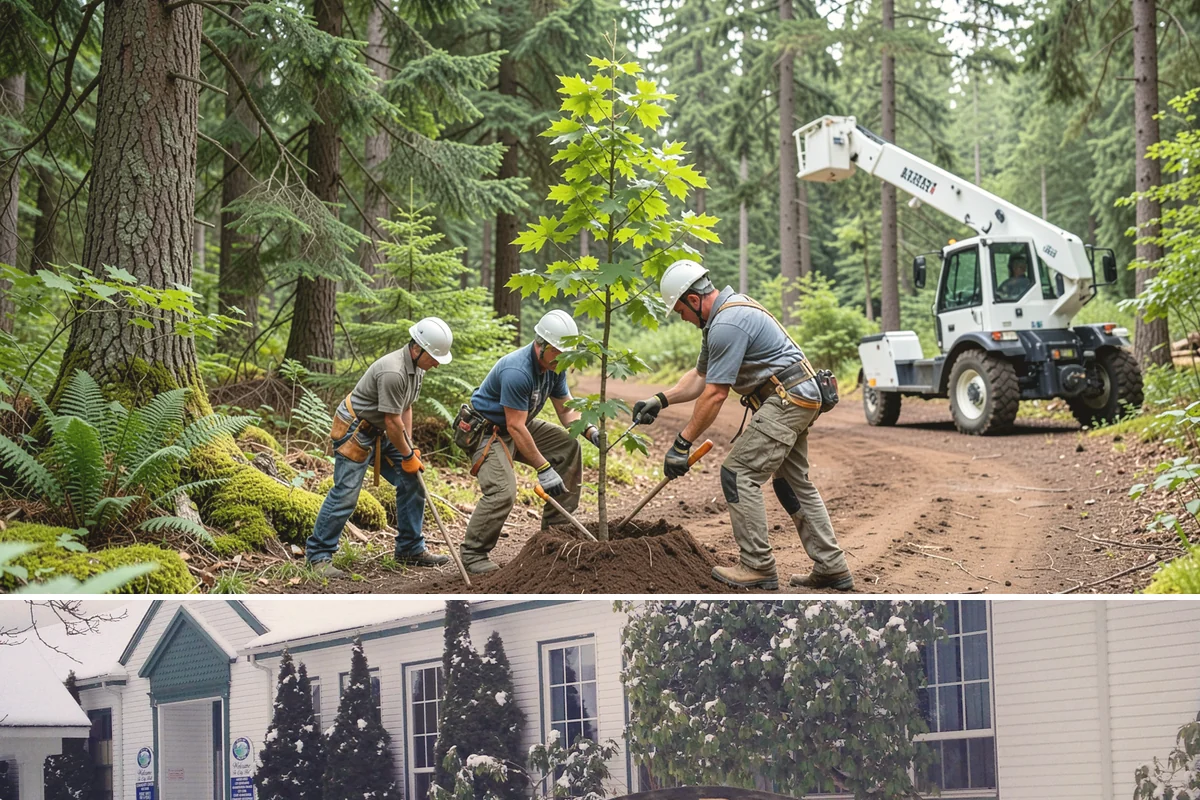
Also serving Pacific
- Ornamental Grass Planting in Pacificat Washington Landscaping
- Municipal Mulch Installation in Pacificat Washington City Services