Where Safety Meets Expert Tree Service.

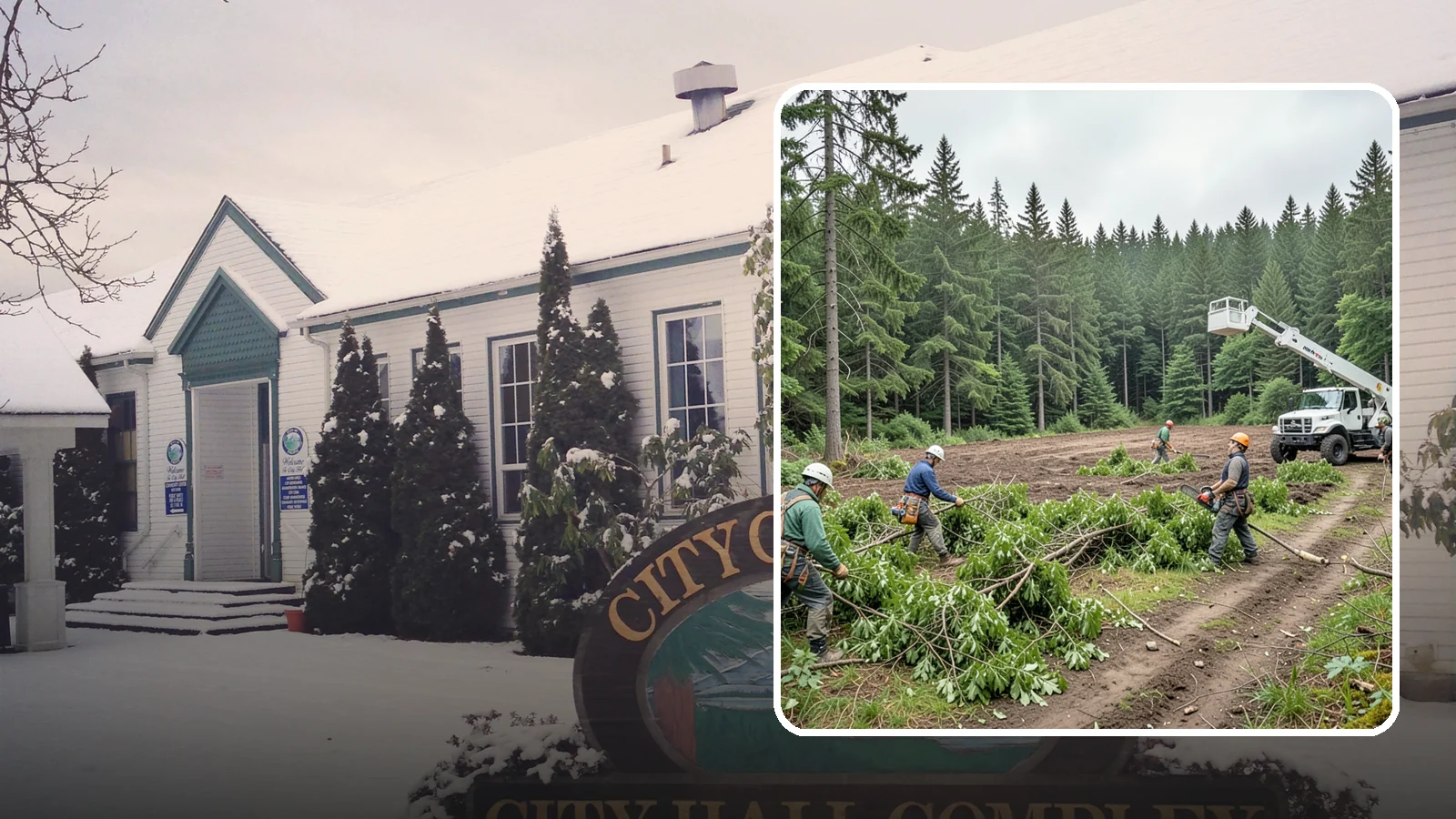
Pacific Trail Clearing
The clearing and maintenance of trails and paths.
The best window for trail clearing is usually late summer into early fall. Ground is firm, vegetation has finished its main growth for the year, and you can see where the path really runs before leaf drop hides it again. Spring clearing tends to grow back fast.
If a trail on your Pacific property has narrowed, filled with brush, or gathered fallen limbs, a walk-through now lets you decide what needs cutting, what can stay, and what should be handled before the wet months arrive.
About Trail Clearing in Pacific
Our trail clearing service helps keep your paths safe, passable, and ready for use throughout the property. We work closely with homeowners who want clear access while managing overgrown vegetation on their land. This approach ensures that trails remain functional without compromising nearby trees or features.
What Pacific Trail Clearing Includes
Trail clearing focuses specifically on maintaining existing trails and paths to ensure they are safe for travel. The process includes removing dense growth, controlling invasive species, and preparing the ground as needed. We match our methods to local tree conditions and site accessibility to deliver effective results.
Pacific Trail Clearing Process
Our trained crews begin by assessing your specific site and marking important features that must be protected during work. Vegetation is then cleared in a planned sequence to maintain stability while removing debris responsibly. Finally, we grade or tidy the area as required before hauling equipment leaves the property with all waste materials.
Equipment We Use for Pacific Trail Clearing
We utilize brush cutters, chainsaws, chippers, and hand tools tailored to the specific vegetation on your site. Hauling equipment is brought in only when ground conditions allow for safe transport over uneven terrain. All crew members wear personal protective gear while operating these machines or using manual tools.
Pacific Trail Clearing Safety & Best Practices
Safety starts with identifying property lines, utility locations, and any features that need retention before work begins. Our team stays alert to uneven terrain and hidden obstacles that could create hazards during clearing operations. We take extra care to protect retained trees and their root zones while managing debris to prevent accidents.
Signs You Need Trail Clearing in Pacific
You may need trail clearing if you notice dense or thorny growth blocking your usual paths along the property. Signs of invasive species regrowing quickly, uneven ground becoming impassable, or wet areas causing access issues are also indicators. If protected features like trees or structures require careful navigation around overgrown sections, this service is appropriate for you.
What Affects the Cost of Trail Clearing in Pacific
The final cost depends on how dense and thorny the vegetation is across your specific trail system. Factors such as invasive species regrowth rates and uneven or wet terrain conditions will influence the time required to complete the job. Additionally, any special measures needed to protect site features during clearing are taken into account when determining pricing.
Best Time of Year for Pacific Trail Clearing
Scheduling work for trail clearing should consider local rainfall patterns that might make hauling equipment difficult on your property. We aim to begin projects only when ground conditions allow our vehicles and machinery to access uneven or wet terrain safely. Planning around these seasonal factors ensures efficient completion while minimizing disruption to your land use.

Planning trail clearing on a Pacific property
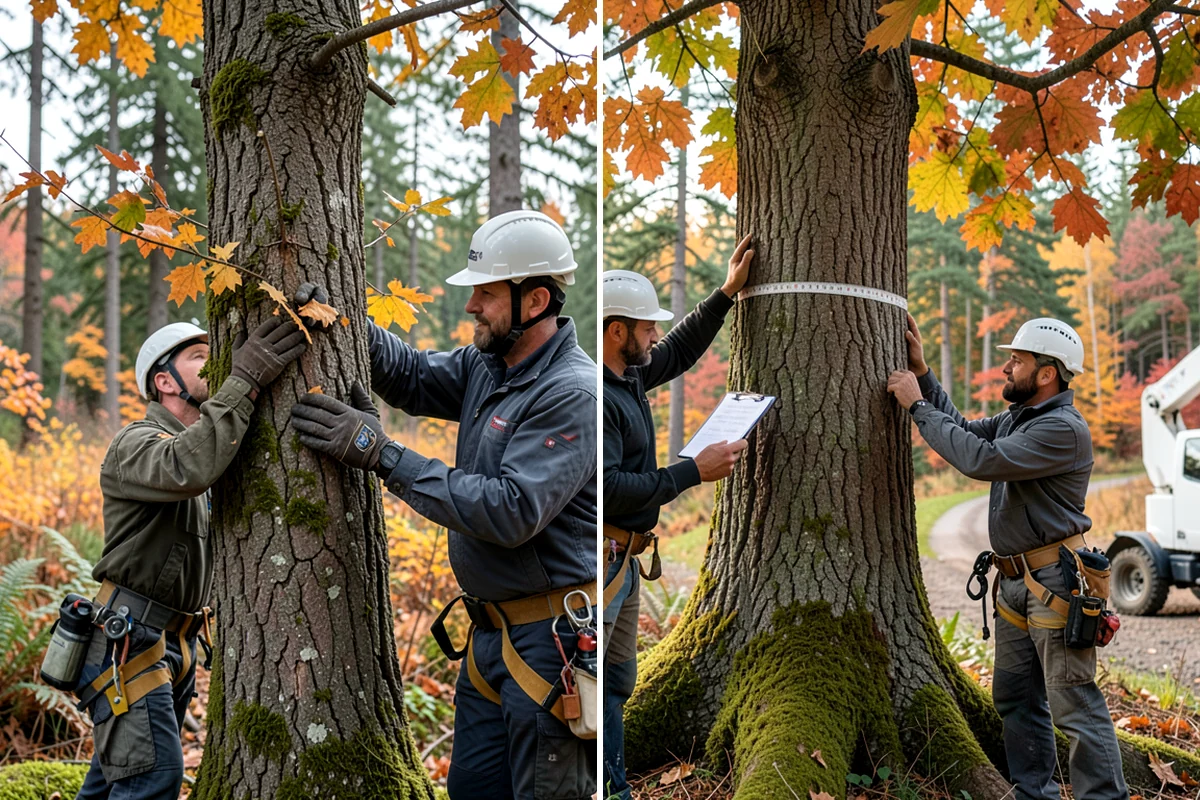
Start by walking the route and marking where you want it to go. Decide how wide it should be and how much headroom you want. Many owners pick a corridor wide enough for a walker or a small cart, then note any spots where the path needs to bend around a tree worth keeping.
What affects the scope
Density of brush, the number of low limbs, and how many downed trees cross the path set most of the work. Slope and wet ground matter too, since they change how material gets moved out. Trees leaning over the route need a closer look. Removing a tree is different from trimming back a branch, and we check with the city before work starts if a tree may fall under a local rule.
Two local details are worth knowing. OpenStreetMap lists 11 parks and nature areas in Pacific, about 11 hectares in all. That tells you open green space here is limited and split into small pieces, so a private trail may connect to or sit near public land. Check boundaries before cutting near an edge.
Also, wind data for the forecast zone that includes Pacific counts 38 high and strong wind episodes from 2005 to 2025. This is a zone-wide figure, not a reading for your lot. It is a good reason to deal with leaning, cracked, or overhanging trees along a trail, since wind is when weak limbs tend to come down onto a path.
What to expect on the day
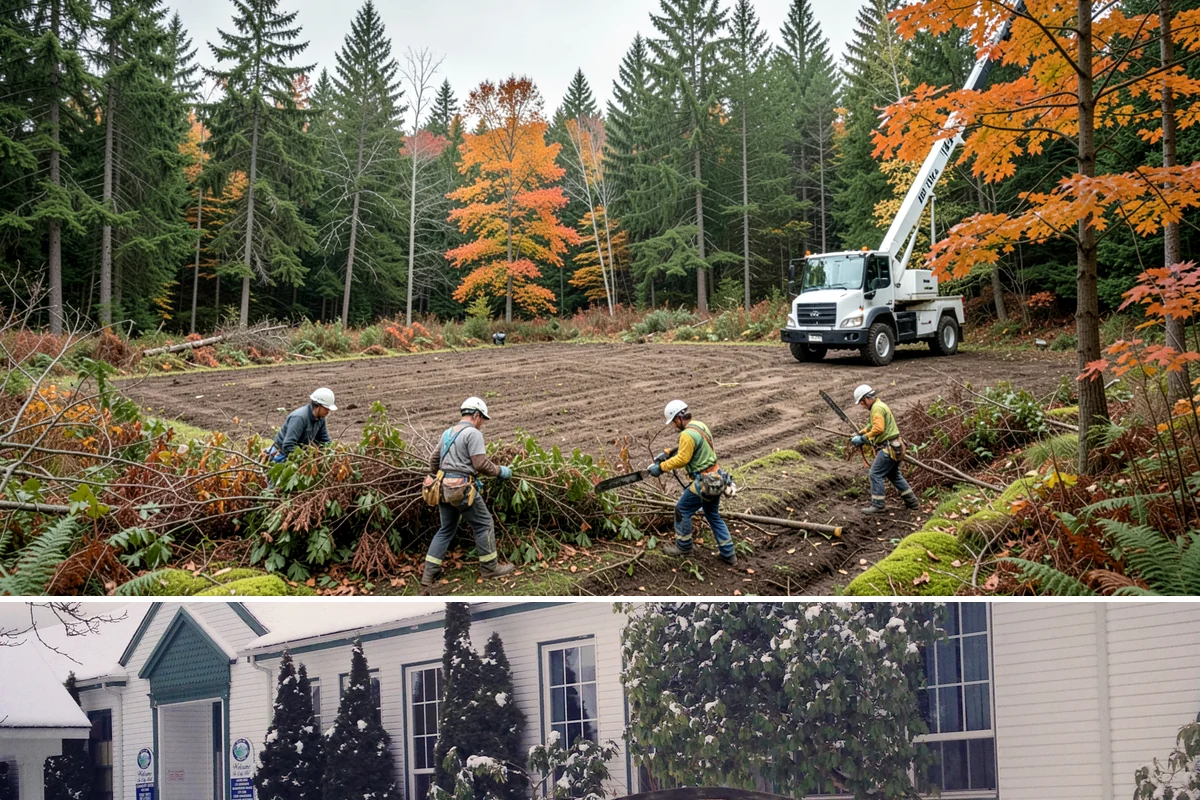
Work usually begins with a walk of the route to confirm the line and flag anything to protect. Brush and small stems are cut back, low limbs are pruned with proper cuts outside the branch collar, and debris is cleared from the tread. Larger fallen wood is cut into manageable pieces. Material is then chipped, stacked, or hauled, depending on what you agreed beforehand.
Our ISA Certified Arborist can advise on which trees should stay and which are risky. Call or text 425-484-4442 for a free estimate.
One practical tip: tie bright flagging tape along the route before anyone arrives. It removes guesswork and keeps the cut where you want it.
Pacific tree conditions at a glance
| Homes in the wildland-urban interface | 0% |
|---|---|
| Land under dense tree cover (50%+ canopy) | 8% |
| Rain and snow falling October to April | 81% of the year’s total |
Tree removal rules in Pacific
Pacific’s published rules don’t spell out clearly which removals need city approval. We check with the city before work starts.
Tree health near Pacific
- Decline, cause not identified890 ac
- Unknown root disease or decay14 ac
- Fir engraver3 ac
Forest damage mapped from the air within 10 km of Pacific, 2021-2025 (USDA Forest Service and WA DNR). This covers forest land, not street or yard trees. “Decline, cause not identified” is dieback with no single cause found.
Sources: Daymet daily weather (NASA/ORNL), NOAA Storm Events, USDA plant hardiness map 2023, NRCS soil survey, USGS elevation, WA DNR landslide inventory, USDA Forest Service aerial survey, WSDA, city tree assessments and street-tree inventories, SILVIS Lab, Arbor Day Foundation, and official city and utility pages.
Trail Clearing Serving Pacific
Pacific
Also serving Pacific
- Land Grading in Pacificat Washington Landscaping
- Deck Demolition in Pacificat Washington Construction
- Herbicide Application in Pacificat Washington City Services
- On-Site Firewood Milling in Pacificat Washington Firewood