Where Safety Meets Expert Tree Service.


Pacific Root Removal
The removal of roots remaining after tree or stump work.
Do I need to remove the roots after a tree comes down? Not always. Roots left in the ground usually decay over time, but they can cause trouble if they sit near a foundation, sewer line, driveway or planned building spot. If any of those apply, removal is worth planning.
Start by noting where the stump or root flare sits and what is nearby. Look for lifted pavement, cracks in walkways, or roots surfacing in the lawn. Those signs help decide how much root to take out and which method fits.
About Root Removal in Pacific
If you have recently had a tree or stump removed but roots remain in your yard, our root removal service can help clear the space for new projects. This work is ideal for homeowners who want to reclaim usable ground or prepare an area for construction and replanting. We are here to ensure your property is left safe and ready for its next use.
What Pacific Root Removal Includes
Root removal focuses on taking out the remaining roots that stay behind after tree or stump work has been completed. This process clears obstructions that could cause tripping hazards while also discouraging pests and unwanted regrowth in the area. By removing these underground remnants, we help you fully utilize your landscape for hardscape installation or new planting efforts.
Pacific Root Removal Process
Our trained crews begin by locating and marking any nearby utilities before starting work to ensure everyone stays safe. We clear the immediate area around the stump and then grind or extract it along with surface roots using appropriate methods. Once removed, we process the resulting debris and backfill the site as needed to restore proper grading for your lawn.
Equipment We Use for Pacific Root Removal
To complete this job effectively, our teams utilize a variety of tools including stump grinders and excavation equipment. We also bring utility locating support systems along with wheelbarrows, rakes, and necessary personal protective gear. These resources allow us to match our methods specifically to the tree species present and the unique conditions of your site.
Pacific Root Removal Safety & Best Practices
Before any grinding begins, we confirm that all underground utilities have been properly located to prevent damage or injury. During work, bystanders are kept clear of ejected debris while crew members wear eye and hearing protection at all times. We also remain vigilant for buried obstructions like rocks or other hazards that could affect the safety of our team or your property.
Signs You Need Root Removal in Pacific
You may need this service if you notice tripping hazards near a stump site or find yourself dealing with pests attracted to remaining roots. If you plan on building hardscape, adding new plants, or simply wanting open space for play and recreation, root removal is the next logical step. Extensive root systems that limit access or cause ground instability are also clear indicators that this work is required.
What Affects the Cost of Root Removal in Pacific
The final cost depends largely on the size of your root system and whether soil conditions contain rock or debris that complicate excavation. Site access limitations for our equipment can influence pricing, as well as any specific requirements to locate underground utilities before we begin. These factors ensure we provide an accurate estimate tailored to the unique challenges of your property.
Best Time of Year for Pacific Root Removal
In our local Puget Sound climate, root removal work can generally proceed throughout all seasons of the year. However, heavy rainfall may temporarily delay projects when it creates muddy ground that is unsuitable for excavation tools and equipment. We monitor weather conditions closely to ensure we only start digging when the site is stable enough for safe operation.
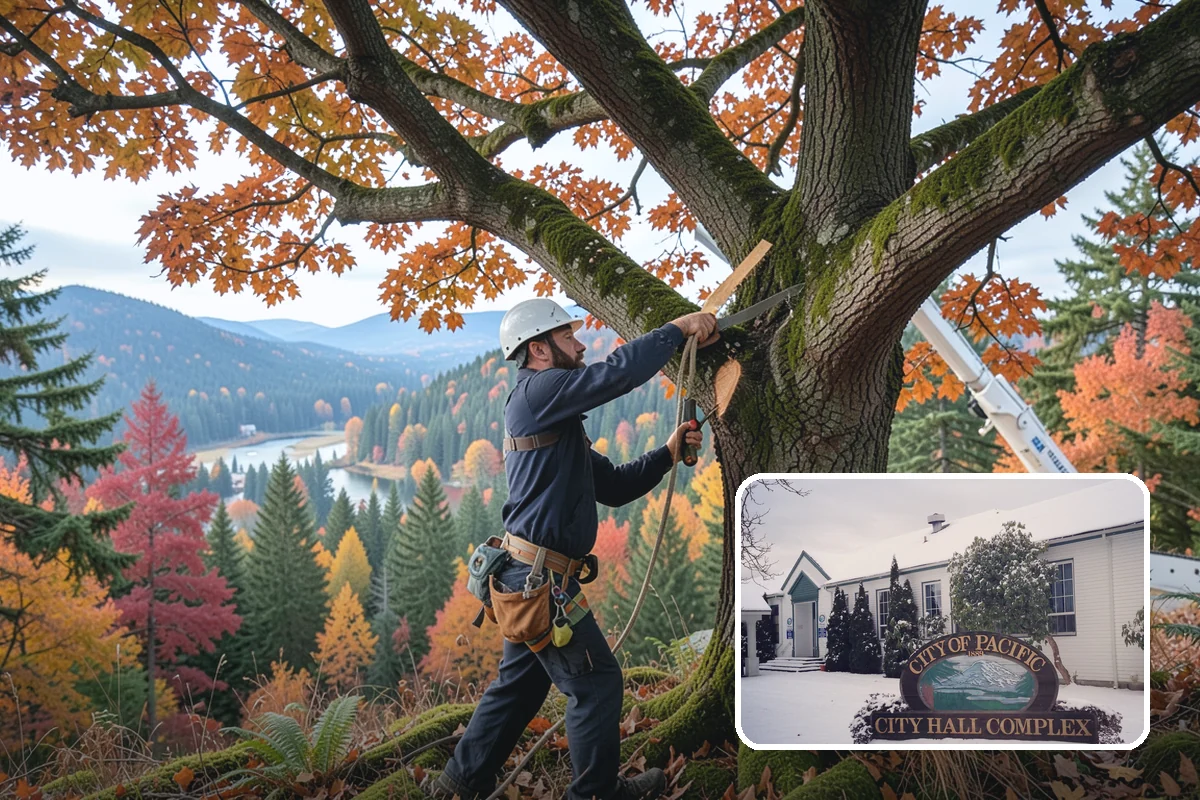
Root removal in Pacific: soils, yards and what to plan for
Why soil matters for roots here
The NRCS soil survey for Pacific shows that 29% of the land has a hard or restrictive layer, such as glacial hardpan, within 40 inches of the surface. Roots that meet a layer like that often spread sideways instead of down. That can mean wide, shallow roots near the surface, which is where they lift paving and crowd utilities. Tracing them takes care.
Wet ground changes the work
The same survey lists Puyallup as the most common soil series. It also reports that 45% of the land is poorly drained and 27% is well drained. Poorly drained soil stays soft and wet for long stretches. Heavy equipment can rut a lawn or compact the ground, so timing and access matter. Drier months are usually easier on the yard. After removal, the hole needs filling and compacting in layers so it does not settle later.
Yards with a house close by
Single-family detached houses make up about 63% of Pacific's housing, according to Census ACS 2020-2024. On those lots, a tree is often only a short distance from the home, a fence or a buried line. That is why we look at what the roots are near before choosing between a few options:
- Grinding the stump and the main roots below grade
- Digging out larger roots by hand or machine where they threaten a structure
- Cutting roots cleanly at a set distance and leaving the rest to decay
Each option has trade-offs. Grinding is fast but does not remove deep roots. Digging is more thorough but disturbs more ground. Before any work, call utility locating so buried lines are marked. If the tree or the work may fall under a city or county rule, we check with the city before starting. Our ISA Certified Arborist can walk the site with you, and estimates are free at 425-484-4442.
Pacific tree conditions at a glance
| Soils | 29% of land has hardpan or another restrictive layer within 40 in; most common series Puyallup; 27% well drained |
|---|---|
| Rain and snow falling October to April | 81% of the year’s total |
| Days that freeze at night and thaw by day | 28 a year |
Tree removal rules in Pacific
Pacific’s published rules don’t spell out clearly which removals need city approval. We check with the city before work starts.
Sources: Daymet daily weather (NASA/ORNL), NOAA Storm Events, USDA plant hardiness map 2023, NRCS soil survey, USGS elevation, WA DNR landslide inventory, USDA Forest Service aerial survey, WSDA, city tree assessments and street-tree inventories, SILVIS Lab, Arbor Day Foundation, and official city and utility pages.
Root Removal Serving Pacific
Pacific

Also serving Pacific
- Lawn Renovation in Pacificat Washington Landscaping
- Storm Cleanup in Pacificat Washington City Services