Where Safety Meets Expert Tree Service.


Pacific Municipal Tree Maintenance
Tree maintenance for public and municipal spaces.
Municipal tree maintenance is for property owners who deal with trees tied to city-managed ground: street trees along the frontage, trees in a right-of-way strip, and sites where it is unclear whether the city or the owner is responsible. It also fits HOAs and managers who want one plan for trees along shared roads.
Start by finding out who owns the tree. Take photos, note where the trunk sits relative to the sidewalk and the property line, and write down what concerns you, such as a lifted sidewalk, dead limbs, or branches over the street.
About Municipal Tree Maintenance in Pacific
This specialized maintenance is designed specifically for public parks, government grounds, and other municipal spaces where tree care goes beyond simple residential trimming. Our trained crews work across these shared properties to ensure every community green stays safe, presentable, and healthy for everyone who visits or lives nearby. We handle the unique challenges of managing trees on a scale that requires careful coordination with traffic patterns and public access needs.
What Pacific Municipal Tree Maintenance Includes
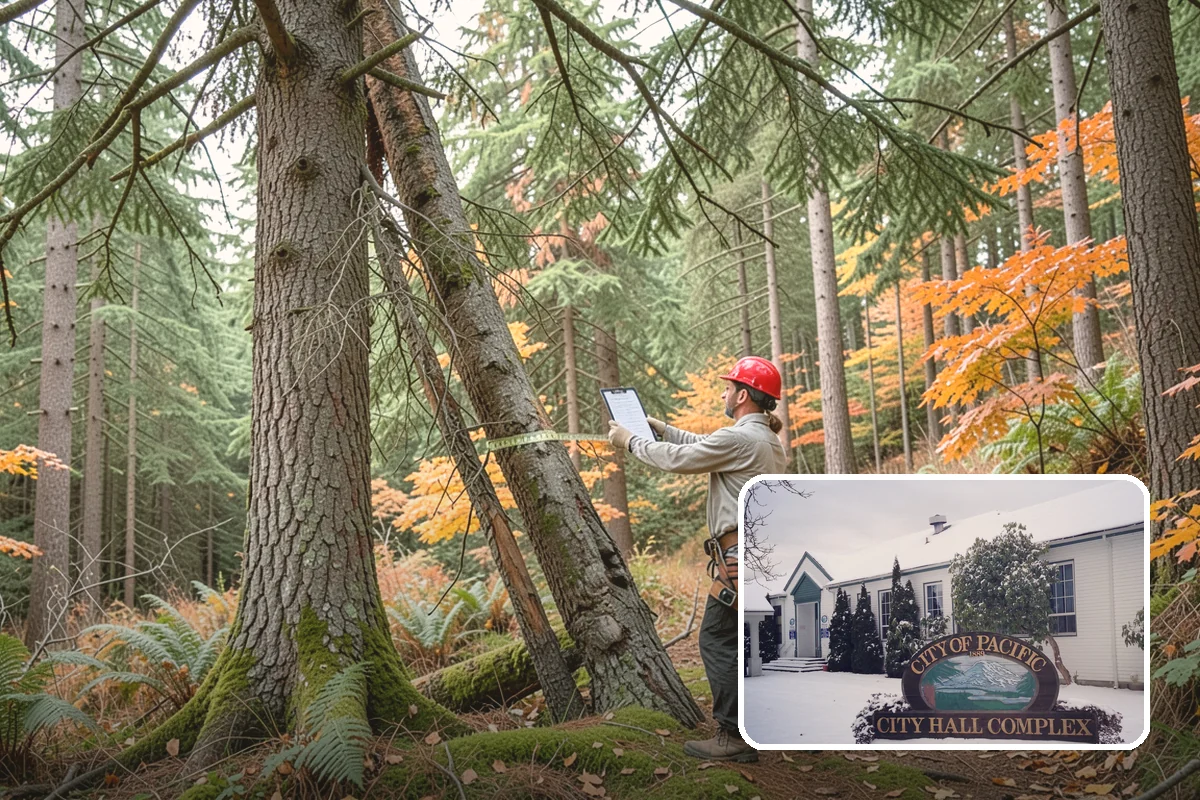
Municipal tree maintenance focuses entirely on caring for trees located in public areas rather than private yards. Our approach includes regular inspections to spot potential issues, followed by pruning and other treatments matched to each specific species and site condition. We also manage the logistics of keeping these spaces looking their best while ensuring that work aligns with recognized arboricultural standards.
Pacific Municipal Tree Maintenance Process
The job begins with a thorough inventory where we assess every tree on the property to understand its current health and structural needs. Based on this assessment, we develop a customized maintenance schedule that prioritizes tasks like recurring pruning and detailed inspections throughout the year. As crews complete their work, they document everything carefully so plans can be updated for future seasons or changing conditions at the site.
Equipment We Use for Pacific Municipal Tree Maintenance
To handle trees in public spaces safely, our teams bring along specialized gear such as rigging equipment and inspection tools tailored to different job requirements. When a tree is too high to reach from the ground, we deploy aerial lifts with precision to access branches without damaging surrounding infrastructure. We also utilize heavy-duty chippers and hauling units to manage debris efficiently while wearing full personal protective equipment at all times.
Pacific Municipal Tree Maintenance Safety & Best Practices
Working in public areas requires strict safety protocols that coordinate our crew movements around pedestrians, vehicles, and other occupants of the space. We establish safe work zones before beginning any task and follow recognized standards to protect both our workers and the general public from hazards like falling branches or dropped tools. Detailed records are kept for every project to ensure full accountability and transparency regarding how safety measures were implemented on site.
Signs You Need Municipal Tree Maintenance in Pacific
You may know this service is needed when a municipal property faces deferred maintenance backlogs that threaten tree stability in high-traffic areas. Varied conditions across a large public site often reveal specific trees requiring immediate attention due to storm damage, disease, or structural weakness. Coordinating access around busy streets and ensuring the schedule fits with community events are also key indicators that professional management is required for these spaces.
What Affects the Cost of Municipal Tree Maintenance in Pacific
The investment in municipal tree maintenance depends heavily on existing deferred maintenance backlogs that may require more extensive work than routine care. Locations with heavy foot traffic or vehicle flow often need careful coordination, which can influence how resources and time are allocated to the project. Additionally, the wide variety of tree conditions found across different public sites and the complexity of accessing certain areas without disrupting daily life will shape the overall budget for the service.
Best Time of Year for Pacific Municipal Tree Maintenance
While we aim to keep trees healthy year-round in our local Puget Sound climate, work follows a recurring schedule aligned with recognized arboricultural standards rather than rushing through every season blindly. We plan tasks so that pruning and inspections happen when they are most effective for each species while accounting for typical weather patterns throughout the year. This approach ensures consistent care without interrupting public access or safety during peak usage times in any given month.
Choosing a Municipal Tree Maintenance Approach in Pacific
Owners in Pacific usually pick from a few approaches. The right one depends on who owns the tree and what the tree needs.
Your options
- Report to the city and wait. This suits trees clearly in the public right-of-way where you are not allowed or expected to do the work.
- Routine care on your own trees. Structural pruning, deadwood removal, and clearance over walks and driveways, following ANSI A300 style practice.
- Assessment first, then decide. An arborist looks at a tree of unclear ownership or condition and writes down what is found before anything is cut.
What local conditions favor
Pacific sits in USDA hardiness zone 8b, according to the 2023 USDA map. That is a mild range, so many species grow actively through a long season. Trees along frontages can put on fast growth that needs regular clearance work, so a scheduled pruning cycle often makes more sense than waiting for a complaint.
About 81% of Pacific's yearly rain and snow falls from October to April, based on Daymet data for 2005 to 2025. Wet soil through those months is the main reason to inspect before winter. Saturated ground can loosen root hold, and trees with dead limbs or poor structure deserve attention in the dry months, when work is easier on the site and the tree.
Where the city comes in
Pacific spans King and Pierce counties, and we have not confirmed which electric utility serves a given address. If a tree is near power lines, we sort out that question before any work is planned. Because ownership and permit rules for trees on city land can be unclear, we check with the city before work starts rather than assume.
If you are unsure which approach fits, call or text 425-484-4442 for a free estimate and an ISA Certified Arborist's view of the tree.
Pacific tree conditions at a glance
| USDA hardiness zone | 8b |
|---|---|
| High and strong wind episodes, 2005-2025 | 38 in the forecast zone |
| Soils | 29% of land has hardpan or another restrictive layer within 40 in; most common series Puyallup; 27% well drained |
Tree removal rules in Pacific
Pacific’s published rules don’t spell out clearly which removals need city approval. We check with the city before work starts.
Sources: Daymet daily weather (NASA/ORNL), NOAA Storm Events, USDA plant hardiness map 2023, NRCS soil survey, USGS elevation, WA DNR landslide inventory, USDA Forest Service aerial survey, WSDA, city tree assessments and street-tree inventories, SILVIS Lab, Arbor Day Foundation, and official city and utility pages.
Municipal Tree Maintenance Serving Pacific
Pacific

Also serving Pacific
- Root Pruning in Pacificat Washington City Services
- Landscape Inspection in Pacificat Washington Landscaping
- Restaurant Buildout in Pacificat Washington Construction
- Sidewalk Gum Removal in Pacificat Washington Pressure Washing