Where Safety Meets Expert Tree Service.


Pacific Large Tree Removal
The sectional removal of large-diameter or tall trees.
In the forecast zone that includes Pacific, the strongest gust recorded since 2005 was 74 mph, on December 14, 2006. That is a useful number if you are looking at a tall tree with a lean, a split trunk, or dead limbs over a roof, driveway or fence line.
Large tree removal works best when it is planned before a storm tests the tree. A look at the trunk, the root flare and the crown can show whether the tree needs to come down, and how it can be taken down safely near your home.
About Large Tree Removal in Pacific
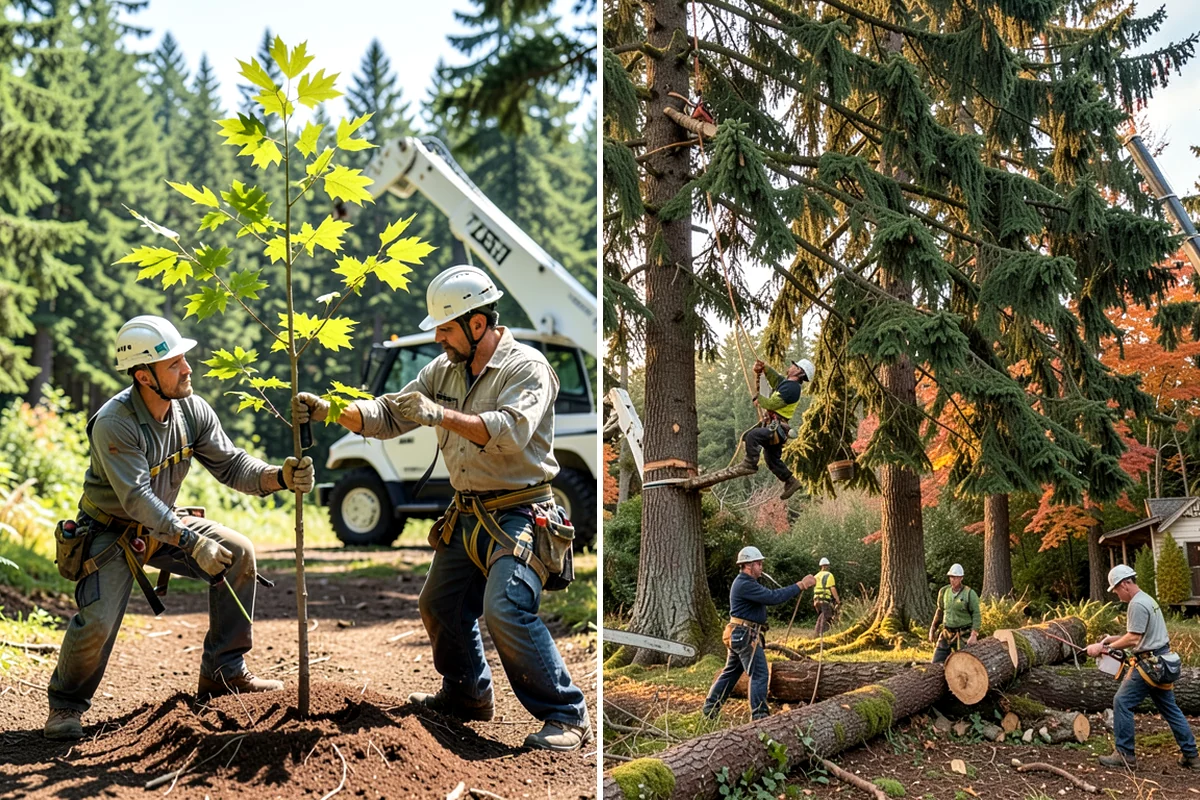
We specialize in safely removing large-diameter or tall trees that require special attention during felling. This service is designed for homeowners who need professional help clearing mature trees from their property while protecting nearby structures. Our trained crews use recognized standards to ensure the job is completed efficiently and securely.
What Pacific Large Tree Removal Includes
Large tree removal involves taking down substantial trees using rigging techniques or mechanical assistance when necessary. We match our methods carefully to the specific species of your tree, current site conditions, and available access points. This approach ensures that even complex jobs are handled with precision and care for your landscape.
Pacific Large Tree Removal Process
The work begins with an on-site assessment to evaluate hazards and establish safe drop zones around the area. Our crew will then rig limbs or lower them in a controlled sequence before felling the main stem as planned. Afterward, we process the wood, haul away debris, and perform final cleanup so your property is left clear and tidy.
Equipment We Use for Pacific Large Tree Removal
To handle these large jobs safely, our teams utilize chainsaws, climbing gear, and rigging equipment to manage heavy limbs. We bring a wood chipper on site along with ground protection mats to shield your landscaping during operations. When the tree size or location requires it, we deploy aerial lifts or cranes to assist with safe removal.
Pacific Large Tree Removal Safety & Best Practices
Safety is our priority, so we maintain clear drop zones and follow controlled fall paths at all times. Before any work begins, we identify overhead utility lines and inspect for hidden decay that could affect structural stability. Our climbers use proper fall protection while coordinating closely with ground crew members to communicate throughout the project.
Signs You Need Large Tree Removal in Pacific
You may need this service if you have a mature tree showing signs of internal decay or an unpredictable lean toward your home. Situations where equipment access is limited or power lines run close to the canopy also indicate when professional removal is required. These factors often mean that standard felling methods are not safe enough for your specific situation.
What Affects the Cost of Large Tree Removal in Pacific
The cost of removing a large tree depends on variables such as hidden internal decay and how close it sits to structures like houses. If limited access requires mechanical assistance, the use of aerial lifts or cranes will also influence the overall pricing. Each job is unique, so factors like load distribution and site conditions play a significant role in determining the final expense.
Best Time of Year for Pacific Large Tree Removal
In our Puget Sound climate, late fall or winter often provides the best time for this work once foliage has dropped. Removing leaves allows us to see defects more clearly on large-diameter trees before we begin cutting. While safety measures allow year-round operation, these seasons generally offer improved visibility and working conditions for complex removals.

Large tree removal in Pacific: how the work goes
Every large removal starts with a walk around the tree and the space under it. We look at the trunk, the base, the crown and what sits nearby: buildings, wires, fences, and neighbors' property.
Plain steps
- Assess the tree for decay, cracks, lean, dead wood and root problems.
- Check with the city before work starts, since the published Pacific rules we found don't spell out clearly which removals need city approval.
- Plan the cut sequence and the drop zone, and decide whether the tree can be felled whole or must be taken down in sections.
- Remove the tree, usually top-down in pieces when space is tight, with rigging to lower sections under control.
- Clean up the debris and discuss what to do with the stump.
Why the wind figure matters
The 74 mph gust comes from the forecast zone that includes Pacific, not from a reading at your address. It still shows that strong wind events do happen in this region. A tree with included bark, a cavity, or a heavy lean toward your house deserves attention sooner rather than later. A healthy tree with a sound structure may only need pruning instead, and we will tell you which applies.
Planning a replacement
Pacific sits in USDA plant hardiness zone 8b, according to the 2023 USDA map. If you want to plant after a removal, that zone helps you choose species that tolerate typical winter lows. Keep new trees well away from structures and overhead lines at their mature size.
Call or text 425-484-4442 to set up a free estimate with our ISA Certified Arborist. Photos of the tree and its surroundings help us prepare before the visit.
Pacific tree conditions at a glance
| USDA hardiness zone | 8b |
|---|---|
| Soils | 29% of land has hardpan or another restrictive layer within 40 in; most common series Puyallup; 27% well drained |
| High and strong wind episodes, 2005-2025 | 38 in the forecast zone |
| Electric utility | unconfirmed |
Tree removal rules in Pacific
Pacific’s published rules don’t spell out clearly which removals need city approval. We check with the city before work starts.
Strongest wind events near Pacific
- Dec 14, 2006: gusts to 74 mph
- Feb 3, 2006: gusts to 67 mph
- Jan 12, 2021: gusts to 61 mph
NOAA Storm Events, forecast zone that includes Pacific, 2005-2025.
Sources: Daymet daily weather (NASA/ORNL), NOAA Storm Events, USDA plant hardiness map 2023, NRCS soil survey, USGS elevation, WA DNR landslide inventory, USDA Forest Service aerial survey, WSDA, city tree assessments and street-tree inventories, SILVIS Lab, Arbor Day Foundation, and official city and utility pages.
Large Tree Removal Serving Pacific
Pacific

Also serving Pacific
- Herb Garden Installation in Pacificat Washington Landscaping
- Memorial Tree Planting in Pacificat Washington City Services
- Tree Removal for Firewood in Pacificat Washington Firewood