Where Safety Meets Expert Tree Service.


Pacific Insect Diagnosis
The identification of insect pests affecting tree health.
This service is for owners in Pacific who see something wrong in a tree and can't tell if insects are the cause. Typical signs include thinning crowns, dead branch tips, sawdust or small exit holes in bark, sticky leaves, or leaves that drop early.
A diagnosis looks at the whole tree before anyone names a cause. Insects are sometimes the problem, but drought, root decay, and fungi can look much the same. Knowing which one you have decides whether treatment, pruning, monitoring, or removal makes sense.
About Insect Diagnosis in Pacific
Our insect diagnosis service helps you understand exactly what pests might be affecting your trees’ health. We work directly for homeowners who want clear answers about infestations before they become serious problems. This approach ensures that every tree receives the specific care it needs to thrive in its environment.
What Pacific Insect Diagnosis Includes
Insect diagnosis is a focused look at bugs and insects impacting your landscape’s vitality. Our trained crews identify these pests while considering soil conditions, site factors, and how easily we can access each tree. The goal is to confirm any infestations so you can move forward with targeted management steps that fit the specific situation.
Pacific Insect Diagnosis Process
We begin by carefully inspecting both the tree itself and its surrounding area for clues about pest activity or other issues. Our team identifies contributing factors such as poor soil, disease presence, or past construction changes that might be at play. Based on these findings, we recommend appropriate treatments and document our observations to guide your follow-up care plan.
Equipment We Use for Pacific Insect Diagnosis
To get an accurate picture of tree health, we use specialized diagnostic tools designed for detailed inspection. Our crews bring along soil probes and sampling kits to check the ground beneath your trees without causing harm. When necessary, we also utilize air excavation equipment or injection systems to reach areas that are hard to see from the surface.
Pacific Insect Diagnosis Safety & Best Practices
We strictly follow product label guidelines when applying any treatments to protect both people and plants in your yard. Our methods prioritize avoiding damage to roots and trunks while ensuring surrounding plantings remain safe during our work. Every step of the process is documented accurately to maintain a clear record of conditions before, during, and after service.
Signs You Need Insect Diagnosis in Pacific
You may need this service if you notice unexplained decline or suspect that pests are harming your valued trees. It becomes especially important when there are signs of girdling roots, compacted soil, or issues from past construction work affecting the site. Using our diagnosis helps catch these problems early before they escalate into larger health concerns for your landscape.
What Affects the Cost of Insect Diagnosis in Pacific
The price we quote depends on factors like the specific species of tree you have and how difficult it is to reach them. Site conditions such as tight spaces around roots or complex soil issues will also influence the overall cost of diagnosis. Additionally, identifying multiple contributing factors like disease alongside pests may adjust the complexity and final investment required for your project.
Best Time of Year for Pacific Insect Diagnosis
In our local climate, this service can be scheduled at any time throughout the year to address immediate concerns. However, during wetter seasons in Puget Sound areas, we might need air excavation tools to get a clear view of root zones for an accurate diagnosis. Planning ahead allows us to choose the right equipment and timing that ensures the most reliable results for your specific trees.
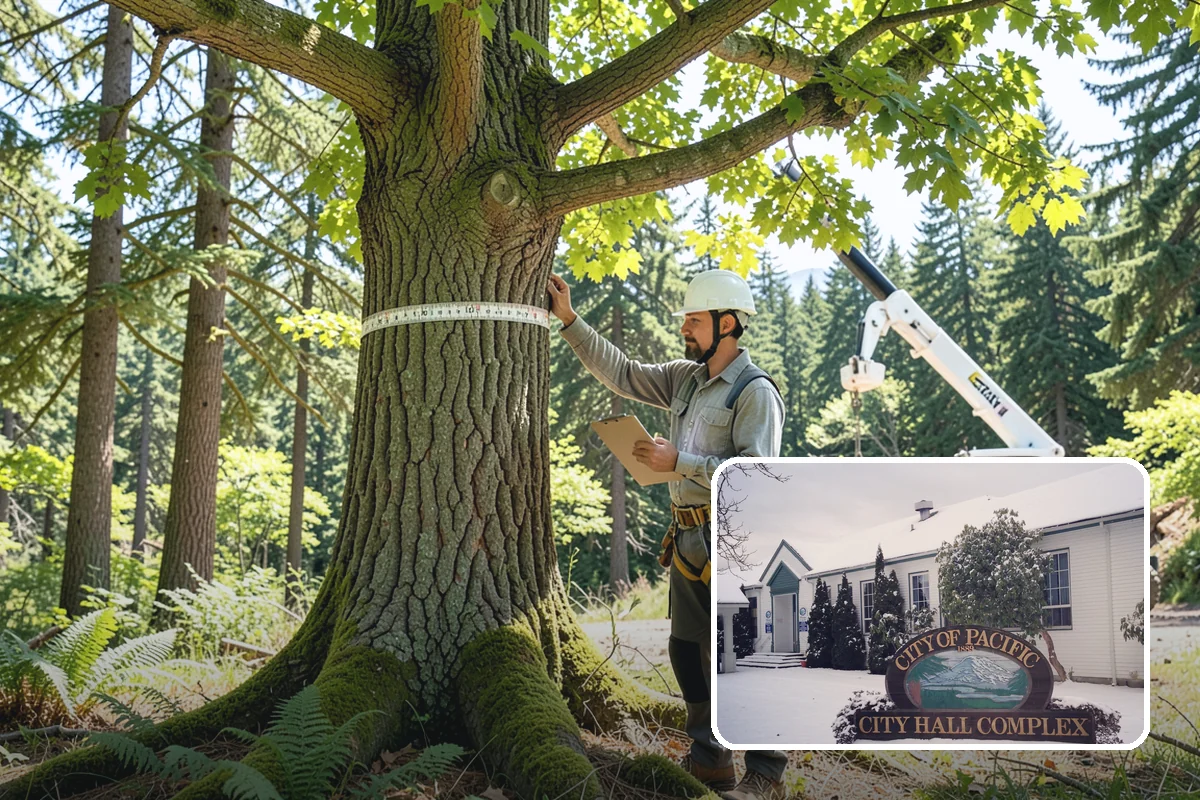
Choosing a diagnosis approach for trees in Pacific
There are a few ways to handle a tree that looks unwell. Which one fits depends on how fast the symptoms are changing and how close the tree is to a house, driveway, or play area.
Option 1: Watch and record
If the change is small, such as a few off-color leaves, take dated photos of the same branches every couple of weeks. This costs nothing and shows whether the problem is spreading. It is a poor choice if you see bark cracking, fresh sawdust, or a lean that is new.
Option 2: On-site inspection
An inspection checks leaves, twigs, bark, the trunk base, and the soil around the roots. The goal is to separate insect damage from disease, decay, and stress. We may take samples for a lab when the signs don't point to one cause. Our ISA Certified Arborist can do this, and estimates are free at 425-484-4442.
Option 3: Treat or remove after diagnosis
Only after a cause is identified should you choose a treatment, corrective pruning, or removal. Spraying on a guess can waste effort and miss the real problem.
What local information tells you
- Emerald ash borer has been confirmed in Washington only near Vancouver and College Place, according to the state agriculture department (WSDA, 2026), not in Puget Sound counties. A declining ash here is more likely to have another cause, though a sample can confirm that.
- A federal and state aerial survey (USDA Forest Service and WA DNR, 2021-2025) of forest within 10 km of Pacific mapped 890 acres of decline with no cause identified, mostly hardwoods and western redcedar. That is forest land, not yard trees. It does show that dieback without a clear cause is common nearby, which is why we look at several possible causes.
- The sooty bark fungus is thought to turn harmful only after heat or drought stress (WSU Urban Forest Health Lab). If your maple or similar tree struggled after a hot, dry summer, that history is worth sharing.
If the tree is near a structure and the symptoms are progressing, skip the watching stage and get it inspected. If a removal might be needed, we check with the city before work starts.
Pacific tree conditions at a glance
| USDA hardiness zone | 8b |
|---|---|
| Soils | 29% of land has hardpan or another restrictive layer within 40 in; most common series Puyallup; 27% well drained |
| Rain and snow falling October to April | 81% of the year’s total |
| Days with 0.1 in or more of rain | 108 a year |
| Days that freeze at night and thaw by day | 28 a year |
Tree health near Pacific
- Decline, cause not identified890 ac
- Unknown root disease or decay14 ac
- Fir engraver3 ac
Forest damage mapped from the air within 10 km of Pacific, 2021-2025 (USDA Forest Service and WA DNR). This covers forest land, not street or yard trees. “Decline, cause not identified” is dieback with no single cause found.
Sources: Daymet daily weather (NASA/ORNL), NOAA Storm Events, USDA plant hardiness map 2023, NRCS soil survey, USGS elevation, WA DNR landslide inventory, USDA Forest Service aerial survey, WSDA, city tree assessments and street-tree inventories, SILVIS Lab, Arbor Day Foundation, and official city and utility pages.
Insect Diagnosis Serving Pacific
Pacific
Also serving Pacific
- Garden Bed Maintenance in Pacificat Washington Landscaping
- Irrigation Maintenance in Pacificat Washington City Services