Where Safety Meets Expert Tree Service.


Pacific Growth Regulator Applications
Applications that slow shoot growth to support tree health.
In Pacific, 81% of the year's rain and snow falls between October and April, according to Daymet data for 2005 to 2025. That means summer is the dry stretch, and a tree's condition going into it affects how it handles a growth regulator treatment.
Growth regulators slow a tree's shoot growth. Owners often ask about them for trees that keep growing into wires, roofs, or fences. Before you decide, it helps to know what the product does, which trees suit it, and how to time the work around the season.
About Growth Regulator Applications in Pacific
Growth regulator applications help your trees grow more slowly so they stay healthy under stress. This care is perfect for homeowners who want their valued specimens to last longer without needing frequent pruning. We focus on supporting tree health while working carefully around the unique conditions of your property.
What Pacific Growth Regulator Applications Includes
This service involves applying specific treatments that slow shoot growth to support overall tree stability. By reducing how fast new shoots develop, we help trees handle stress better and catch problems before they get worse. The goal is to improve soil and root conditions so your trees remain strong for years to come.
Pacific Growth Regulator Applications Process
Our trained crews start by inspecting the tree and its site to find issues like poor soil or pests. We identify contributing factors such as girdling roots or disease, then recommend and apply the right treatments for that specific species. Afterward, we document our findings so you know exactly what was done and how to care for it afterward.
Equipment We Use for Pacific Growth Regulator Applications
To do this work correctly, we use diagnostic tools and soil probes to check the ground beneath your trees. We bring injection or application equipment along with air excavation tools when needed to reach difficult areas safely. All crew members wear personal protective equipment while handling these specialized supplies on site.
Pacific Growth Regulator Applications Safety & Best Practices
We follow strict label guidelines for any products used to ensure they are applied correctly and protect surrounding plants. Our methods avoid damaging the tree’s roots or trunk during application, keeping your landscape intact throughout the job. Accurate documentation of conditions helps us maintain a safe environment while we work around existing vegetation.
Signs You Need Growth Regulator Applications in Pacific
You might need this service if you notice compacted soil, girdling roots, or signs that pests and disease are affecting your trees. Decline caused by past construction projects or changes in ground grade can also signal it is time for growth regulation. If pruning has become too frequent because shoots grow back quickly, our treatments can help slow that cycle down effectively.
What Affects the Cost of Growth Regulator Applications in Pacific
The price depends on the species of tree you have and how difficult access might be to reach them. We must identify complex factors like soil quality or root issues before applying any treatment, which influences the final cost. Site conditions play a major role in determining what approach works best for your specific situation without inventing fixed rates.
Best Time of Year for Pacific Growth Regulator Applications
Applications work best when trees are actively growing so they can take up the treatments effectively. We avoid working during extreme heat or dormant periods that are common here to ensure the products perform as intended. Timing is key to matching our methods with the natural rhythm of growth in your local climate.
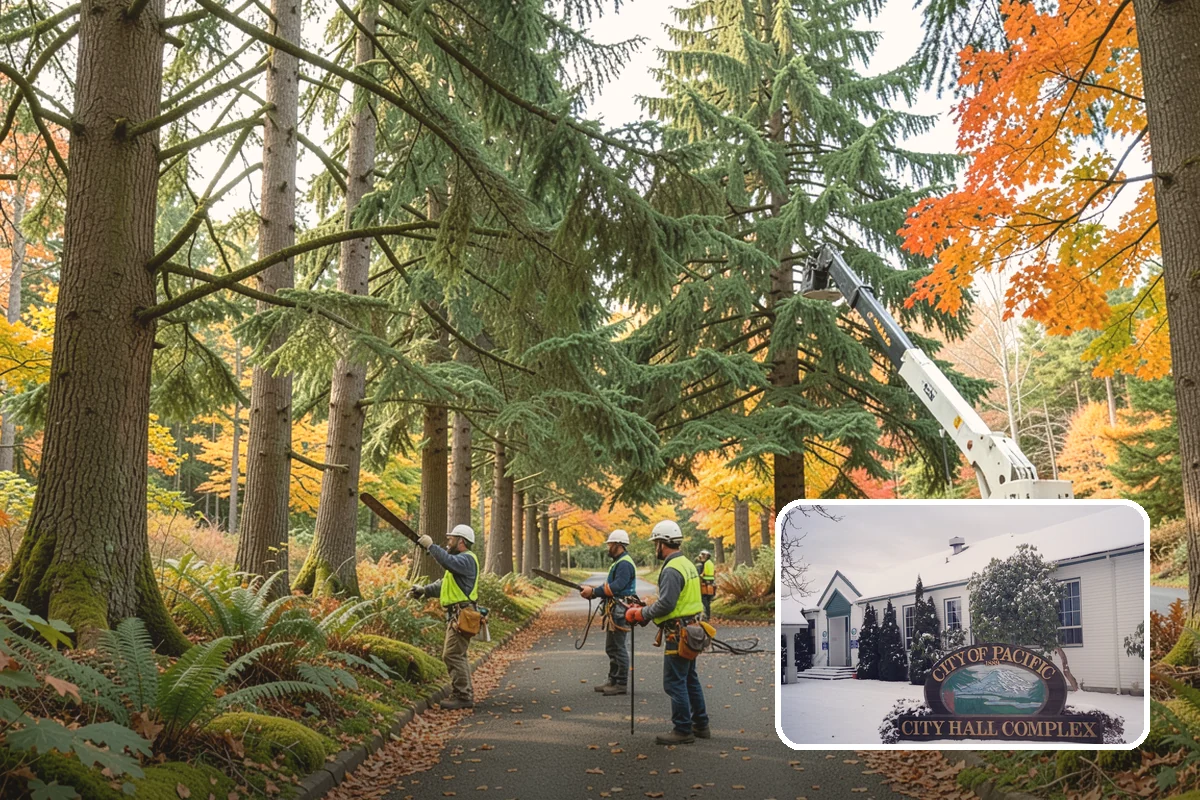
How growth regulator applications work in Pacific
A growth regulator is a product that slows shoot growth in a tree. It does not stop growth, and it does not replace pruning. Where a tree needs clearance from a structure, pruning is still the standard way to get it. A regulator may reduce how fast the tree grows back afterward.
The steps
- Look at the tree. We check species, health, and the reason for the request.
- Decide if a regulator fits. A stressed or declining tree is usually not a good candidate.
- Choose the method and timing. Products can be applied to the soil around the base or in other ways, depending on the product and the tree.
- Apply it, then plan a follow-up check on how the tree responds.
Why the dry summer matters here
Pacific gets 81% of its yearly rain and snow from October to April, per Daymet data for 2005 to 2025. Soil moisture drops through summer. A tree already short on water is a poor candidate for any treatment that changes how it grows. If you have cedars, WSU HortSense notes they may need extra irrigation during summer drought to reduce flagging, which is when branch tips turn brown and die back. Watering them well matters before and after any treatment, so you can tell drought stress from a reaction to the product.
Climate and species
The USDA map from 2023 places Pacific in plant hardiness zone 8b. That tells you which trees are generally suited to winter lows here. It does not tell you how a particular tree will respond to a regulator, so we judge that tree by tree.
Pacific sits in both King and Pierce counties, and we have not confirmed which electric utility serves your address. If the goal is to keep a tree away from power lines, check with your utility first. Work near lines is a separate matter from a regulator application. We also check with the city before work starts if there is any question about rules for your property.
To talk through your trees, call or text 425-484-4442. Estimates are free, and an ISA Certified Arborist is on staff.
Pacific tree conditions at a glance
| USDA hardiness zone | 8b |
|---|---|
| Soils | 29% of land has hardpan or another restrictive layer within 40 in; most common series Puyallup; 27% well drained |
| Rain and snow falling October to April | 81% of the year’s total |
| Days with 0.1 in or more of rain | 108 a year |
| Days that freeze at night and thaw by day | 28 a year |
Tree health near Pacific
- Decline, cause not identified890 ac
- Unknown root disease or decay14 ac
- Fir engraver3 ac
Forest damage mapped from the air within 10 km of Pacific, 2021-2025 (USDA Forest Service and WA DNR). This covers forest land, not street or yard trees. “Decline, cause not identified” is dieback with no single cause found.
Sources: Daymet daily weather (NASA/ORNL), NOAA Storm Events, USDA plant hardiness map 2023, NRCS soil survey, USGS elevation, WA DNR landslide inventory, USDA Forest Service aerial survey, WSDA, city tree assessments and street-tree inventories, SILVIS Lab, Arbor Day Foundation, and official city and utility pages.
Growth Regulator Applications Serving Pacific
Pacific

Also serving Pacific
- Ornamental Grass Cutting in Pacificat Washington Landscaping
- Seasonal Flower Planting in Pacificat Washington City Services