Where Safety Meets Expert Tree Service.

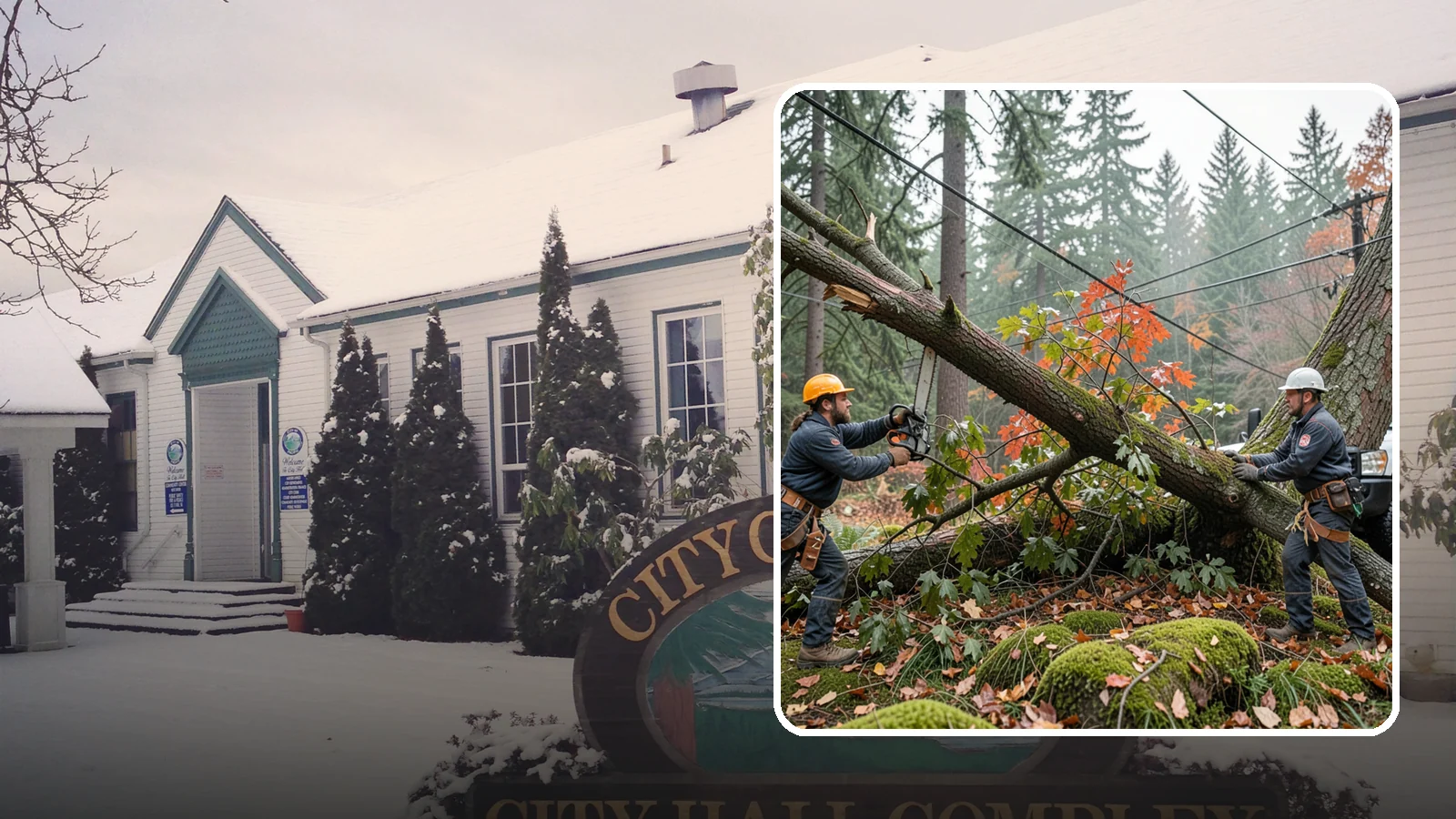
Pacific Emergency On-call Arborist
On-call access to an arborist for urgent situations.
In the forecast zone that includes Pacific, 38 high and strong wind episodes were recorded between 2005 and 2025, according to National Weather Service storm records. That is nearly two a year on average, so a tree can come down on a fence, driveway or roofline more than once in a decade.
If a tree or large limb falls, stay clear of it and of any wires near it. Take a few photos from a safe distance, note what it is touching, and call or text 425-484-4442. Clear details help us plan the first visit.
About Emergency On-call Arborist in Pacific
When a tree situation turns urgent, you need an arborist who can respond quickly without delay. This on-call access is designed for homeowners facing sudden issues that require immediate professional attention. It ensures expert guidance arrives exactly when it matters most to protect your property and family safety.
What Pacific Emergency On-call Arborist Includes
Emergency on-call arborist provides direct access to a trained crew ready to handle urgent situations as they arise. The work follows recognized standards while carefully matching methods to the specific tree species, site conditions, and available access points. This service delivers objective guidance that helps you make informed decisions during critical moments for your landscape.
Pacific Emergency On-call Arborist Process
We begin by gathering essential information about your site and the trees involved before moving forward with an inspection. Our team assesses current conditions and analyzes findings against established objectives to ensure a thorough evaluation. Clear recommendations or reports are then prepared and reviewed directly with you so everyone understands the next steps.
Equipment We Use for Pacific Emergency On-call Arborist
Trained crews utilize specialized diagnostic and measurement tools to accurately evaluate tree health and structural integrity. Mapping, imaging equipment, and reporting software help document conditions for permits, insurance claims, or future planning needs. Personal protective gear is worn throughout all tasks to ensure safety for both our team and your property during the response.
Pacific Emergency On-call Arborist Safety & Best Practices
All findings are grounded in observed evidence and recognized industry standards rather than assumptions made under pressure. We openly disclose any limitations within an assessment so you understand exactly what can be determined at that moment. If uncertainty remains after inspection, we recommend necessary follow-up actions to address potential risks before they escalate.
Signs You Need Emergency On-call Arborist in Pacific
You may need this service when a storm has damaged branches or if hidden defects suddenly become visible during high winds. Situations where incomplete site history complicates the picture often require an expert’s eye to separate fact from speculation. Regulatory requirements that vary by location can also create urgent needs for guidance on how best to proceed legally and safely.
What Affects the Cost of Emergency On-call Arborist in Pacific
The final cost is influenced by specific conditions such as difficult access points or unique characteristics of the tree species in question. Diagnosing defects while managing time pressure adds complexity to the work, which naturally impacts the overall expense. These factors ensure you receive a fair price that reflects the true effort required for your urgent situation.
Best Time of Year for Pacific Emergency On-call Arborist
This service is available year-round despite our typical Puget Sound weather patterns and seasonal changes. However, heavy rain or snow can create logistical challenges that may complicate rapid emergency response efforts in certain conditions. Planning ahead when possible helps us navigate these environmental factors while still providing the support you need quickly.
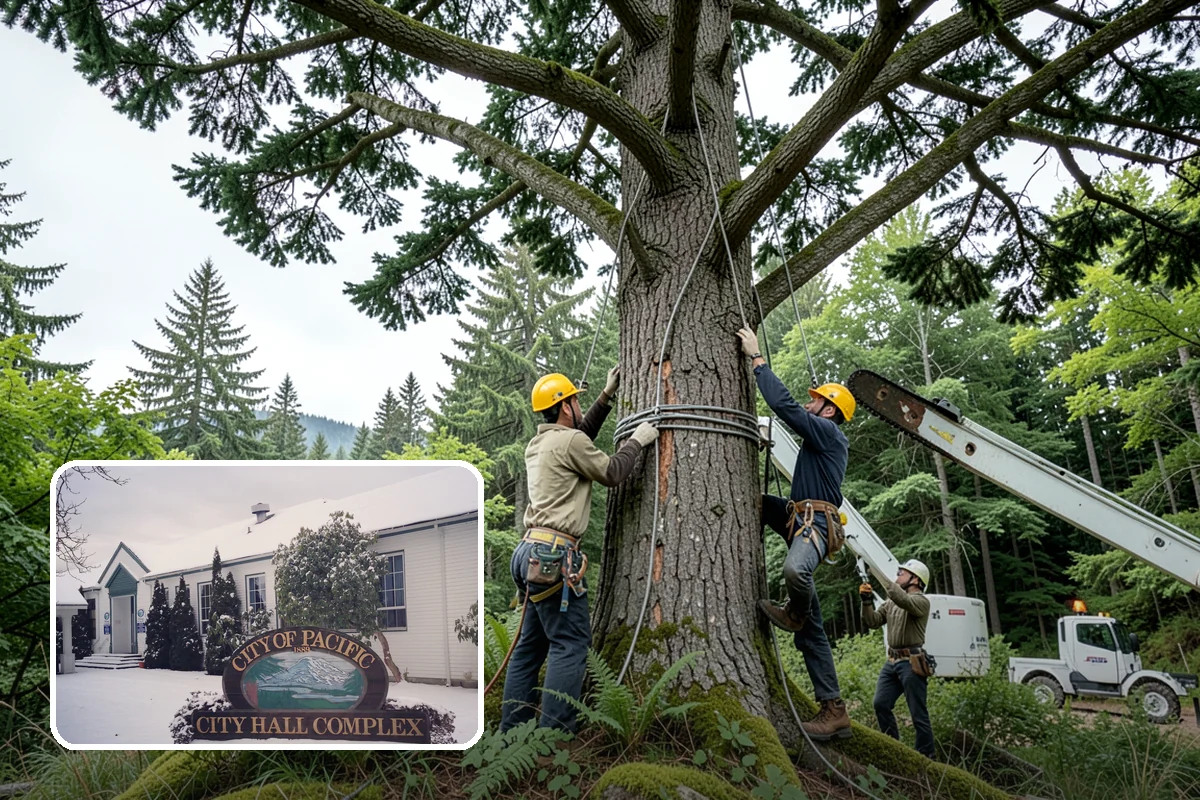
Emergency tree response in Pacific: what happens after you call
An emergency call is about making a situation safe first. Cleanup and full repair usually come after that. Here is how the work generally goes.
Step by step
- You describe what happened and send photos by text if you can.
- We ask what the tree is touching: a house, a vehicle, a fence, a road or utility lines.
- An ISA Certified Arborist assesses the tree and the site before any cutting starts.
- Hazards are dealt with in order. Pressure on structures comes first, then blocked access, then cleanup.
Anything touching a power line is a utility matter. Stay away and call the utility and 911 before you call anyone else.
Why wind and ice both matter here
The 38 wind episodes are figures for the forecast zone that includes Pacific, not for any one yard. They still tell you something useful: wind damage is a recurring risk, not a rare event. Trees that are leaning, have cracked unions or dead limbs overhead are worth having looked at before the next storm.
The same zone saw 3 ice storm episodes over those 20 years. Ice adds heavy weight to branches, and it often causes limbs to break at weak attachments. After an ice event, a tree can look fine from the ground and still have hanging or split limbs. Do not stand under them to check.
Before removal work
Pacific sits across King County and Pierce County, and we do not have a city tree rule to cite here. If the work goes beyond making a hazard safe, such as removing a whole tree, we check with the city before work starts. In a true emergency, safety comes first, and we tell you what we find.
Pacific is in USDA hardiness zone 8b, according to the 2023 USDA map. That zone describes typical winter lows, not storm risk. It is helpful later, when you choose replacement species that suit the site.
When you call, free estimates are available for follow-up work, and we are licensed, bonded and insured.
Pacific tree conditions at a glance
| High and strong wind episodes, 2005-2025 | 38 in the forecast zone |
|---|---|
| Ice storm episodes, 2005-2025 | 3 in the forecast zone |
| Average snowfall | 6.5 in a season |
| Soils | 29% of land has hardpan or another restrictive layer within 40 in; most common series Puyallup; 27% well drained |
| Rain and snow falling October to April | 81% of the year’s total |
| Electric utility | unconfirmed |
Tree removal rules in Pacific
Pacific’s published rules don’t spell out clearly which removals need city approval. We check with the city before work starts.
Strongest wind events near Pacific
- Dec 14, 2006: gusts to 74 mph
- Feb 3, 2006: gusts to 67 mph
- Jan 12, 2021: gusts to 61 mph
NOAA Storm Events, forecast zone that includes Pacific, 2005-2025.
Sources: Daymet daily weather (NASA/ORNL), NOAA Storm Events, USDA plant hardiness map 2023, NRCS soil survey, USGS elevation, WA DNR landslide inventory, USDA Forest Service aerial survey, WSDA, city tree assessments and street-tree inventories, SILVIS Lab, Arbor Day Foundation, and official city and utility pages.
Emergency On-call Arborist Serving Pacific
Pacific
Also serving Pacific
- Landscape Consultation in Pacificat Washington Landscaping