Where Safety Meets Expert Tree Service.

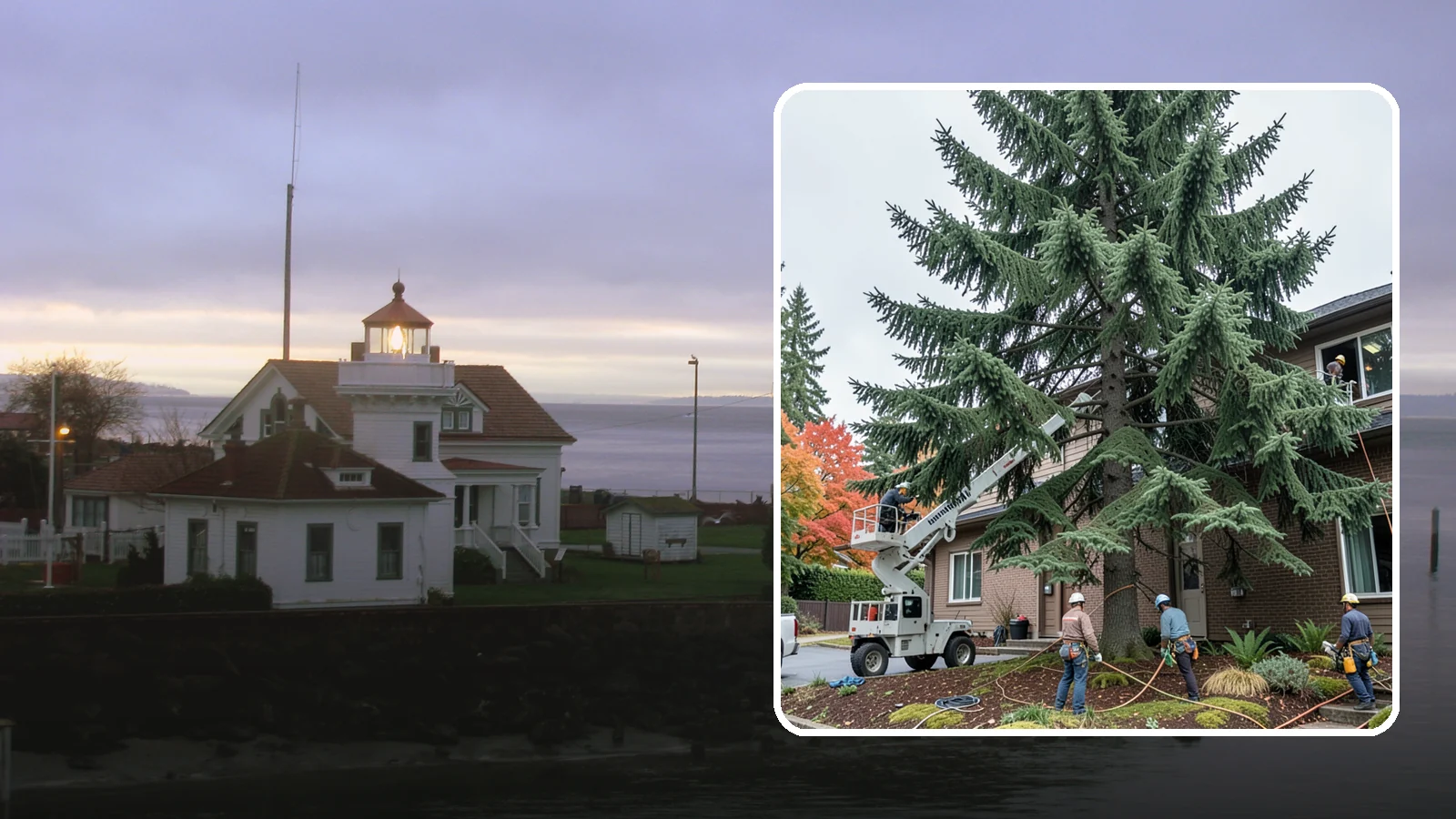
Mukilteo Commercial Tree Maintenance
Ongoing tree maintenance for commercial properties.
This service is for owners and managers of commercial properties in Mukilteo: office parks, retail centers, apartment and HOA grounds, and courses or campuses with mature trees along parking lots, walkways and buildings. It fits you if you want trees checked and pruned on a plan instead of reacting after a limb drops.
A good starting point is a walk of the property to note which trees sit over cars, entries, signs and roofs. Those spots decide what gets attention first, and they shape which maintenance approach makes sense.
About Commercial Tree Maintenance in Mukilteo
This ongoing tree maintenance is designed specifically for commercial properties that need their landscapes kept safe and presentable. Our trained crews work alongside your team to ensure consistent care without disrupting daily operations or traffic flow. We help businesses maintain a professional appearance while reducing potential liability risks associated with large trees on site.
What Mukilteo Commercial Tree Maintenance Includes
Commercial tree maintenance includes recurring pruning, inspections, and general care tailored to the specific species and conditions of each tree. Our methods are matched carefully to your unique site layout and access points to provide effective results every time. This service supports a budget-friendly approach by addressing deferred backlogs and keeping high-traffic areas secure for everyone.
Mukilteo Commercial Tree Maintenance Process
The work begins with an inventory and assessment of all trees across the property to identify priorities and develop a customized schedule. We then perform the necessary pruning, inspections, and care tasks while documenting our progress to keep your plan up to date. This cycle ensures that varied tree conditions are managed consistently throughout large sites without causing unnecessary delays.
Equipment We Use for Mukilteo Commercial Tree Maintenance
Our crews utilize specialized pruning and rigging gear along with aerial lifts when needed to reach difficult branches safely. We bring inspection tools, chippers, hauling equipment, and full personal protective gear to handle every job efficiently. Having the right machinery on hand allows us to navigate complex access challenges while keeping work zones clear for occupants.
Mukilteo Commercial Tree Maintenance Safety & Best Practices
Every project starts by coordinating our activities around building occupants and active traffic patterns to maintain a safe environment. We strictly follow recognized arboricultural standards and keep detailed records in public areas to ensure full accountability at all times. Maintaining these safety protocols helps protect workers, visitors, and the property itself from potential hazards during maintenance work.
Signs You Need Commercial Tree Maintenance in Mukilteo
You may need this service if you notice deferred maintenance backlogs building up or see varied tree conditions affecting different parts of your site. High-traffic areas that require extra attention to keep them safe are also a clear indicator that professional care is needed now. If coordinating access and scheduling has become difficult due to the size or complexity of your property, this service can help streamline those challenges.
What Affects the Cost of Commercial Tree Maintenance in Mukilteo
The investment for commercial tree maintenance depends on factors like existing deferred backlogs and the specific requirements of high-traffic areas within your site. Varied conditions across a large property and coordination challenges related to access will also influence how much care is needed overall. By addressing these elements proactively, you can support consistent, budget-friendly care that preserves your property value over time.
Best Time of Year for Mukilteo Commercial Tree Maintenance
Work on commercial landscapes continues year-round based on specific pruning needs rather than being limited to a single fixed season. Safety priorities dictated by recognized arboricultural standards guide our schedule whenever weather or tree health requires immediate attention. This flexible approach ensures that critical tasks are completed when they matter most for your property’s safety and appearance.
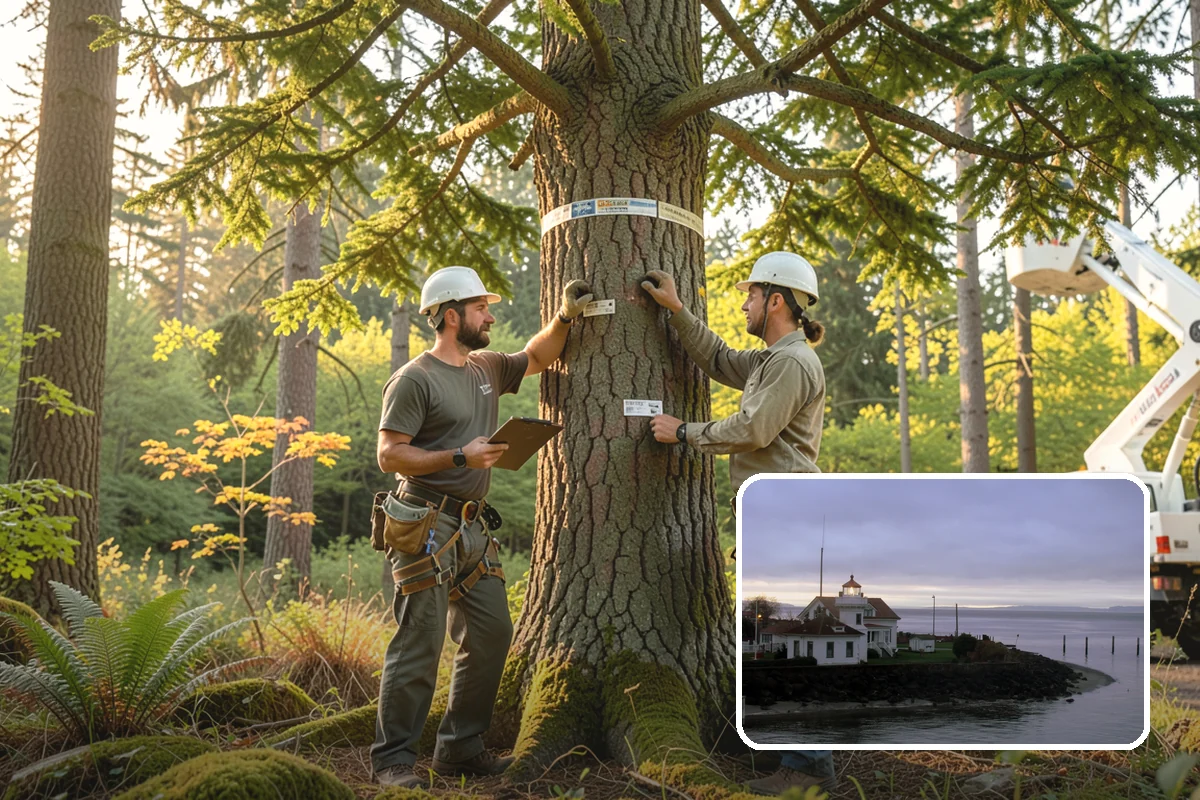
Commercial tree care options for Mukilteo properties
Most commercial owners choose between three approaches. The right one depends on how many trees you have, where they stand and how much risk you can accept.
Option 1: Scheduled maintenance visits
Trees are inspected and pruned on a regular cycle. Work follows ISA/ANSI A300 pruning practice: removing dead, broken or crossing branches and raising canopies over drive lanes and walkways, without topping. This suits properties with many trees, such as a retail center or an HOA common area, where small problems are cheaper to handle early.
Option 2: Inspection first, then targeted work
An ISA Certified Arborist looks at the trees and recommends only what each one needs. This suits owners with a few large trees near buildings or parking, or those taking over a property with no tree records.
Option 3: Call-in work after a storm or complaint
This is the least planned option. It can leave hazards unnoticed until they fail, so we usually suggest it only for properties with very few trees.
What local conditions favor
Wind is the main local reason to lean toward planned care. The forecast zone that includes Mukilteo logged 38 high and strong wind episodes from 2005 to 2025. That figure covers the whole zone, not any one property, but it shows that wind loading on large canopies is a repeat event. Trees with weak unions, deadwood or heavy limbs over traffic areas are the ones to address before the next season.
Larger landscaped grounds, like those around Harbour Pointe Golf Club, show the kind of site where many trees line paths and play areas, and where a cycle of inspections is easier to manage than one-off calls.
Removals and city approval
The published Mukilteo tree rules we found don't clearly say which removals need city approval. If a plan includes removing a tree, we check with the city before work starts.
- Many trees, shared spaces: scheduled visits
- Few large trees near buildings: inspection first
- Very few trees, low exposure: call-in work
Call or text 425-484-4442 for a free estimate.
Mukilteo tree conditions at a glance
| Tree canopy | Among the most heavily treed Puget Sound cities (satellite data) |
|---|---|
| USDA hardiness zone | 8b (8b to 9a across the city) |
| High and strong wind episodes, 2005-2025 | 38 in the forecast zone |
| Soils | 80% of land has hardpan or another restrictive layer within 40 in; most common series Alderwood |
Tree removal rules in Mukilteo
Mukilteo’s published rules don’t spell out clearly which removals need city approval. We check with the city before work starts.
Sources: Daymet daily weather (NASA/ORNL), NOAA Storm Events, USDA plant hardiness map 2023, NRCS soil survey, USGS elevation, WA DNR landslide inventory, USDA Forest Service aerial survey, WSDA, city tree assessments and street-tree inventories, SILVIS Lab, Arbor Day Foundation, and official city and utility pages.
Commercial Tree Maintenance Serving Mukilteo
Mukilteo

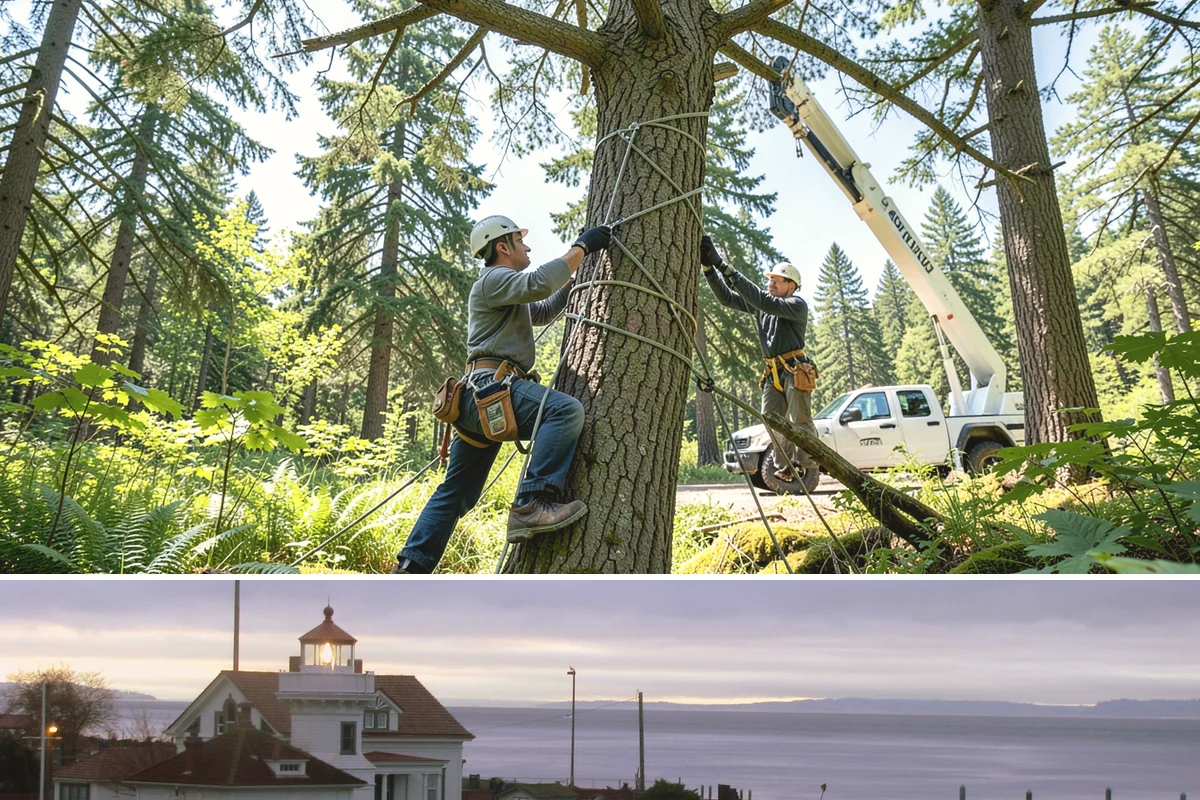
Also serving Mukilteo
- Utility Line Clearance in Mukilteoat Washington City Services
- Weekly Landscape Maintenance in Mukilteoat Washington Landscaping
- Commercial Kitchen Construction in Mukilteoat Washington Construction
- Restaurant Exterior Cleaning in Mukilteoat Washington Pressure Washing