Where Safety Meets Expert Tree Service.

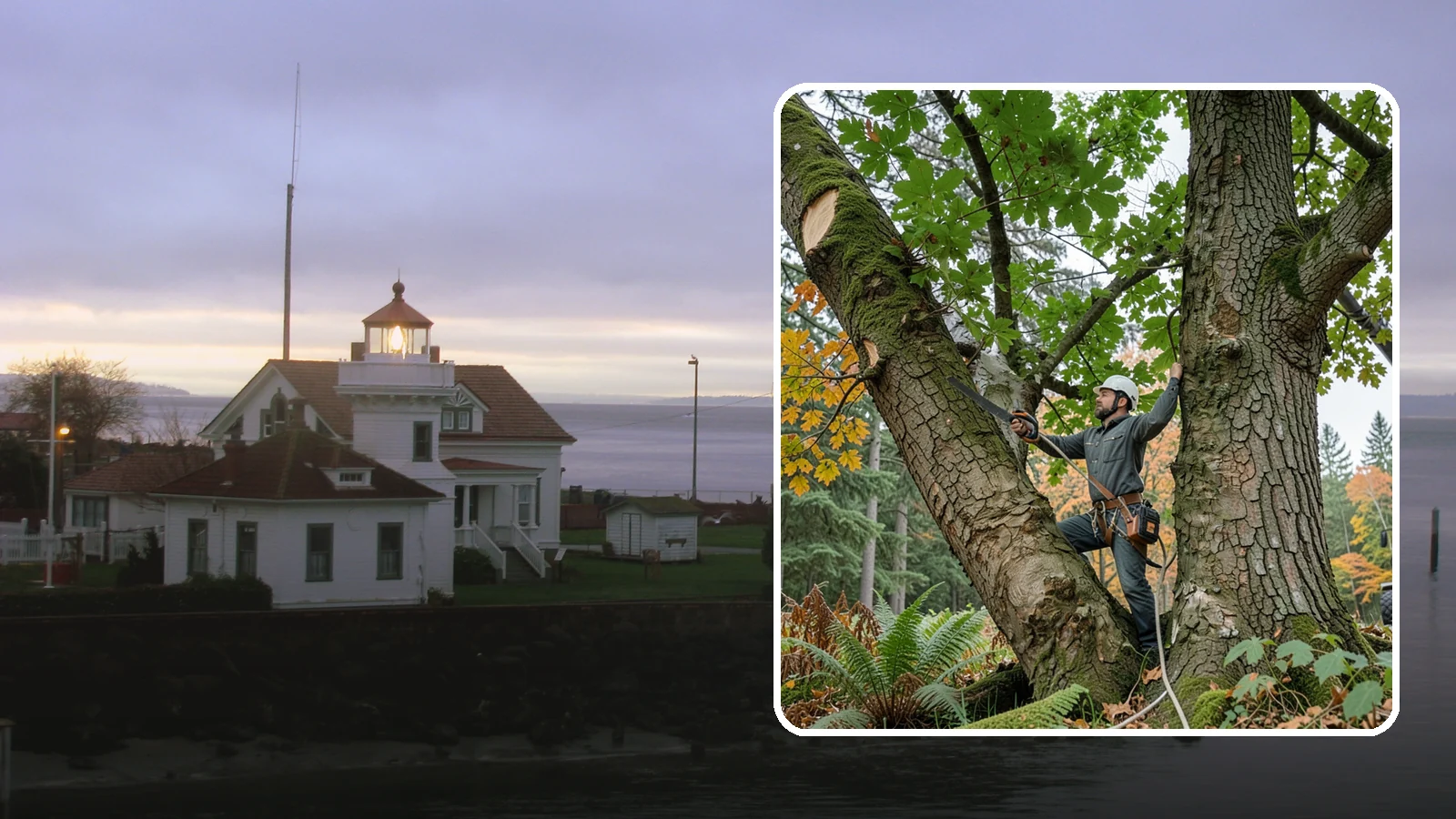
Mukilteo Canopy Reduction
The reduction of overall canopy size with measured cuts.
Canopy reduction suits owners whose trees have grown too large for the space: limbs hanging over a roof, branches crowding a power line, or a dense crown that shades the whole yard. It also fits trees that catch wind like a sail because the crown has become heavy and thick.
The goal is to shorten or remove selected branches so the tree stays smaller and keeps its natural shape. Below are the main approaches and how Mukilteo conditions point toward one or another.
About Canopy Reduction in Mukilteo
Canopy reduction helps homeowners manage large trees by carefully lowering their overall size while keeping a natural look. This approach improves safety around your property without harming the tree’s long-term health or structure. It is an ideal solution for those dealing with heavy branches that might interfere with overhead lines or viewlines.
What Mukilteo Canopy Reduction Includes
This service reduces the total canopy volume using precise, measured cuts designed to lower weight and wind resistance. We focus on maintaining the tree’s natural form while removing excess growth that could lead to branch failure. The work is tailored specifically to your tree species and current site conditions for a balanced result.
Mukilteo Canopy Reduction Process
Our trained crews begin by assessing the condition of your canopy and defining clear pruning objectives before making any cuts. Each cut is placed at proper points using techniques matched to the specific needs of your tree type and season. Afterward, we lower all removed material safely and clean up the entire work area to leave your property tidy.
Equipment We Use for Mukilteo Canopy Reduction
We utilize a range of tools including hand saws, pole saws, chainsaws, and wood chippers to handle branches efficiently. Climbing gear and rigging equipment allow our team to access high limbs securely when necessary. An aerial lift is used only if the site conditions or tree size require additional height assistance.
Mukilteo Canopy Reduction Safety & Best Practices
We strictly follow recognized arboricultural standards to avoid making harmful cuts that could stress your trees. Our crew watches closely for unstable limbs and overhead power lines while working at heights with proper fall protection. By limiting removal to healthy amounts of live tissue, we prevent unnecessary shock or damage during the process.
Signs You Need Canopy Reduction in Mukilteo
You may need this service if you notice deadwood in weak unions or branches that block sightlines near your home. Interference with structures or utility lines often indicates it is time for a measured reduction of canopy size. Over-pruning from past attempts can also signal a need to correct structure and restore the tree’s natural vigor.
What Affects the Cost of Canopy Reduction in Mukilteo
The price varies based on the overall size of the trees, how complex the site access is, and the volume of wood that needs disposal. Larger jobs with difficult terrain or significant amounts of cut material will naturally require more time and resources. These factors combine to determine a fair estimate for your specific project scope.
Best Time of Year for Mukilteo Canopy Reduction
Work should be scheduled according to species-specific timing sensitivities common in our region to avoid stressing trees during active growth. We plan around dormancy periods so that cuts do not coincide with times when the tree is most vulnerable to weather or disease. Following these seasonal windows ensures the best recovery and health for your canopy after reduction.
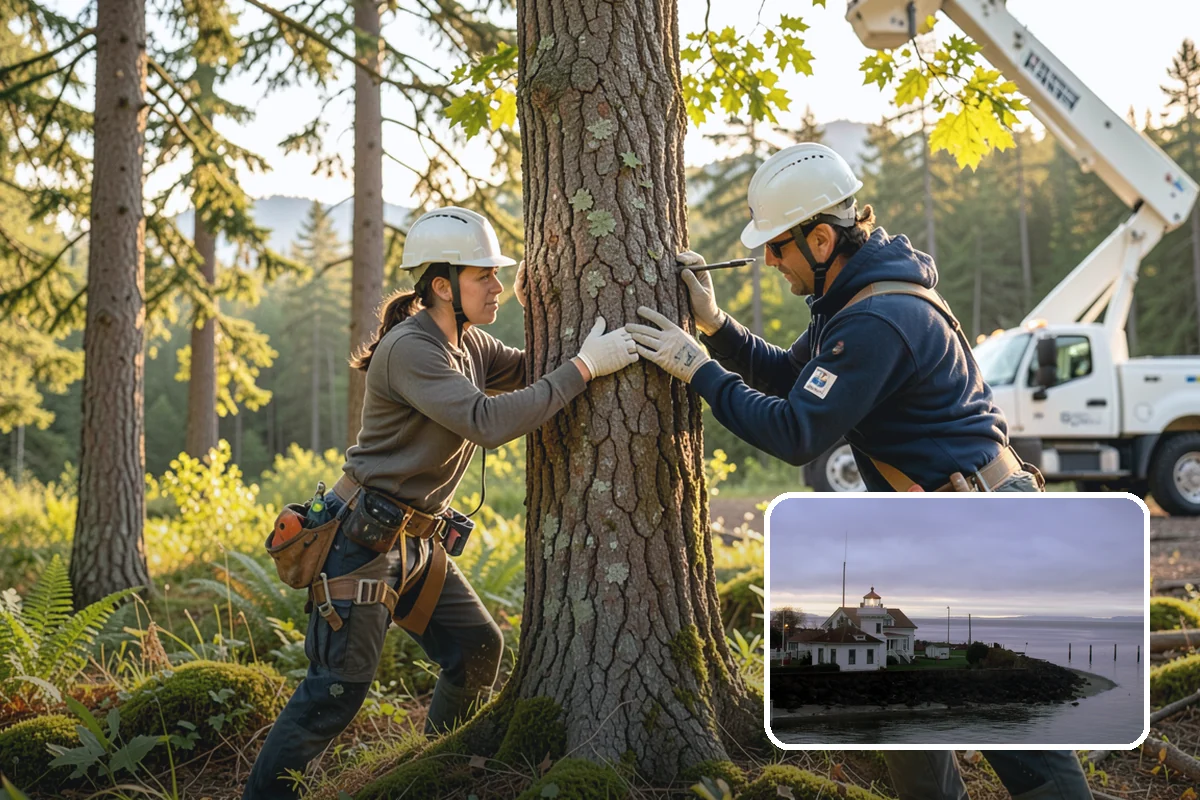
Canopy reduction options for Mukilteo trees
Satellite tree-canopy data (USFS/NLCD 2025) puts Mukilteo among the most heavily treed Puget Sound cities we compared. In a place with this much canopy, trees often grow close to each other and to houses. That makes selective work more useful than a single dramatic cut, because neighbors' trees and your own may share crowded space.
The approaches you can choose between
- Crown reduction: shortening the longest limbs back to side branches large enough to take over as the new growing tip. This lowers height or spread while keeping a natural form.
- Crown thinning: removing a modest share of interior branches so light and air move through. It does not make the tree smaller, but it can lessen sail effect.
- Targeted clearance: trimming only the limbs that touch or overhang a roof, wire or view. It is the lightest option and often enough.
- Removal: worth discussing if a tree is too large for its spot or in poor health. Check city rules first, since a tree rule may apply to removal.
Why wind matters here
The forecast zone that includes Mukilteo logged 38 high and strong wind episodes from 2005 to 2025. That is a regional record, not a measure of any one tree. Still, it is a reason to consider thinning or reduction on large, dense crowns, since a lighter, better-spaced crown gives wind less to push against.
What we do not recommend
Topping, which means cutting main stems back to stubs, is not on the list. Linda Chalker-Scott of the WSU Puyallup Research and Extension Center writes that topping is never a justifiable pruning practice, that it increases health problems and that it is unattractive. If a tree needs to be much smaller, we would talk about the options above or about replacing it.
Timing and species
Mukilteo sits in USDA hardiness zone 8b, with parts of the city ranging from 8b to 9a. That is a mild range, so most pruning can be planned around the tree's species and the work needed rather than a hard cold limit. Our ISA Certified Arborist can look at the tree and suggest the lightest cut that solves the problem. Call or text 425-484-4442 for a free estimate.
Mukilteo tree conditions at a glance
| USDA hardiness zone | 8b (8b to 9a across the city) |
|---|---|
| Rain and snow falling October to April | 79% of the year’s total |
| Tree canopy | Among the most heavily treed Puget Sound cities (satellite data) |
| Days that freeze at night and thaw by day | 37 a year |
| Electric utility | Snohomish County PUD |
Trees near the power line to your house
Snohomish County PUD: PUD "does not maintain vegetation around service lines or standalone communication lines." Customer must keep 5 ft clearance on all sides of the service drop (10 ft diameter), except the first 10 ft nearest the primary line which the PUD trims.
Customer Service Regulations list tree trimming as a non-routine disconnection/reconnection of residential service;00 each on overtime. Customers must not cut/disconnect the drop themselves (tampering charge).
Tree/vegetation questions: 425-783-5579 (Mon-Fri 7am-3pm) or [email protected]. Utility page.
Any fee for a disconnect is set by the utility.
Sources: Daymet daily weather (NASA/ORNL), NOAA Storm Events, USDA plant hardiness map 2023, NRCS soil survey, USGS elevation, WA DNR landslide inventory, USDA Forest Service aerial survey, WSDA, city tree assessments and street-tree inventories, SILVIS Lab, Arbor Day Foundation, and official city and utility pages.
Canopy Reduction Serving Mukilteo
Mukilteo
Also serving Mukilteo
- Maple Tree Pruning in Mukilteoat Washington Landscaping
- Roof Tune-Up in Mukilteoat Washington Roofing
- Tree Watering in Mukilteoat Washington City Services