Where Safety Meets Expert Tree Service.

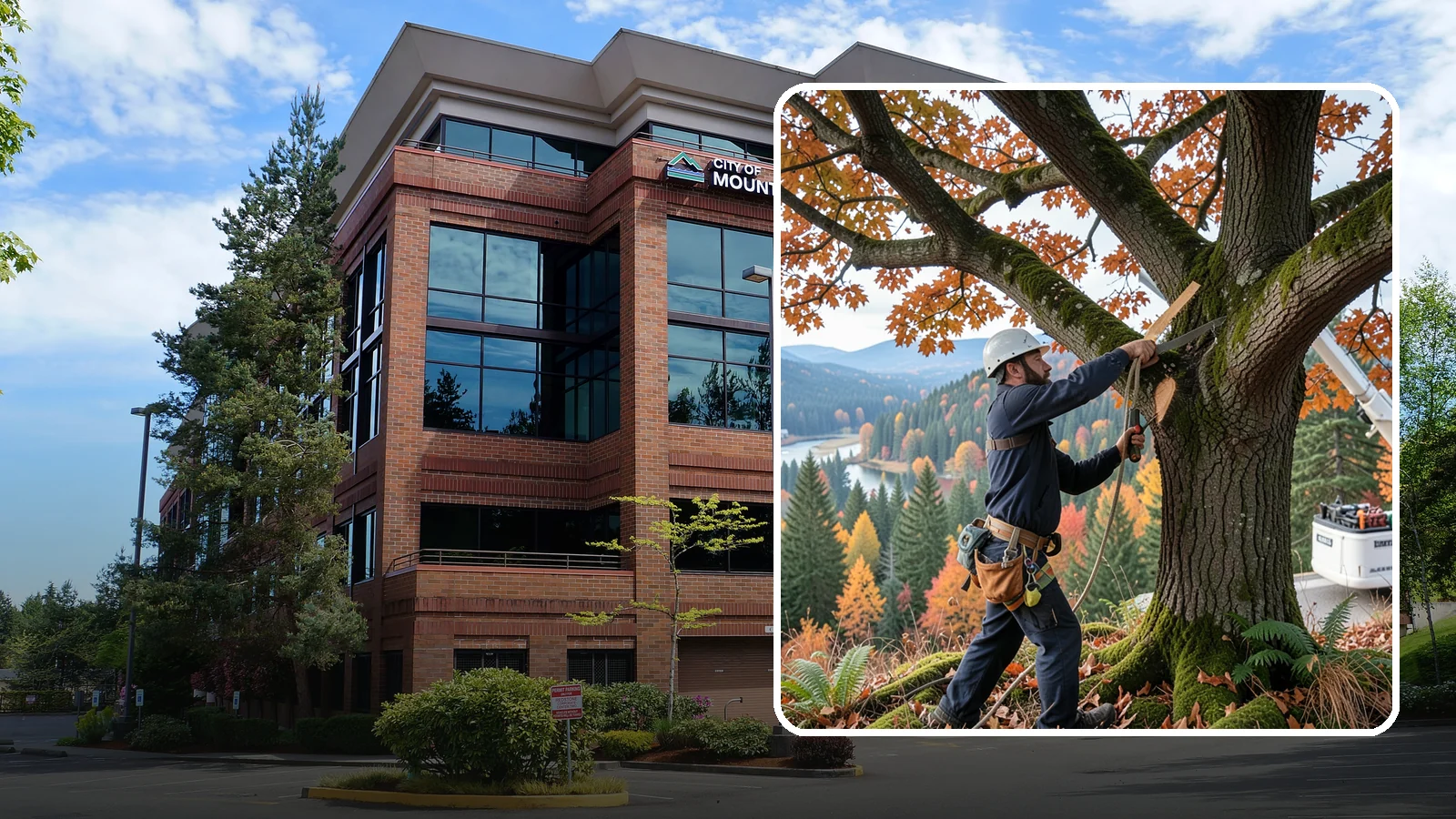
Mountlake Terrace Vista Pruning
Selective pruning to open or improve a view.
About 80% of Mountlake Terrace's yearly rain and snow falls from October to April, according to Daymet data for 2005 to 2025. That makes the dry months the easier window to see how a tree looks in full leaf and to judge which branches actually block your view.
Vista pruning means selectively thinning and shaping a tree's crown so you can see through it, rather than removing it. A good plan starts with the view you want back, then works out which branches can go without harming the tree.
About Vista Pruning in Mountlake Terrace
Vista pruning is a specialized tree care approach designed to open up or improve your view without harming the long-term health of your trees. This selective method helps homeowners who want clearer sightlines while ensuring their landscape remains safe and vigorous for years to come. We work with you to balance aesthetic goals with proper arboricultural standards so your property looks its best from any angle.
What Mountlake Terrace Vista Pruning Includes
Vista pruning involves carefully selecting specific cuts that enhance sightlines while protecting the structural integrity of each tree. Our crews match these methods to your unique site conditions and the natural characteristics of your local species, ensuring a tailored approach for every job. The process focuses on improving clearance around structures or pathways without over-pruning or stressing the canopy beyond its recovery ability.
Mountlake Terrace Vista Pruning Process
We begin by assessing the current condition of the canopy and defining exactly what pruning objectives are needed to improve your view. Trained professionals then select the correct cuts based on the species, season, and access points available at your location. After making clean cuts at proper locations, our team lowers branches safely, processes the material efficiently, and cleans up the work area completely.
Equipment We Use for Mountlake Terrace Vista Pruning
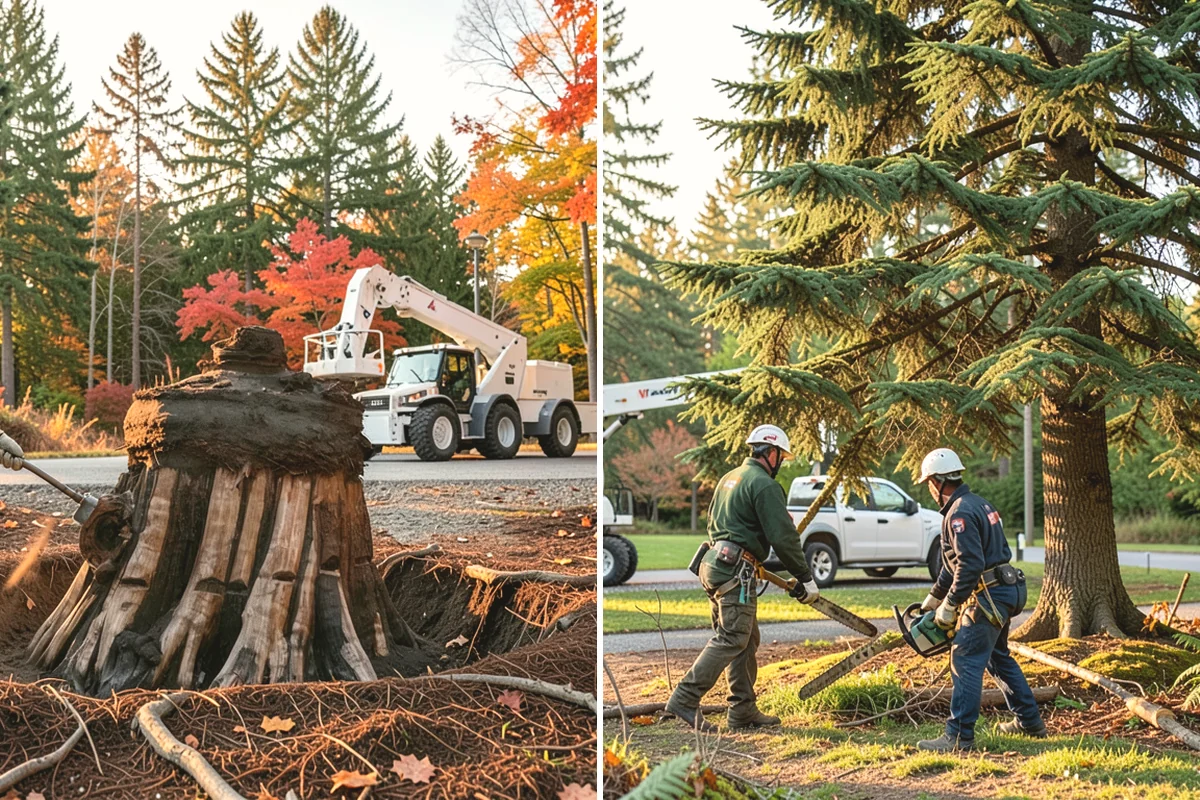
Our crews utilize a variety of tools including hand saws, pole saws, chainsaws, and climbing gear to reach different heights on your trees. Depending on the specific site conditions and tree size, we may also use aerial lifts or rigging equipment to ensure safe access and efficient removal. A wood chipper is used to process cut material right at the job site, keeping debris managed throughout the project.
Mountlake Terrace Vista Pruning Safety & Best Practices
We follow recognized pruning standards that avoid harmful cuts which can cause unnecessary stress or disease entry into your trees. Our team takes extra care when working near overhead power lines and unstable limbs, using appropriate fall protection whenever we are aloft. By limiting removal to healthy amounts of live tissue, we minimize the risk of branch failure while maintaining a safe environment for everyone involved.
Signs You Need Vista Pruning in Mountlake Terrace
You may need vista pruning if you notice deadwood or weak unions interfering with your desired view or blocking important sightlines. Over-pruning from previous work or improper cuts that have caused stress to specific branches are also signs that this service is appropriate. Additionally, if tree growth has encroached on structures or utility lines in a way that impacts visibility or safety, we can help restore balance and clarity.
What Affects the Cost of Vista Pruning in Mountlake Terrace
The cost of vista pruning depends heavily on the current condition of your canopy and how many specific objectives need to be met for sightlines. Factors such as species-specific cut selection, proper disposal of processed material, and necessary site access needs will influence the overall price. We provide transparent discussions about these variables so you understand exactly what drives the investment in this specialized service.
Best Time of Year for Mountlake Terrace Vista Pruning
Work timing is carefully planned according to recognized arboricultural standards that match specific tree species found in our region. Seasonal conditions are considered closely to ensure cuts heal properly and do not stress your trees during vulnerable periods of growth or dormancy. Our crews schedule projects when the weather and biological cycles align best for both safety and the long-term vigor of your landscape.

How vista pruning works for Mountlake Terrace properties
Vista pruning is planned from the spot where you want the view. Standing there, we sight through the tree and mark the branches that block it. Then the work follows a few plain steps.
- Walk the property and agree on the view lines.
- Choose branches to thin or shorten, cutting back to a side branch or the trunk.
- Open windows through the crown instead of cutting the whole top.
- Clear the debris.
Cuts are made to a branch union, not at random points along a limb. That follows standard ISA and ANSI A300 pruning practice. It lets the tree close the wounds in its own way.
Why we avoid cutting the top
It can be tempting to cut a conifer's top off to open a view. The WSU Extension Pacific Northwest Gardener's Handbook (Chapter 23, on pruning woody landscape plants) notes that topping conifers often produces multiple trunks that can become a structural problem. For a view, we thin and window the crown instead.
Timing and local conditions
Because about 80% of the year's precipitation arrives from October to April, wet conditions dominate much of the year. Pruning in the drier months also means you can see the tree fully leafed, which helps in judging how much canopy blocks the view. That figure is a climate average for the city, not a measure of any one tree.
Mountlake Terrace sits in USDA hardiness zone 9a, per the 2023 USDA map. That mild rating tells you about winter lows, not about how a given species will respond to pruning, so we judge each tree by its own species and condition.
The city's rules on tree removal do not necessarily describe pruning, and we cannot assume what applies to your lot. If anything is unclear, we check with the city before work starts. Our ISA Certified Arborist can walk the property with you, and estimates are free. Call or text 425-484-4442.
Mountlake Terrace tree conditions at a glance
| USDA hardiness zone | 9a |
|---|---|
| Rain and snow falling October to April | 80% of the year’s total |
| Days that freeze at night and thaw by day | 33 a year |
| Tree City USA | 7 years |
| Electric utility | Snohomish County PUD |
Trees near the power line to your house
Snohomish County PUD: PUD "does not maintain vegetation around service lines or standalone communication lines." Customer must keep 5 ft clearance on all sides of the service drop (10 ft diameter), except the first 10 ft nearest the primary line which the PUD trims.
Customer Service Regulations list tree trimming as a non-routine disconnection/reconnection of residential service;00 each on overtime. Customers must not cut/disconnect the drop themselves (tampering charge).
Tree/vegetation questions: 425-783-5579 (Mon-Fri 7am-3pm) or [email protected]. Utility page.
Any fee for a disconnect is set by the utility.
Sources: Daymet daily weather (NASA/ORNL), NOAA Storm Events, USDA plant hardiness map 2023, NRCS soil survey, USGS elevation, WA DNR landslide inventory, USDA Forest Service aerial survey, WSDA, city tree assessments and street-tree inventories, SILVIS Lab, Arbor Day Foundation, and official city and utility pages.
Vista Pruning Serving Mountlake Terrace
Mountlake Terrace
Also serving Mountlake Terrace
- Pine Tree Pruning in Mountlake Terraceat Washington Landscaping
- Roof Maintenance in Mountlake Terraceat Washington Roofing
- Tree Risk Assessments in Mountlake Terraceat Washington City Services