Where Safety Meets Expert Tree Service.

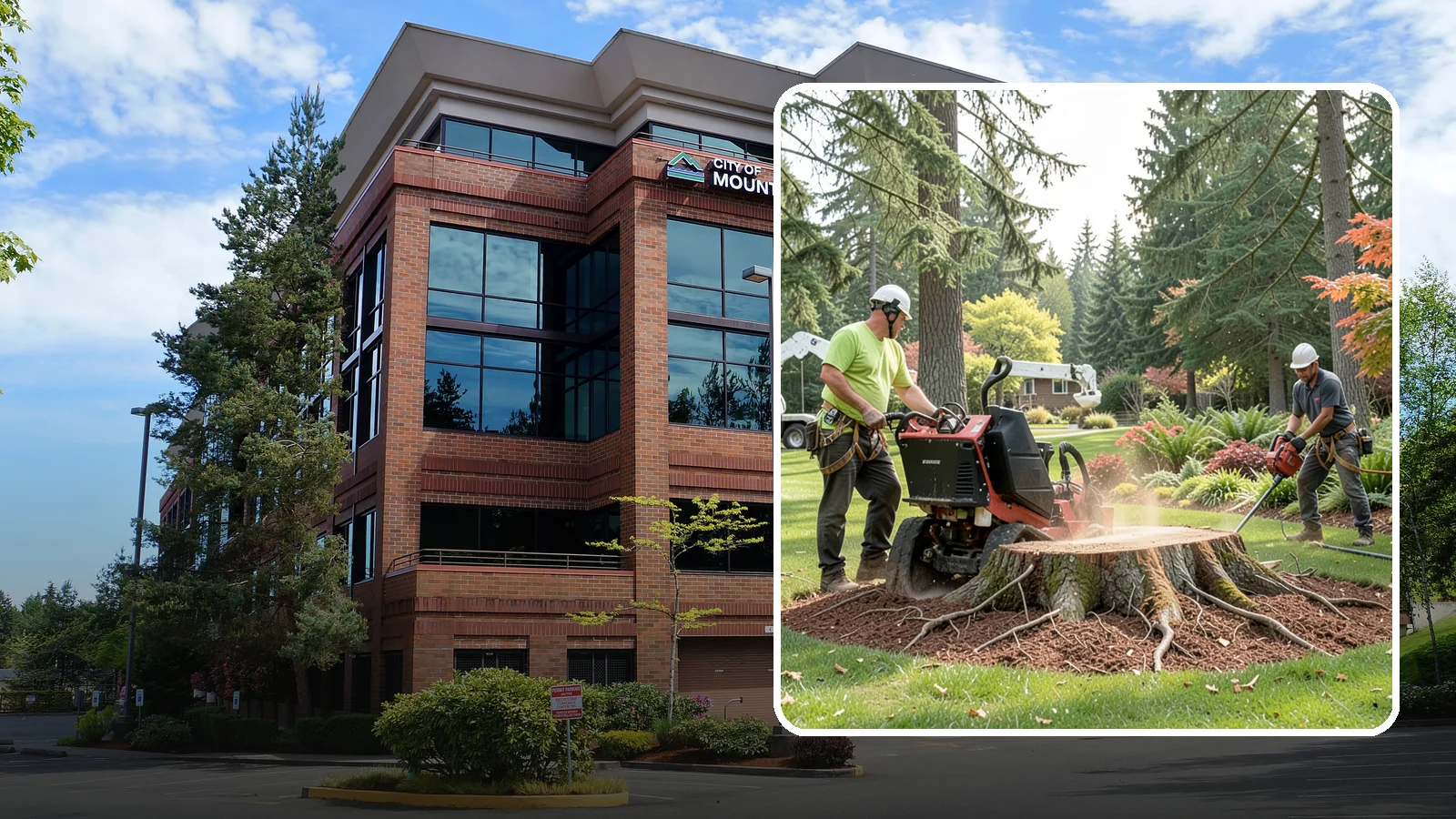
Mountlake Terrace Stump Grinding
The mechanical grinding of a stump below grade.
Before you book stump grinding in Mountlake Terrace, think about what you plan to put in the spot afterward. A NRCS soil survey shows that 59% of the land here has a hard or restrictive layer, such as glacial hardpan, within 40 inches of the surface. The most common soil series is Alderwood.
That matters for the hole a grinder leaves behind. A new tree, a shrub bed or a patch of lawn each needs a different depth of cleared wood and a different fill. Decide on the replacement first, and the grinding depth can be set to match.
About Stump Grinding in Mountlake Terrace
Stump grinding is a helpful way to clear out old tree stumps that might trip you or block your yard from being used again. This service restores the ground so you can replant new trees or simply enjoy open space without obstructions. It works well for homeowners who want their property looking neat and safe after removing a large tree.
What Mountlake Terrace Stump Grinding Includes
Our crews use mechanical grinding to remove stumps below grade, leaving only small surface roots behind. This process matches the specific needs of your site conditions and helps prevent pests or unwanted regrowth from taking hold in that spot. Once finished, the area is ready for replanting or other surface projects you have planned.
Mountlake Terrace Stump Grinding Process
We start by locating underground utilities to keep everyone safe before we begin any digging work. After clearing debris around the stump, our trained team grinds it down and processes the material into mulch or chips. Finally, we backfill and grade the soil as needed so your yard looks smooth and level again.
Equipment We Use for Mountlake Terrace Stump Grinding
The job relies on a powerful stump grinder to cut through wood efficiently while excavation tools handle any remaining roots. We also use wheelbarrows and rakes to manage the grindings and ensure the site is clean after work is done. All crew members wear necessary personal protective equipment, including eye and hearing protection, throughout the project.
Mountlake Terrace Stump Grinding Safety & Best Practices
Safety starts with confirming that all underground utilities are marked before we lower our machinery near your home or garden. We keep bystanders away from the area to avoid flying debris while grinding and stay alert for hidden rocks in the soil. Our team also takes extra care when working around buried obstructions to prevent accidental damage during excavation.
Signs You Need Stump Grinding in Mountlake Terrace
You may need this service if you notice a stump acting as a tripping hazard or stopping people from using part of your yard freely. If pests are attracted to old roots or new shoots keep growing where the tree used to stand, grinding can stop that cycle. It is also useful when you want to prepare an area for planting something new but cannot get rid of the visible stump first.
What Affects the Cost of Stump Grinding in Mountlake Terrace
The price will change based on how big the stump is and whether your soil contains rocks or other hard debris. Sites with limited access, such as narrow spaces where large equipment cannot fit easily, may also affect the final cost. These factors help us determine a fair rate that fits the specific challenges of your property without guessing at numbers you haven’t asked for yet.
Best Time of Year for Mountlake Terrace Stump Grinding
You can schedule this work anytime during the year since Washington State weather usually allows it to proceed smoothly. However, we take special precautions when heavy rain is forecasted because muddy sites make excavation more difficult and slower. Planning ahead helps us manage these conditions so your project stays on track regardless of seasonal changes.

Stump grinding in Mountlake Terrace: steps and local factors
Stump grinding removes the stump below ground with a rotating cutting wheel. It does not pull out the whole root system. Here is how the job usually goes.
- Mark anything buried near the stump, such as irrigation lines, and have utilities located before cutting.
- Cut the stump low, then grind it in passes, working down through the wood.
- Rake out the chips and decide whether to haul them off or use them to fill the hole.
- Top off with soil and, if you want, level and seed or plant.
Why the soil layer matters
The NRCS figure covers the city as a whole, not your yard. Still, with a restrictive layer often close to the surface, roots tend to spread sideways rather than straight down. Grinding usually goes deeper than the stump itself, so we can look at how deep you need to go. If you plan to replant in the same spot, the best fill is mostly clean soil, since a pocket of wood chips can settle over time. Grinding a bit deeper and removing most of the chips helps a new tree get started. A shallow layer of hardpan can also affect how well water drains from a filled hole, so it is worth watching after heavy rain.
Replacement trees and the city code
The city's tree code speaks to replacement trees. On development sites, replacement trees are based on the size of the tree removed, or you pay a fee-in-lieu to the City tree fund. In critical areas, the code calls for a replacement or mitigation plan, with restoration started within one year. That rule is about tree removal, not the grinding of a stump left behind. If your tree has not yet come down, or your property is in a critical area or part of a development, we check with the city before work starts.
Planning the new planting
Mountlake Terrace is in USDA hardiness zone 9a, according to the 2023 USDA map. That helps when you choose what goes where the stump was. Call or text 425-484-4442 for a free estimate.
Mountlake Terrace tree conditions at a glance
| Soils | 59% of land has hardpan or another restrictive layer within 40 in; most common series Alderwood |
|---|---|
| Rain and snow falling October to April | 80% of the year’s total |
| Days that freeze at night and thaw by day | 33 a year |
Tree removal rules in Mountlake Terrace
City critical-areas tree FAQ: in general single-family homeowners do not need a permit to remove a tree unless it is in a critical area or the removal is associated with a land use action such as a development proposal; a clearing and grading permit may be needed if the ground is significantly disturbed by equipment (especially multiple trees). Under MTMC 19.130.170 (Ord.
Regulated size: Deciduous trees 6 inches DBH or greater, or coniferous trees at least 7 ft tall, excluding trees on the City's Prohibited Tree List (MTMC 16.30, Ord.
Official city source. Rules change; we confirm with the city before work starts.
Sources: Daymet daily weather (NASA/ORNL), NOAA Storm Events, USDA plant hardiness map 2023, NRCS soil survey, USGS elevation, WA DNR landslide inventory, USDA Forest Service aerial survey, WSDA, city tree assessments and street-tree inventories, SILVIS Lab, Arbor Day Foundation, and official city and utility pages.
Stump Grinding Serving Mountlake Terrace
Mountlake Terrace
Also serving Mountlake Terrace
- Bare Spot Repair in Mountlake Terraceat Washington Landscaping
- Park Tree Maintenance in Mountlake Terraceat Washington City Services