Where Safety Meets Expert Tree Service.


Mountlake Terrace Tree Planting
The selection and planting of new trees.
You may have a bare spot where a tree came down, or a new yard with nothing taller than the fence. Maybe a tree you planted a few years ago still looks stunted and leans. Those are the usual reasons people start asking about planting.
Planting a tree is simple to describe and easy to get wrong. The species, the hole, the depth of the root flare and the first year of care all affect how well a young tree settles in. This page covers what matters for a planting in Mountlake Terrace.
About Tree Planting in Mountlake Terrace
Our tree planting services help homeowners establish new greenery that fits their property perfectly. We work with you to bring healthy trees suited to your specific location for long-term benefit. This project is ideal if you want to expand your shade or improve the ecology of your yard.
What Mountlake Terrace Tree Planting Includes
Tree planting involves carefully selecting and placing new trees where they will thrive best. Our trained crews use methods matched to each tree species, site conditions, and access points. The goal is always to establish healthy trees that support privacy, screening, and a richer environment for wildlife.
Mountlake Terrace Tree Planting Process
We begin by assessing your site conditions to choose the right species before preparing the soil. Once ready, we plant at the correct depth and spacing, then add mulch and water in each tree. Finally, we provide guidance on establishment care to ensure your new trees get off to a strong start.
Equipment We Use for Mountlake Terrace Tree Planting
Our crews utilize digging tools, watering equipment, and staking materials as needed for every job. We also bring soil amendments and fresh mulch to support the health of newly planted specimens. All work is done with personal protective equipment to keep our team safe throughout the project.
Mountlake Terrace Tree Planting Safety & Best Practices
Before any digging begins, we locate underground utilities to prevent damage or injury during installation. We select species suited to your site to avoid future conflicts between roots and structures. Planting at the proper depth and handling trees gently protects their root systems from harm.
Signs You Need Tree Planting in Mountlake Terrace
You may need this service if you want to restore tree cover lost over time or create new shade areas. It is also a great choice when aiming to improve privacy, screening views, or enhancing your site ecology. Establishing healthy trees suited to the location helps ensure these benefits last for years to come.
What Affects the Cost of Tree Planting in Mountlake Terrace
The price of planting depends on how difficult it is to access your specific site conditions. Costs are influenced by whether soil amendments are needed for poor or compacted ground and which tree species you choose. Necessary staking materials also play a role in the final cost based on what each project requires.
Best Time of Year for Mountlake Terrace Tree Planting
In our Pacific Northwest climate, planting works best during dormant seasons to minimize transplant shock for most trees. While evergreens can often be planted year-round with proper care, timing is key to reducing stress on new specimens. We will help you choose a season that gives your new trees the best chance to establish themselves successfully.
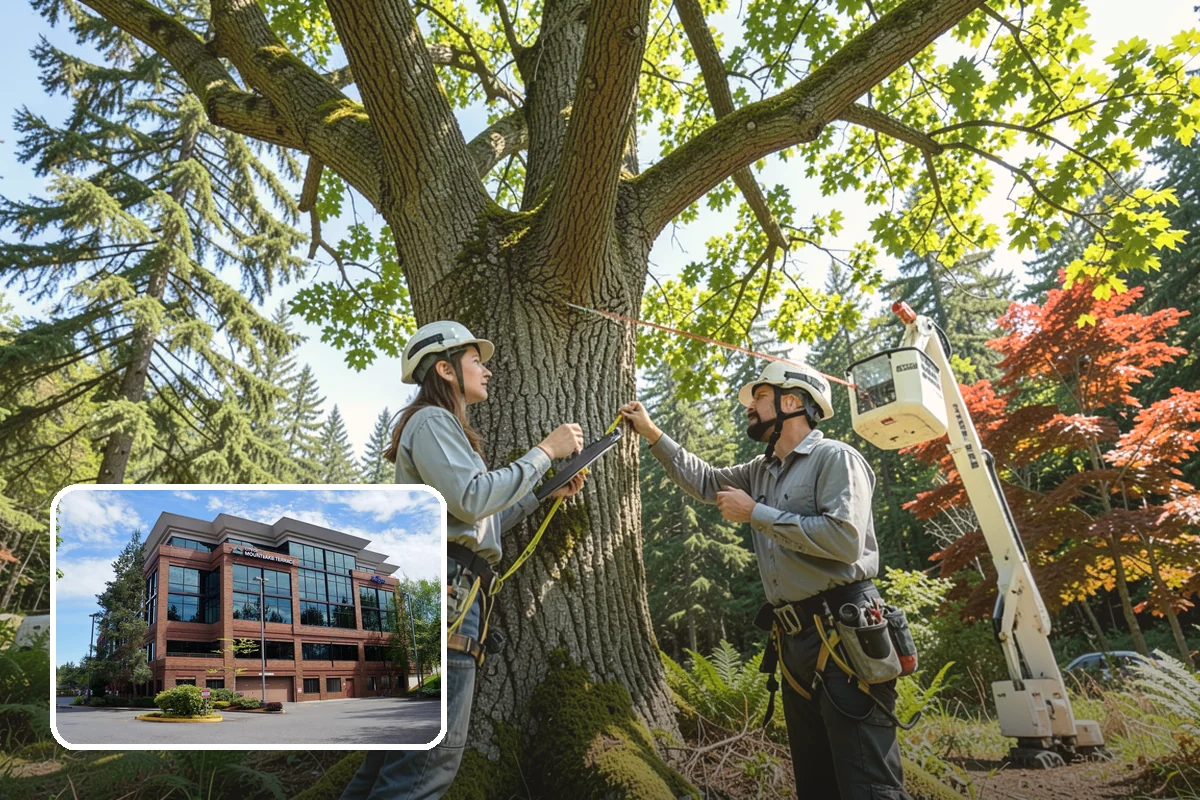
Planting a tree in Mountlake Terrace: soil, stakes and species
Most failed plantings trace back to the soil under the hole, not the tree itself. The NRCS soil survey says 59% of the land in Mountlake Terrace has a hard or restrictive layer, such as glacial hardpan, within 40 inches of the surface. The most common soil series is Alderwood. That is a survey of the city's land in general, not a test of your yard. It does tell us what to check first.
Where a hard layer sits close to the surface, water can collect in the planting hole and sit around the roots. A tree in a hole that holds water may decline slowly, and the cause is easy to miss. Before planting, we dig and look at how the soil drains. If the hole stays wet, the options include choosing a species that tolerates wet feet or planting a little higher with a wider, shallow hole. We do not promise how any tree will grow, but these steps address a known local risk.
The hole itself should be wide, not deep. The root flare, where the trunk widens at the base, should sit at or just above the surrounding grade. Planting too deep is a common cause of trouble. We also remove burlap, wire or twine that could restrict roots, and we loosen circling roots on container stock.
Species choice starts with climate. The USDA map from 2023 places Mountlake Terrace in plant hardiness zone 9a. That shows which trees can handle the winter lows, so it narrows the list. Mature size, distance from the house, power lines and your soil then narrow it further.
Staking is not always needed. If a tree must be staked, the WSU Extension Pacific Northwest Gardener's Handbook says to remove stakes within about a year, because ties left on can girdle the trunk. We recommend marking a date to check and remove them.
Mountlake Terrace is a current Tree City USA, a recognition from the Arbor Day Foundation that the city has held for 7 years. It points to community interest in trees, but it does not set rules for your yard. If a city requirement could touch your planting, such as street frontage, we check with the city before work starts. For a free estimate, call or text 425-484-4442.
Mountlake Terrace tree conditions at a glance
| USDA hardiness zone | 9a |
|---|---|
| Soils | 59% of land has hardpan or another restrictive layer within 40 in; most common series Alderwood |
| Rain and snow falling October to April | 80% of the year’s total |
| Days that freeze at night and thaw by day | 33 a year |
| Tree City USA | 7 years |
Tree removal rules in Mountlake Terrace
City critical-areas tree FAQ: in general single-family homeowners do not need a permit to remove a tree unless it is in a critical area or the removal is associated with a land use action such as a development proposal; a clearing and grading permit may be needed if the ground is significantly disturbed by equipment (especially multiple trees). Under MTMC 19.130.170 (Ord.
Regulated size: Deciduous trees 6 inches DBH or greater, or coniferous trees at least 7 ft tall, excluding trees on the City's Prohibited Tree List (MTMC 16.30, Ord.
Official city source. Rules change; we confirm with the city before work starts.
Sources: Daymet daily weather (NASA/ORNL), NOAA Storm Events, USDA plant hardiness map 2023, NRCS soil survey, USGS elevation, WA DNR landslide inventory, USDA Forest Service aerial survey, WSDA, city tree assessments and street-tree inventories, SILVIS Lab, Arbor Day Foundation, and official city and utility pages.
Tree Planting Serving Mountlake Terrace
Mountlake Terrace
Also serving Mountlake Terrace
- Flower Bed Design in Mountlake Terraceat Washington Landscaping
- Municipal Flower Program in Mountlake Terraceat Washington City Services