Where Safety Meets Expert Tree Service.


Mountlake Terrace Small Tree Removal
The removal of small or young trees.
Can a small tree in my Mountlake Terrace yard just come out? Sometimes, but it depends on where the tree stands and what else is happening on the lot. The city's critical-areas tree FAQ says single-family homeowners generally do not need a permit for removal unless the tree is in a critical area or the removal ties to a land use action such as a development proposal.
Before you pick a date, note the tree's species, its trunk diameter and how close it sits to a slope, stream or wetland. Those details decide which questions come first.
About Small Tree Removal in Mountlake Terrace
We specialize in taking down small or young trees that may be causing trouble on your property. Our trained crews work efficiently to clear these compact trees while keeping your home and landscape safe. This service is perfect for homeowners who need space opened up without the complexity of larger removal jobs.
What Mountlake Terrace Small Tree Removal Includes
Small tree removal focuses specifically on removing smaller, younger specimens from your yard or garden. The process includes carefully taking down limbs or felling the stem in a controlled sequence to ensure safety. We handle everything from rigging and lowering branches to processing wood and clearing debris so you are left with a clean site.
Mountlake Terrace Small Tree Removal Process
Our team starts by assessing hazards and establishing clear drop zones around your property before beginning work. Once safe access is confirmed, we use specific methods matched to the tree species and current ground conditions. After the tree comes down, we process the wood, haul away debris, and perform final cleanup to restore your area.
Equipment We Use for Mountlake Terrace Small Tree Removal
We utilize chainsaws and climbing gear to safely reach and remove branches from these smaller trees. Depending on site access needs, an aerial lift or crane may be brought in to assist with lowering limbs or stems. Additional tools like a wood chipper and ground protection mats help us work efficiently while protecting your landscaping.
Mountlake Terrace Small Tree Removal Safety & Best Practices
Safety is our priority as we maintain clear drop zones and identify any overhead utility lines before starting. We inspect every tree for hidden decay or structural defects that could change how it needs to be taken down. Our crew uses fall protection gear and maintains constant communication between climbers and ground workers throughout the job.
Signs You Need Small Tree Removal in Mountlake Terrace
You might need this service if a young tree is leaning unpredictably toward your house, fence, or power lines. Signs of hidden internal decay or limited space for equipment often indicate that professional removal is necessary to prevent accidents. If you notice pests spreading from one small tree to others nearby, removing the source can help protect your entire grove.
What Affects the Cost of Small Tree Removal in Mountlake Terrace
The price depends on factors like the specific size of the tree and how difficult it will be to access the site. Hidden issues such as internal decay or proximity to power lines may require specialized rigging techniques that affect pricing. Additionally, the complexity of processing and hauling away the debris plays a significant role in determining the final cost.
Best Time of Year for Mountlake Terrace Small Tree Removal
In our local climate, this work can generally be done at any time during the year for small trees. However, we exercise extra caution during wet seasons when soft ground makes equipment access harder and increases fall hazards. Planning your project outside of heavy rain periods ensures a safer environment for both our crew and your property.
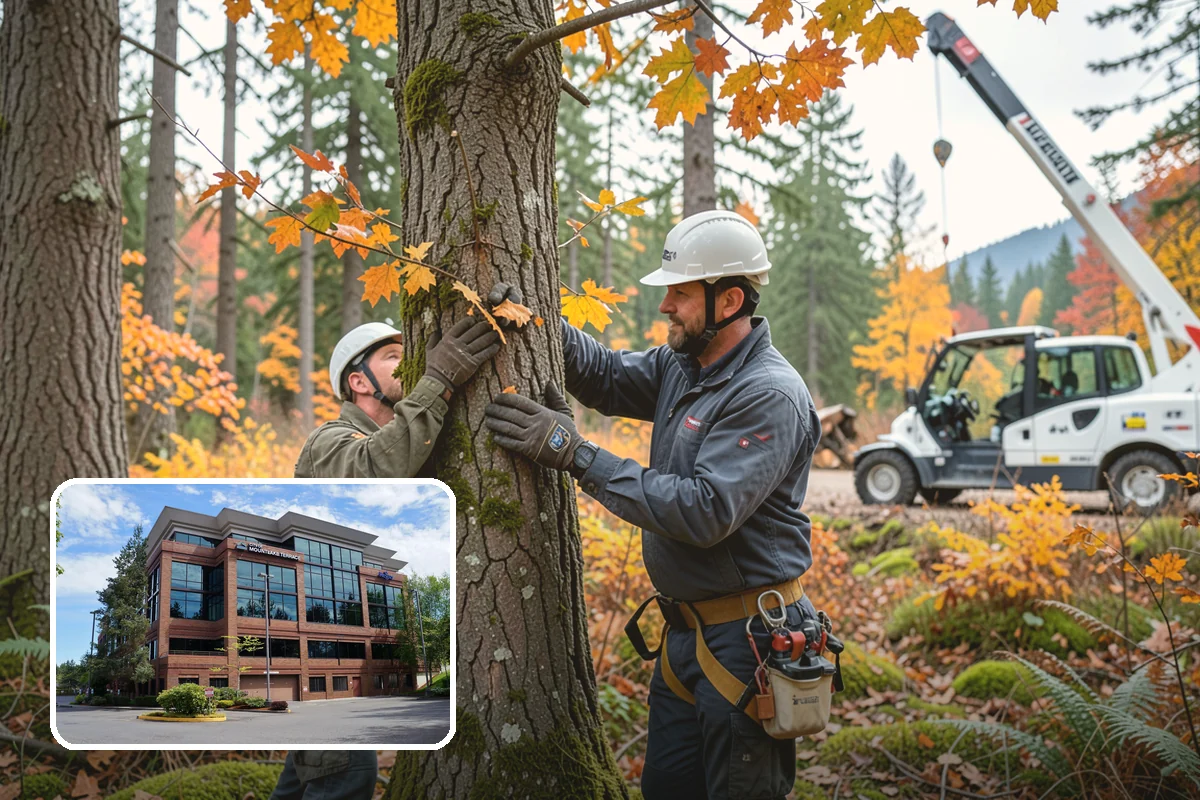
Small tree removal in Mountlake Terrace: what to check first
Size and species set what the city regulates
The city's FAQ says the regulated size is deciduous trees 6 inches DBH or greater, or coniferous trees at least 7 feet tall. Trees on the City's Prohibited Tree List are excluded. DBH means trunk diameter measured at about chest height. Measure yours and identify the species before you call, because a small conifer can fall under the rule more easily than you might expect. The rule is about removal. It does not speak to pruning, so if you want pruning instead, we check with the city before work starts when anything is unclear.
Critical areas and ground disturbance
The same FAQ says a clearing and grading permit may be needed if equipment significantly disturbs the ground. For a small tree, that matters most when the stump, roots or access path involve heavy machinery on a slope or soft ground. Hand tools and careful stump handling keep disturbance low. If the tree is in or near a critical area, or the removal is part of a development proposal, the city's review applies. We check with the city before work starts in those cases, not after.
Timing around the wet season
Daymet data for 2005 to 2025 shows about 80% of Mountlake Terrace's yearly rain and snow falls from October to April. Saturated soil is easier to rut and compact when crews move wood and gear across a lawn or bed. Scheduling removal in the drier months can protect the ground around the tree, though a hazardous tree should not wait for good weather.
Our ISA Certified Arborist can look at the tree, explain the options and give a free estimate. Call or text 425-484-4442.
Mountlake Terrace tree conditions at a glance
| USDA hardiness zone | 9a |
|---|---|
| Landslides mapped by WA DNR | 2 |
| Soils | 59% of land has hardpan or another restrictive layer within 40 in; most common series Alderwood |
| High and strong wind episodes, 2005-2025 | 38 in the forecast zone |
| Electric utility | Snohomish County PUD |
Tree removal rules in Mountlake Terrace
City critical-areas tree FAQ: in general single-family homeowners do not need a permit to remove a tree unless it is in a critical area or the removal is associated with a land use action such as a development proposal; a clearing and grading permit may be needed if the ground is significantly disturbed by equipment (especially multiple trees). Under MTMC 19.130.170 (Ord.
Regulated size: Deciduous trees 6 inches DBH or greater, or coniferous trees at least 7 ft tall, excluding trees on the City's Prohibited Tree List (MTMC 16.30, Ord.
Official city source. Rules change; we confirm with the city before work starts.
Trees near the power line to your house
Snohomish County PUD: PUD "does not maintain vegetation around service lines or standalone communication lines." Customer must keep 5 ft clearance on all sides of the service drop (10 ft diameter), except the first 10 ft nearest the primary line which the PUD trims.
Customer Service Regulations list tree trimming as a non-routine disconnection/reconnection of residential service;00 each on overtime. Customers must not cut/disconnect the drop themselves (tampering charge).
Tree/vegetation questions: 425-783-5579 (Mon-Fri 7am-3pm) or [email protected]. Utility page.
Any fee for a disconnect is set by the utility.
Strongest wind events near Mountlake Terrace
- Dec 20, 2018: gusts to 66 mph
- Dec 14, 2006: gusts to 66 mph
- Apr 2, 2010: gusts to 62 mph
NOAA Storm Events, forecast zone that includes Mountlake Terrace, 2005-2025.
Sources: Daymet daily weather (NASA/ORNL), NOAA Storm Events, USDA plant hardiness map 2023, NRCS soil survey, USGS elevation, WA DNR landslide inventory, USDA Forest Service aerial survey, WSDA, city tree assessments and street-tree inventories, SILVIS Lab, Arbor Day Foundation, and official city and utility pages.
Small Tree Removal Serving Mountlake Terrace
Mountlake Terrace
Also serving Mountlake Terrace
- Flower Bed Design in Mountlake Terraceat Washington Landscaping
- Emergency Tree Removal in Mountlake Terraceat Washington City Services
- Firewood Processing in Mountlake Terraceat Washington Firewood