Where Safety Meets Expert Tree Service.

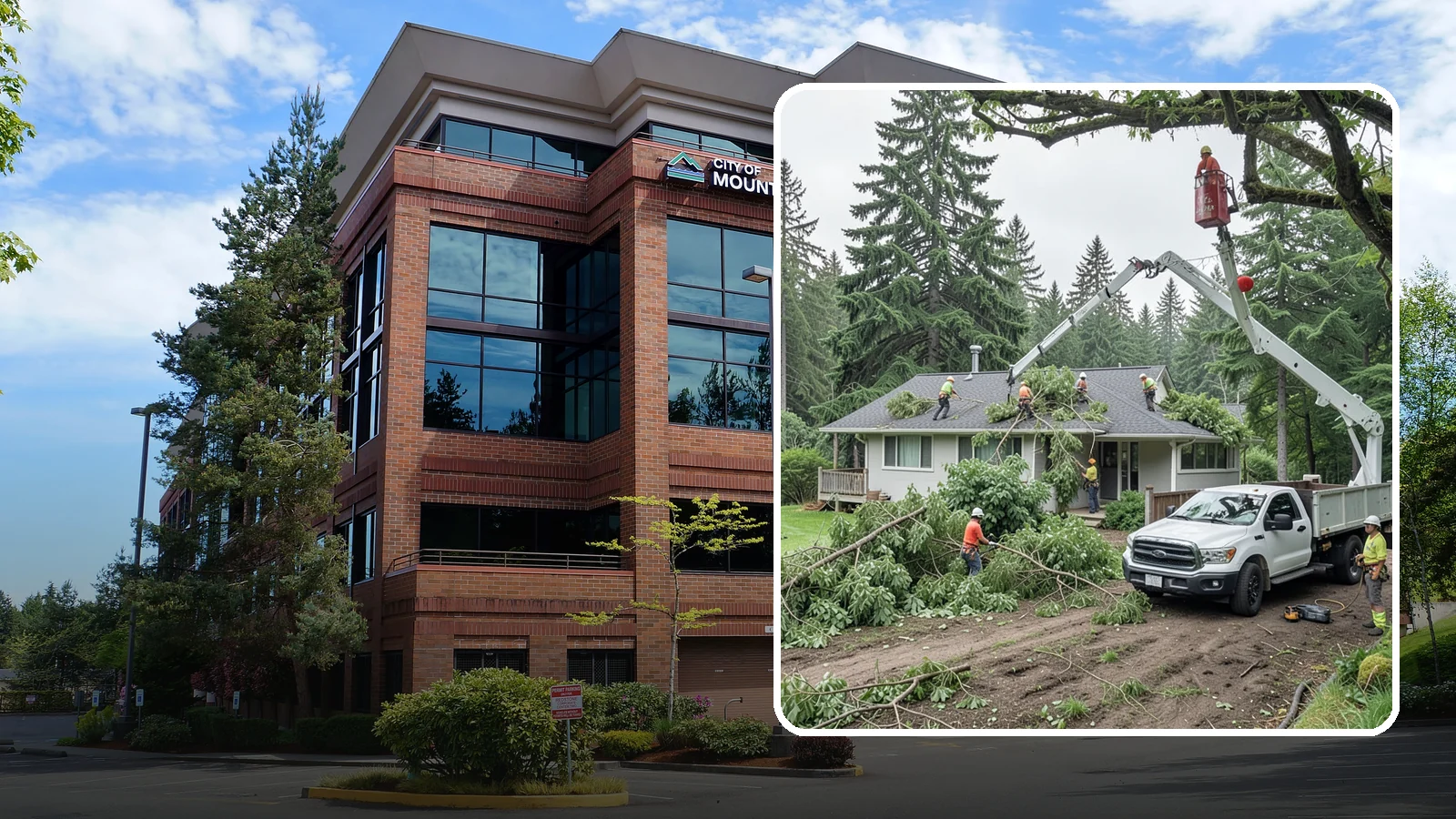
Mountlake Terrace Roof Clearance Pruning
The pruning of branches away from rooflines.
The best time to plan roof clearance pruning in Mountlake Terrace is late spring through early fall, when branches are leafed out and easy to judge. Rain falls on about 107 days a year here (Daymet, 2005-2025), so branches touching shingles stay damp for long stretches. Moss, debris and rot tend to follow.
You can also act after a windy spell, when you can see which limbs now rest on the roof. Walk the property, look up from each corner of the house, and note any branch within a few feet of the roofline.
About Roof Clearance Pruning in Mountlake Terrace
Roof clearance pruning helps keep your home’s exterior safe by trimming branches away from rooflines. This essential tree care protects roofing materials and gutters while reducing the amount of debris that accumulates over time. We work with homeowners throughout our service area to maintain healthy trees without compromising their structure or safety.
What Mountlake Terrace Roof Clearance Pruning Includes
Our team specializes in pruning branches specifically to create safe distance between your limbs and your home’s roofline. This targeted approach reduces potential damage from falling leaves, twigs, and larger debris that can clog gutters or wear down shingles. We focus on removing only what is necessary while respecting the natural growth patterns of each tree species.
Mountlake Terrace Roof Clearance Pruning Process
The work begins with a careful assessment of your canopy condition to determine the best pruning objectives for your specific trees. Our trained crews select precise cuts tailored to the season and species, ensuring clean incisions that avoid stressing the plant. After making these strategic cuts, we lower the material safely and thoroughly clean up the entire work area around your property.
Equipment We Use for Mountlake Terrace Roof Clearance Pruning
We utilize a variety of tools including hand saws, pole saws, chainsaws, and wood chippers to handle branches efficiently. Depending on how close trees are to structures or roofs, our crews may use climbing rigging gear or aerial lifts for safe access. All personnel wear proper personal protective equipment while operating this specialized machinery around your home.
Mountlake Terrace Roof Clearance Pruning Safety & Best Practices
We strictly follow recognized arboricultural standards to avoid making harmful cuts that could weaken a tree’s structure. Our crew watches carefully for overhead power lines and unstable limbs before beginning any work aloft or on the ground. Fall protection systems are used whenever workers climb, ensuring everyone remains secure throughout the pruning process.
Signs You Need Roof Clearance Pruning in Mountlake Terrace
You may need this service if you notice branches hanging low over your roofline or accumulating excessive debris in gutters. Deadwood found near weak unions or limbs interfering with structures also indicate that clearance work is appropriate for your trees. Addressing these issues early helps prevent branch failure and supports the long-term health of your landscape.
What Affects the Cost of Roof Clearance Pruning in Mountlake Terrace
The final price depends on factors such as tree species, current canopy condition, and specific access requirements like climbing gear or lifts. We also consider the volume of debris that needs processing and removal from your site before concluding our estimate. Each project is unique, so we evaluate these variables to provide a fair assessment for every job.
Best Time of Year for Mountlake Terrace Roof Clearance Pruning
Scheduling work during dormant seasons often minimizes stress on trees caused by over-pruning live tissue at the wrong time. We adhere to specific timing sensitivities required by different tree species common in our region to ensure optimal healing and growth. Planning ahead allows us to match methods to site conditions while keeping your trees vigorous throughout their life cycle.
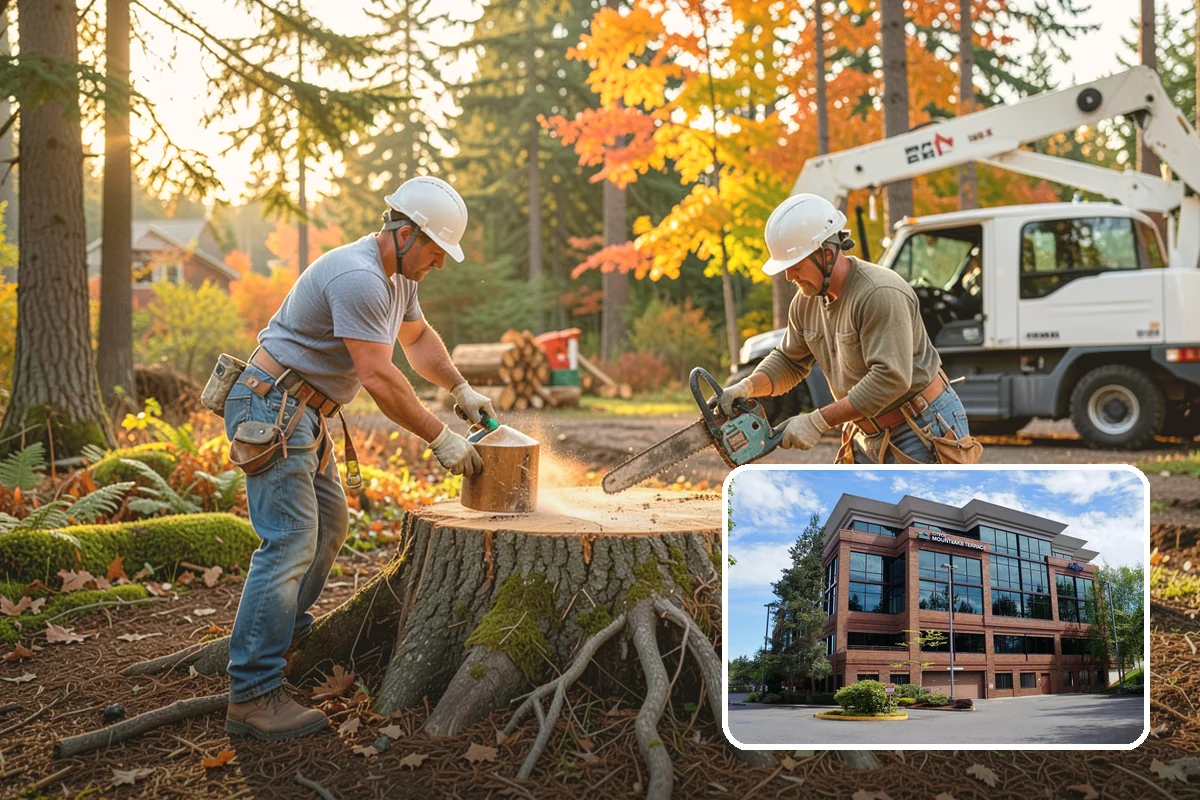
Planning roof clearance pruning in Mountlake Terrace
Start by deciding what you want the roof to look like afterward. Most clearance work aims to pull live branches back from shingles, gutters and chimneys, and to remove dead limbs hanging over the house. Standard practice, as in the ANSI A300 pruning standards, is to cut back to a branch union or a suitable lateral rather than leaving stubs. We do not recommend topping, which weakens a tree and often leads to fast, weak regrowth.
What affects the scope
Branch size and height matter most. Small twigs brushing a roof are a quick job. Large limbs over the house may need to be lowered in sections on ropes so nothing lands on the shingles. The tree's species and health also count. A tree with dead wood or poor structure may call for more than a trim.
Wind is another reason to look closely. The National Weather Service forecast zone that includes Mountlake Terrace logged 38 high and strong wind episodes from 2005 to 2025. That is a zone-wide record, not a measure of any one tree. Still, it is a fair reason to remove limbs that could whip against the roof.
Pruning a tree is not the same as removing it, and a city removal rule would not necessarily apply to pruning. If anything about your tree is unclear, we check with the city before work starts.
What to expect on the day
A crew will review the plan with you, protect the work area and set up ropes or climbing lines. Cuts are made one limb at a time, and debris is lowered or guided down, then cleared. Our ISA Certified Arborist can walk through the cuts with you beforehand, and estimates are free.
Practical tip: take dated photos of the roof and the branches from the ground before the visit. They help you point out exactly which limbs worry you, and they give you a record to compare against later.
Mountlake Terrace tree conditions at a glance
| USDA hardiness zone | 9a |
|---|---|
| Rain and snow falling October to April | 80% of the year’s total |
| Days that freeze at night and thaw by day | 33 a year |
| Tree City USA | 7 years |
| Electric utility | Snohomish County PUD |
Trees near the power line to your house
Snohomish County PUD: PUD "does not maintain vegetation around service lines or standalone communication lines." Customer must keep 5 ft clearance on all sides of the service drop (10 ft diameter), except the first 10 ft nearest the primary line which the PUD trims.
Customer Service Regulations list tree trimming as a non-routine disconnection/reconnection of residential service;00 each on overtime. Customers must not cut/disconnect the drop themselves (tampering charge).
Tree/vegetation questions: 425-783-5579 (Mon-Fri 7am-3pm) or [email protected]. Utility page.
Any fee for a disconnect is set by the utility.
Sources: Daymet daily weather (NASA/ORNL), NOAA Storm Events, USDA plant hardiness map 2023, NRCS soil survey, USGS elevation, WA DNR landslide inventory, USDA Forest Service aerial survey, WSDA, city tree assessments and street-tree inventories, SILVIS Lab, Arbor Day Foundation, and official city and utility pages.
Roof Clearance Pruning Serving Mountlake Terrace
Mountlake Terrace

Also serving Mountlake Terrace
- Pear Tree Pruning in Mountlake Terraceat Washington Landscaping
- Roof Algae Treatment in Mountlake Terraceat Washington Roofing
- Hazard Tree Inspections in Mountlake Terraceat Washington City Services