Where Safety Meets Expert Tree Service.

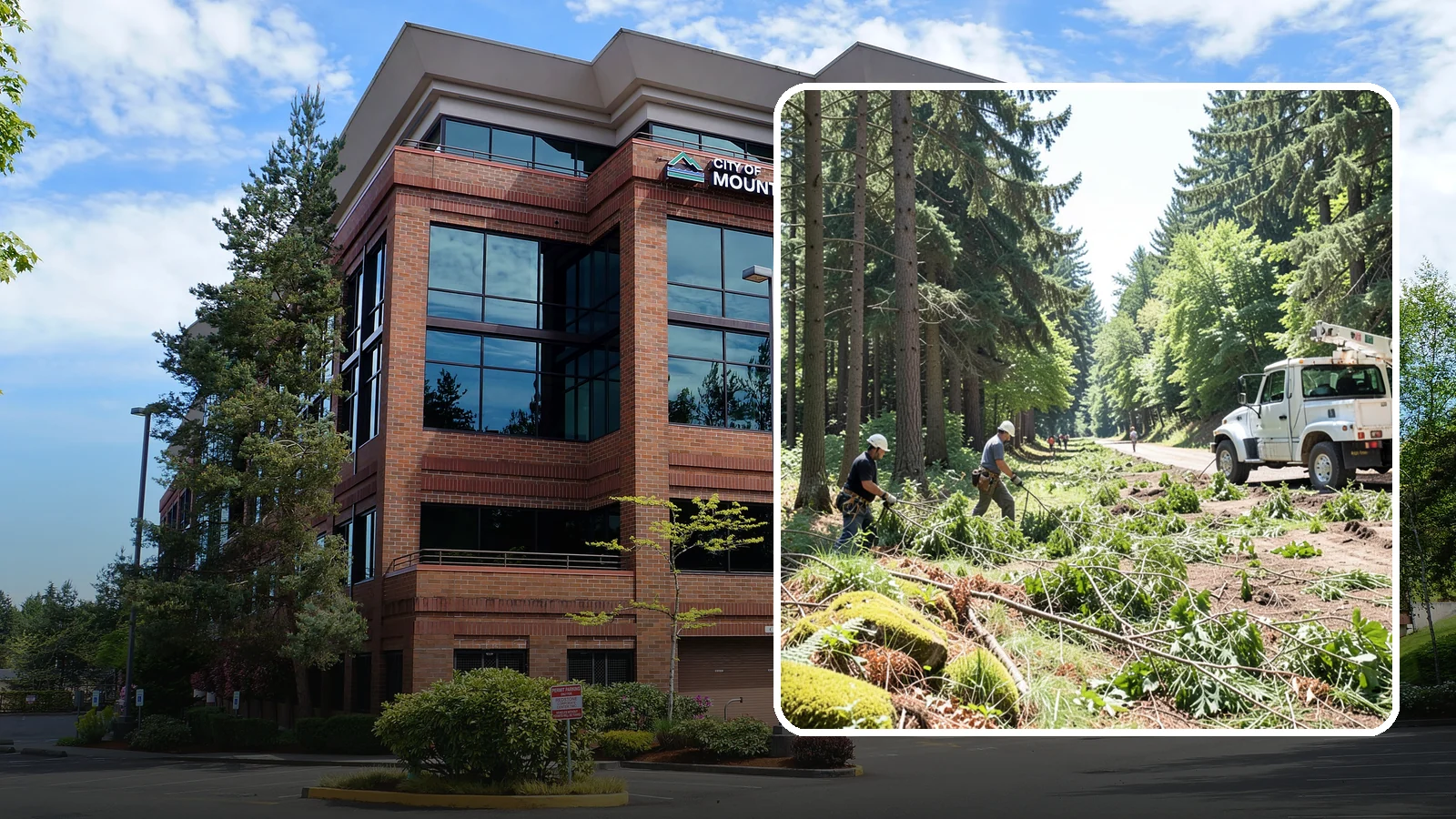
Mountlake Terrace Right-of-way Clearing
The clearing of vegetation along easements and access corridors.
Who has to clear the branches around the wire that runs to my house in Mountlake Terrace? In most cases, you do. Snohomish County PUD says it does not maintain vegetation around service lines, so growth near the drop to your home is usually the owner's job.
Right-of-way clearing here starts with finding which wire is which. Look from the pole to the roofline and note every limb that is close to that line. Then decide whether the work is routine pruning or something that needs the utility involved.
About Right-of-way Clearing in Mountlake Terrace
Right-of-way clearing helps homeowners keep their easements and access corridors safe from overgrown vegetation. Our trained crews work carefully to maintain these important pathways so they remain usable for everyone who needs them. This service is designed to reduce fire risks while preparing your land exactly as you intend it to be used.
What Mountlake Terrace Right-of-way Clearing Includes
We clear unwanted plants along designated rights-of-way using methods that match the specific tree species and site conditions on your property. Our goal is to remove thorny growth, invasive species, and dense thickets without damaging features that must stay intact. This process ensures a clean corridor while protecting retained trees and their root zones from unnecessary disturbance.
Mountlake Terrace Right-of-way Clearing Process
We begin by assessing the entire area and marking key features to ensure they are protected during work. Vegetation is then removed in a planned sequence before we grade or tidy the surface as needed for your specific goals. Finally, all debris is processed responsibly so that the land looks neat and ready for its intended purpose once our crew leaves.
Equipment We Use for Mountlake Terrace Right-of-way Clearing
Our crews use brush cutters, chainsaws, chippers, and hauling equipment to handle vegetation of any density efficiently. Hand tools are available when precision work near sensitive areas or unique tree species requires a gentler touch. We also wear full personal protective gear throughout the job to keep everyone safe while we operate these powerful machines.
Mountlake Terrace Right-of-way Clearing Safety & Best Practices
Before starting, our team identifies property lines and utility locations to avoid accidental damage during clearing operations. We stay alert for uneven terrain and hidden obstacles that could create hazards if debris is not managed properly. Every step of the work prioritizes keeping retained trees healthy and ensuring no features are compromised by heavy machinery or falling branches.
Signs You Need Right-of-way Clearing in Mountlake Terrace
You may need this service when you notice dense, thorny growth blocking your path or invasive species taking over an easement. If your land has uneven ground that feels unsafe to walk on, clearing vegetation can restore stability and visibility. Overgrown corridors also increase fire risk by creating continuous fuel loads that connect across your property boundaries.
What Affects the Cost of Right-of-way Clearing in Mountlake Terrace
The final price depends heavily on how dense the vegetation is and whether thorny plants or invasive species require special handling methods. Uneven terrain conditions add complexity to the job, as does the responsibility of properly disposing of all removed debris. We tailor our approach based on these factors rather than using a one-size-fits-all pricing structure for every site.
Best Time of Year for Mountlake Terrace Right-of-way Clearing
This work can be performed year-round in Puget Sound weather when ground conditions allow for safe operations and efficient progress. During winter months, we adjust our methods to account for wet or frozen ground that is common during the colder seasons. By planning around these seasonal changes, we ensure high-quality results regardless of whether you need service now or later this season.
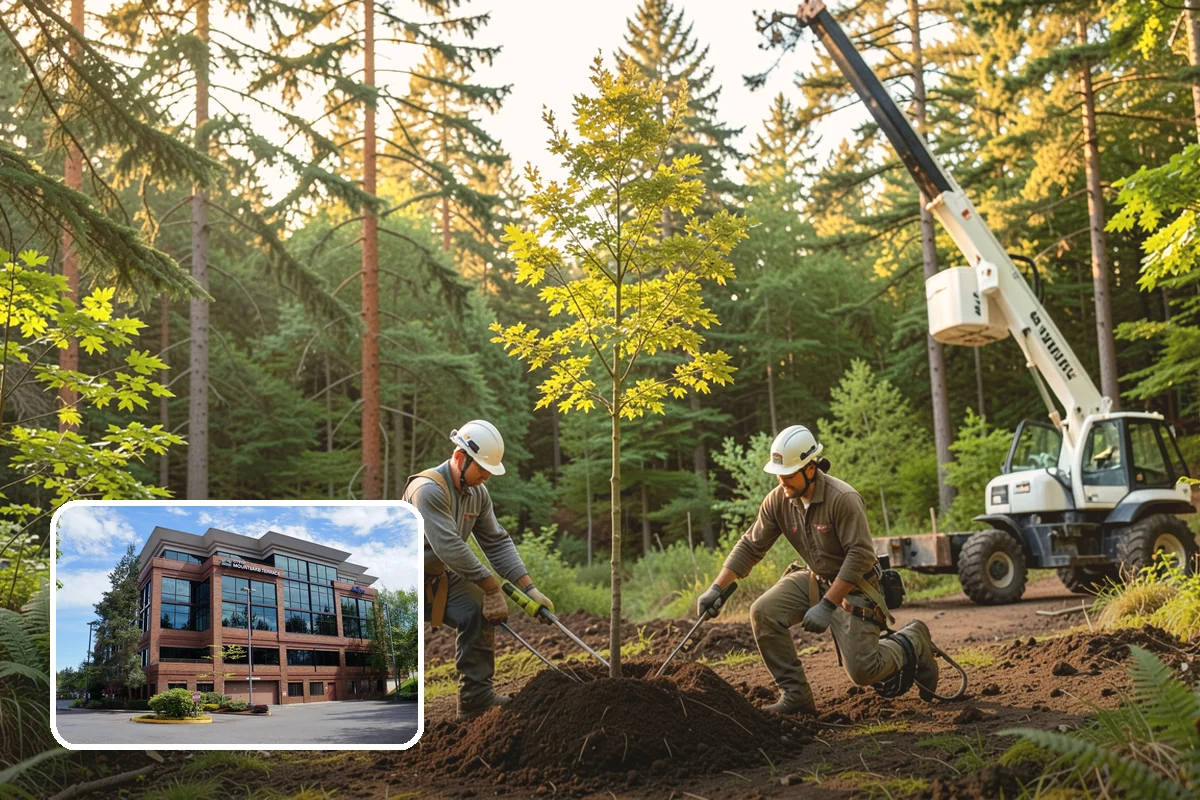
Clearing near service lines in Mountlake Terrace
Who trims what
The PUD's rule is specific. The customer must keep 5 feet of clearance on all sides of the service drop, which makes a 10-foot-diameter corridor around the wire. The exception is the first 10 feet nearest the primary line. The PUD trims that stretch. Everything else along the drop falls to the owner. Knowing this helps you tell which branches you need to deal with and which you should leave to the utility.
Why we keep clear of the wire
Service drops carry live current, and branches that touch them can be hazardous to anyone working nearby. The PUD also says customers must not cut or disconnect the drop themselves, and it lists a tampering charge for doing so. Where limbs sit inside the 5-foot zone, the safe route is to plan the work with the wire in mind rather than reach for a saw.
When a disconnect may be needed
Some jobs cannot be done safely with the service still connected. The PUD's Customer Service Regulations list tree trimming as a non-routine disconnection and reconnection of residential service, with a fee for overtime work. Any fee is set by the utility, not by us. If your job might need a disconnect, it is worth knowing before the day of the work so you can plan around the power being off.
Why windy weather matters
The forecast zone that includes Mountlake Terrace recorded 38 high and strong wind episodes from 2005 to 2025. That is a zone-wide figure, not a measure of any one tree. It does suggest that branches hanging close to a service line can be moved toward it by wind. Clearing the 5-foot corridor ahead of time leaves more room for that movement.
For a walk-through of your lines, call or text 425-484-4442. Free estimates are available, and an ISA Certified Arborist is on staff.
Mountlake Terrace tree conditions at a glance
| Electric utility | Snohomish County PUD |
|---|---|
| Land under dense tree cover (50%+ canopy) | 16% |
| High and strong wind episodes, 2005-2025 | 38 in the forecast zone |
| Ice storm episodes, 2005-2025 | 2 in the forecast zone |
Trees near the power line to your house
Snohomish County PUD: PUD "does not maintain vegetation around service lines or standalone communication lines." Customer must keep 5 ft clearance on all sides of the service drop (10 ft diameter), except the first 10 ft nearest the primary line which the PUD trims.
Customer Service Regulations list tree trimming as a non-routine disconnection/reconnection of residential service;00 each on overtime. Customers must not cut/disconnect the drop themselves (tampering charge).
Tree/vegetation questions: 425-783-5579 (Mon-Fri 7am-3pm) or [email protected]. Utility page.
Any fee for a disconnect is set by the utility.
Sources: Daymet daily weather (NASA/ORNL), NOAA Storm Events, USDA plant hardiness map 2023, NRCS soil survey, USGS elevation, WA DNR landslide inventory, USDA Forest Service aerial survey, WSDA, city tree assessments and street-tree inventories, SILVIS Lab, Arbor Day Foundation, and official city and utility pages.
Right-of-way Clearing Serving Mountlake Terrace
Mountlake Terrace
Also serving Mountlake Terrace
- Land Grading in Mountlake Terraceat Washington Landscaping
- Garage Demolition in Mountlake Terraceat Washington Construction
- Noxious Weed Treatment in Mountlake Terraceat Washington City Services
- Fallen Tree Firewood in Mountlake Terraceat Washington Firewood