Where Safety Meets Expert Tree Service.


Kent Diseased Tree Removal
The removal of trees affected by disease beyond recovery.
A federal aerial survey of forest within 10 km of Kent mapped 6,473 acres of decline where no single cause was found. That is forest land, not yard trees, but it is a reminder that dieback can look the same from the ground whatever is behind it.
If a tree on your property has thinning crowns, dead limbs, or fungal growth at the base, a diagnosis should come before any decision to cut. Some trees can be treated or pruned. Others are hazards that need to come down.
About Diseased Tree Removal in Kent
When a tree on your property is affected by disease beyond recovery, our team can help remove it safely and efficiently. This specialized removal protects nearby healthy trees from infection while clearing away potential safety hazards for you and your family. We work with homeowners throughout the service area to restore peace of mind after an illness has compromised their landscape.
What Kent Diseased Tree Removal Includes
Diseased tree removal focuses on taking down trees where disease has weakened the structure or threatens to spread further. Our trained crews follow recognized arboricultural standards, tailoring every method to match your specific tree species and site conditions. This service ensures that hazardous limbs are lowered safely while minimizing impact on surrounding areas during the work.
Kent Diseased Tree Removal Process
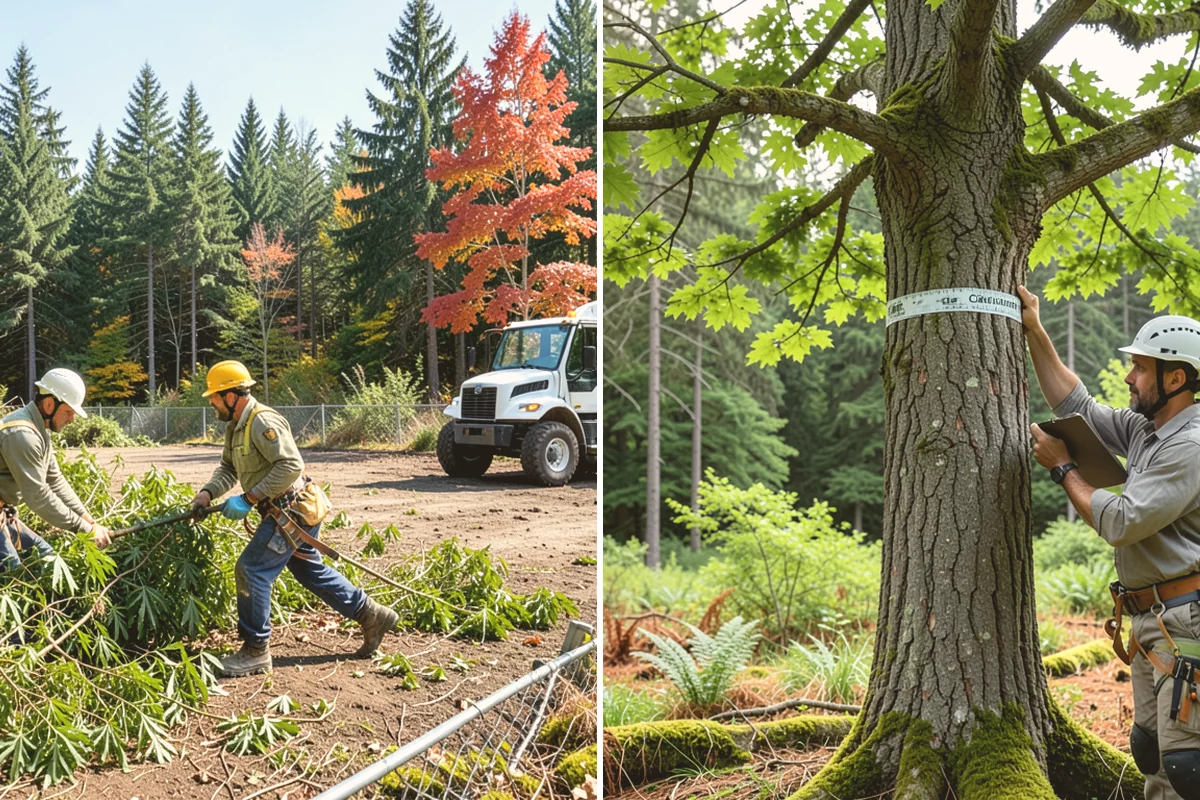
The typical workflow begins with an on-site assessment to evaluate hazards before establishing clear drop zones and safety perimeters. We then rig and lower branches or fell the stem in a controlled sequence, followed by processing the wood and clearing debris from your property. Once all materials are hauled away, we complete final site cleanup to leave your landscape looking tidy again.
Equipment We Use for Kent Diseased Tree Removal
Our crews utilize chainsaws, climbing gear, and rigging equipment to handle trees of various sizes safely. Depending on access needs and tree location, we may also bring in a wood chipper, aerial lift, or crane as required for the job. Ground protection measures are always used alongside personal protective equipment to keep everyone safe during operations.
Kent Diseased Tree Removal Safety & Best Practices
Safety is our priority, so we maintain clear drop zones and follow controlled fall paths at all times. Before starting any work, we identify overhead utility lines and inspect trees for hidden decay or structural defects that could affect climbing safety. Coordinated ground communication and proper use of fall protection ensure a secure environment throughout the removal process.
Signs You Need Diseased Tree Removal in Kent
You may need this service if you notice disease has compromised your tree’s structure or poses a risk to nearby healthy plants. Other indicators include situations where the infection threatens to spread, creating an urgent need for professional intervention before conditions worsen. Recognizing these signs early helps prevent further damage to your property and surrounding vegetation.
What Affects the Cost of Diseased Tree Removal in Kent
The cost of removal is influenced by factors such as tree size and site access limitations like proximity to structures or power lines. Hidden internal decay severity also plays a role, along with the complexity required for processing wood debris after felling. These variables determine the resources needed to complete your project safely without inventing specific price estimates.
Best Time of Year for Kent Diseased Tree Removal
Work can be performed year-round in our local climate, offering flexibility when you need urgent removal services completed quickly. However, extra caution is advised during wet seasons due to slippery conditions that may affect rigging operations and ground stability. Planning ahead for these weather patterns helps ensure a smooth and safe execution of your diseased tree project.

Diseased tree removal in Kent: how the work is decided
Removal starts with finding out what is wrong. Our ISA Certified Arborist looks at the crown, trunk, root flare and soil, then judges whether the tree can be saved or is a risk to people and structures.
What the local data can and cannot tell you
The same federal survey (USDA Forest Service and WA DNR, 2021-2025) mapped 3,709 acres of heat damage across all tree species and 951 acres of bear damage in Douglas-fir. These figures describe nearby forests, not your tree. They do show that heat stress is a real pattern here, and stress can look like disease.
Maples are a good example. WSU HortSense says leaf scorch on maples comes from drought or heat stress, especially near buildings or pavement. Scorched leaves alone do not mean a maple is dying. A maple by a driveway may need better watering rather than removal, so we look at the whole tree first.
Pests matter too. The Washington State Department of Agriculture trapped 7 spongy moths in 6 trap catch records in Kent in 2024 and 9 moths in 7 records in 2025. Those are trap detections, not a count of infested trees. If you see unusual defoliation, it is worth having it identified before you decide.
How a removal usually goes
- Inspect the tree and confirm the problem.
- Check city requirements before any cutting.
- Section the tree down in controlled pieces where it cannot fall clear, protecting nearby structures and plants.
- Haul off the debris, and grind the stump if you want it done.
On the city side, the published Kent rules we found do not clearly say which removals need approval. So we check with the city before work starts, rather than guess.
Free estimates are available. Call or text 425-484-4442 with photos of the tree and we can tell you what we would look for on site.
Kent tree conditions at a glance
| USDA hardiness zone | 8b (8b to 9a across the city) |
|---|---|
| Soils | 60% of land has hardpan or another restrictive layer within 40 in; most common series Alderwood |
| Rain and snow falling October to April | 81% of the year’s total |
| Days with 0.1 in or more of rain | 117 a year |
| Days that freeze at night and thaw by day | 30 a year |
Tree health near Kent
Spongy moth (WSDA 2025): WSDA trap detection(s): 9 moth(s) in 7 trap catch record(s).
Spongy moth (WSDA 2024): WSDA trap detection(s): 7 moth(s) in 6 trap catch record(s).
- Decline, cause not identified6,473 ac
- Heat3,709 ac
- Bears951 ac
Forest damage mapped from the air within 10 km of Kent, 2021-2025 (USDA Forest Service and WA DNR). This covers forest land, not street or yard trees. “Decline, cause not identified” is dieback with no single cause found.
Sources: Daymet daily weather (NASA/ORNL), NOAA Storm Events, USDA plant hardiness map 2023, NRCS soil survey, USGS elevation, WA DNR landslide inventory, USDA Forest Service aerial survey, WSDA, city tree assessments and street-tree inventories, SILVIS Lab, Arbor Day Foundation, and official city and utility pages.
Diseased Tree Removal Serving Kent
Kent

Diseased tree removal in nearby areas
Also serving Kent
- Native Plant Landscaping in Kentat Washington Landscaping
- Emergency Tree Response in Kentat Washington City Services
- Storm Wood Processing in Kentat Washington Firewood