Where Safety Meets Expert Tree Service.


Kent Emergency Tree Removal
The urgent removal of trees that present an immediate danger.
Is a fallen or split tree an emergency? It is if it is on a house, a car, a power line or a driveway you need to use, or if a large limb is hanging and could drop. In those cases, keep everyone away from it and call for help the same day.
If the tree is down but nothing is damaged or blocked, you can usually take a few photos and plan the removal calmly. Either way, note where the tree is, what it touches, and whether any lines are involved. That helps us decide how to approach the job.
About Emergency Tree Removal in Kent
When a tree suddenly fails or begins falling toward your home, you need immediate help from our emergency removal team. We are here to act quickly for homeowners facing dangerous situations that require urgent attention regardless of the season. Our goal is to secure your property and restore peace of mind as fast as safely possible.
What Kent Emergency Tree Removal Includes
This service involves the rapid extraction of trees or large limbs that pose an immediate threat to safety. Work follows recognized arboricultural standards, with specific methods chosen based on the tree species and current site conditions. We focus entirely on removing hazards without delay while protecting your structures and landscaping from further damage.
Kent Emergency Tree Removal Process
Our crews begin by assessing the hazard and establishing a clear drop zone along with a safe perimeter around the work area. Limbs are rigged for lowering or the stem is felled in a controlled sequence to manage unpredictable lean or load distribution. Once the tree is down, we process the wood, haul away debris, and complete final site cleanup to leave your property secure.
Equipment We Use for Kent Emergency Tree Removal
We utilize chainsaws and climbing gear alongside rigging equipment to handle complex removals safely. Depending on access needs, an aerial lift or crane may be brought in to assist with lowering heavy limbs or stems. Ground protection measures are also used during the process to safeguard your lawn and hardscapes from damage caused by machinery movement.
Kent Emergency Tree Removal Safety & Best Practices
Safety is our priority as we maintain clear drop zones and carefully plan controlled fall paths away from overhead utility lines. Every crew member inspects for hidden decay and structural defects before climbing, using proper fall protection at all times. Coordinated ground communication ensures that everyone stays safe while managing the risks associated with unstable trees near power sources or buildings.
Signs You Need Emergency Tree Removal in Kent
You likely need this urgent service if a tree has already fallen or is actively leaning in an unsafe direction toward your house. Signs of hidden internal decay, such as cracks or hollows, combined with limited access for standard equipment often indicate that immediate action is required. If you notice unpredictable shifts in the tree’s position near structures or power lines, do not wait to address these potential dangers.
What Affects the Cost of Emergency Tree Removal in Kent
The final cost depends on factors like how much hidden internal decay exists within the trunk and branches. Proximity to active utility lines and nearby buildings can significantly influence the complexity of the job required for a safe removal. Additionally, limited access for heavy equipment or the need for specialized rigging due to an unpredictable lean will affect the overall pricing.
Best Time of Year for Kent Emergency Tree Removal
This critical service must be performed immediately whenever a tree fails, regardless of whether it is summer or winter in our region. While crews are ready to work year-round, wetter conditions during the Puget Sound winters may complicate site safety and require extra caution. There is no ideal season for emergency removal; if a hazard exists today, we must address it without delay to protect your family.
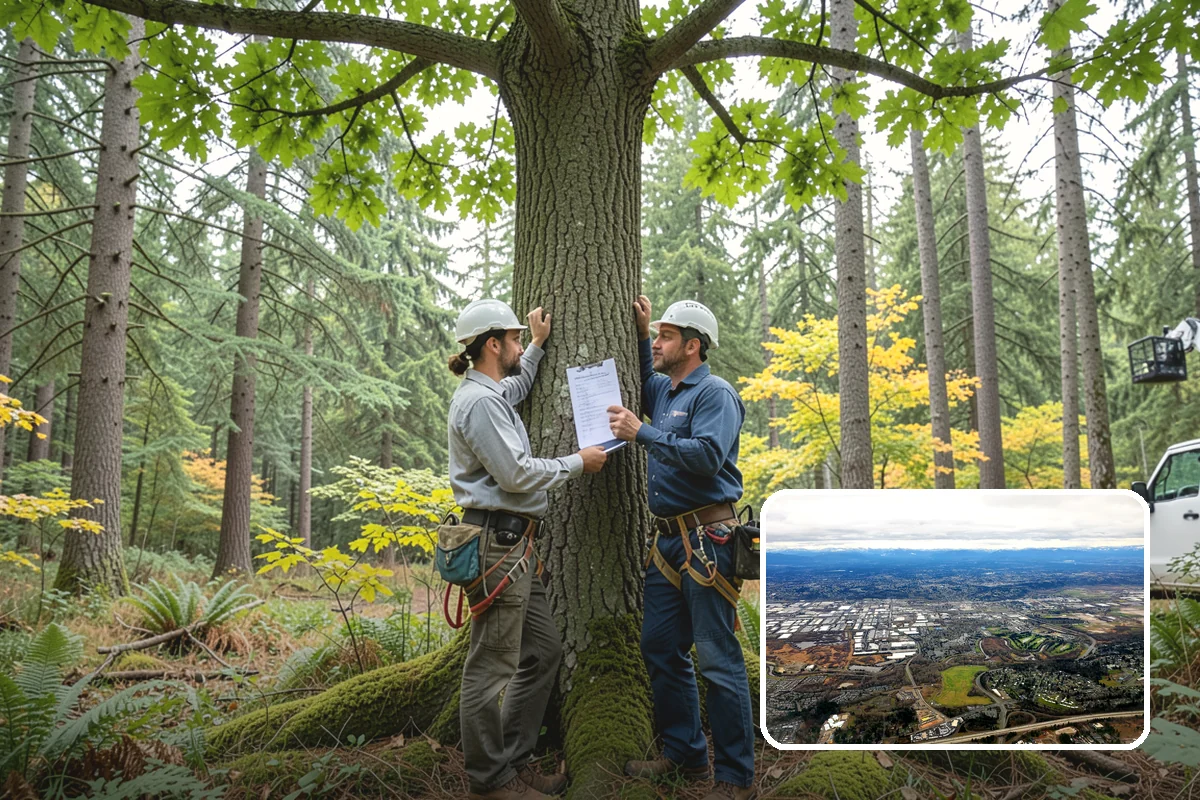
Emergency tree removal in Kent after a windstorm
Why wind is the main concern here
The National Weather Service forecast zone that includes Kent logged 38 high and strong wind episodes between 2005 and 2025. That figure covers the whole zone, not just Kent, and it does not tell you anything about a specific tree on your lot. It does show that damaging wind is a repeat event, not a rare one. The strongest gust recorded in that zone since 2005 was 74 mph on December 14, 2006. A tree that looks sound in summer can still fail in a storm if it has decay, a cracked union or a root system that has been disturbed.
What to do while you wait
Stay well clear of any tree touching a power line, and treat the line as live. Call the utility first. Do not cut a tree that is under tension, such as one bent against a roof or another tree. The stored force can release without warning. If you can do so safely, move cars and outdoor items away from the area, and photograph the damage from a distance for your insurance records.
Permits and the city
The published Kent tree rules we found do not clearly spell out which removals need city approval. So we check with the city before work starts, even when the job is urgent. If a tree is an immediate hazard, we can talk through what makes sense to do first, such as making the site safe, and what has to wait for the city's answer.
When you call or text 425-484-4442, tell us:
- where the tree is on the property
- what it is leaning on or has hit
- whether any wires are involved
- whether people can still get in and out of the home
An ISA Certified Arborist on staff can assess the tree, and estimates are free.
Kent tree conditions at a glance
| High and strong wind episodes, 2005-2025 | 38 in the forecast zone |
|---|---|
| Ice storm episodes, 2005-2025 | 3 in the forecast zone |
| Average snowfall | 5 in a season |
| Soils | 60% of land has hardpan or another restrictive layer within 40 in; most common series Alderwood |
| Rain and snow falling October to April | 81% of the year’s total |
| Electric utility | unconfirmed |
Tree removal rules in Kent
Kent’s published rules don’t spell out clearly which removals need city approval. We check with the city before work starts.
Strongest wind events near Kent
- Dec 14, 2006: gusts to 74 mph
- Feb 3, 2006: gusts to 67 mph
- Jan 12, 2021: gusts to 61 mph
NOAA Storm Events, forecast zone that includes Kent, 2005-2025.
Sources: Daymet daily weather (NASA/ORNL), NOAA Storm Events, USDA plant hardiness map 2023, NRCS soil survey, USGS elevation, WA DNR landslide inventory, USDA Forest Service aerial survey, WSDA, city tree assessments and street-tree inventories, SILVIS Lab, Arbor Day Foundation, and official city and utility pages.
Emergency Tree Removal Serving Kent
Kent
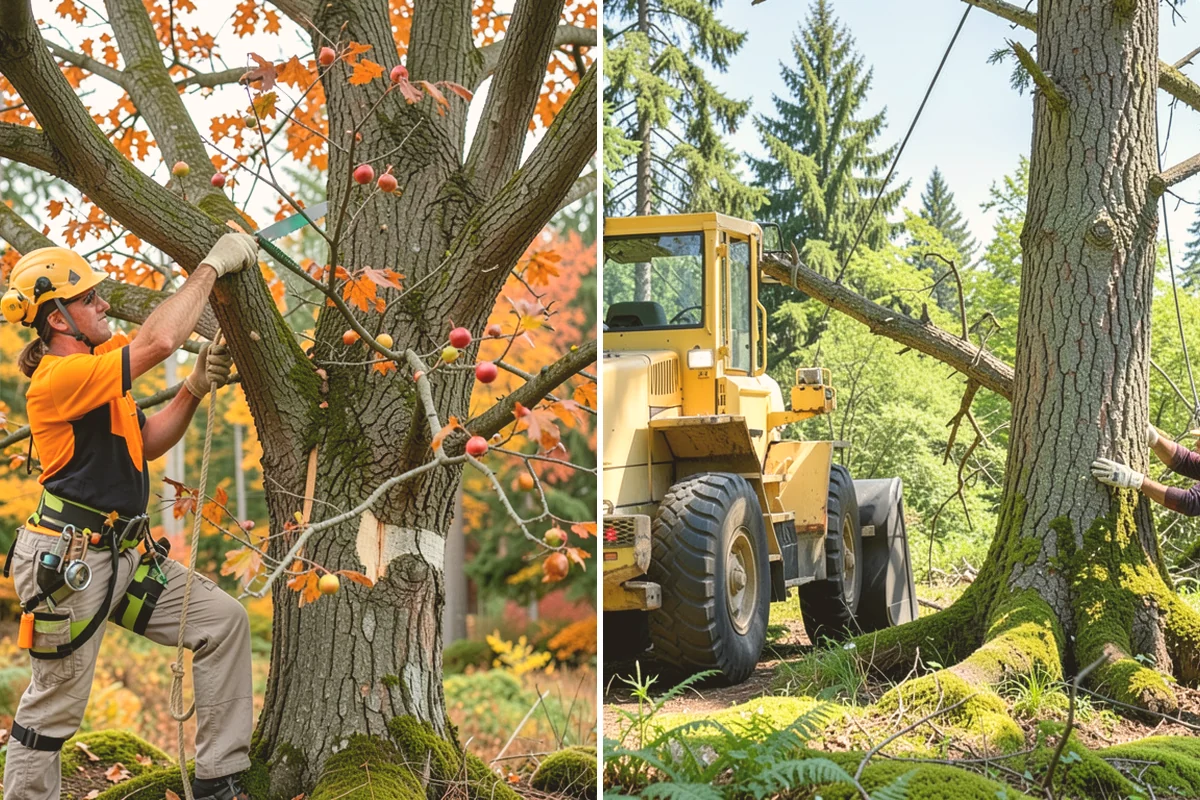

Emergency tree removal in nearby areas
Also serving Kent
- Garden Bed Installation in Kentat Washington Landscaping
- Hazard Tree Inspections in Kentat Washington City Services
- Storm Wood Processing in Kentat Washington Firewood