Where Safety Meets Expert Tree Service.

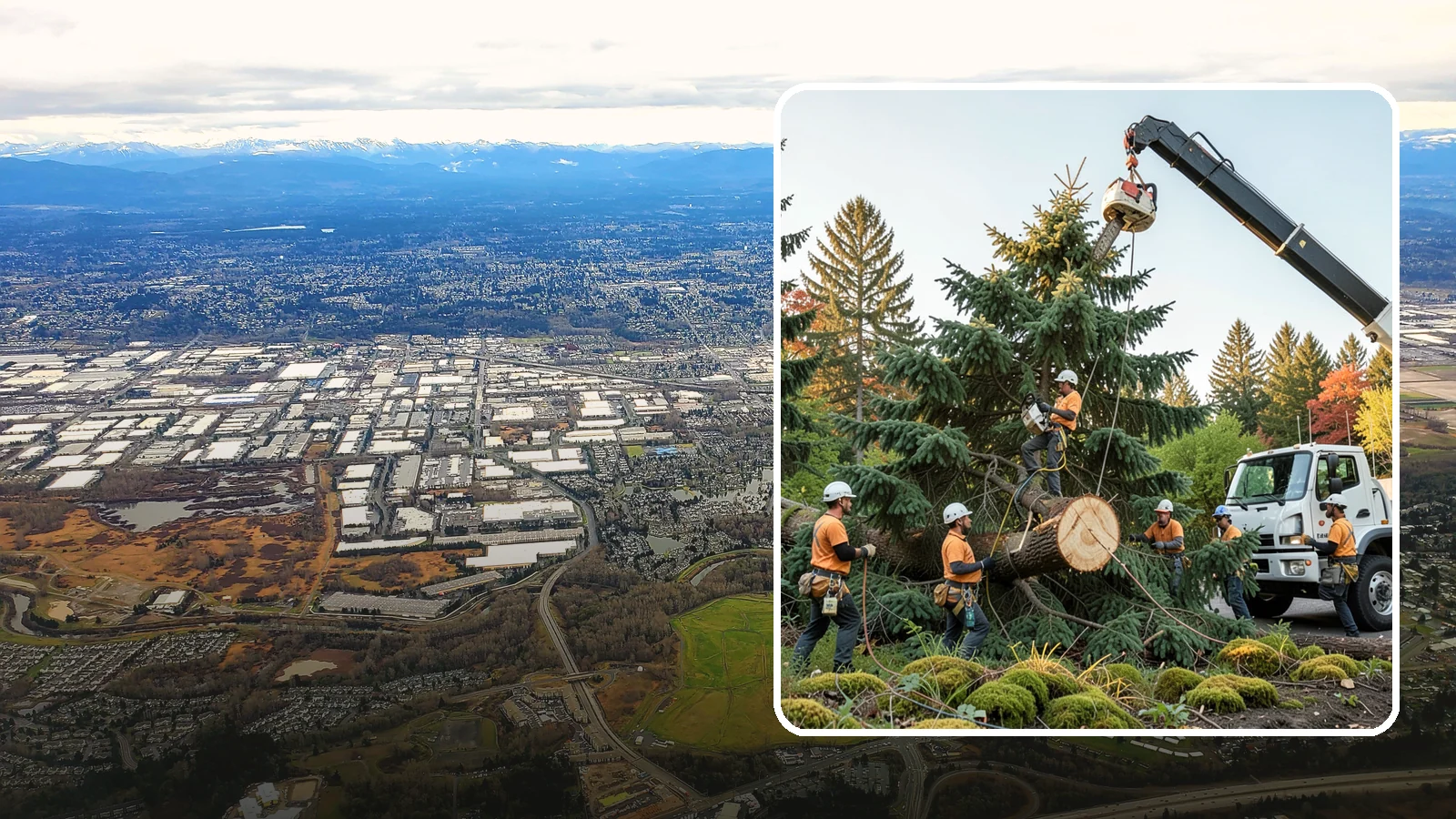
Kent Crane-assisted Tree Removal
The removal of trees using a crane to lift sections clear of obstacles.
Before anyone books a crane in Kent, find out whether the city needs to approve the removal. The published rules we found don't spell out clearly which removals need city approval, so that question comes first, ahead of scheduling or access planning.
A crane lifts a tree out in sections, which suits trees that are too large, too close to a structure, or too unstable to climb and drop piece by piece. Below, we explain how the work goes and what you can do to prepare.
About Crane-assisted Tree Removal in Kent
If your property has a large tree or tight access that makes standard removal difficult, crane-assisted services offer a safe solution for homeowners in our area. This method helps clear obstacles while protecting nearby structures and landscaping from potential damage during the job. We are here to help you manage challenging trees with care and precision.
What Kent Crane-assisted Tree Removal Includes
Crane-assisted tree removal uses specialized equipment to lift sections of a tree, keeping them clear of sensitive targets like homes or power lines. This approach is ideal when access is restricted, nearby features require extra protection, or the size of the tree makes conventional rigging impractical. Our crews follow recognized arboricultural standards to ensure every step matches your specific site conditions and tree species.
Kent Crane-assisted Tree Removal Process
The work begins with an on-site assessment to evaluate hazards and establish safe drop zones around the property. Crews then carefully rig limbs or fell the stem in a controlled sequence before processing the wood and hauling debris away. Once all material is removed, we complete final cleanup to leave your site clear and ready for use again.
Equipment We Use for Kent Crane-assisted Tree Removal
Our teams utilize chainsaws, climbing gear, and ground protection equipment alongside cranes or aerial lifts as needed for each job. A wood chipper helps manage branches on-site while personal protective equipment ensures the safety of everyone involved in the operation. All tools are selected to match the specific requirements of your tree’s size and location.
Kent Crane-assisted Tree Removal Safety & Best Practices
Safety is a priority, so we maintain clear drop zones and follow controlled fall paths throughout the removal process. Before starting any work, our crews identify overhead utility lines and inspect trees for hidden decay or structural defects that could affect stability. We also use coordinated ground communication and proper fall protection to manage risks during every phase of the job.
Signs You Need Crane-assisted Tree Removal in Kent
You may need this service if you notice a tree leaning unpredictably or have limited space for standard equipment on your property. Situations where targets are sensitive, such as homes close by, or internal decay makes conventional methods unsafe also indicate when crane assistance is required. This method helps prevent pests and disease from spreading to nearby trees while removing safety hazards quickly.
What Affects the Cost of Crane-assisted Tree Removal in Kent
The final cost depends on factors like the size of the tree and any hidden conditions affecting its structural integrity. Proximity to structures and power lines, limited equipment access, and specific wood disposal requirements will also influence pricing for your project. These variables ensure we provide an accurate estimate that reflects the unique challenges of your site.
Best Time of Year for Kent Crane-assisted Tree Removal
This service can be performed year-round in our local weather patterns with appropriate planning for ground stability during wetter seasons. While rain requires careful management to keep crane operations safe, crews are ready to work whenever conditions allow and access is available. We prioritize managing moisture levels on the ground to ensure a secure operation regardless of the season.
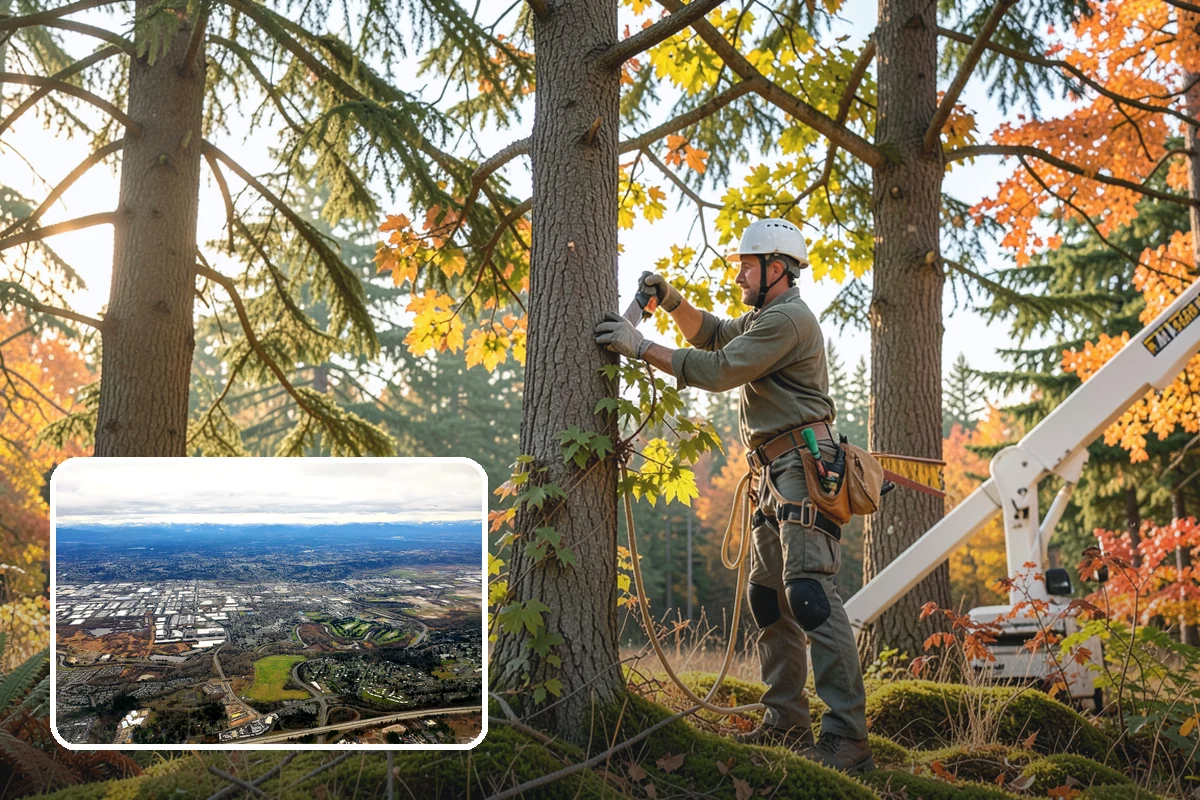
How crane-assisted removal works on a Kent property
Crane-assisted removal is a way to take a tree down in controlled pieces without dropping them to the ground. It is often chosen when a tree leans over a house, sits behind a fence or garage, or has decay that makes climbing unwise.
The steps
- Site visit: we look at the tree, the access route, overhead lines, and where the crane can stand.
- City check: we contact the city before work starts, because Kent's published rules don't clearly say which removals need approval.
- Rigging: a climber attaches the crane's line to a section and makes the cut.
- Lift: the crane swings the section to a set landing area, where it is cut up or hauled off.
- Cleanup: the remaining trunk is taken down the same way, and debris is cleared.
Things that change the plan
Crane placement matters most. The crane needs firm, level ground and a clear path, so driveways, soft lawn, and septic areas all come up during the visit. Moving vehicles and trimming back a gate path ahead of time can help.
We have not confirmed which electric utility serves your address in Kent. If lines run near the tree, that has to be settled before any lift, since it affects how sections can be swung out.
Kent falls in USDA hardiness zone 8b, with parts of the city ranging from 8b to 9a, according to the 2023 USDA map. That is a winter-cold rating, not a measure of tree health or risk. It tells you the area's typical low temperatures, which is useful if you plan to replant. Choose species rated for your zone.
If you are weighing crane work against a standard removal, call or text 425-484-4442. Our ISA Certified Arborist can look at the tree and give a free estimate.
Kent tree conditions at a glance
| USDA hardiness zone | 8b (8b to 9a across the city) |
|---|---|
| Landslides mapped by WA DNR | 2 |
| Soils | 60% of land has hardpan or another restrictive layer within 40 in; most common series Alderwood |
| High and strong wind episodes, 2005-2025 | 38 in the forecast zone |
| Electric utility | unconfirmed |
Tree removal rules in Kent
Kent’s published rules don’t spell out clearly which removals need city approval. We check with the city before work starts.
Strongest wind events near Kent
- Dec 14, 2006: gusts to 74 mph
- Feb 3, 2006: gusts to 67 mph
- Jan 12, 2021: gusts to 61 mph
NOAA Storm Events, forecast zone that includes Kent, 2005-2025.
Sources: Daymet daily weather (NASA/ORNL), NOAA Storm Events, USDA plant hardiness map 2023, NRCS soil survey, USGS elevation, WA DNR landslide inventory, USDA Forest Service aerial survey, WSDA, city tree assessments and street-tree inventories, SILVIS Lab, Arbor Day Foundation, and official city and utility pages.
Crane-assisted Tree Removal Serving Kent
Kent
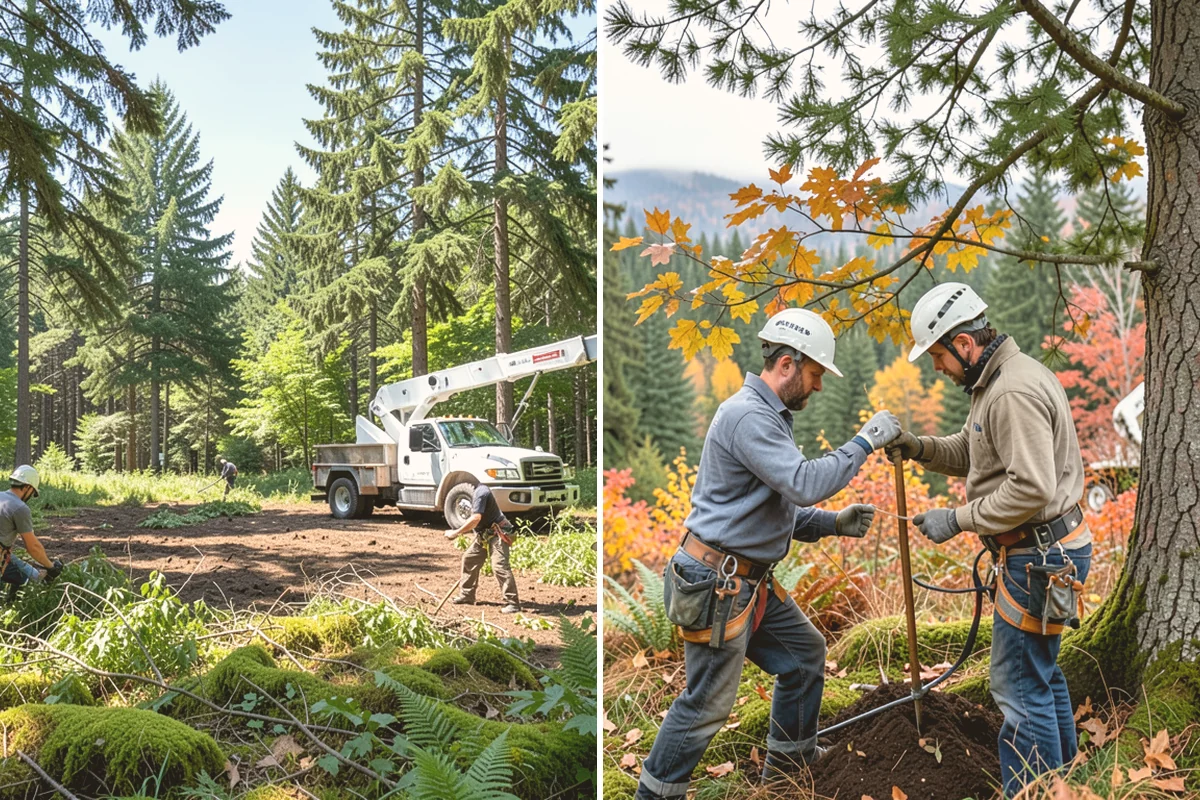
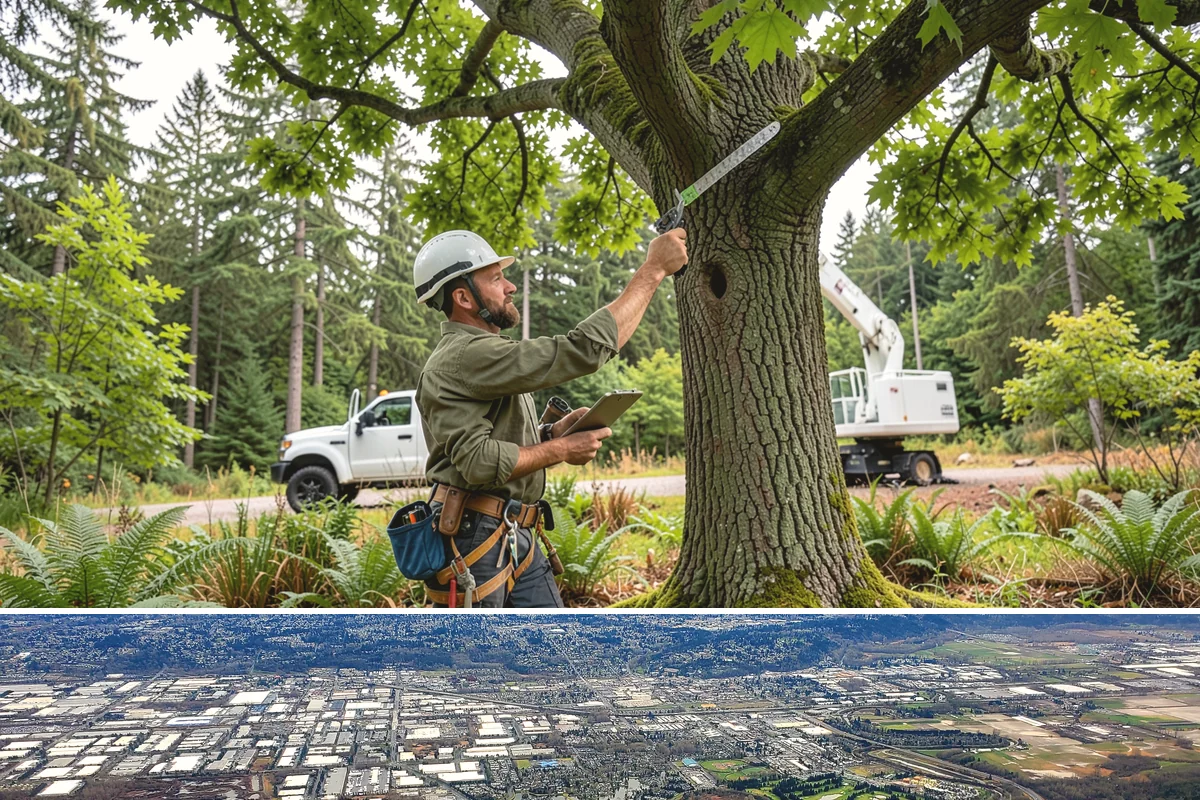
Crane-assisted tree removal in nearby areas
Also serving Kent
- Seasonal Color Rotation in Kentat Washington Landscaping
- Street Tree Pruning in Kentat Washington City Services
- Tree Removal for Firewood in Kentat Washington Firewood