Where Safety Meets Expert Tree Service.

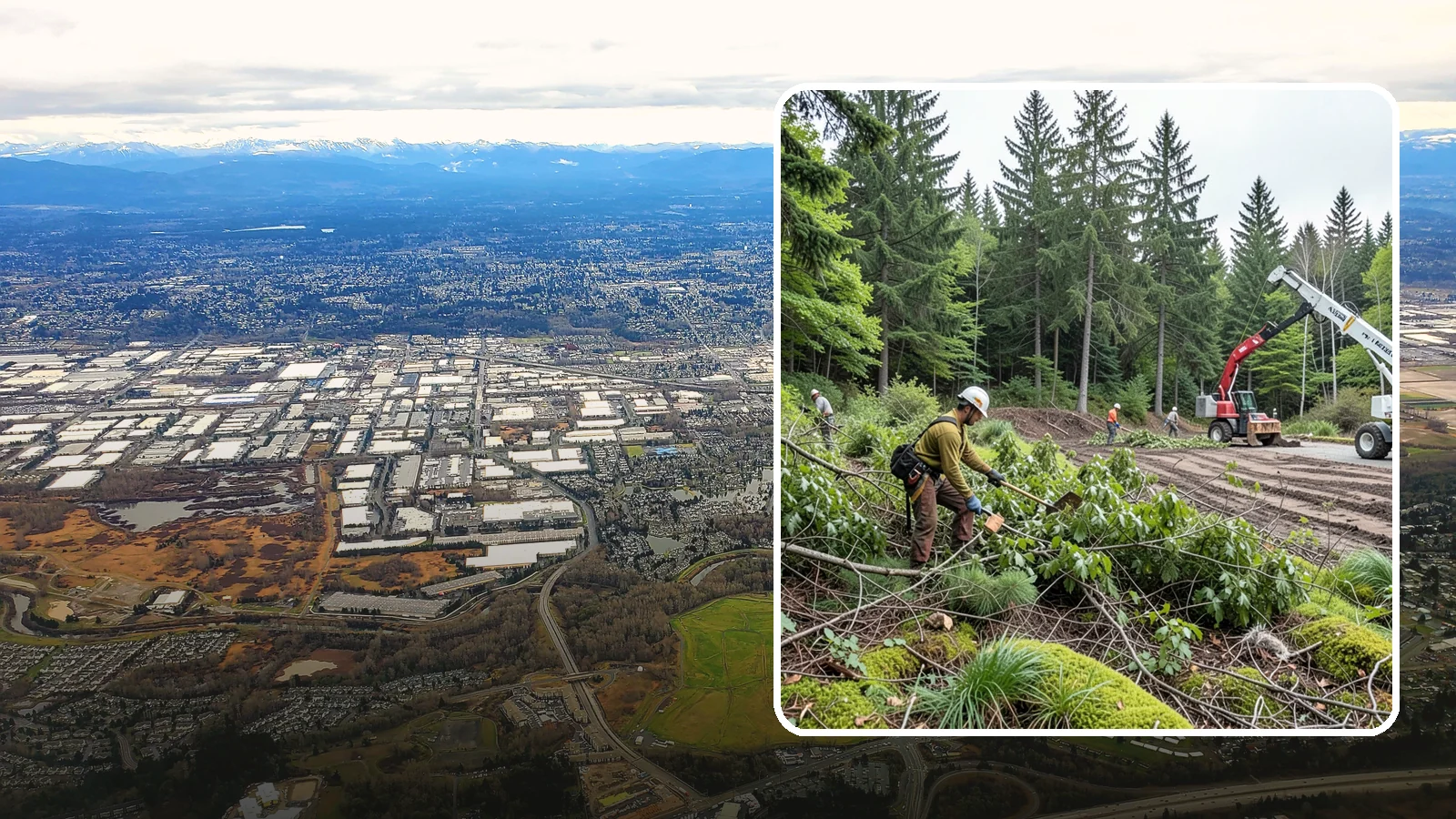
Kent Brush Clearing
The removal of brush and light vegetation.
About 6% of Kent's homes sit in the wildland-urban interface, according to SILVIS Lab's 2020 data. That is the zone where houses meet wildland vegetation. If your lot backs onto brush, a wooded strip, or an overgrown greenbelt, the plants closest to your house are the ones to deal with first.
Brush clearing removes unwanted shrubs, blackberry, saplings and woody tangles so you can see and reach your property again. Start by walking the edges and the area around your home, fences, sheds and utility meters, and note where growth is crowding them.
About Brush Clearing in Kent
Brush clearing helps homeowners manage overgrown areas by removing light vegetation that can hinder access or increase fire risk. Our trained crews work carefully to prepare your site while protecting the features you want to keep. This service is ideal for anyone looking to reduce fuel loads and regain control of their land.
What Kent Brush Clearing Includes
This category focuses on clearing brush and thinning out dense, light vegetation across a property. The goal is to improve usability by creating clear pathways and removing invasive plants that might otherwise take over. We tailor our methods to match the specific tree species and conditions found at your site.
Kent Brush Clearing Process
We begin by assessing the area and marking important features like trees or structures that need protection. Crews then remove vegetation in a planned sequence, processing and hauling away debris responsibly as they go. Finally, we grade or tidy the cleared zone so it is ready for its intended use without leaving hazards behind.
Equipment We Use for Kent Brush Clearing
Our teams utilize brush cutters, chainsaws, chippers, and hand tools to handle various types of growth efficiently. Hauling equipment ensures that all removed material is transported away from the property promptly. We also wear full personal protective gear to keep everyone safe while operating these powerful machines.
Kent Brush Clearing Safety & Best Practices
Safety starts with identifying utility lines, uneven terrain, and hidden obstacles before any work begins. Our crews take extra care to manage debris properly so it does not create new hazards or damage retained trees. By respecting property boundaries and root zones, we ensure the site remains secure throughout the clearing process.
Signs You Need Brush Clearing in Kent
You may need this service if you notice dense thorny growth making your yard difficult to navigate. Signs that include invasive species regrowing quickly or wet ground complicating access also indicate a time for intervention. If overgrown vegetation is threatening nearby structures or increasing fire risk, brush clearing can help restore safety and order.
What Affects the Cost of Brush Clearing in Kent
The price of this work depends on how dense the vegetation is and whether the plants are thorny or invasive. Uneven terrain conditions that require special care will also influence the overall cost of the project. Additionally, any specific features at your site that must be protected during clearing can affect the final estimate.
Best Time of Year for Kent Brush Clearing
While brush clearing can happen year-round in our region, we always check ground conditions before starting work. Wet or muddy weather common to the Puget Sound climate may require us to adjust schedules for better access and safety. Planning around these seasonal factors ensures that your crew can move efficiently without damaging the site.
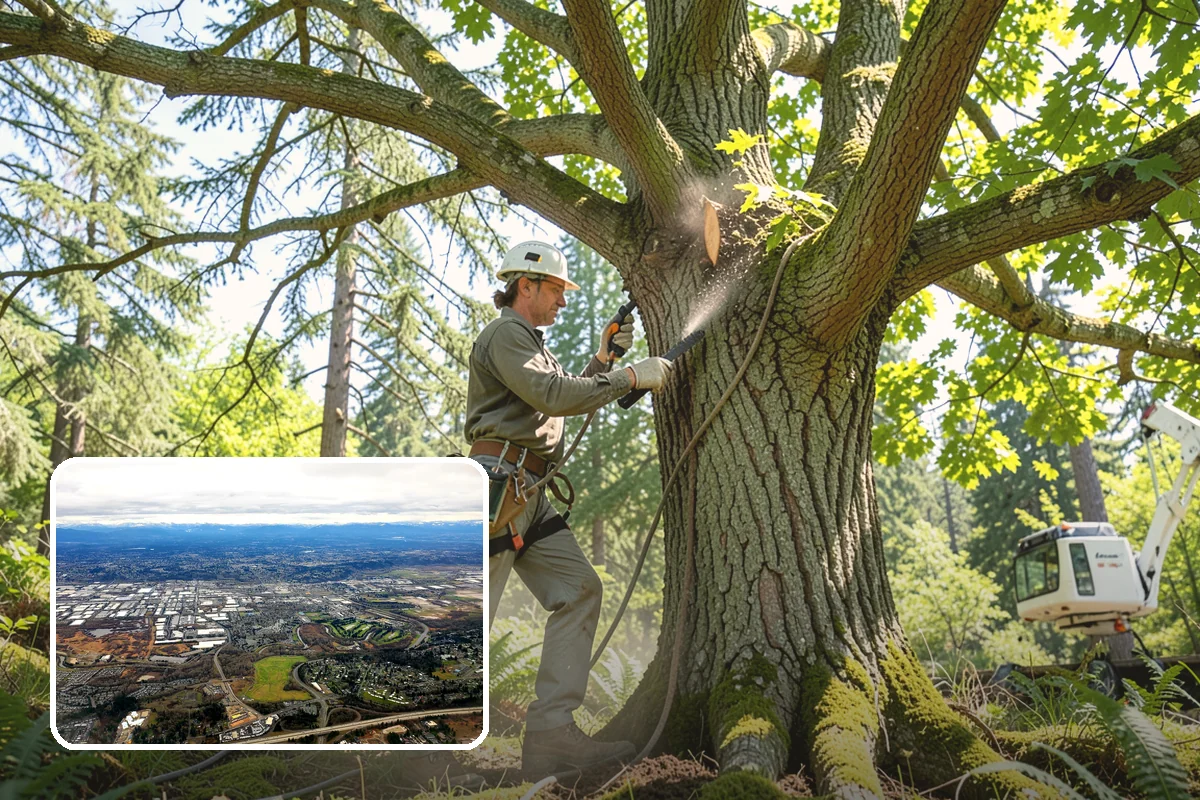
How brush clearing works for Kent properties
Brush clearing is not the same as removing trees. It targets understory growth: shrubs, vines, small saplings and dense thickets. Here is how the work usually goes.
- Walk the site and mark what stays, including healthy trees, desirable shrubs and anything near a property line.
- Cut and remove the brush, working from the house outward.
- Haul or chip the debris so it does not sit as a pile against buildings or fences.
- Decide what to do with the cleared ground so weeds and brambles do not simply return.
Why the wildland-urban interface figure matters
The 6% figure comes from SILVIS Lab's 2020 analysis of Kent as a whole. It does not describe your lot. It does tell you that some Kent homes border wild vegetation, and if yours is one of them, clearing dense brush next to the house and outbuildings is a practical first step. Keeping a gap between thick growth and structures gives you more room to maintain the area.
Tree cover and what we leave in place
Satellite data shows about 15% of Kent's land under dense tree cover, meaning 50% canopy or more. Most of the city is therefore more open than a forest. On a lot with mature trees, though, brush often grows beneath them. We clear around the trees carefully, because cutting too close can injure roots and trunks. If a tree stands in the way, that is a separate decision. Tree removal may be covered by city rules, so we check with the city before any work starts.
Plan for regrowth
Kent falls in USDA hardiness zone 8b, with parts of the city ranging from 8b to 9a, per the 2023 USDA map. Those zones are mild enough for many woody plants to resprout after cutting. Blackberry and similar plants often come back from roots, so expect to follow up. Treating stumps, planting groundcover or mulching the cleared area can slow that.
For a free estimate, call or text 425-484-4442. An ISA Certified Arborist on staff can walk the site with you.
Kent tree conditions at a glance
| Homes in the wildland-urban interface | 6% |
|---|---|
| Land under dense tree cover (50%+ canopy) | 15% |
| Landslides mapped by WA DNR | 2 |
| Rain and snow falling October to April | 81% of the year’s total |
Tree removal rules in Kent
Kent’s published rules don’t spell out clearly which removals need city approval. We check with the city before work starts.
Tree health near Kent
Spongy moth (WSDA 2025): WSDA trap detection(s): 9 moth(s) in 7 trap catch record(s).
Spongy moth (WSDA 2024): WSDA trap detection(s): 7 moth(s) in 6 trap catch record(s).
- Decline, cause not identified6,473 ac
- Heat3,709 ac
- Bears951 ac
Forest damage mapped from the air within 10 km of Kent, 2021-2025 (USDA Forest Service and WA DNR). This covers forest land, not street or yard trees. “Decline, cause not identified” is dieback with no single cause found.
Sources: Daymet daily weather (NASA/ORNL), NOAA Storm Events, USDA plant hardiness map 2023, NRCS soil survey, USGS elevation, WA DNR landslide inventory, USDA Forest Service aerial survey, WSDA, city tree assessments and street-tree inventories, SILVIS Lab, Arbor Day Foundation, and official city and utility pages.
Brush Clearing Serving Kent
Kent
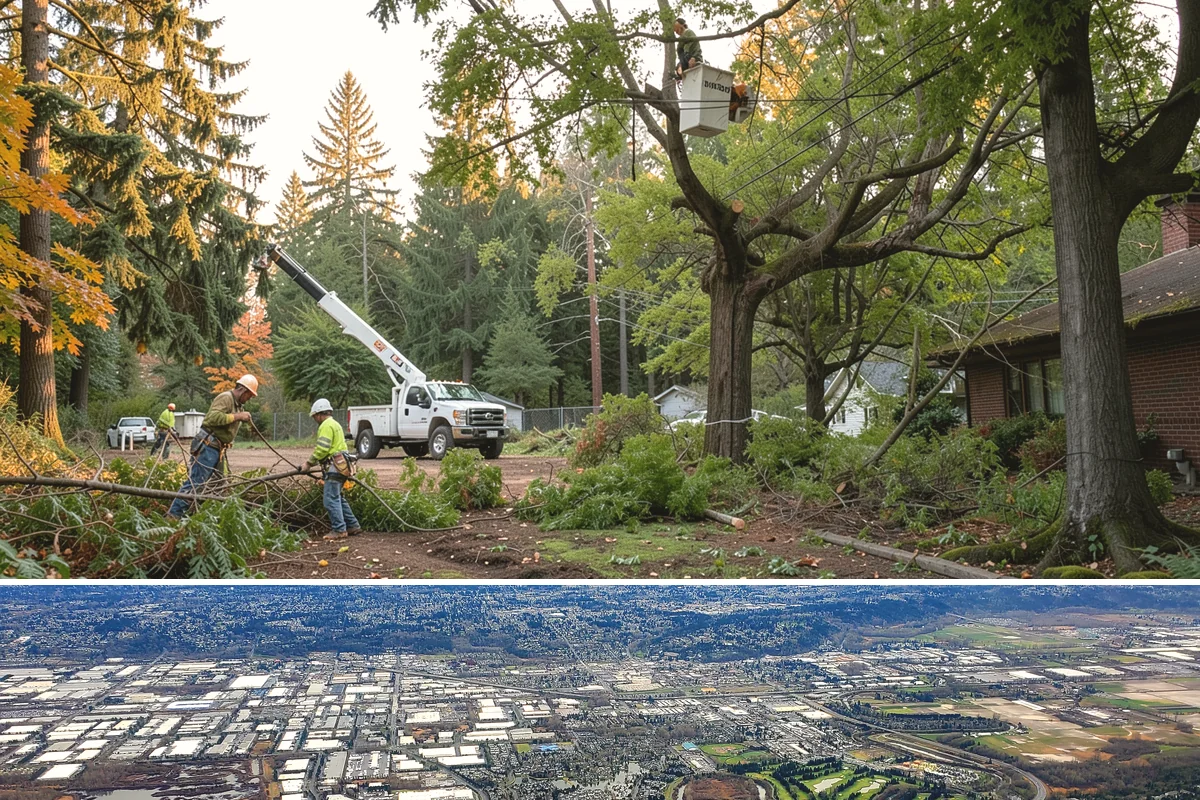
Brush clearing in nearby areas
Also serving Kent
- Land Grading in Kentat Washington Landscaping
- Excavation in Kentat Washington Construction
- Bare Ground Vegetation Control in Kentat Washington City Services
- Fallen Tree Firewood in Kentat Washington Firewood