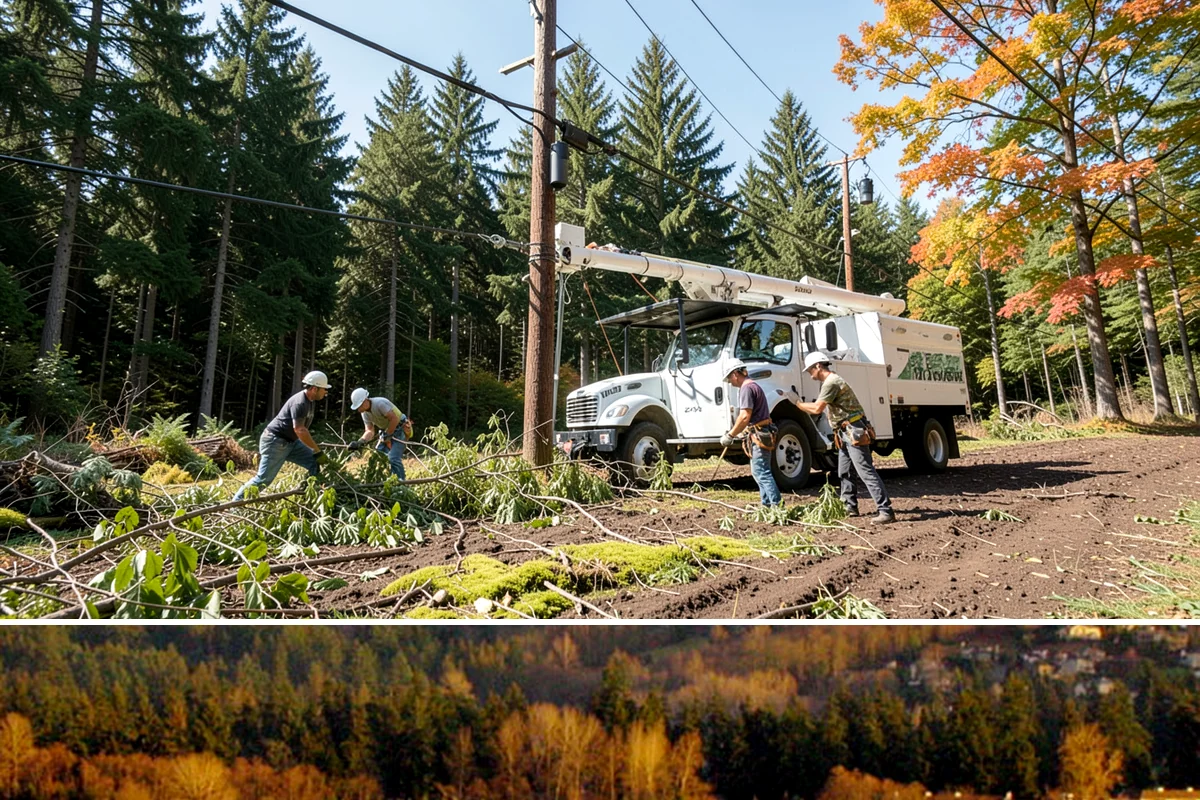
Where Safety Meets Expert Tree Service.

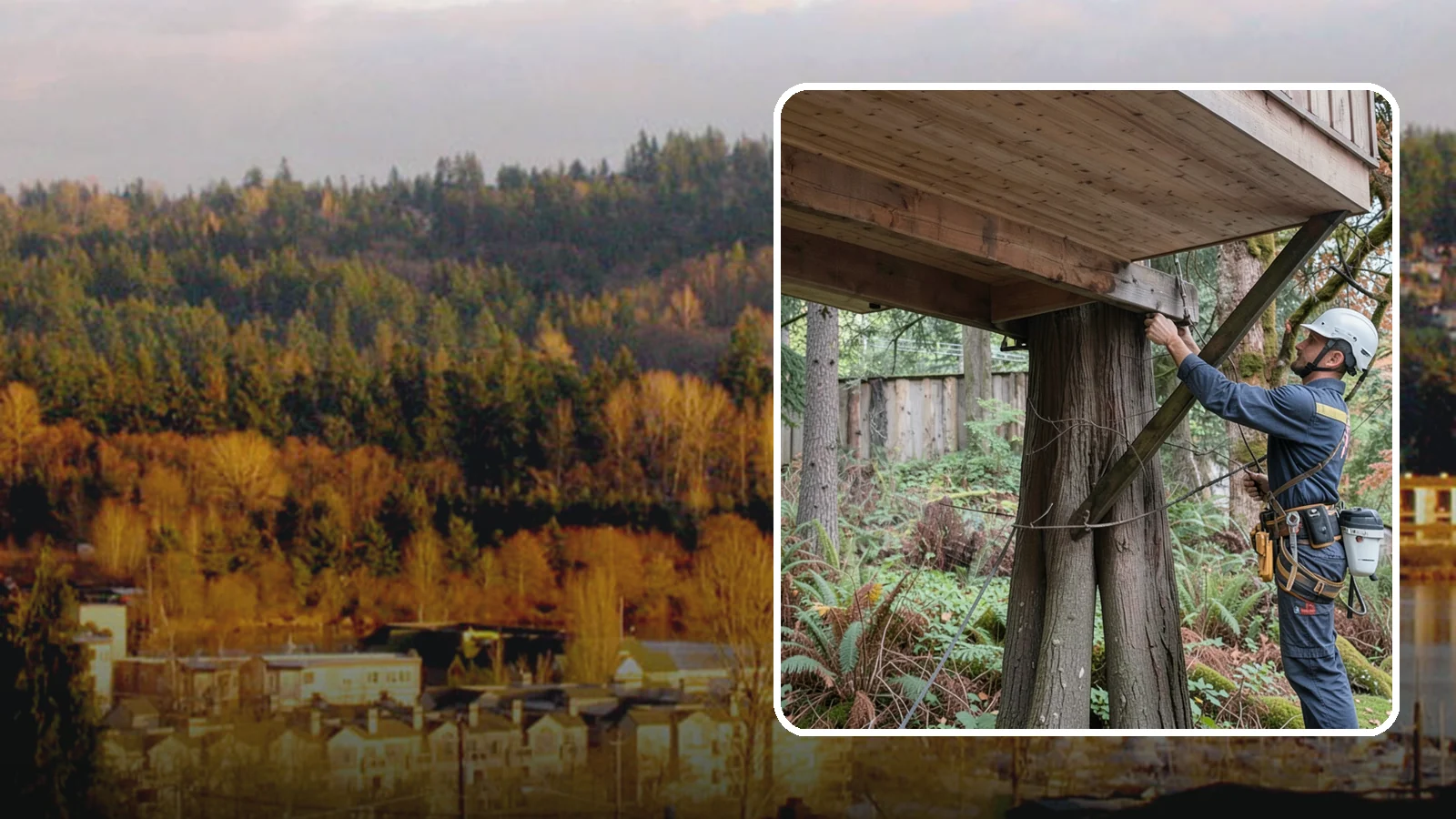
Kenmore Tree Bracing
The installation of rods to reinforce splits or weak unions.
Tree bracing is for owners of a tree with a split trunk, a tight V-shaped union between two stems, or a large limb that has started to separate. It also fits a tree you want to keep because of its size, its location, or what it shades.
Bracing adds support to a structural weakness. It does not fix decay or make a failing tree safe. The first step is a close look at the tree to see whether support is a reasonable choice or whether another approach fits better.
About Tree Bracing in Kenmore
Tree bracing is a supportive solution designed to help homeowners protect their most valued trees from structural stress. By reinforcing weak points in the trunk or branches, we can extend the safe life of significant specimens on your property. This service works well for any location where mature trees face challenges like heavy limbs or included-bark unions.
What Kenmore Tree Bracing Includes
Tree bracing involves installing rods to reinforce splits and strengthen cracks within a tree’s structure. We specifically target weak unions and included-bark areas that are prone to failure under load. Our work is tailored to the specific needs of your tree species, site conditions, and access requirements.
Kenmore Tree Bracing Process
The typical process begins with an assessment of structural defects and how loads travel through the tree. Once a suitable support system is selected, trained crews install hardware at precise positions following recognized arboricultural standards. We document every installation and set up a schedule for future inspections to ensure long-term stability.
Equipment We Use for Kenmore Tree Bracing
Our teams utilize specialized cabling and bracing hardware along with professional installation tools to complete the job safely. Depending on the tree’s height and location, we may use climbing rigging gear or an aerial lift to reach work areas effectively. All crew members wear necessary personal protective equipment throughout the project.
Kenmore Tree Bracing Safety & Best Practices
We install support systems only where they are appropriate and effective for preventing limb or stem failure. It is critical that all hardware used is correctly rated for the specific forces it will encounter over time. Periodic inspections help recognize when aging hardware needs replacement or if removal becomes the safer option for your tree’s health.
Signs You Need Tree Bracing in Kenmore
You may need this service if you notice cracks, cavities, or included-bark unions forming in your trees’ trunks or branches. Overextended limbs that struggle to support their own weight are another common situation where bracing provides necessary relief. Identifying these issues early helps preserve valued trees before they become hazardous risks for people nearby.
What Affects the Cost of Tree Bracing in Kenmore
The cost of tree bracing is influenced by the number of rods required to adequately reinforce your specific tree. Factors such as species-specific hardware selection and site access conditions also play a major role in determining the final price. Additionally, documenting installations with detailed inspection schedules adds complexity that affects overall costs for the project.
Best Time of Year for Kenmore Tree Bracing
While work can be performed year-round, we typically schedule projects when trees have full foliage to accurately assess load paths. Freezing temperatures may affect installation safety or require specialized rigging gear, so timing is adjusted based on weather conditions. Planning your service during these optimal windows ensures that our crews can perform the job with maximum efficiency and care.
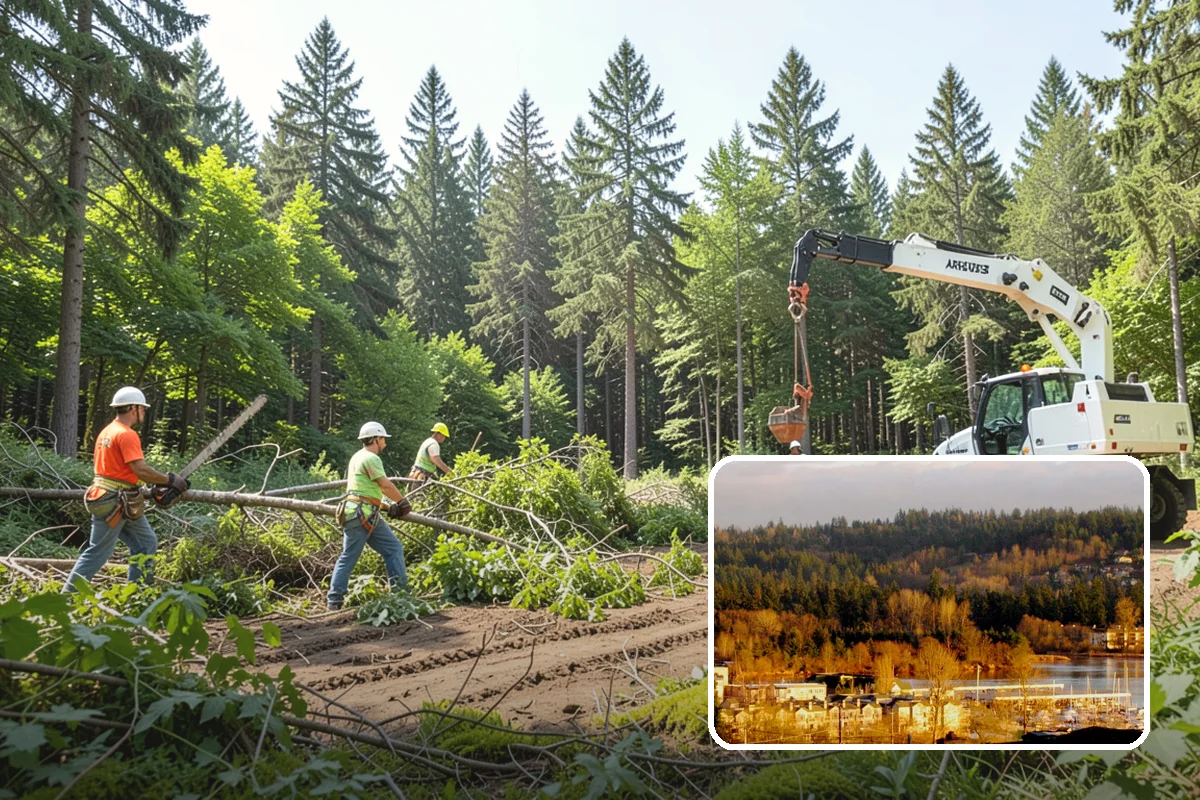
Bracing options for Kenmore trees and what favors each
An owner with a weak union or a cracked stem usually has a few approaches to choose from. Which one fits depends on the defect, the size of the tree, and the weather it has to withstand.
The main approaches
- Cabling: flexible steel cable installed high in the canopy to limit how far two stems or limbs can move apart in wind.
- Rod bracing: threaded steel rods placed through a split or a weak union to hold it together. It is often paired with cabling.
- Reduction pruning: shortening a heavy limb or stem to lower the load on a weak point, with or without hardware.
- Removal: the better choice when there is advanced decay, a failing root system, or a defect that hardware cannot reasonably support.
What local conditions favor
Wind is the main reason to think about support. In the forecast zone that includes Kenmore, the National Weather Service recorded 33 high and strong wind episodes from 2005 to 2025. The strongest gust in that zone was 72 mph on December 17, 2010. A weak union in a large tree gets tested repeatedly over the years, so a flexible cable is often considered for trees with several heavy stems.
The same zone had 2 ice storm episodes in that period. Ice adds weight to branches that are already under load, which matters for a limb with a known crack.
Size matters too. Kenmore's street-tree inventory shows a median trunk diameter of 10.0 in, and 14.0% of trees are 24 in or wider. That is street trees, not yard trees, but it shows that larger trees are common here. Larger trees carry more weight at a weak point, so they are where hardware is most often discussed.
Storm-damaged trees often need multiple pruning cycles to recover, according to WA DNR Tree Link. If a tree has already lost limbs, expect bracing to be part of a longer plan. We check with the city before work starts if a removal or any permit question comes up.
Kenmore tree conditions at a glance
| High and strong wind episodes, 2005-2025 | 33 in the forecast zone |
|---|---|
| Ice storm episodes, 2005-2025 | 2 in the forecast zone |
| Average snowfall | 5 in a season |
| Soils | 51% of land has hardpan or another restrictive layer within 40 in; most common series Alderwood |
| Slopes | Some steep slopes |
Strongest wind events near Kenmore
- Dec 17, 2010: gusts to 72 mph
- Feb 7, 2012: gusts to 70 mph
- Dec 14, 2006: gusts to 68 mph
NOAA Storm Events, forecast zone that includes Kenmore, 2005-2025.
Most common street trees in Kenmore
- Douglas-fir11.3%
- Eastern arborvitae9.8%
- Red alder8.4%
- Western red cedar7.4%
- Bigleaf maple5.1%
- Black cottonwood4.8%
Share of 12,435 trees in the city’s street-tree inventory; median trunk diameter 10.0 in, 14.0% at 24 in or wider.
Sources: Daymet daily weather (NASA/ORNL), NOAA Storm Events, USDA plant hardiness map 2023, NRCS soil survey, USGS elevation, WA DNR landslide inventory, USDA Forest Service aerial survey, WSDA, city tree assessments and street-tree inventories, SILVIS Lab, Arbor Day Foundation, and official city and utility pages.
Tree Bracing Serving Kenmore
Kenmore