Where Safety Meets Expert Tree Service.

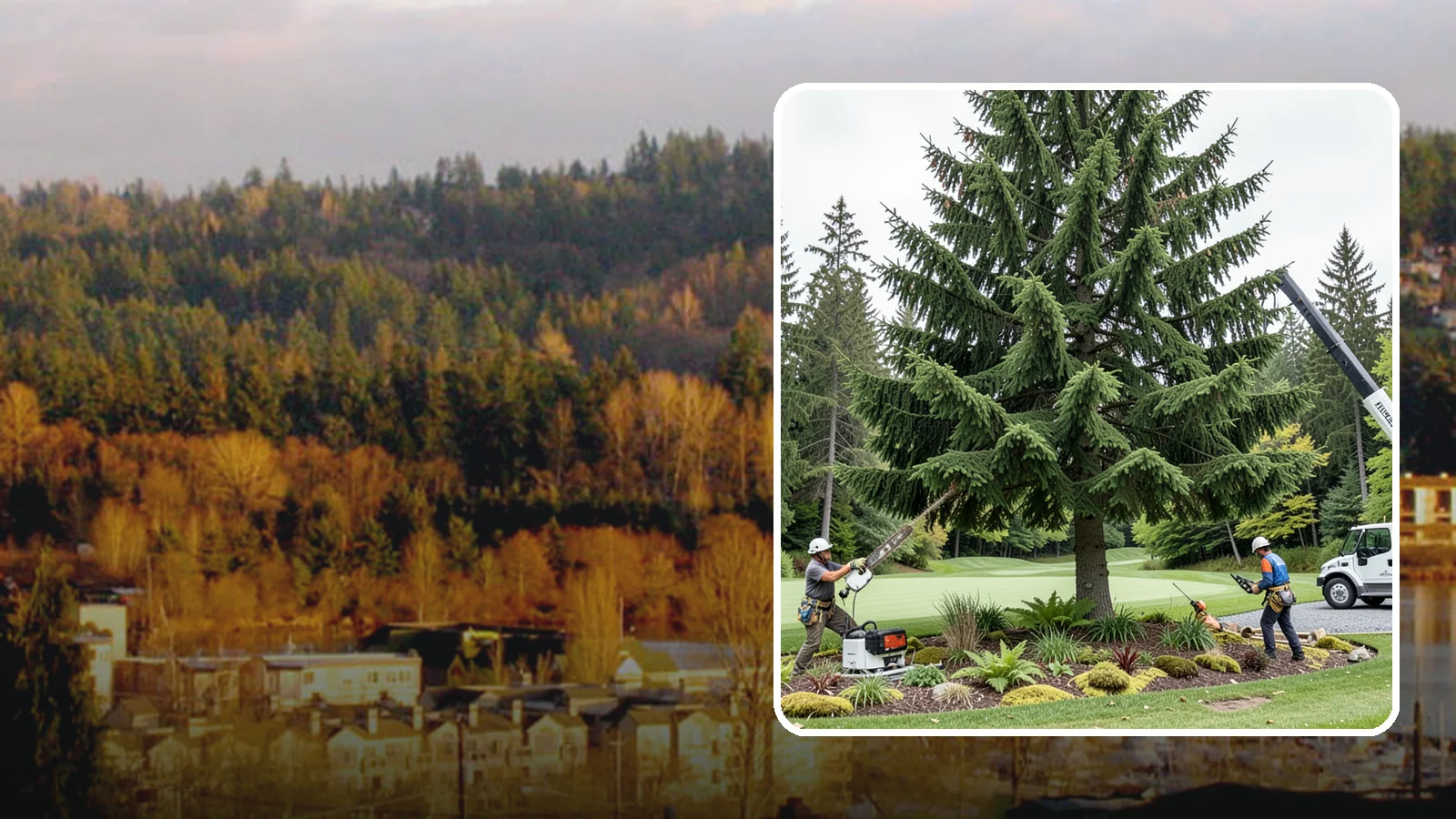
Kenmore Golf Course Tree Maintenance
Specialized tree care for golf courses.
A golf course manager usually starts looking at trees after something small goes wrong. A limb lands on a fairway. A cedar turns rusty brown in August. A player reports a branch hanging over a tee box.
Each of these points to a different kind of work. Some trees need pruning, some need water, and a few need a closer look from someone trained to judge structure. Sorting out which is which before the next storm gives you time to plan the work around play.
About Golf Course Tree Maintenance in Kenmore
Specialized tree care is available specifically designed for golf courses that need expert attention on their grounds. This service helps property managers keep trees safe while maintaining the playability and aesthetic appeal of the course. It supports consistent upkeep without compromising safety or budget constraints.
What Kenmore Golf Course Tree Maintenance Includes
Golf course tree maintenance focuses on preserving both the health of individual trees and the overall look of the facility. Our trained crews use methods tailored to specific species, site conditions, and access points to ensure every task is done correctly. The work covers recurring pruning, detailed inspections, and general care plans that match recognized arboricultural standards.
Kenmore Golf Course Tree Maintenance Process
We begin by taking a full inventory and assessing all trees on your property to understand their unique needs. Once we have the facts, we develop a maintenance schedule with clear priorities for addressing deferred backlogs or high-traffic areas. Throughout the year, our team performs documented care tasks and updates these plans as conditions change across the site.
Equipment We Use for Kenmore Golf Course Tree Maintenance
To handle varied tree conditions safely, crews utilize pruning gear, rigging equipment, and aerial lifts when access requires elevation. Inspection tools help identify potential issues early, while chippers and hauling units manage debris efficiently from high-traffic zones. All personnel wear necessary personal protective equipment to ensure a secure environment for everyone involved in the work.
Kenmore Golf Course Tree Maintenance Safety & Best Practices
Work is carefully coordinated around active occupants and traffic flows to maintain safe boundaries throughout public areas of the course. We strictly follow recognized arboricultural standards and keep detailed records to hold ourselves accountable for every safety decision made on site. Maintaining these clear zones ensures that operations run smoothly without risking liability or disrupting playability during peak times.
Signs You Need Golf Course Tree Maintenance in Kenmore
You may need this service if you notice a backlog of deferred maintenance affecting the condition of trees across your property. High-traffic areas near hazards often require specialized attention to prevent accidents and protect visitors from falling branches. Varied tree conditions in different parts of the site or difficulty coordinating crew access are also common indicators that professional help is needed.
What Affects the Cost of Golf Course Tree Maintenance in Kenmore
The final investment depends on factors like existing maintenance backlogs and how many high-traffic zones exist near potential hazards. Costs will vary based on the specific condition of trees across your entire property and any logistical challenges in getting crews to every location efficiently. These variables ensure we can provide budget-friendly care that matches the actual scope of work required for safety and aesthetics.
Best Time of Year for Kenmore Golf Course Tree Maintenance
While our team works year-round to keep playability high, schedules are often adjusted around peak golfing seasons when course usage is at its highest. We also monitor weather patterns closely; freezing temperatures may require us to pause certain pruning techniques until conditions improve. This flexible approach ensures that maintenance happens safely whenever the site allows for optimal results without disrupting operations.
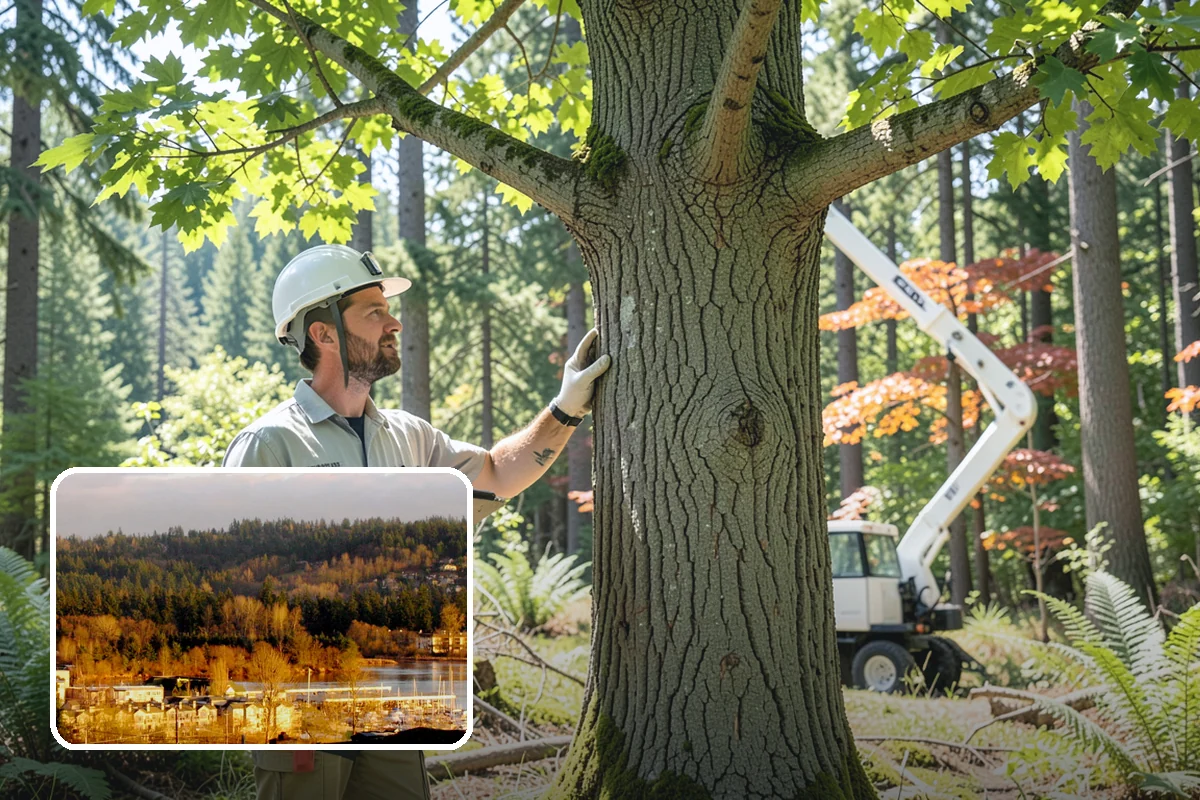
Golf course tree care in Kenmore: causes and local conditions
Trees on a course carry more risk than most yard trees because people and carts pass under them every day. Tee boxes, cart paths, greens and clubhouse areas are the targets. A dead branch over a path matters more than the same branch in a back corner. Maintenance starts by ranking trees by what sits beneath them.
Wind is the first local factor. Weather records for the forecast zone that includes Kenmore count 33 high and strong wind episodes from 2005 to 2025. That is a zone-wide figure, not a reading for Inglewood Golf Club or any one tree. It still tells us that limbs with weak unions, deadwood or heavy end weight will be tested repeatedly. So we look at structure before storm season, not after.
Drought is the second factor. Summer dryness can cause cedar flagging, where scattered branches turn brown. WSU HortSense notes that cedars may need extra irrigation during summer drought to reduce flagging. On a course, that is a practical point. Irrigation is often aimed at turf, so a cedar at the edge of a fairway may get less water than it needs. Before anyone cuts brown branches, it helps to check whether the cause is water stress, which pruning will not fix.
Kenmore sits in USDA hardiness zone 9a, with parts of the city ranging from 8b to 9a, according to the 2023 USDA map. That mild range means a wide choice of species for replacement planting, though it says nothing about how a given tree is doing.
The work itself follows standard practice, such as ISA and ANSI A300 pruning guidance. We remove dead, broken and crossing branches, reduce end weight where it is appropriate, and keep clearance over play areas and paths. We do not recommend topping. Where a tree looks unsound, our ISA Certified Arborist can assess it. If removal is on the table, we check Kenmore's rules with the city before work starts. Free estimates are available at 425-484-4442.
Kenmore tree conditions at a glance
| Tree canopy | Among the most heavily treed Puget Sound cities (satellite data) |
|---|---|
| USDA hardiness zone | 9a (8b to 9a across the city) |
| High and strong wind episodes, 2005-2025 | 33 in the forecast zone |
| Soils | 51% of land has hardpan or another restrictive layer within 40 in; most common series Alderwood |
Tree removal rules in Kenmore
Kenmore’s published rules don’t spell out clearly which removals need city approval. We check with the city before work starts.
Most common street trees in Kenmore
- Douglas-fir11.3%
- Eastern arborvitae9.8%
- Red alder8.4%
- Western red cedar7.4%
- Bigleaf maple5.1%
- Black cottonwood4.8%
Share of 12,435 trees in the city’s street-tree inventory; median trunk diameter 10.0 in, 14.0% at 24 in or wider.
Sources: Daymet daily weather (NASA/ORNL), NOAA Storm Events, USDA plant hardiness map 2023, NRCS soil survey, USGS elevation, WA DNR landslide inventory, USDA Forest Service aerial survey, WSDA, city tree assessments and street-tree inventories, SILVIS Lab, Arbor Day Foundation, and official city and utility pages.
Golf Course Tree Maintenance Serving Kenmore
Kenmore


Also serving Kenmore
- Vegetation Management in Kenmoreat Washington City Services
- Estate Maintenance in Kenmoreat Washington Landscaping
- Restaurant Buildout in Kenmoreat Washington Construction
- HOA Pressure Washing in Kenmoreat Washington Pressure Washing