Where Safety Meets Expert Tree Service.

Kenmore Emergency Tree Stabilization
The urgent, temporary stabilization of a compromised or partially failed tree.
Emergency stabilization makes most sense in the weeks after a windstorm, once the ground is soft and a tree has shifted, split or started to lean. Autumn and winter storms are the usual cause in Kenmore. A tree that moved in the last storm can move again in the next one.
Look at the base first. Fresh cracks in the soil, lifted roots or a new tilt are signs to act soon. Look up too, for split forks and hanging limbs. Keep people and cars out of the fall zone until someone qualified has looked at the tree.
About Emergency Tree Stabilization in Kenmore
When a tree is at immediate risk of failure, our emergency stabilization team steps in quickly to make your property safe again. This urgent support helps preserve valued trees that are compromised or showing signs of partial failure right when you need them most. We work with homeowners across the region who face sudden structural threats from aging limbs or weak unions.
What Kenmore Emergency Tree Stabilization Includes
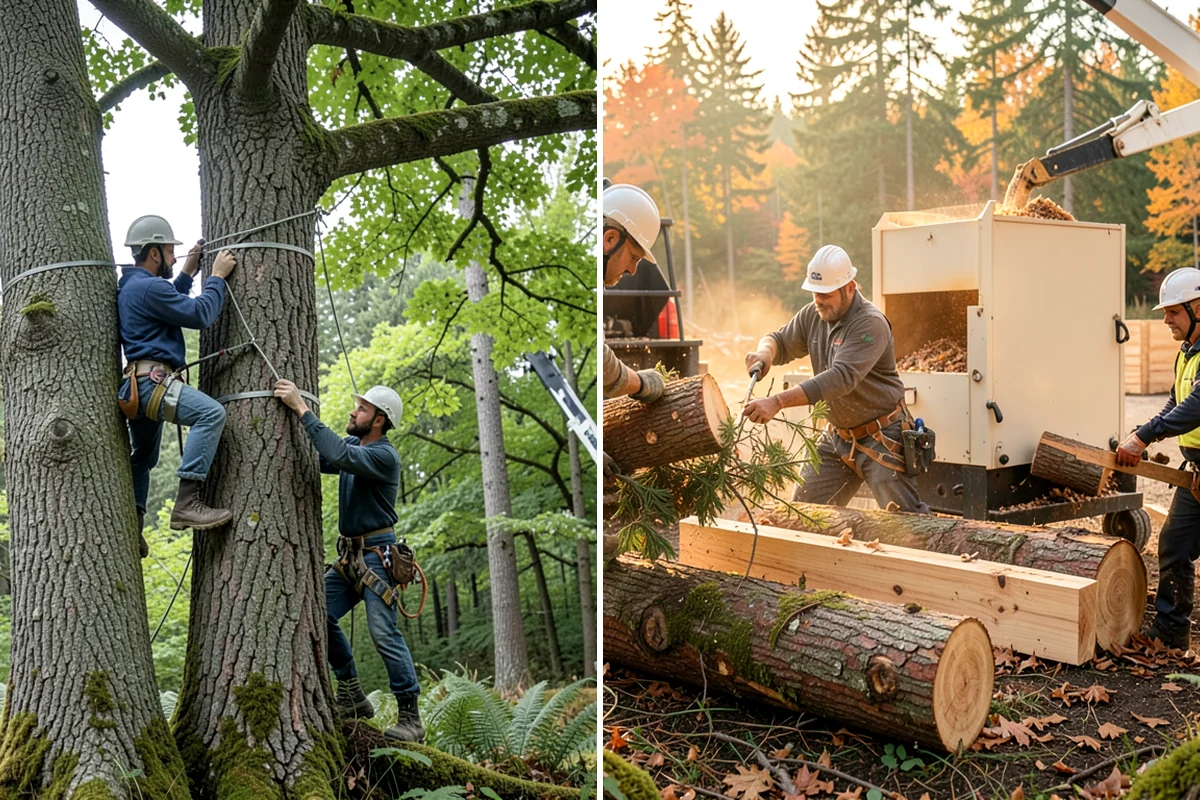
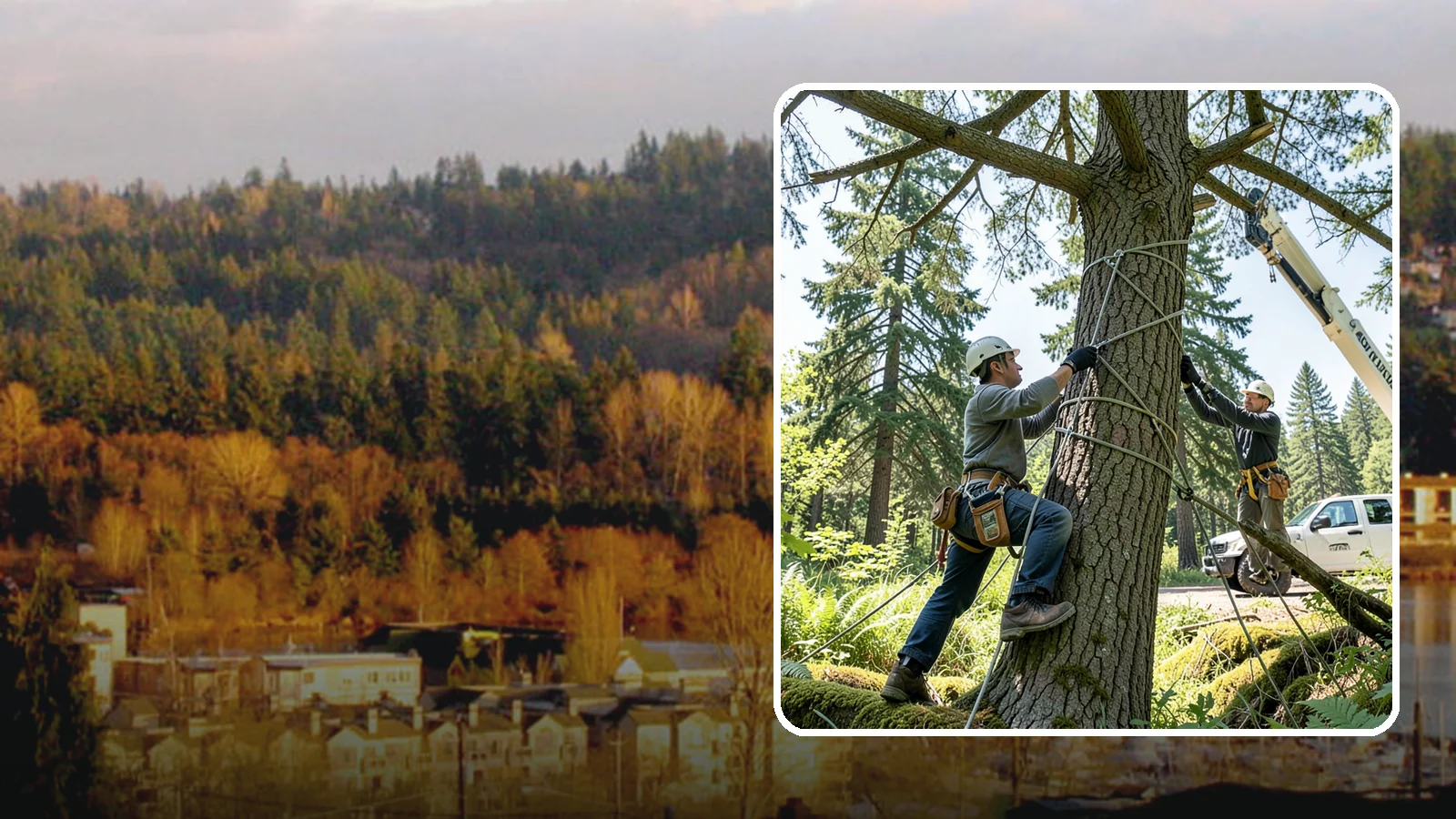
Emergency Tree Stabilization provides temporary but effective reinforcement for a tree facing an immediate danger of falling. Our crews use specialized cabling and bracing hardware to support heavy limbs and strengthen vulnerable connections within the trunk. This approach is matched specifically to your unique site conditions, ensuring the solution fits both the species of tree and its current health status.
Kenmore Emergency Tree Stabilization Process
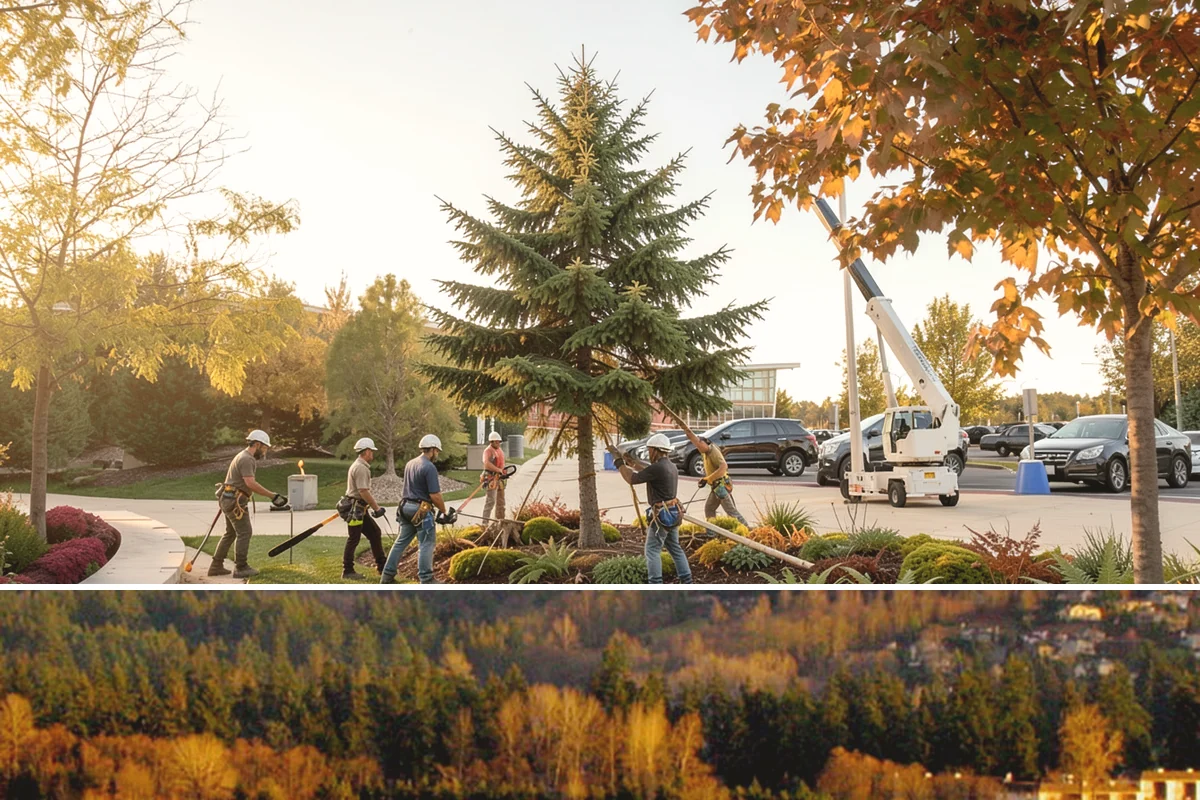
We begin by carefully assessing structural defects and identifying exactly where loads need to be redirected for safety. Once a plan is selected, trained installers position high-quality hardware at correct locations using climbing gear or aerial lifts as needed. After installation, we document every step and set up an inspection schedule so you know when the system needs checking again.
Equipment We Use for Kenmore Emergency Tree Stabilization
Our crews utilize professional cabling systems along with durable bracing hardware designed to handle significant weight loads. To reach difficult spots safely, we bring climbing gear, rigging equipment, and aerial lifts depending on your specific site access conditions. Every tool is used correctly to ensure the temporary support system remains secure without causing further damage to the tree’s bark or structure.
Kenmore Emergency Tree Stabilization Safety & Best Practices
We install stabilization hardware only where it will be truly effective at reducing the risk of limb or stem failure. All systems are built using correctly rated components and inspected periodically to catch any signs of wear before they become hazards. If we determine that removal is actually safer than support, our trained crews recognize this immediately rather than forcing an inappropriate fix onto a failing tree.
Signs You Need Emergency Tree Stabilization in Kenmore
You may need emergency stabilization if you notice cracks in the trunk, cavities near weak unions, or limbs stretching too far beyond their natural reach. Included-bark unions and codominant stems often require immediate attention to prevent sudden collapse during strong winds or heavy rain. Any sign of aging hardware from previous work also indicates it is time for a professional inspection and potential reinforcement.
What Affects the Cost of Emergency Tree Stabilization in Kenmore
The investment required depends heavily on the specific species of tree you are trying to save rather than a flat rate per job. Site access conditions play a major role, as reaching tight spaces or steep slopes adds complexity to the installation process. Additionally, the intricacy of installing hardware around compromised structures will influence how much time and resources our team needs to dedicate.
Best Time of Year for Kenmore Emergency Tree Stabilization
This critical safety measure can be performed year-round in Puget Sound weather whenever your tree faces an immediate risk of failure. There is no need to wait for a specific season; we are ready to respond quickly regardless of the current temperature or precipitation levels. Our goal is always to secure the area as fast as possible, ensuring you do not have to delay safety measures until spring or fall arrives.
Stabilizing storm-damaged trees in Kenmore
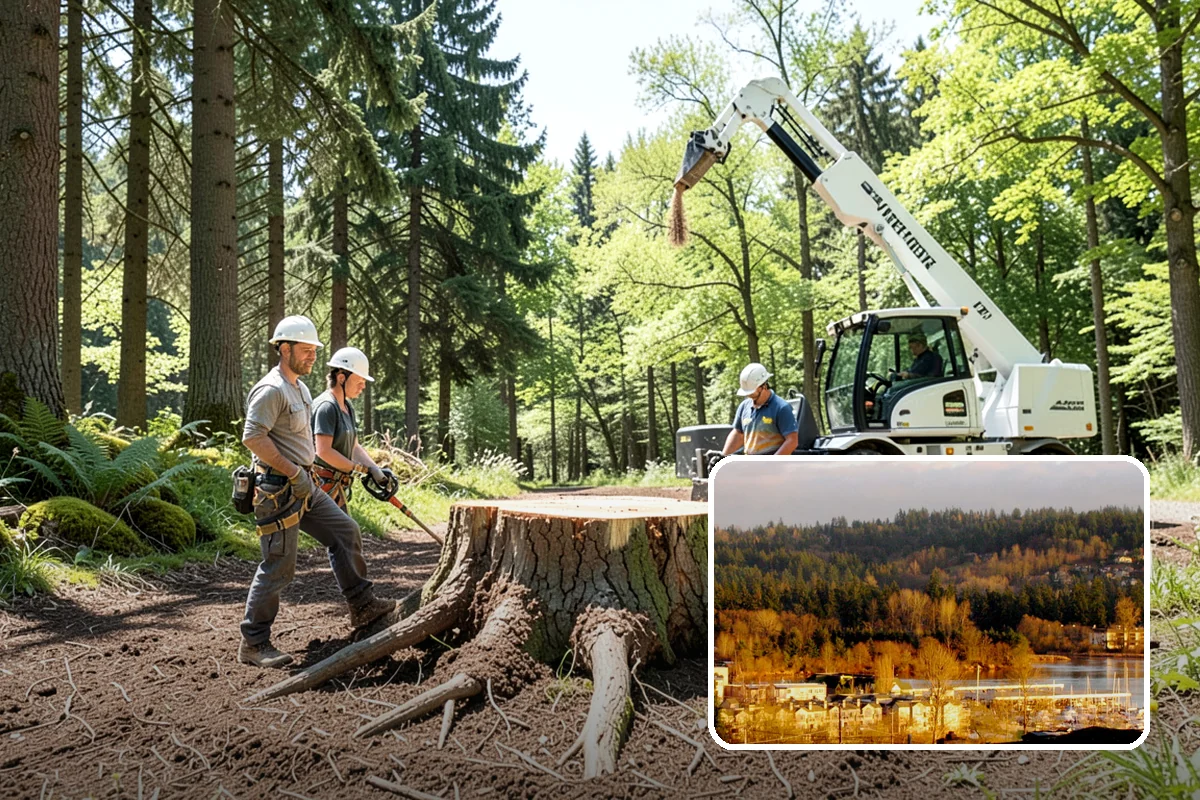
Stabilization is the work done to make a damaged tree safe enough to stay, or safe enough to wait for full removal. It can mean removing broken or hanging limbs, reducing a heavy section, or installing support. Which of those fits depends on what the tree has actually done.
Planning around local conditions
Two local details shape the plan. First, the National Resource Conservation Service (NRCS) soil survey says 51% of Kenmore's land has a hard or restrictive layer, such as glacial hardpan, within 40 inches of the surface. Alderwood is the most common soil series. Roots that meet a hard layer tend to spread sideways instead of down, so a leaning tree may have a shallow root plate. That is why we check the base and the soil before deciding a tree can be saved.
Second, the strongest gust recorded in the forecast zone that includes Kenmore since 2005 was 72 mph on December 17, 2010. That is a zone figure, not a reading from your yard. It shows the kind of load a damaged tree may face again.
What affects scope
Scope depends on the tree's species and size, where it could fall, whether it touches a structure or wires, and how much of the root system is still holding. Trees near power lines are a separate matter, and we have found no published Puget Sound Energy storm-debris policy, so do not assume the utility will handle wood from your tree.
Where a city permit might apply to removal, we check with Kenmore before work starts.
On the day
An ISA Certified Arborist looks the tree over first and explains what we can do and what we cannot. Work then starts with the most hazardous parts. Routine work leaves cut wood on site in manageable pieces. Estimates are free, and you can call or text 425-484-4442.
Practical tip: take dated photos of the tree, the soil at its base and any damage before anything is moved. They help us plan, and they help with any insurance claim.
Kenmore tree conditions at a glance
| High and strong wind episodes, 2005-2025 | 33 in the forecast zone |
|---|---|
| Ice storm episodes, 2005-2025 | 2 in the forecast zone |
| Average snowfall | 5 in a season |
| Soils | 51% of land has hardpan or another restrictive layer within 40 in; most common series Alderwood |
| Rain and snow falling October to April | 81% of the year’s total |
| Electric utility | Puget Sound Energy (PSE) |
Tree removal rules in Kenmore
Kenmore’s published rules don’t spell out clearly which removals need city approval. We check with the city before work starts.
Trees near the power line to your house
Puget Sound Energy (PSE): Service line (wire from PSE pole to home or meter pole): PSE does not trim it; homeowner/private arborist trims.
PSE performs a safety disconnection so the homeowner or private tree trimmer/arborist can work; Call at least 5 business days ahead to check crew availability and potential charges.
Safety disconnect: 1-888-321-7779 (5+ business days ahead). Utility page.
Any fee for a disconnect is set by the utility.
Strongest wind events near Kenmore
- Dec 17, 2010: gusts to 72 mph
- Feb 7, 2012: gusts to 70 mph
- Dec 14, 2006: gusts to 68 mph
NOAA Storm Events, forecast zone that includes Kenmore, 2005-2025.
Sources: Daymet daily weather (NASA/ORNL), NOAA Storm Events, USDA plant hardiness map 2023, NRCS soil survey, USGS elevation, WA DNR landslide inventory, USDA Forest Service aerial survey, WSDA, city tree assessments and street-tree inventories, SILVIS Lab, Arbor Day Foundation, and official city and utility pages.
Emergency Tree Stabilization Serving Kenmore
Kenmore