Where Safety Meets Expert Tree Service.

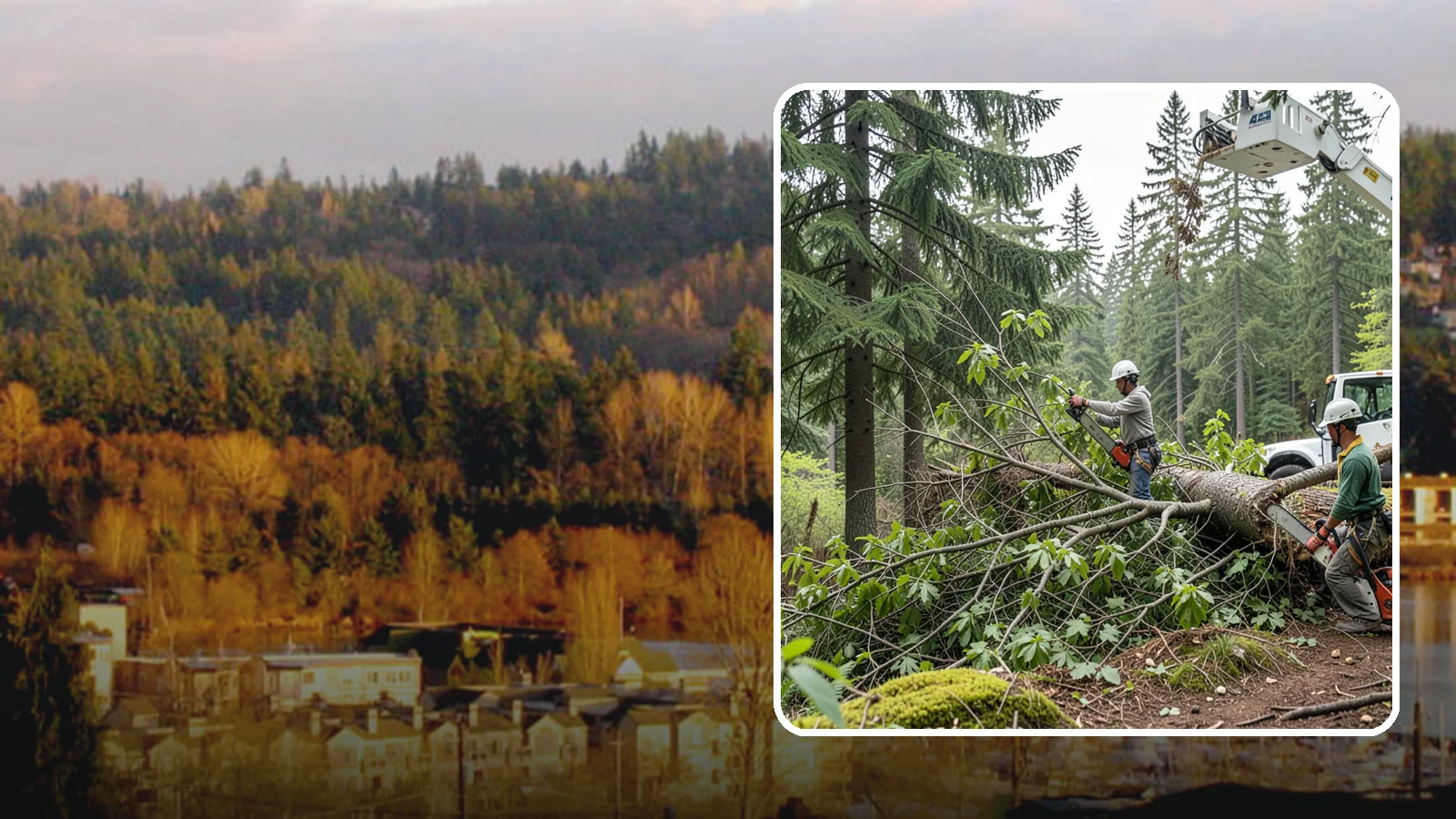
Kenmore Crown Cleaning
The selective removal of dead, dying, diseased, and weakly attached branches from the crown.
What does crown cleaning actually do for a tree? It removes dead, dying, diseased and broken branches from the crown, along with stubs and hanging limbs. It does not thin the canopy or shorten the tree. The goal is to take out the wood most likely to fail or to feed decay.
A good time to look is when the leaves are down or after a storm. Check for bare twigs, branches with no bark, cracked limbs, and anything hanging in the crown. Photos from the ground help when you ask for an estimate.
About Crown Cleaning in Kenmore
Crown cleaning helps keep your trees safe by removing dead or weak branches from the upper canopy without altering their overall size. This selective approach improves both the health of your landscape and its visual appeal while maintaining the tree’s natural form. We are here to support homeowners who want a healthier, safer yard through professional care.
What Kenmore Crown Cleaning Includes
Our crews perform crown cleaning by carefully selecting which branches to remove based on recognized arboricultural standards. This process targets dead, dying, diseased, and weakly attached limbs while leaving the healthy structure intact. The work is tailored to match your specific tree species, site conditions, and access requirements for a clean result.
Kenmore Crown Cleaning Process
We begin by assessing the condition of your canopy and defining clear pruning objectives before making any cuts. Our team selects precise cut points that suit the season and species, ensuring we do not over-prune or cause unnecessary stress. Afterward, we lower all material safely, process it on site, and thoroughly clean up the work area to leave everything tidy.
Equipment We Use for Kenmore Crown Cleaning
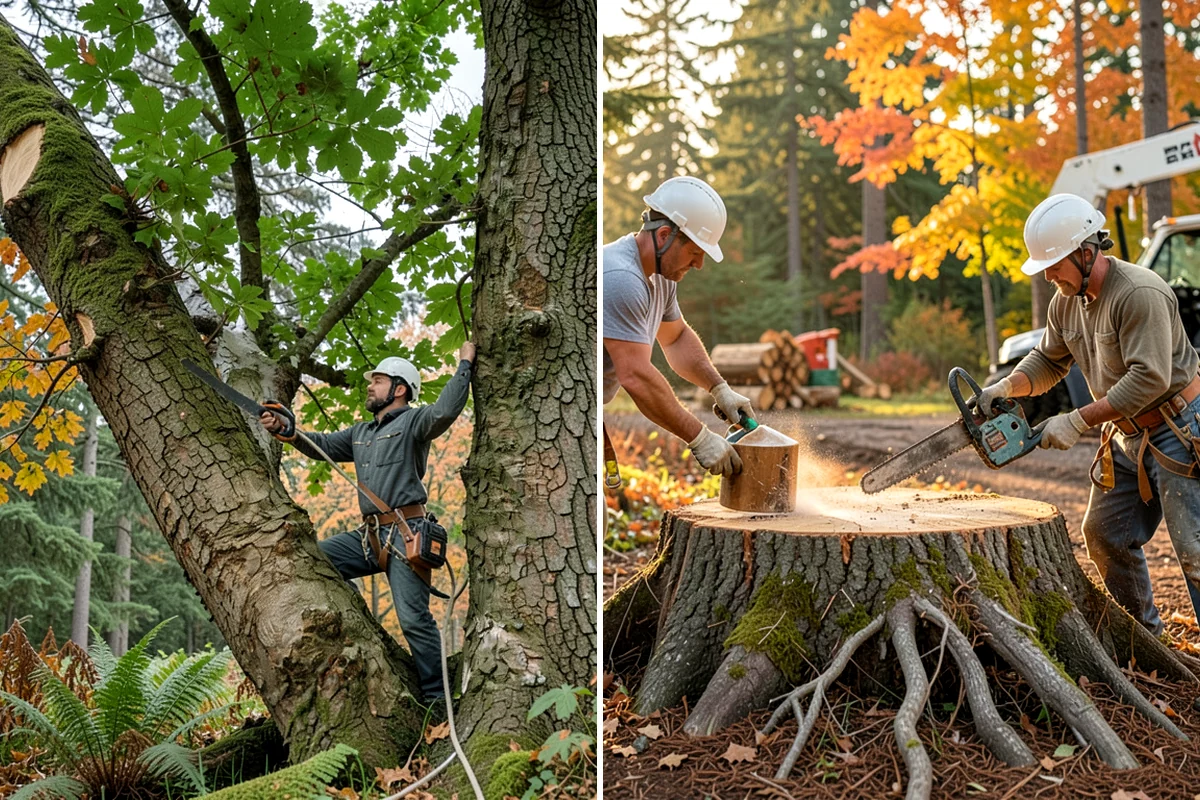
To complete this job effectively, our crews utilize hand saws, pole saws, chainsaws, and wood chippers for efficient debris removal. Depending on your specific tree location, we may also use climbing rigging gear or an aerial lift to reach high branches safely. Every crew member wears necessary personal protective equipment while operating these tools with care.
Kenmore Crown Cleaning Safety & Best Practices
We strictly follow recognized pruning standards to avoid making harmful cuts that could damage the tree’s long-term vigor. Our team stays alert for overhead power lines and unstable limbs, using fall protection whenever we work aloft. By limiting removal to healthy amounts of live tissue, we ensure your trees remain strong after the service is complete.
Signs You Need Crown Cleaning in Kenmore
You may need crown cleaning if you notice deadwood hanging in your canopy or weak unions that could fail during a storm. This service becomes important when branches interfere with structures or block sightlines at driveways and walkways. It is also recommended to address species-specific timing sensitivities before they lead to over-pruning issues later on.
What Affects the Cost of Crown Cleaning in Kenmore
The investment for crown cleaning depends largely on the type of tree you have and how easily its canopy can be accessed. Additional costs may arise if significant disposal of cut material is required or if your site has unique conditions like proximity to structures. We evaluate these factors carefully so there are no surprises regarding what influences the final price.
Best Time of Year for Kenmore Crown Cleaning
For most trees in our region, we aim to schedule work outside of dormant periods whenever possible to support better healing and growth. However, exact timing must be adjusted for each species to prevent over-pruning during sensitive seasons that could harm the tree’s health. We will coordinate with you to find a window that aligns with both your needs and the biological requirements of your specific trees.
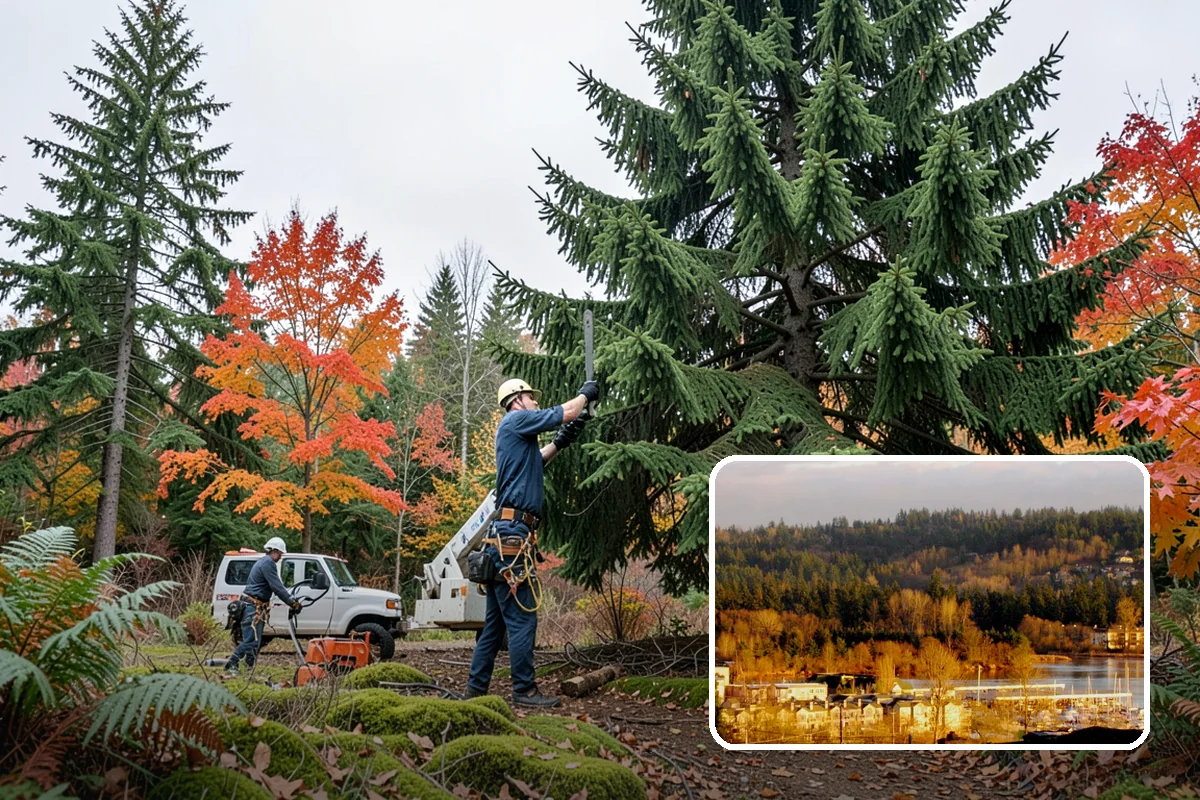
Crown cleaning in Kenmore: timing, scope and what to expect
Why the wet season matters
Daymet climate data for 2005-2025 shows that 81% of Kenmore's yearly rain and snow falls from October to April. Wet months keep wood damp and favor decay fungi, so a broken limb or an open stub can start rotting quickly. Dead wood is also easier to spot in the leafless months. That makes late summer a good time to book a look at the crown, before the wet season starts.
Dieback is not always one problem
A federal aerial survey (USDA Forest Service and WA DNR, 2021-2025) of forest within 10 km of Kenmore mapped 141 acres of western redcedar in decline, cause not identified. That term means dieback with no single cause found. The survey covers forest land, not street or yard trees, so it says nothing about the trees on your property. It does show that redcedar dieback is worth watching. If your redcedar has browning tops or dead branches, cleaning removes the dead wood, but it will not tell you why the tree is struggling. We would look at the whole tree before deciding what to cut.
What the work includes and what it leaves alone
Crown cleaning under ISA and ANSI A300 style practice means removing dead, diseased and broken branches, cutting back to the branch collar, and leaving healthy live growth. It is not a way to lower a tree. If height is a concern, research from WSU recommends reduction cuts to a lateral at least one-third the diameter of the removed limb, and only on rounded trees, not conifers. Topping is not something we recommend.
- Dead and dying branches
- Broken or hanging limbs
- Stubs from earlier cuts
- Branches rubbing or crossing, where they are damaged
Kenmore sits in USDA hardiness zone 9a, with parts of the city in 8b, according to the 2023 USDA map. That is a cold-tolerance rating, not a pruning calendar, so we plan cuts around the tree and the condition of its wood. Call or text 425-484-4442 for a free estimate. Crown cleaning is not removal, but where a city rule might apply to other work on your tree, we check with the city before work starts.
Kenmore tree conditions at a glance
| USDA hardiness zone | 9a (8b to 9a across the city) |
|---|---|
| Rain and snow falling October to April | 81% of the year’s total |
| Tree canopy | Among the most heavily treed Puget Sound cities (satellite data) |
| Days that freeze at night and thaw by day | 30 a year |
| Electric utility | Puget Sound Energy (PSE) |
Trees near the power line to your house
Puget Sound Energy (PSE): Service line (wire from PSE pole to home or meter pole): PSE does not trim it; homeowner/private arborist trims.
PSE performs a safety disconnection so the homeowner or private tree trimmer/arborist can work; Call at least 5 business days ahead to check crew availability and potential charges.
Safety disconnect: 1-888-321-7779 (5+ business days ahead). Utility page.
Any fee for a disconnect is set by the utility.
Most common street trees in Kenmore
- Douglas-fir11.3%
- Eastern arborvitae9.8%
- Red alder8.4%
- Western red cedar7.4%
- Bigleaf maple5.1%
- Black cottonwood4.8%
Share of 12,435 trees in the city’s street-tree inventory; median trunk diameter 10.0 in, 14.0% at 24 in or wider.
Sources: Daymet daily weather (NASA/ORNL), NOAA Storm Events, USDA plant hardiness map 2023, NRCS soil survey, USGS elevation, WA DNR landslide inventory, USDA Forest Service aerial survey, WSDA, city tree assessments and street-tree inventories, SILVIS Lab, Arbor Day Foundation, and official city and utility pages.
Crown Cleaning Serving Kenmore
Kenmore

Crown cleaning in nearby areas
Also serving Kenmore
- Japanese Maple Pruning in Kenmoreat Washington Landscaping
- Roof Stain Removal in Kenmoreat Washington Roofing
- Invasive Vegetation Removal in Kenmoreat Washington City Services