Where Safety Meets Expert Tree Service.

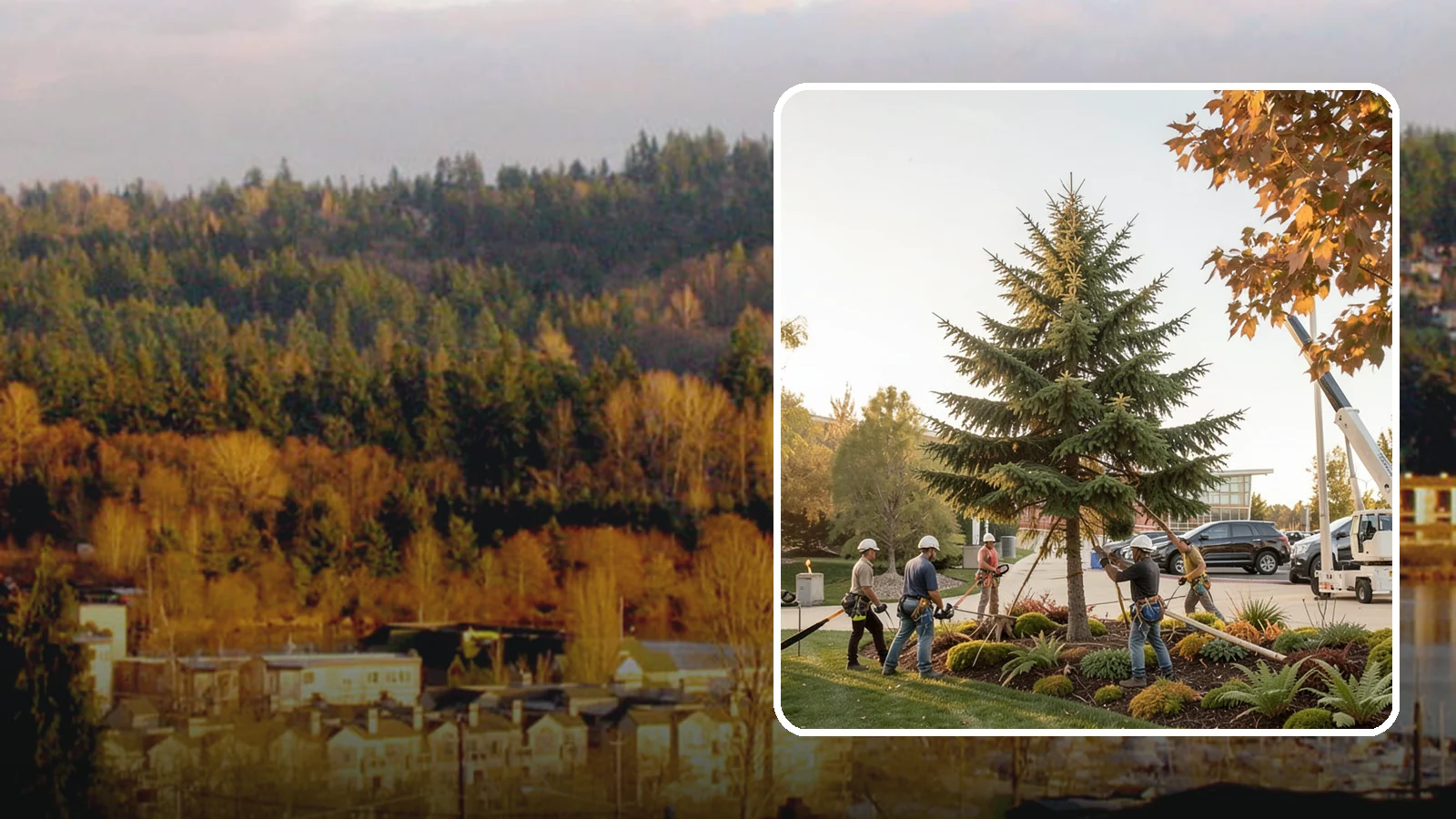
Kenmore Campus Tree Management
Tree management for campuses and institutional grounds.
This service is for campuses with trees spread across lawns, parking areas, walkways and building edges: colleges, hospital grounds, corporate offices and similar sites. It suits facilities managers who need a clear picture of what the trees are, where they stand and what work each one needs.
Campus tree care usually starts with a walk-through and a written list of trees, concerns and priorities. From there, work can be done in steps that fit your budget, your calendar and the way people use the grounds.
About Campus Tree Management in Kenmore
Campus tree management provides professional care for large institutional properties like schools or community centers. Our trained crews help keep your grounds safe, presentable, and aligned with recognized arboricultural standards while respecting the unique needs of each site. This service is designed to support consistent maintenance across expansive campus landscapes without disrupting daily operations.
What Kenmore Campus Tree Management Includes
This service covers comprehensive tree management tailored specifically for campuses and other institutional grounds. We match our methods to local tree species and specific site conditions, ensuring that every task from pruning to inspection fits the environment perfectly. The goal is to maintain a healthy canopy while managing access challenges common in high-traffic areas around buildings and walkways.
Kenmore Campus Tree Management Process
Work begins with an inventory and assessment of all trees on your property to establish priorities for care. We then develop a customized maintenance schedule that includes recurring pruning, inspections, and necessary treatments. Throughout the project, we document our work and regularly update the plan to address deferred issues or changing conditions across the site.
Equipment We Use for Kenmore Campus Tree Management
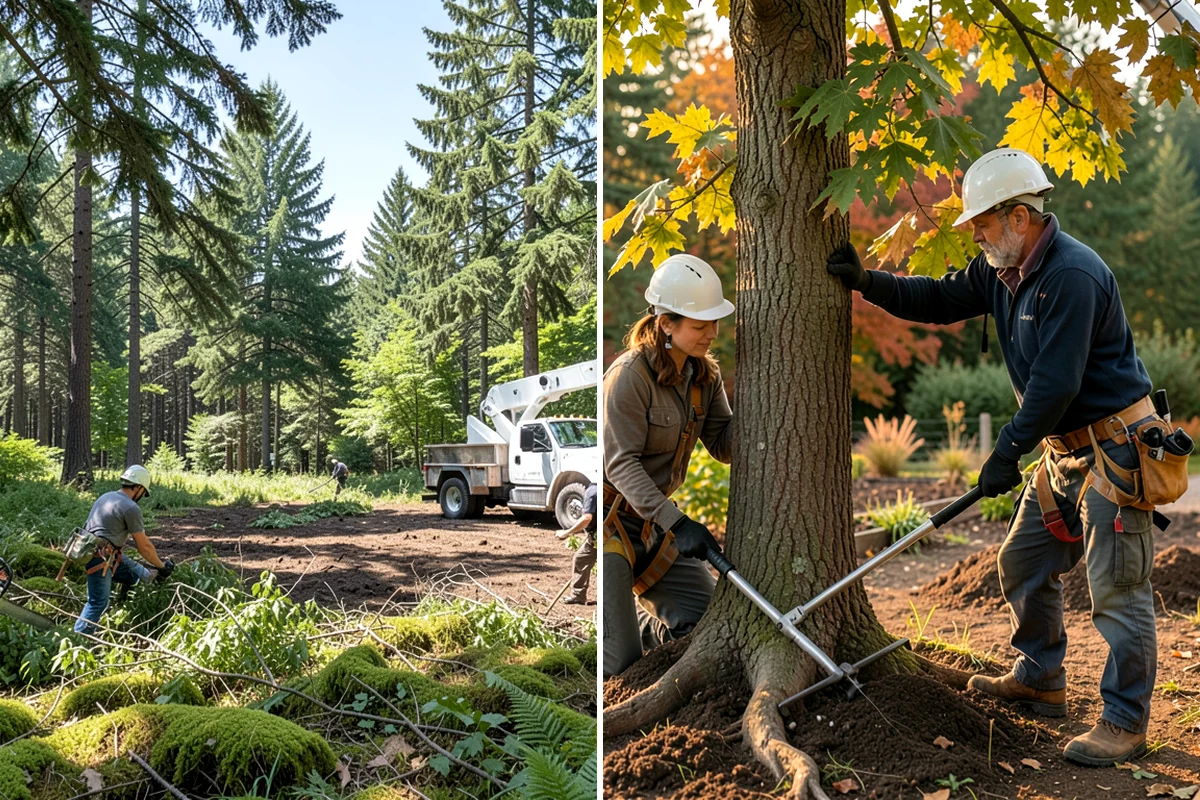
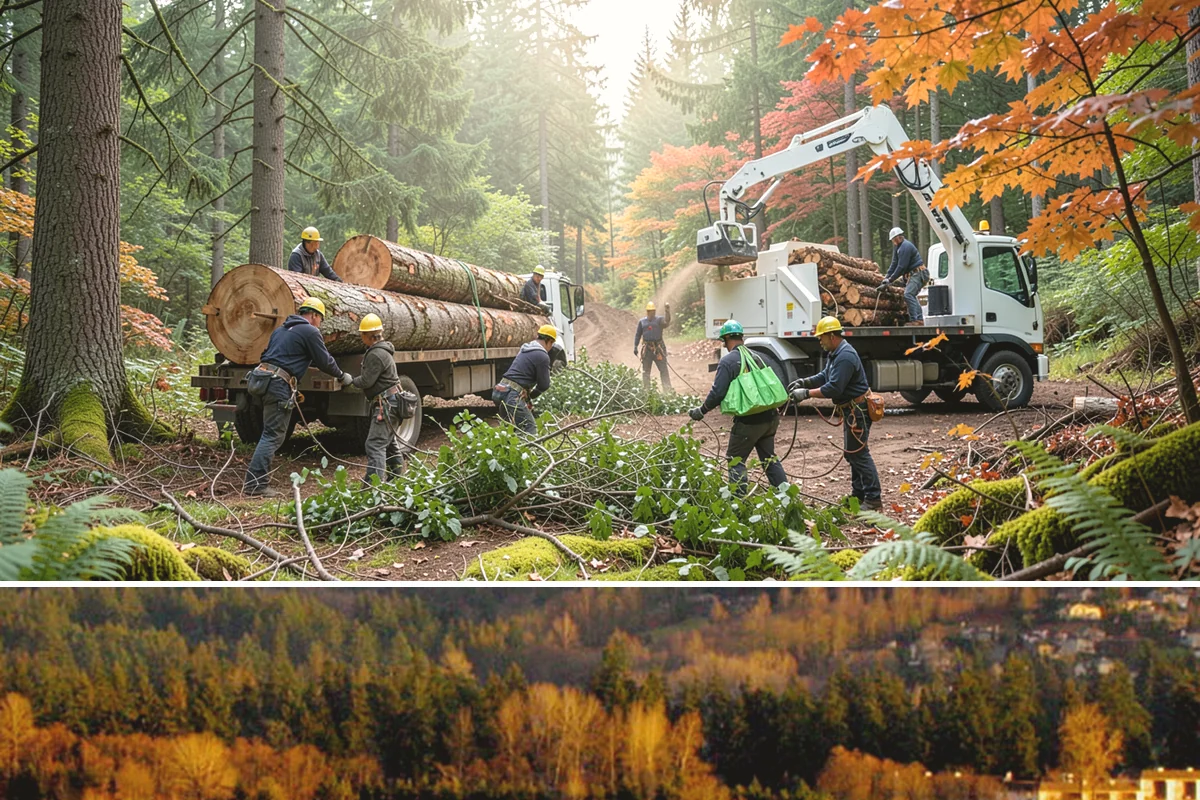
Our crews utilize specialized gear such as rigging equipment, inspection tools, and personal protective equipment for every job. Depending on the height of your trees and access points, we may bring in aerial lifts to reach difficult branches safely. We also use chippers and hauling equipment to remove debris efficiently while minimizing disruption to campus activities.
Kenmore Campus Tree Management Safety & Best Practices
Safety is a top priority as we coordinate all work around building occupants and active traffic patterns. We maintain strict safe work zones in public areas and follow recognized standards to protect both our team and your community members. Detailed records are kept for accountability, ensuring that every step of the process meets high safety expectations.
Signs You Need Campus Tree Management in Kenmore
You may need this service if you face a backlog of deferred maintenance or struggle with varied tree conditions across different parts of your campus. High-traffic areas often require extra attention to ensure trees remain safe and do not interfere with daily movement around the property. Coordinating schedules around these complex site conditions is another common reason institutions seek our help for institutional grounds management.
What Affects the Cost of Campus Tree Management in Kenmore
The investment depends largely on the total size of your campus property and how many acres or buildings are included in the scope. Access challenges within high-traffic zones can influence pricing, as well as the specific timing required to work around varied tree conditions across the site. We aim to provide budget-friendly care that supports consistent maintenance without unexpected financial surprises for institutional budgets.
Best Time of Year for Kenmore Campus Tree Management
Our schedules follow local Puget Sound weather patterns to ensure trees receive care when they need it most. Inspections are typically prioritized during dormancy, while pruning is timed according to species-specific needs and any specific constraints of your institution. This approach allows us to maintain a steady rhythm of work that respects both the biology of your trees and the operational calendar of your campus.

Campus tree care options for Kenmore properties
A campus manager can choose between a few approaches. Each fits different conditions.
Reactive care
You call when a limb drops or a tree looks wrong. This costs nothing up front, but problems tend to show up during storms or at busy times, when walkways and parking are in use. It leaves little room to schedule work around classes, clinics or events.
Scheduled maintenance
A recurring cycle of inspection and pruning, following ISA/ANSI A300 style practice, lets you plan around the academic or business calendar. Pruning can remove dead wood and reduce conflicts with roofs, lights and sightlines. It does not guarantee a tree will never fail.
Full tree inventory and plan
Every tree is mapped, identified and given a condition note and a priority. This suits larger sites, such as the Bastyr University campus listed in OpenStreetMap as a college campus in Kenmore, where many trees sit near buildings and paths.
Species mix matters for planning. Kenmore's street-tree inventory lists 12,435 trees, and the most common are Douglas-fir at 11.3%, Eastern arborvitae at 9.8% and Red alder at 8.4%. That is street trees, not your campus, but it shows conifers and alders are common locally. Alder tends to be shorter-lived, so it deserves a closer look during inspections. Large conifers call for attention to crown weight and the ground around them.
Removals and city approval
The published Kenmore rules we found don't spell out clearly which removals need city approval. Because of that, we check with the city before work starts, and we suggest you do not schedule removals until that is settled.
- Reactive: lowest planning effort, least control over timing
- Scheduled: steady upkeep, predictable calendar
- Inventory and plan: best for large or mixed-use grounds
Call or text 425-484-4442 for a free estimate and a walk-through of your grounds.
Kenmore tree conditions at a glance
| Tree canopy | Among the most heavily treed Puget Sound cities (satellite data) |
|---|---|
| USDA hardiness zone | 9a (8b to 9a across the city) |
| High and strong wind episodes, 2005-2025 | 33 in the forecast zone |
| Soils | 51% of land has hardpan or another restrictive layer within 40 in; most common series Alderwood |
Tree removal rules in Kenmore
Kenmore’s published rules don’t spell out clearly which removals need city approval. We check with the city before work starts.
Most common street trees in Kenmore
- Douglas-fir11.3%
- Eastern arborvitae9.8%
- Red alder8.4%
- Western red cedar7.4%
- Bigleaf maple5.1%
- Black cottonwood4.8%
Share of 12,435 trees in the city’s street-tree inventory; median trunk diameter 10.0 in, 14.0% at 24 in or wider.
Sources: Daymet daily weather (NASA/ORNL), NOAA Storm Events, USDA plant hardiness map 2023, NRCS soil survey, USGS elevation, WA DNR landslide inventory, USDA Forest Service aerial survey, WSDA, city tree assessments and street-tree inventories, SILVIS Lab, Arbor Day Foundation, and official city and utility pages.
Campus Tree Management Serving Kenmore
Kenmore
Also serving Kenmore
- Street Tree Removal in Kenmoreat Washington City Services
- Apartment Landscape Maintenance in Kenmoreat Washington Landscaping
- Retail Renovation in Kenmoreat Washington Construction
- Dumpster Pad Cleaning in Kenmoreat Washington Pressure Washing