
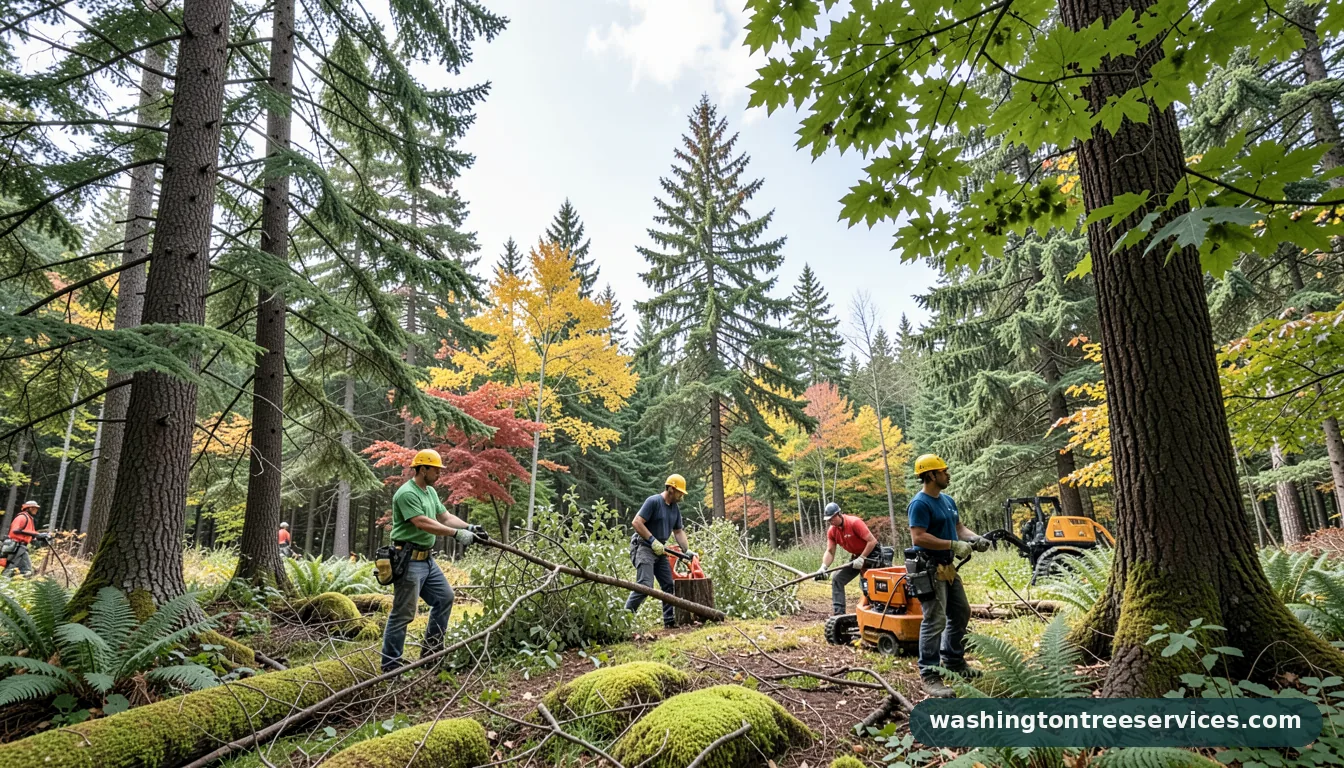
A big conifer near your house is not a problem just because it is big. Look for specific warning signs: many dead or dying branches, cracks or breaks, fungal growths, poor trunk taper, or recent digging near the roots. One sign calls for a closer look. Several together call for a professional assessment.
Western Washington does get strong wind, so the question is worth asking. The goal is a calm, informed decision, not a reflex to cut the tree down.
Signs on the tree that deserve attention
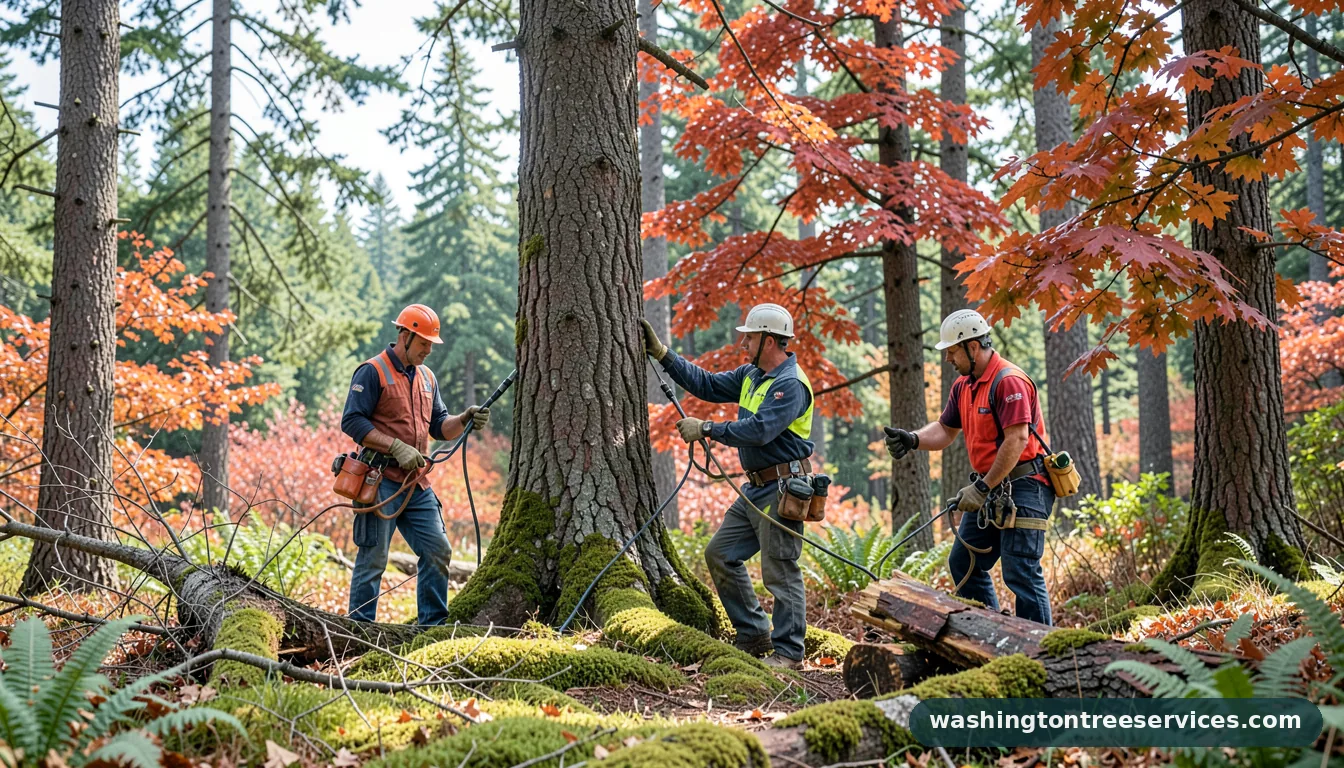
WSU Extension’s Pacific Northwest Gardener’s Handbook lists defects to watch for. Walk around the tree and look up, then down at the base.
- A large volume of dead or dying branches.
- Cracks or breaks in branches or the trunk.
- Fungal growths on branches, trunk or root zone, which indicate decay.
- Lack of trunk taper, or reverse taper at ground level.
A few dead lower branches on an old conifer are not the same as a crown full of dead wood. Note what you see, take photos, and compare them over time.
What raises the risk around your home
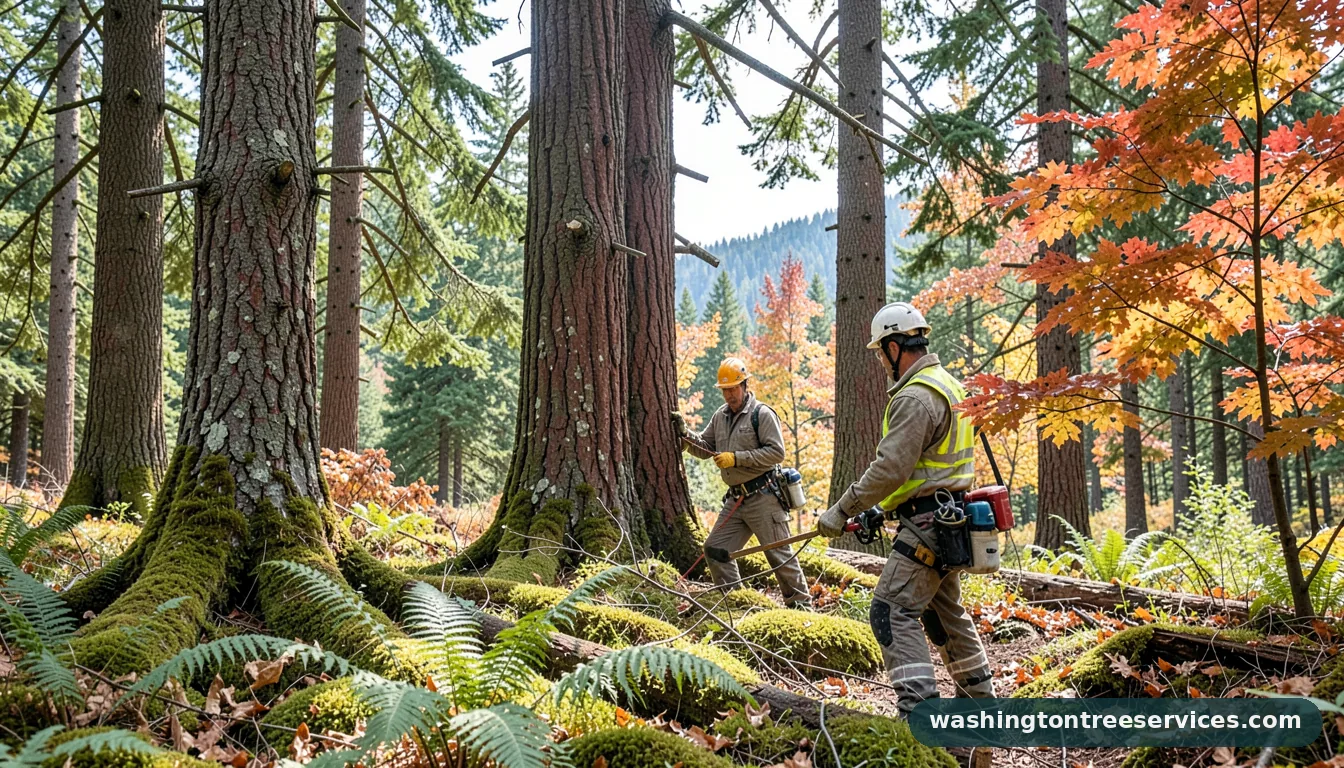
The tree is only half the picture. The other half is what it could hit and what has happened to the roots.
WSU Extension names construction, trenching or grade change within the drip line as a risk factor. If a new patio, utility trench or fill pile went in under the canopy, take the tree’s condition more seriously.
Wind matters too. In the forecast zones covering the 87 Puget Sound cities we track, NOAA storm events show a strongest gust of 90 mph on December 3, 2007, in the zone that includes Skykomish. The same records show 1 to 3 ice storm episodes from 2005 to 2025, depending on the zone. Strong storms do happen here, so a tree with defects near a bedroom or driveway deserves more weight than one in a far corner.
Size alone is not the test
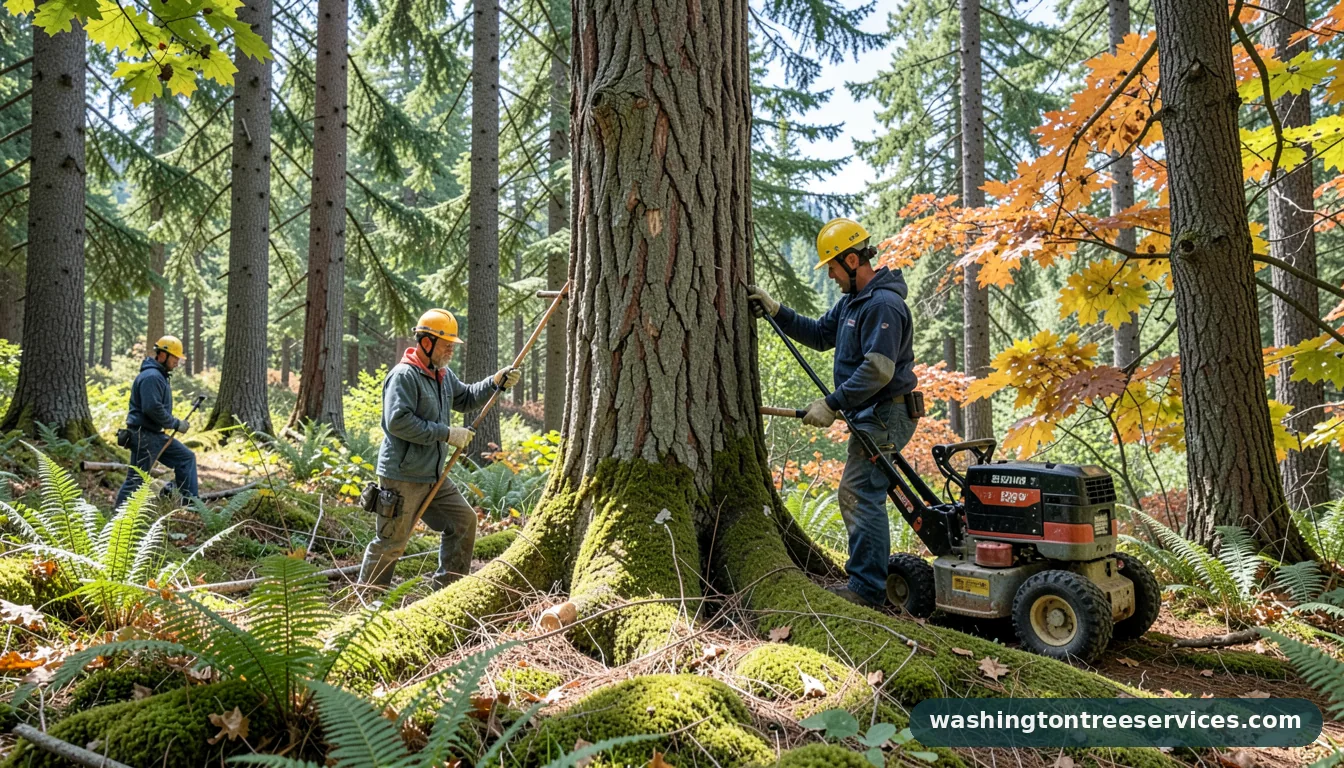
Seattle’s street-tree inventory counts 240,243 trees, and 8.0% are 24 in or wider at the trunk. Large trees are a normal part of the urban canopy, and many stand for decades. Width tells you the tree is mature. It does not tell you it is failing.
Also check your city’s tree rules before planning any removal. Many cities regulate removal, and the rules differ. Confirm the details with your city. A rule about removal does not tell you anything about pruning, so ask about both.
Slope can matter as well. WA DNR has mapped landslides in 43 of our 87 cities. If your tree sits on a steep hillside, mention that to any assessor.
What to do next, and who to call
If you see several warning signs, have the tree assessed. Look for an ISA Certified Arborist, ideally one with the TRAQ credential for tree risk assessment.
After a storm, do not rush. WA DNR’s Tree Link guidance says not to remove storm-damaged trees without weighing risk, because some recover with pruning. It also says never to prune or move tree material tangled with utility lines without the utility on site. Call the utility first.
Washington Tree Services has an ISA Certified Arborist on staff and is licensed, bonded and insured, with a $2 million general liability policy. Estimates are free. Call or text 425-484-4442.
Related services
Request a free estimate for a site-specific assessment.
Ready to get started?
Tell us about your trees and we'll get back to you with a free estimate.