Where Safety Meets Expert Tree Service.

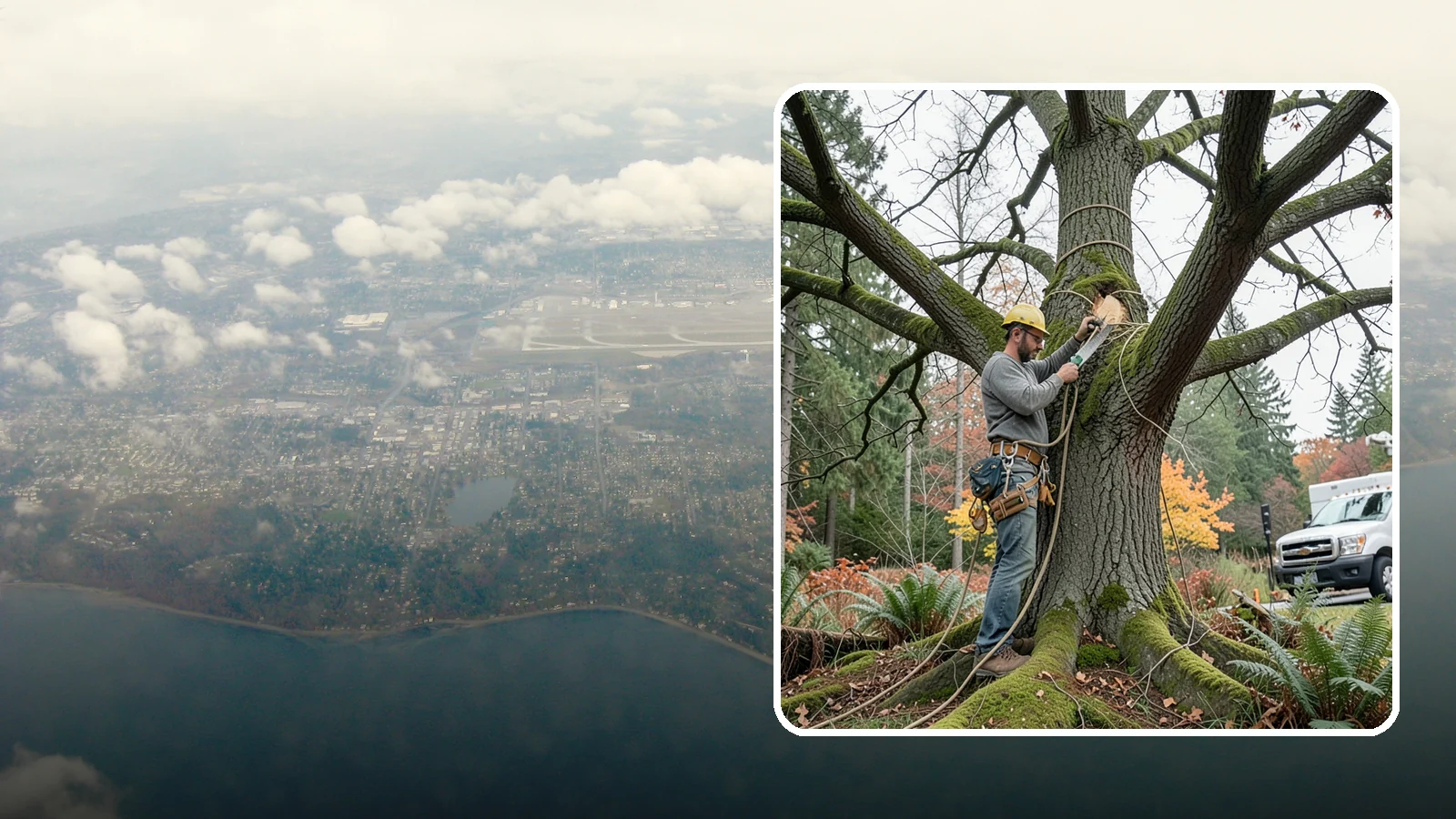
Burien Seasonal Pruning
Pruning timed to a tree’s seasonal cycle.
When is the right time to prune trees in Burien? For most trees, the answer depends on what you are removing. Dead branches can come off at almost any time of year. Cuts that remove live growth are better planned around the season and the weather.
A quick walk around your yard can help you sort this out. Look for branches with no leaves in summer, bark peeling away, or limbs rubbing together. Note which trees need a few small cuts and which need more. That list makes it easier to decide what can happen now and what can wait for the right window.
About Seasonal Pruning in Burien
Seasonal pruning is a thoughtful way to care for your trees by working in rhythm with their natural growth cycles. This service helps maintain the health and structure of your landscape while keeping branches clear where they matter most. It is designed specifically for homeowners who want long-term vigor without unnecessary stress on their plants.
What Burien Seasonal Pruning Includes
We perform pruning timed to match each tree species’ seasonal needs, focusing on proper cuts that support overall health. Our crews follow recognized arboricultural standards and tailor methods to your specific site conditions and the type of trees you have. The goal is always to improve structure and appearance while reducing risks like branch failure or interference with nearby structures.
Burien Seasonal Pruning Process
We begin by assessing your canopy condition and defining clear pruning objectives for each tree. Trained professionals select the correct cuts based on species requirements, making clean incisions at proper points without removing too much live tissue. Afterward, we carefully lower cut material, process it through a wood chipper if needed, and leave your work area completely clean.
Equipment We Use for Burien Seasonal Pruning
Our teams use hand saws, pole saws, chainsaws, and climbing gear to reach branches safely from the ground or aloft. When necessary, aerial lifts are deployed for taller trees while personal protective equipment is worn by everyone on site. A wood chipper handles cut material efficiently, ensuring debris does not remain in your yard after the job is done.
Burien Seasonal Pruning Safety & Best Practices
We strictly follow recognized pruning standards to avoid making harmful cuts that could weaken a tree’s structure. Our crews watch closely for overhead power lines and unstable limbs before starting any work on elevated branches. Fall protection systems are used whenever workers climb, ensuring everyone stays safe while handling tools near your home or property.
Signs You Need Seasonal Pruning in Burien
You may need seasonal pruning if you notice deadwood hanging in the canopy or weak unions that could fail during storms. Overgrown branches blocking sightlines or interfering with buildings and utility lines also indicate it is time for this service. If a tree shows signs of stress from improper past cuts, professional assessment can help restore its balance and strength.
What Affects the Cost of Seasonal Pruning in Burien
The price depends on factors like the size of your trees and how complex access to them might be at your property site. We consider the condition of the canopy during our initial assessment along with the proper disposal methods required for all cut material. Specialized equipment such as climbing gear or aerial lifts may also influence the final cost based on what is needed for safe completion.
Best Time of Year for Burien Seasonal Pruning
In our local Puget Sound climate, it is best to schedule pruning when your specific tree species enters its dormancy period each year. This timing supports health by avoiding active growth phases where cutting can cause stress and slow recovery. Waiting until these appropriate windows ensures the work aligns with nature’s cycle for maximum benefit to every branch we touch.

Timing seasonal pruning in Burien's wet and dry months
Deadwood can be handled any time
The WSU Extension Pacific Northwest Gardener's Handbook, in its chapter on pruning woody landscape plants, says deadwood, or less than 10% of live tissue, can be removed at almost any time. So a broken or dead limb does not have to wait for a particular month. If it hangs over a driveway, roof or walkway, it is reasonable to deal with it sooner.
Why the wet season matters
Daymet data for 2005-2025 shows that 83% of Burien's yearly rain and snow falls from October to April. Wet weather is a good reason to think before making larger cuts on live wood. Fresh wounds stay damp for long stretches, and heavy rain and slick ground make work harder and less pleasant for everyone. We would plan bigger jobs around the forecast, and keep the cuts to what the tree needs.
Using the drier months
On average, July is the driest month in Burien. That makes summer a practical time to schedule work that needs dry access, such as getting equipment across a lawn without tearing it up. Which trees to prune in summer and which to leave for another season depends on the species, so it is worth asking before you book.
What to expect from the work
Standard pruning practice, such as the ANSI A300 approach, is to make clean cuts just outside the branch collar and avoid removing more live growth than a tree can handle. We do not recommend topping. Burien sits in USDA hardiness zone 9a on the 2023 USDA map, which is a general guide to winter cold for plant choices, not a pruning schedule for any one tree.
If you are unsure what your trees need, a free estimate is a simple way to get a walk-through. Call or text 425-484-4442 and we can talk through what you are seeing.
Burien tree conditions at a glance
| USDA hardiness zone | 9a |
|---|---|
| Rain and snow falling October to April | 83% of the year’s total |
| Days that freeze at night and thaw by day | 28 a year |
| Tree City USA | 25 years |
| Electric utility | Puget Sound Energy (PSE) |
Trees near the power line to your house
Puget Sound Energy (PSE): Service line (wire from PSE pole to home or meter pole): PSE does not trim it; homeowner/private arborist trims.
PSE performs a safety disconnection so the homeowner or private tree trimmer/arborist can work; Call at least 5 business days ahead to check crew availability and potential charges.
Safety disconnect: 1-888-321-7779 (5+ business days ahead). Utility page.
Any fee for a disconnect is set by the utility.
Sources: Daymet daily weather (NASA/ORNL), NOAA Storm Events, USDA plant hardiness map 2023, NRCS soil survey, USGS elevation, WA DNR landslide inventory, USDA Forest Service aerial survey, WSDA, city tree assessments and street-tree inventories, SILVIS Lab, Arbor Day Foundation, and official city and utility pages.
Seasonal Pruning Serving Burien
Burien

Seasonal pruning in nearby areas
Also serving Burien
- Pear Tree Pruning in Burienat Washington Landscaping
- Roof Algae Treatment in Burienat Washington Roofing
- Vegetation Management in Burienat Washington City Services