Where Safety Meets Expert Tree Service.

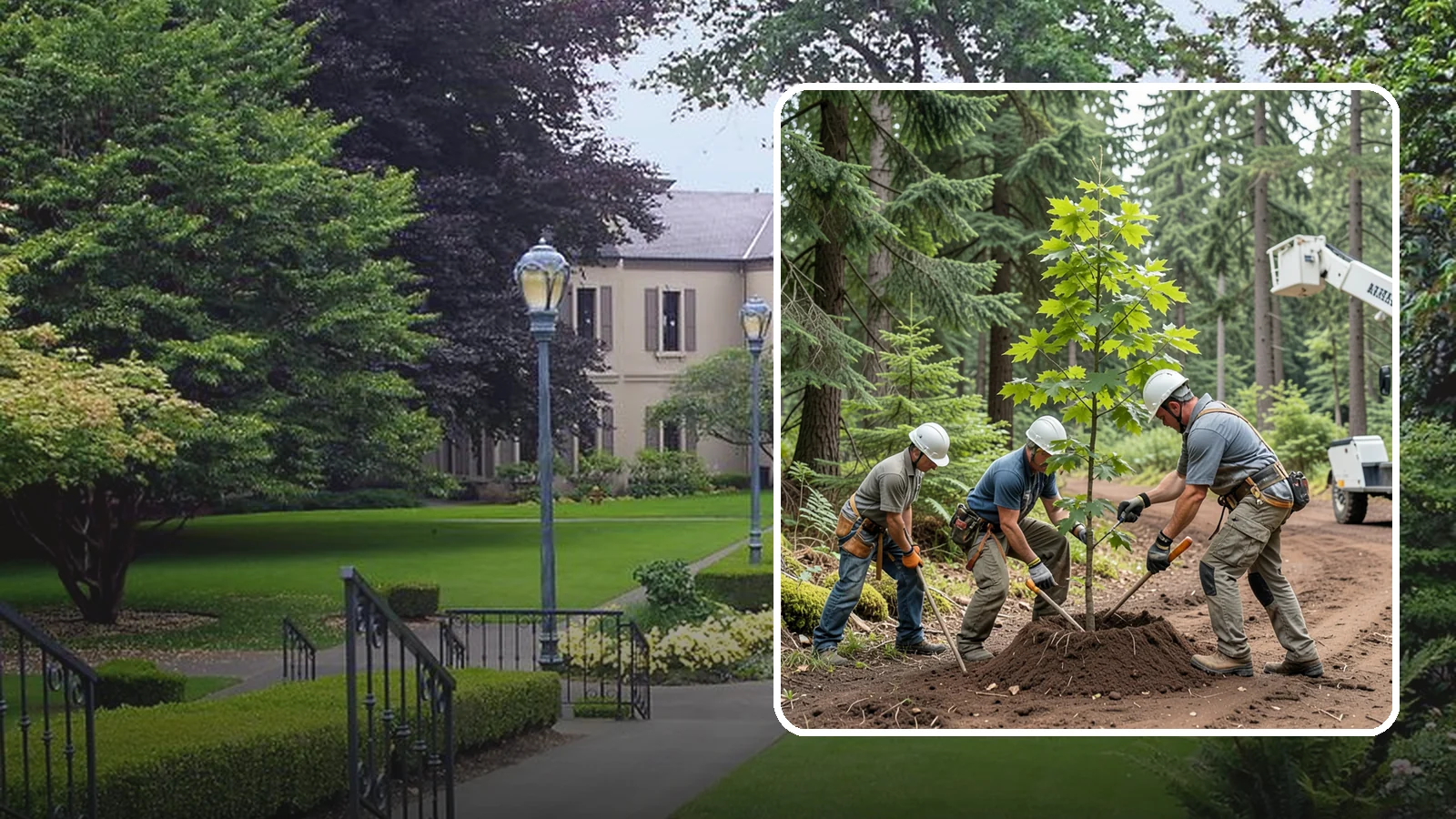
Woodinville Reforestation Planting
Larger-scale planting to re-establish tree cover.
You may be looking at a gap where trees came down, a hillside that has thinned, or a stand of cedars with browning tops. Any of these can be a reason to plant again, and the best time to plan is before you buy a single seedling.
Reforestation planting means putting back a mix of trees suited to the site so the area can rebuild cover over time. Below is how the cause of the loss shapes what goes in, and what local conditions mean for your planting plan in Woodinville.
About Reforestation Planting in Woodinville
Reforestation planting helps homeowners restore tree cover on larger areas that have been cleared or degraded. This approach brings back the benefits of shade, privacy, and improved site ecology for your property. Our trained crews work to establish healthy trees that are well-suited to your specific location.
What Woodinville Reforestation Planting Includes
This service focuses on re-establishing broad canopy coverage rather than planting individual specimens in isolation. We match our methods carefully to the tree species chosen, current site conditions, and available access points. The goal is to create a resilient forest layer that supports long-term environmental health for your land.
Woodinville Reforestation Planting Process
Our team begins by assessing your site to select suitable species before preparing the soil and planting area. Each tree is planted at the correct depth with proper spacing, followed by mulching and watering in. We also provide guidance on establishment care to ensure these new trees thrive as they grow into a mature canopy.
Equipment We Use for Woodinville Reforestation Planting
The work utilizes digging tools for site preparation alongside equipment designed specifically for efficient planting operations. Soil amendments and fresh mulch are applied to support root development, while specialized watering gear ensures adequate moisture levels. Staking materials and personal protective equipment are used whenever necessary to secure young trees and keep crews safe.
Woodinville Reforestation Planting Safety & Best Practices
Before any ground is broken, we locate underground utilities to prevent damage during the digging process. We strictly select species suited to your site conditions to avoid future conflicts with structures or other vegetation. Planting at the proper depth and handling roots carefully are essential steps that protect both the new trees and our workers.
Signs You Need Reforestation Planting in Woodinville
You may need this service if you have areas of land where tree cover has been lost due to clearing or degradation. Signs include compacted soil, existing gaps in your canopy, or a desire to expand privacy and shade across a larger footprint. This project is ideal when the goal is to restore ecological balance rather than just adding isolated trees.
What Affects the Cost of Reforestation Planting in Woodinville
The overall investment depends on how accessible your site is for our crews and equipment teams. Costs are also influenced by soil conditions that might require amendments, the complexity of species selection, and whether staking or specialized watering gear is needed. These factors determine the resources required to successfully establish a new forest layer on your property.
Best Time of Year for Woodinville Reforestation Planting
In Washington’s Puget Sound climate, planting is generally best performed during dormant seasons to minimize stress on young trees. However, specific timing must always match the unique establishment requirements of the tree species you choose for your site. We will coordinate with you to schedule work when conditions are optimal for successful root growth and survival.
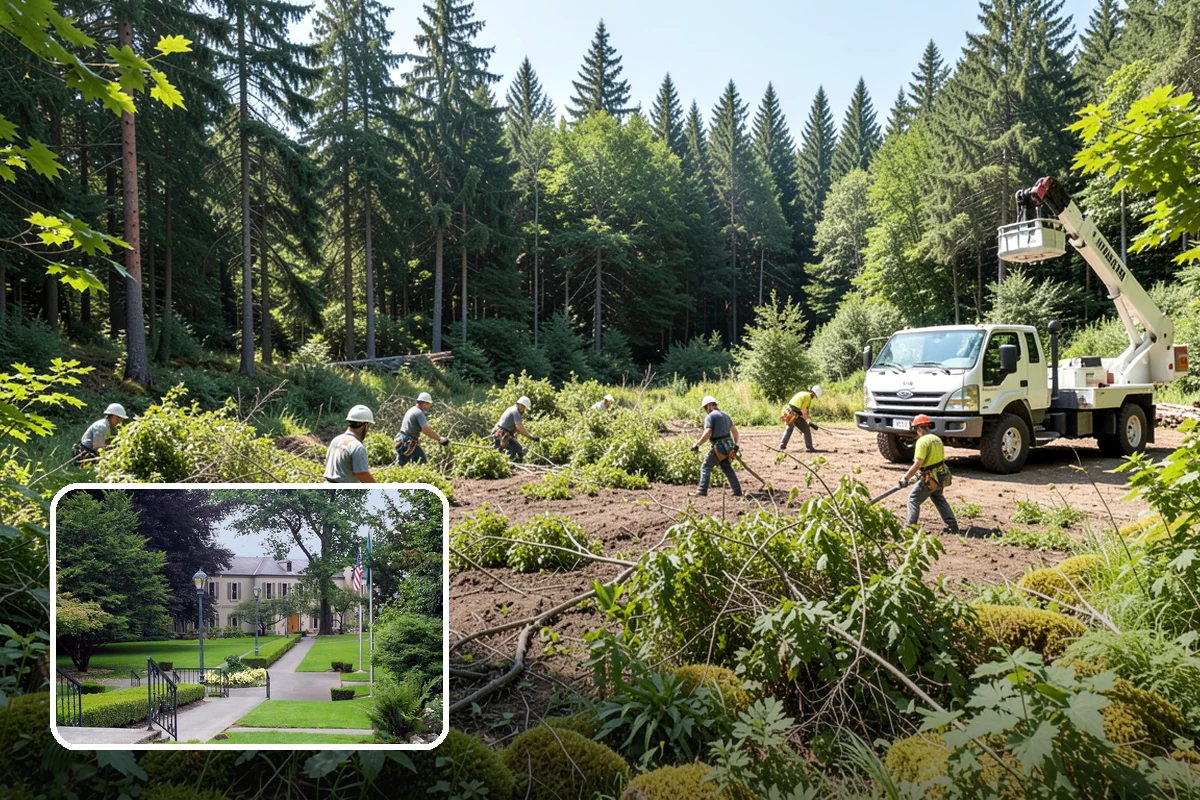
Reforestation planting in Woodinville: cause, site and species
Start with why the trees were lost. Removal, storm damage, root disease and insect attack all call for different choices. If the cause is still active, new trees of the same species may face the same problem.
Local survey data shows why this matters. A federal aerial survey by the USDA Forest Service and WA DNR, covering 2021 to 2025, mapped damage in forest within 10 km of Woodinville. This is forest land, not yard trees, so it does not describe your property. The largest category was decline with no cause identified, at 819 acres in western redcedar. That label means dieback where no single cause was found. The survey also mapped Douglas-fir engraver on 36 acres and Douglas-fir beetle on 19 acres, both in Douglas-fir. If you are replacing cedar or Douglas-fir, it is sensible to mix in other species rather than replant one kind across the whole site.
Climate sets the next limit. The USDA hardiness map from 2023 puts Woodinville in zone 8b, with parts of the city ranging from 8b to 9a. That tells us which species will tolerate winter lows here. It does not tell us about soil, shade or drainage, so we look at those on site.
Slope matters too. USGS elevation data shows Woodinville has some steep slopes, though fewer than the hilliest Puget Sound cities. On a sloped lot, planting is usually done in stages, with roots and ground cover helping hold soil. We would want to see the grade before suggesting a layout.
Size at maturity is the last check. Linda Chalker-Scott of the WSU Puyallup Research and Extension Center advises weighing a tree's mature size against power lines and structures before planting. A tall conifer set under a line becomes a pruning problem later, so those spots get smaller species.
The work itself is plain. We assess the site, choose species and spacing, prepare the planting areas, set the trees at the right depth, and mulch. If the planting follows tree removal, we check with the city before work starts. Call or text 425-484-4442 for a free estimate.
Woodinville tree conditions at a glance
| USDA hardiness zone | 8b (8b to 9a across the city) |
|---|---|
| Soils | 55% of land has hardpan or another restrictive layer within 40 in; most common series Alderwood |
| Rain and snow falling October to April | 80% of the year’s total |
| Days that freeze at night and thaw by day | 32 a year |
| Tree City USA | 30 years |
Tree removal rules in Woodinville
Woodinville’s published rules don’t spell out clearly which removals need city approval. We check with the city before work starts.
Sources: Daymet daily weather (NASA/ORNL), NOAA Storm Events, USDA plant hardiness map 2023, NRCS soil survey, USGS elevation, WA DNR landslide inventory, USDA Forest Service aerial survey, WSDA, city tree assessments and street-tree inventories, SILVIS Lab, Arbor Day Foundation, and official city and utility pages.
Reforestation Planting Serving Woodinville
Woodinville
Also serving Woodinville
- Ornamental Grass Planting in Woodinvilleat Washington Landscaping
- Median & Roundabout Landscaping in Woodinvilleat Washington City Services