Where Safety Meets Expert Tree Service.

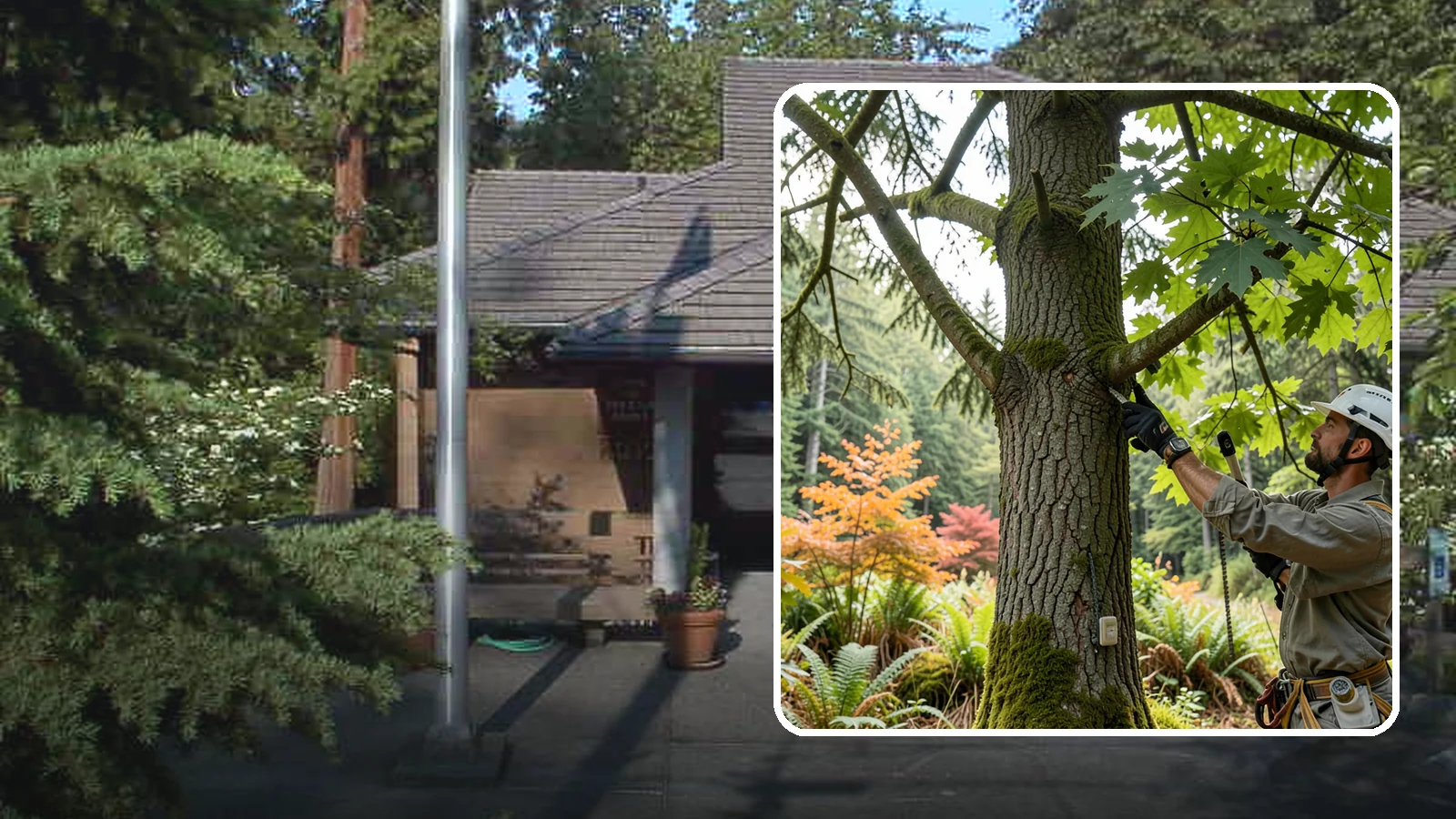
Yarrow Point Tree Health Inspection
A professional evaluation of a tree’s overall condition.
A tree health inspection suits Yarrow Point owners who have a tree that looks thinner than it used to, drops branches without warning, leans toward the house, or shows fungus, cracks or dead limbs. It also fits anyone buying or selling a home with large trees close to the structure.
An inspector looks at the whole tree: crown, trunk, root flare and the soil around it. The goal is to learn what is wrong, how serious it is, and whether the tree needs monitoring, care or removal.
About Tree Health Inspection in Yarrow Point
A tree health inspection offers a professional look at your trees’ overall condition to help keep them safe and strong for years to come. This valuable check-up is designed specifically for homeowners who want to catch potential issues before they become serious problems. It serves as the first step in creating a customized care plan that supports long-term stability and life extension for valued specimens.
What Yarrow Point Tree Health Inspection Includes
Tree health inspection provides an expert evaluation of your trees’ current status, focusing on identifying early warning signs of trouble. Our trained crews follow recognized arboricultural standards to assess soil quality, root structure, pest presence, and disease indicators while matching methods to each tree’s specific species and site conditions. The goal is to clearly identify contributing factors like compacted soils or girdling roots so you can guide an effective care plan forward.
Yarrow Point Tree Health Inspection Process
Our team begins by carefully inspecting the tree within its surrounding environment to understand how soil, pests, or past construction might be affecting it. Once we have identified these issues, we recommend and apply appropriate treatments while documenting our findings for your records. We ensure that follow-up care is planned based on accurate documentation of conditions found during the initial visit.
Equipment We Use for Yarrow Point Tree Health Inspection
To get a complete picture, we utilize diagnostic tools along with soil probes and sampling kits to examine what lies beneath the surface. Depending on access needs or wet season conditions, our crews may bring air excavation tools to gently assess root zones without causing damage. We also use specialized injection equipment for treatments while wearing necessary personal protective gear throughout the workday.
Yarrow Point Tree Health Inspection Safety & Best Practices
During any inspection involving products, we strictly follow label instructions and application guidelines to ensure everyone remains safe. Our methods are designed to protect your soil and surrounding plantings while avoiding accidental damage to roots or trunks during our visit. We take great care to document all conditions accurately so that future treatments remain effective without risking the tree’s health.
Signs You Need Tree Health Inspection in Yarrow Point
You may need this service if you notice signs of decline caused by poor soils, pests, disease, or changes in ground grade from past construction. Girdling roots and other hidden issues often go unnoticed until a professional evaluation reveals them early enough to prevent escalation. If your trees have experienced stress from environmental shifts or nearby development, an inspection can help determine the best path forward for their recovery.
What Affects the Cost of Tree Health Inspection in Yarrow Point
The investment for this service varies based on several factors including the specific species of tree being evaluated and the complexity of diagnosing soil issues. Site conditions such as difficult access requirements will also influence how much time and resources are needed to complete a thorough assessment. Additionally, identifying pests or diseases requires specialized attention that impacts the overall cost structure of your care plan.
Best Time of Year for Yarrow Point Tree Health Inspection
In our Puget Sound climate, you can schedule this inspection at any point throughout the year since trees remain active in most seasons. However, during wetter periods, we may need to use air excavation tools specifically to effectively assess root zones without getting bogged down by mud or water. Planning your visit allows us to choose the right timing and equipment for clear results regardless of current weather patterns.

Choosing an inspection approach in Yarrow Point
Owners usually choose between three approaches. The right one depends on what you see and how close the tree is to people and buildings.
- Visual walk-around: a ground-level look at the crown, trunk, root flare and soil. It suits a tree with no obvious symptoms that you want checked on a regular basis.
- Targeted defect assessment: a closer look at one tree with a known concern, such as a crack, a lean or a dead section.
- Monitor and re-check: a plan to look again after a set period when a problem is minor and the tree is not near a target.
What local conditions favor
Daymet data for 2005-2025 shows that 81% of Yarrow Point's yearly rain and snow falls from October to April. Soil stays wet through the months when storms are most likely. Inspecting in late summer or early fall, before the wet season, gives you time to act on what is found. Wet soil is also a reason to take a leaning tree seriously, so we would put a targeted assessment ahead of a simple walk-around for any tree with a lean.
The defects we look for come from a WA DNR publication on tree failure: dead or decayed parts, cracks, included-bark unions, uncorrected leans and low live crown ratios. A tree with any of these deserves a closer look than a general check gives it.
A federal aerial survey (USDA Forest Service and WA DNR, 2021-2025) mapped 134 acres of western redcedar in decline, cause not identified, in forest within 10 km of Yarrow Point. That means dieback with no single cause found. It covers forest land, not yard trees, so it does not tell us about your tree. It is a reason to look carefully at any redcedar showing thin or browning foliage.
If the inspection points toward removal and the city has a rule that applies, we check with the city before work starts. Call or text 425-484-4442 to start with a free estimate.
Yarrow Point tree conditions at a glance
| USDA hardiness zone | 9a (8b to 9a across the city) |
|---|---|
| Soils | 93% of land has hardpan or another restrictive layer within 40 in; most common series Alderwood |
| Rain and snow falling October to April | 81% of the year’s total |
| Days with 0.1 in or more of rain | 108 a year |
| Days that freeze at night and thaw by day | 28 a year |
Tree health near Yarrow Point
- Decline, cause not identified134 ac
Forest damage mapped from the air within 10 km of Yarrow Point, 2021-2025 (USDA Forest Service and WA DNR). This covers forest land, not street or yard trees. “Decline, cause not identified” is dieback with no single cause found.
Sources: Daymet daily weather (NASA/ORNL), NOAA Storm Events, USDA plant hardiness map 2023, NRCS soil survey, USGS elevation, WA DNR landslide inventory, USDA Forest Service aerial survey, WSDA, city tree assessments and street-tree inventories, SILVIS Lab, Arbor Day Foundation, and official city and utility pages.
Tree Health Inspection Serving Yarrow Point
Yarrow Point


Tree health inspection in nearby areas
Also serving Yarrow Point
- Hedge Shaping in Yarrow Pointat Washington Landscaping
- Park Landscape Maintenance in Yarrow Pointat Washington City Services