Where Safety Meets Expert Tree Service.


Yarrow Point Insurance Claim Documentation
The documentation of tree damage for insurance claims.
What should you do first if a tree damages your Yarrow Point property? Photograph everything before anything is moved, then call your insurer. Take wide shots that show the tree, the damage and the surroundings, then close-ups of the break points, the roots and the affected structure.
Insurers usually want a clear record of what happened and what the tree's condition was. A written assessment from an arborist can support that record. Keep your own notes on the date, the weather and what you saw, because details fade quickly once cleanup starts.
About Insurance Claim Documentation in Yarrow Point
This documentation service helps homeowners navigate insurance claims after tree-related damage occurs in our Pacific Northwest climate. Our trained crews provide expert, objective guidance to support your decisions when dealing with storm events or other incidents. We work alongside you to ensure the facts are clearly recorded for your claim process.
What Yarrow Point Insurance Claim Documentation Includes
Insurance claim documentation focuses on recording specific details of tree damage to strengthen your insurance application. This service includes gathering site history and inspecting conditions while adhering to recognized arboricultural standards. The final output is a clear report that can support permits, planning needs, or insurance submissions.
Yarrow Point Insurance Claim Documentation Process
Our team begins by collecting information about the trees and their specific location on your property. We then assess current conditions against established objectives before preparing detailed recommendations for you. Each step involves reviewing findings with the client to ensure everyone understands the situation clearly.
Equipment We Use for Yarrow Point Insurance Claim Documentation
To gather accurate data, we use diagnostic tools designed for measurement and specialized imaging equipment when necessary. Mapping software helps visualize site details, while documentation platforms allow us to create professional reports quickly. All crew members wear personal protective gear to stay safe during these assessments.
Yarrow Point Insurance Claim Documentation Safety & Best Practices
We base all our findings on observed evidence and recognized industry standards rather than speculation. If there are limitations in what we can assess or if uncertainty remains about a specific condition, we disclose those factors openly. Our approach ensures that any recommendations for follow-up care are documented accurately to protect your interests.
Signs You Need Insurance Claim Documentation in Yarrow Point
You may need this service when you have experienced tree damage and require official support for an insurance claim. Situations involving hidden defects within the trunk or root system often benefit from a professional inspection of site history. Regulatory requirements can also vary by jurisdiction, making expert documentation essential for compliance with local rules.
What Affects the Cost of Insurance Claim Documentation in Yarrow Point
The price is influenced by how difficult it is to access your specific property and the complexity of the tree species involved. If specialized diagnostic imaging tools are required during the damage assessment, this will factor into the overall cost as well. These variables ensure that our services match the unique needs of each site without using a flat rate.
Best Time of Year for Yarrow Point Insurance Claim Documentation
While we can perform documentation year-round to fit your schedule, expedited support is available after storm events when immediate claim assistance is needed. This flexibility allows us to work within the Pacific Northwest climate patterns while prioritizing urgent situations for homeowners in our service area.
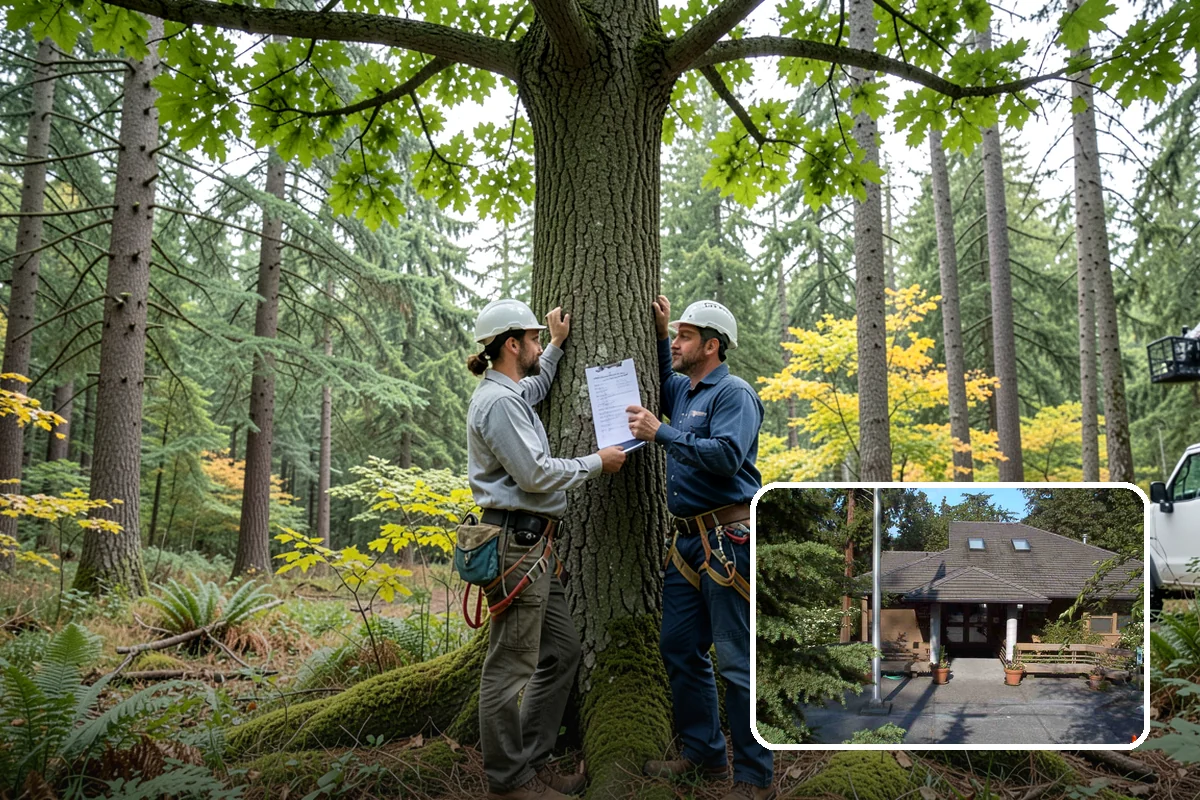
Documenting Tree Damage for a Claim in Yarrow Point
Why storm history matters for your records
The National Weather Service forecast zone that includes Yarrow Point logged 33 high and strong wind episodes between 2005 and 2025. The strongest gust recorded in that zone since 2005 was 72 mph on December 17, 2010. These are zone-wide figures, not measurements from your property. They do show that wind events are a recurring part of the local record. If a recent storm brought down a limb or a whole tree, noting the date and checking it against weather reports gives your claim a clear timeline.
Ice is a separate kind of event
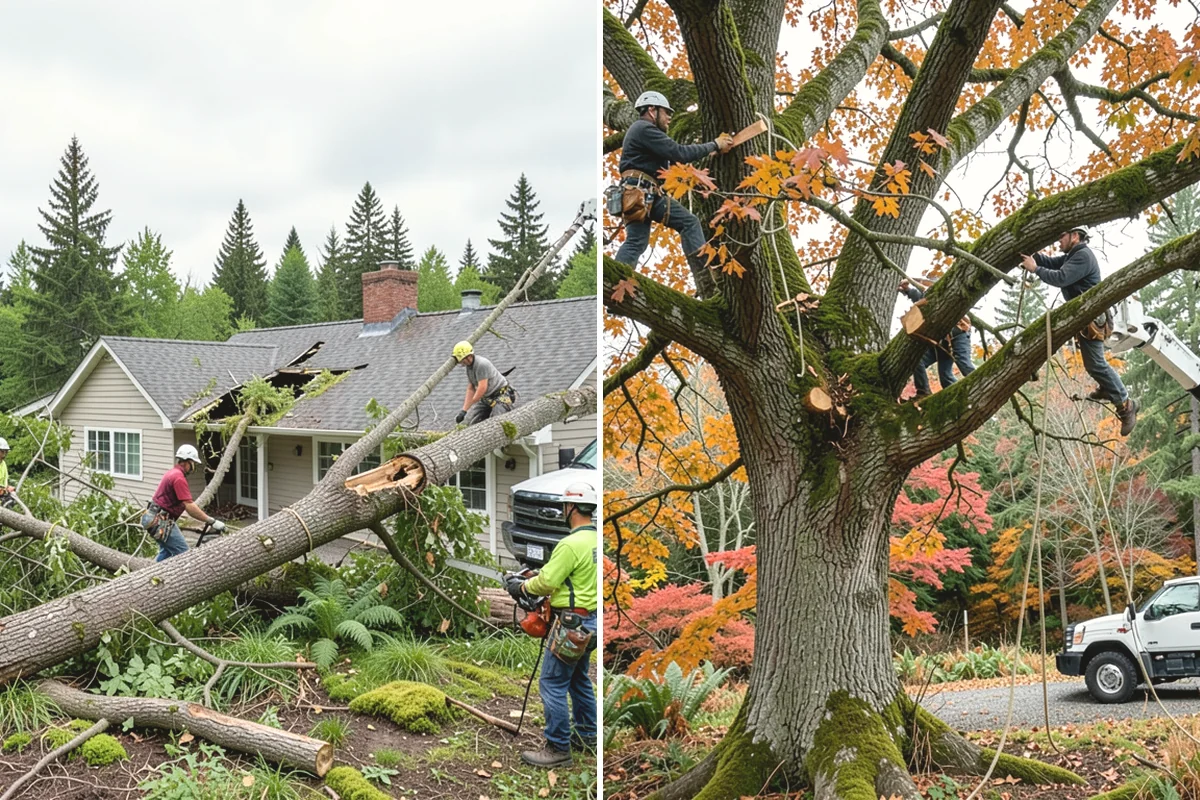
The same forecast zone had 2 ice storm episodes in that period. Ice damage often looks different from wind damage. Limbs may split along their length or bend and break under load, and several branches can fail at once. If ice was involved, photograph the split surfaces and any broken branches still hanging in the crown. Say in your notes whether the damage followed ice or wind, since the cause can affect how a claim is described.
What we put in a written assessment
An ISA Certified Arborist on our staff can inspect the tree and write up what is visible: species, the type and location of the failure, signs of decay or old wounds, and the targets affected. We take dated photographs and describe the condition in plain terms. We do not decide whether your policy covers the loss. That is the insurer's call.
- Photos of the whole tree and the damaged area before cleanup
- Close-ups of breaks, cavities, fungi and root lift
- Notes on the date, weather and what you saw
- Any earlier pruning or inspection records you have
If the tree must come down quickly for safety, tell your insurer first when you can, and keep removed sections or photos of them. We also check with the city before any removal work starts, in case a permit applies. Call or text 425-484-4442 for a free estimate.
Yarrow Point tree conditions at a glance
| Soils | 93% of land has hardpan or another restrictive layer within 40 in; most common series Alderwood |
|---|---|
| High and strong wind episodes, 2005-2025 | 33 in the forecast zone |
| USDA hardiness zone | 9a (8b to 9a across the city) |
Tree removal rules in Yarrow Point
A tree removal permit is required to remove any significant tree on private property (YPMC 20.22.030(A)). Minimum density of one significant tree per 5,000 sq ft of lot area must be shown whenever a significant or heritage tree is removed. Trees proposed for removal must be marked with yellow tape at DSH.
Regulated size: Any healthy tree at least 12 in DSH (diameter at 4.5 ft).
Official city source. Rules change; we confirm with the city before work starts.
Sources: Daymet daily weather (NASA/ORNL), NOAA Storm Events, USDA plant hardiness map 2023, NRCS soil survey, USGS elevation, WA DNR landslide inventory, USDA Forest Service aerial survey, WSDA, city tree assessments and street-tree inventories, SILVIS Lab, Arbor Day Foundation, and official city and utility pages.
Insurance Claim Documentation Serving Yarrow Point
Yarrow Point
Insurance claim documentation in nearby areas
Also serving Yarrow Point
- Green Roof Installation in Yarrow Pointat Washington Landscaping