Where Safety Meets Expert Tree Service.


Yarrow Point Growth Regulator Applications
Applications that slow shoot growth to support tree health.
The practical window for growth regulator work in Yarrow Point is the dry season, after the wet months have passed. About 81% of the city's yearly rain and snow falls from October to April (Daymet, 2005-2025), so the soil is usually wet through spring and then dries out. Planning ahead lets you pick a time when the ground and the tree are ready.
A growth regulator is a product applied to a tree to slow its growth. Owners often ask about it for trees that keep pushing into wires, roofs or view lines. Here is how we plan the work and what happens on the day.
About Growth Regulator Applications in Yarrow Point
Growth regulator applications help your trees grow more slowly so they stay healthy under stress. This care is perfect for homeowners who want their valued specimens to last longer without needing frequent pruning. We focus on supporting tree health while working carefully around the unique conditions of your property.
What Yarrow Point Growth Regulator Applications Includes
This service involves applying specific treatments that slow shoot growth to support overall tree stability. By reducing how fast new shoots develop, we help trees handle stress better and catch problems before they get worse. The goal is to improve soil and root conditions so your trees remain strong for years to come.
Yarrow Point Growth Regulator Applications Process
Our trained crews start by inspecting the tree and its site to find issues like poor soil or pests. We identify contributing factors such as girdling roots or disease, then recommend and apply the right treatments for that specific species. Afterward, we document our findings so you know exactly what was done and how to care for it afterward.
Equipment We Use for Yarrow Point Growth Regulator Applications
To do this work correctly, we use diagnostic tools and soil probes to check the ground beneath your trees. We bring injection or application equipment along with air excavation tools when needed to reach difficult areas safely. All crew members wear personal protective equipment while handling these specialized supplies on site.
Yarrow Point Growth Regulator Applications Safety & Best Practices
We follow strict label guidelines for any products used to ensure they are applied correctly and protect surrounding plants. Our methods avoid damaging the tree’s roots or trunk during application, keeping your landscape intact throughout the job. Accurate documentation of conditions helps us maintain a safe environment while we work around existing vegetation.
Signs You Need Growth Regulator Applications in Yarrow Point
You might need this service if you notice compacted soil, girdling roots, or signs that pests and disease are affecting your trees. Decline caused by past construction projects or changes in ground grade can also signal it is time for growth regulation. If pruning has become too frequent because shoots grow back quickly, our treatments can help slow that cycle down effectively.
What Affects the Cost of Growth Regulator Applications in Yarrow Point
The price depends on the species of tree you have and how difficult access might be to reach them. We must identify complex factors like soil quality or root issues before applying any treatment, which influences the final cost. Site conditions play a major role in determining what approach works best for your specific situation without inventing fixed rates.
Best Time of Year for Yarrow Point Growth Regulator Applications
Applications work best when trees are actively growing so they can take up the treatments effectively. We avoid working during extreme heat or dormant periods that are common here to ensure the products perform as intended. Timing is key to matching our methods with the natural rhythm of growth in your local climate.
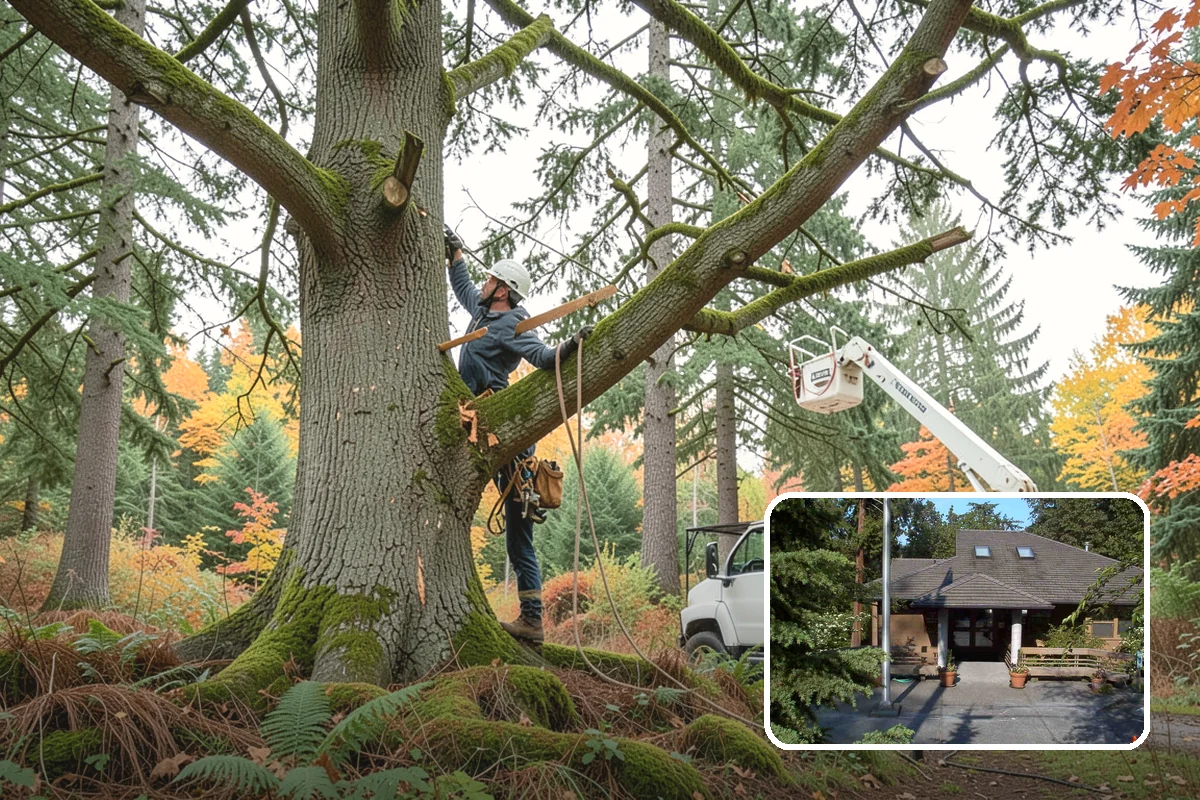
Planning growth regulator work in Yarrow Point
Start with the tree and the goal
Not every tree is a candidate. We look at species, health, size and what you want to change. A healthy tree that crowds a roofline is a different case from a stressed tree that is already struggling. If a tree shows dieback or poor vigor, we may suggest other care first. Pruning to ANSI A300 standards may fit better than a chemical treatment, and we will tell you which we think makes sense.
What affects scope
Scope depends on how many trees are involved, their size and how easy they are to reach. It also depends on how the product is applied, which can mean working at the base of the tree or in the soil around it. Because that area matters, we check for nearby plantings, slopes and drainage before choosing a method.
Wet-season rain matters here. With 81% of the yearly precipitation arriving October to April, according to Daymet, a treatment applied into saturated ground can run off or move away from the roots. That is why we lean toward drier conditions.
Species matters too. Cedars, common in Puget Sound yards, may need extra irrigation during summer drought to reduce flagging, according to WSU HortSense. Flagging is when scattered branches turn brown. If you have a cedar, tell us about any browning, because a tree under drought stress is not a good candidate for added treatment until its water needs are met.
Yarrow Point sits mostly in USDA hardiness zone 9a, with parts at 8b (USDA map, 2023). That is a winter low-temperature guide. It helps with species choice but does not decide timing for this work.
What to expect on the day
We confirm the trees and the product plan with you first. The application itself is usually short per tree. We mark the treated area, keep pets and children away until it is safe, and tell you what to watch for afterward. Results build over time, and we cannot promise a set amount of change.
One practical tip: water your trees deeply in the weeks before a summer application, so they go into treatment well hydrated.
Yarrow Point tree conditions at a glance
| USDA hardiness zone | 9a (8b to 9a across the city) |
|---|---|
| Soils | 93% of land has hardpan or another restrictive layer within 40 in; most common series Alderwood |
| Rain and snow falling October to April | 81% of the year’s total |
| Days with 0.1 in or more of rain | 108 a year |
| Days that freeze at night and thaw by day | 28 a year |
Tree health near Yarrow Point
- Decline, cause not identified134 ac
Forest damage mapped from the air within 10 km of Yarrow Point, 2021-2025 (USDA Forest Service and WA DNR). This covers forest land, not street or yard trees. “Decline, cause not identified” is dieback with no single cause found.
Sources: Daymet daily weather (NASA/ORNL), NOAA Storm Events, USDA plant hardiness map 2023, NRCS soil survey, USGS elevation, WA DNR landslide inventory, USDA Forest Service aerial survey, WSDA, city tree assessments and street-tree inventories, SILVIS Lab, Arbor Day Foundation, and official city and utility pages.
Growth Regulator Applications Serving Yarrow Point
Yarrow Point
Growth regulator applications in nearby areas
Also serving Yarrow Point
- Plant Health Care in Yarrow Pointat Washington Landscaping
- Soil Amendments in Yarrow Pointat Washington City Services