Where Safety Meets Expert Tree Service.


Yarrow Point Dynamic Cabling Installation
The installation of flexible support systems that allow natural movement.
You may have noticed a large tree with two or more main stems that split low, a crack or tight bark seam where the stems meet, or a limb that sags and moves more than its neighbors in a breeze. That is often the point when owners start asking about cabling.
Dynamic cabling is a way to support a weak union in the crown while still letting the tree move. It is not right for every tree, and it works best when the tree is assessed before a defect gets worse.
About Dynamic Cabling Installation in Yarrow Point
Dynamic cabling installation helps protect your valued trees by adding flexible support systems that allow them natural movement. This service is ideal for homeowners who want to reduce the risk of limb or stem failure while preserving significant specimens on their property. We work with trained crews to ensure every tree receives care matched specifically to its species and site conditions.
What Yarrow Point Dynamic Cabling Installation Includes
This category of cabling involves installing hardware designed to support weak unions without restricting a tree’s ability to build reinforcing wood over time. The process focuses on stabilizing heavy limbs or included-bark areas while following recognized arboricultural standards for safety and effectiveness. Our goal is to extend the safe life of your trees by addressing structural weaknesses before they become dangerous failures.
Yarrow Point Dynamic Cabling Installation Process
Work begins with an assessment of structural defects, load paths, and specific access conditions at your property site. We select an appropriate support system based on these findings and install hardware precisely where it is needed for maximum benefit. After installation, we document the work performed and set up a schedule to inspect the systems periodically as part of ongoing maintenance.
Equipment We Use for Yarrow Point Dynamic Cabling Installation
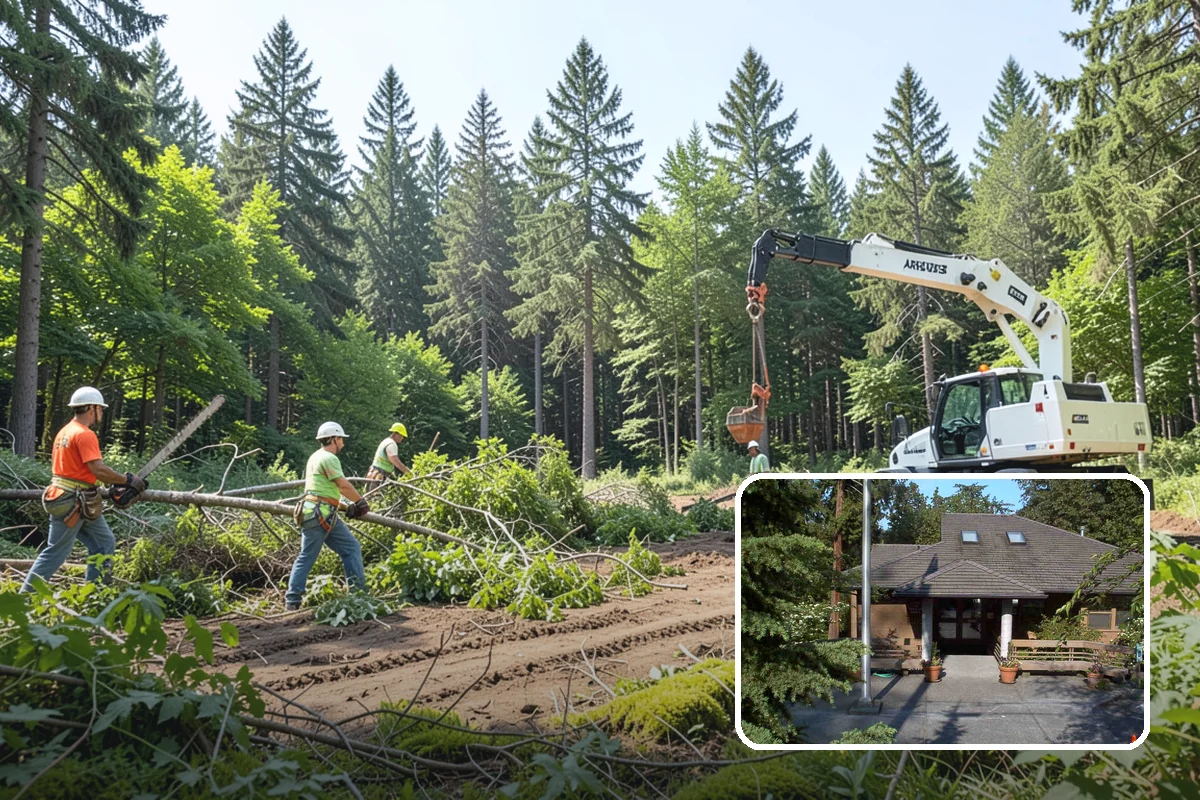
Our crews utilize specialized cabling and bracing hardware along with professional installation tools to complete each job safely. Depending on the tree’s height and location, we may use climbing and rigging gear or an aerial lift to reach difficult areas. All personnel wear personal protective equipment throughout the project to ensure a secure working environment for everyone involved.
Yarrow Point Dynamic Cabling Installation Safety & Best Practices
We install cabling only where support is appropriate and effective, using hardware that is correctly rated for the specific load it will carry. It is important to recognize when removal might be the safer option rather than attempting to save a tree with compromised structural integrity. Regular inspections help identify aging hardware or shifting conditions so adjustments can be made before they become hazards.
Signs You Need Dynamic Cabling Installation in Yarrow Point
You may need this service if you notice cracks, cavities, overextended limbs, or included-bark unions forming in your trees. Codominant stems that split under stress are another common situation where dynamic cabling provides necessary reinforcement to prevent sudden breakage. If a tree has reached an age where its hardware needs inspection and replacement, it is also time to consider this support system.
What Affects the Cost of Dynamic Cabling Installation in Yarrow Point
The price of installation varies based on the species of your trees and how complex their structural defects are at each location. Site access conditions play a major role in cost, as reaching certain branches or navigating tight spaces requires additional planning and effort. Additionally, installing hardware at correct positions for multiple weak unions will naturally influence the final investment required for the project.
Best Time of Year for Yarrow Point Dynamic Cabling Installation
There is no fixed season when this work must be done; instead, timing should follow recognized arboricultural standards matched to current site conditions. We evaluate weather patterns and tree health throughout the year to determine the best moment to install or inspect your cabling systems. This flexible approach ensures that our methods are always safe regardless of whether we are working in early spring or late fall.
Dynamic cabling and wind in Yarrow Point
Dynamic cabling uses a flexible synthetic rope installed high in the crown, usually above the midpoint of the stems or limbs it connects. The rope is not meant to hold a tree rigidly. It stays slack in light wind and takes up load only when a stem swings far enough to stress the weak union. Because the tree keeps moving, it can still build strength in its wood, which is one reason this approach is used on trees with codominant stems or heavy, long limbs.
Local weather is the reason to think about this before a storm rather than after. The National Weather Service forecast zone that includes Yarrow Point logged 33 high and strong wind episodes from 2005 to 2025, and the strongest gust recorded in that zone since 2005 was 72 mph on December 17, 2010. The same zone had 2 ice storm episodes in that period. Those figures cover the whole zone, not one yard, but they show that a crown with a weak attachment can be loaded hard, and ice adds weight on top of wind.
Pruning history matters too. WSU Extension's Pacific Northwest Gardener's Handbook notes that over-thinning, sometimes called lion's-tailing, puts weight at the branch tips and raises the risk of failure in windstorms. If a tree has been thinned that way, a cable may not fix the problem. Sometimes the better step is careful reduction or other corrective pruning, and we would not recommend topping.
During an assessment, our ISA Certified Arborist looks at the stem union, included bark, cracks, decay, and the overall health of the tree. If cabling fits, the work follows standard practice, such as ANSI A300 guidance: choose proper anchor points, install the system, and plan for periodic inspection. A cable cannot guarantee a tree will not fail, and a tree with serious decay may need a different plan.
If a tree is near a house, driveway, or shoreline path, tell us when you request an estimate. Where a city rule could apply to work on a tree, we check with the city before work starts.
Yarrow Point tree conditions at a glance
| High and strong wind episodes, 2005-2025 | 33 in the forecast zone |
|---|---|
| Ice storm episodes, 2005-2025 | 2 in the forecast zone |
| Average snowfall | 5.4 in a season |
| Soils | 93% of land has hardpan or another restrictive layer within 40 in; most common series Alderwood |
Strongest wind events near Yarrow Point
- Dec 17, 2010: gusts to 72 mph
- Feb 7, 2012: gusts to 70 mph
- Dec 14, 2006: gusts to 68 mph
NOAA Storm Events, forecast zone that includes Yarrow Point, 2005-2025.
Sources: Daymet daily weather (NASA/ORNL), NOAA Storm Events, USDA plant hardiness map 2023, NRCS soil survey, USGS elevation, WA DNR landslide inventory, USDA Forest Service aerial survey, WSDA, city tree assessments and street-tree inventories, SILVIS Lab, Arbor Day Foundation, and official city and utility pages.
Dynamic Cabling Installation Serving Yarrow Point
Yarrow Point

